
































A Chronicle of Anti-Jewish Violence in the Middle East and North Africa: Historical Episodes from the 7th Century to the Modern Era
By: Fern Sidman
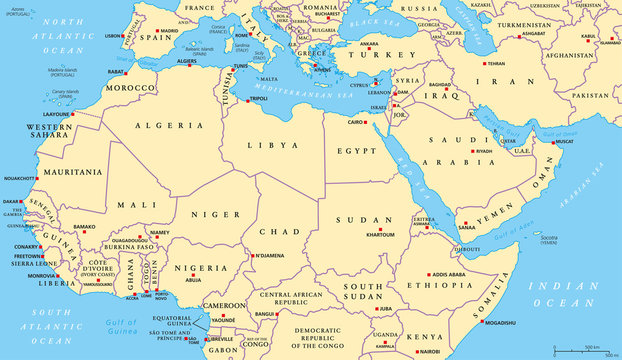
The history of Jewish communities in the Middle East and North Africa stretches back more than 2,500 years, predating both Christianity and Islam. Long before the rise of modern nationalism, the establishment of the State of Israel, or the emergence of the contemporary Israeli-Palestinian conflict, Jewish populations lived throughout Arabia, Mesopotamia, Persia, Egypt, Syria, Yemen, Morocco, Libya, Algeria, and Tunisia. These communities developed rich religious traditions, commercial networks, and intellectual institutions that became integral components of the broader societies in which they resided.
Yet alongside periods of relative stability and communal continuity, the historical record also contains numerous episodes of anti-Jewish violence, persecution, expulsion, and discrimination. Historians continue to debate the causes, frequency, and broader significance of these events, but there is little dispute that many Jewish communities throughout the Middle East and North Africa periodically faced serious threats to their security and survival.

Examining these episodes does not require reducing more than 1,400 years of history to a single narrative. Rather, it involves understanding a succession of documented incidents that left lasting impressions on Jewish communal memory and, in many cases, altered the demographic and political landscape of entire regions.
Among the earliest and most frequently discussed episodes are the conflicts involving Jewish tribes in Arabia during the 7th century. Several Jewish tribes living in and around Medina became involved in military and political disputes with the emerging Muslim community led by the Prophet Muhammad. Historical sources describe the expulsion of the Banu Qaynuqa and Banu Nadir tribes, as well as the defeat of the Banu Qurayza following a siege during a period of intense warfare. The interpretation of these events remains the subject of scholarly debate, with historians differing over whether they should be understood primarily through the lens of tribal politics, military conflict, religion, or some combination thereof. Nevertheless, they represent some of the earliest documented confrontations between Jewish and Muslim communities.
In the centuries that followed, Jewish communities remained scattered throughout the expanding Islamic world. While many survived and maintained their religious identity, outbreaks of violence periodically occurred. Medieval chronicles describe attacks on Jewish populations in various regions of North Africa and the Middle East. One of the most frequently cited incidents occurred in Granada in 1066, when a Muslim mob attacked the city’s Jewish community. Historical estimates vary, but many scholars regard the massacre as one of the most significant anti-Jewish outbreaks of the medieval Islamic period. Thousands of Jews were reportedly killed, and the Jewish community suffered devastating losses.
In Yemen, Jewish communities experienced repeated episodes of persecution over many centuries. Historical records document periods during which Jews were subjected to forced conversions, expulsions, and restrictive decrees. One of the most notable episodes occurred during the late 17th century, when Yemen’s Jewish population was expelled from numerous communities under what became known as the Mawza Exile. Many perished during the displacement, and the event remains one of the most traumatic episodes in the history of Yemeni Jewry.
Elsewhere, Jewish communities in Morocco periodically faced mob violence and discriminatory restrictions. While conditions varied dramatically depending on the ruler and historical period, records describe multiple attacks on Jewish quarters, forced conversions, and episodes of communal unrest. Similar incidents occurred in Persia, where Jewish populations became targets during periods of political instability or religious extremism.
The early modern period witnessed additional examples of anti-Jewish violence across the region. In numerous cities throughout the Ottoman Empire and North Africa, Jewish communities remained vulnerable to accusations, riots, and local outbreaks of hostility. While the severity of such incidents varied widely, they reinforced a sense of insecurity among many Jewish populations.
The 19th century brought a series of particularly consequential events. Among the most infamous was the Damascus Affair of 1840. Following the disappearance of a Christian monk and his servant, local Jews were falsely accused of ritual murder. Several members of the Jewish community were arrested, tortured, and pressured into confessions. The case attracted international attention and became one of the most notorious examples of the blood libel accusation in the modern Middle East.
The Damascus Affair resonated far beyond Syria. It galvanized Jewish communities throughout Europe and the Middle East and highlighted the vulnerability of minority populations during periods of political uncertainty. Historians frequently identify the episode as a turning point in the emergence of modern Jewish political advocacy.
Additional anti-Jewish disturbances occurred throughout the century in Morocco, Persia, Libya, and other regions. Although the circumstances differed from place to place, recurring themes included mob violence, economic tensions, religious incitement, and political instability.
The transition from the Ottoman era to the modern age introduced new pressures. Nationalist movements, imperial rivalries, and changing political structures transformed relations among ethnic and religious communities. In Ottoman Palestine, tensions between Arab and Jewish populations increased during the late 19th and early 20th centuries as Jewish immigration expanded and competing national aspirations emerged.
These tensions erupted periodically into violence. Riots in Jerusalem, Jaffa, Safed, and Hebron during the British Mandate period became defining moments in the history of Jewish-Arab relations.
Particularly significant was the Hebron massacre of 1929. Following rumors and escalating tensions surrounding holy sites in Jerusalem, violence spread to Hebron, where Arab rioters attacked the city’s long-established Jewish community. 69 Jews were killed, and many others were wounded. Survivors were evacuated, effectively ending a Jewish presence in Hebron that had existed for centuries. The massacre profoundly influenced Jewish perceptions of security and remains a powerful symbol in Israeli historical memory.
The 1930s and 1940s witnessed further deterioration. Anti-Jewish sentiment intensified in several Arab countries amid rising nationalism, European influence, and the growing conflict in Mandatory Palestine.
Among the most devastating events was the Farhud of Baghdad in 1941. Occurring during a period of political upheaval in Iraq, the pogrom resulted in the deaths of Jewish residents, widespread injuries, and extensive destruction of homes and businesses. For Iraqi Jews, the Farhud represented a profound psychological rupture. A community that had existed in Mesopotamia since ancient times suddenly confronted the reality that centuries of integration could not guarantee safety during moments of political crisis.
The Farhud occupies a central place in modern Jewish historical consciousness. Many scholars regard it as a precursor to the broader collapse of Jewish life across the Arab world during the decades that followed.
The establishment of the State of Israel in 1948 dramatically altered the political environment throughout the Middle East. As war broke out between Israel and neighboring Arab states, Jewish communities across the region faced increasing hostility. In numerous countries, anti-Jewish riots erupted, businesses were targeted, and communal institutions came under pressure.
In Egypt, Iraq, Libya, Yemen, Syria, and elsewhere, restrictions on Jewish populations intensified. Governments imposed limitations on property ownership, employment, travel, and political activity. Arrests, expulsions, and confiscations became increasingly common in certain jurisdictions.
The Libyan Jewish community experienced particularly severe violence. Anti-Jewish riots occurred in 1945 and again after the establishment of Israel. Many Jews were killed, and substantial portions of the community’s property were destroyed. Similar patterns emerged elsewhere, contributing to a growing sense that long-established Jewish communities no longer had a secure future in many Arab states.
The consequences were historic.
Between the late 1940s and the 1970s, approximately 850,000 Jews left or were expelled from Arab and Muslim-majority countries. Ancient communities that had survived for centuries—and in some cases millennia—largely disappeared within a generation.
Iraq’s Jewish population, once among the largest and most influential in the Middle East, virtually vanished. Yemen’s Jewish community was largely airlifted to Israel. Egypt’s Jewish population declined dramatically. Similar demographic transformations occurred in Libya, Syria, Algeria, and elsewhere.
For many historians, this exodus represents one of the most significant demographic shifts in modern Middle Eastern history. Entire cultural worlds disappeared. Synagogues were abandoned, schools closed, and communal institutions dissolved. Communities that had contributed to the economic, cultural, and intellectual life of their countries for centuries effectively ceased to exist.
The historical significance of these developments remains the subject of ongoing scholarly discussion. Researchers continue to debate the relative roles of nationalism, anti-Zionism, anti-Semitism, regional warfare, colonial legacies, and state policies in producing the exodus. What is not disputed is the scale of the transformation.
Today, many countries that once contained thriving Jewish populations have only tiny remnants of those communities. In some places, Jewish life has virtually disappeared altogether.
The cumulative history of anti-Jewish violence in the Middle East and North Africa spans many centuries and encompasses a wide range of political systems, dynasties, ideologies, and historical circumstances. The episodes vary enormously in their causes, scale, and consequences. Some occurred during periods of warfare; others emerged from local political conflicts, religious tensions, or broader social upheaval.
Yet taken together, these incidents form an important part of the historical record. They remain central to understanding the experiences of Jewish communities throughout the region and continue to influence contemporary discussions about identity, security, memory, and historical justice.
For descendants of these communities, the massacres, expulsions, pogroms, and persecutions are not merely distant historical events. They are chapters in a collective memory that helps explain how one of the world’s oldest diasporas was transformed during the modern era. Understanding that history remains essential for anyone seeking to comprehend the complex and often painful evolution of Jewish life in the Middle East and North Africa.



