




















By: Fern Sidman
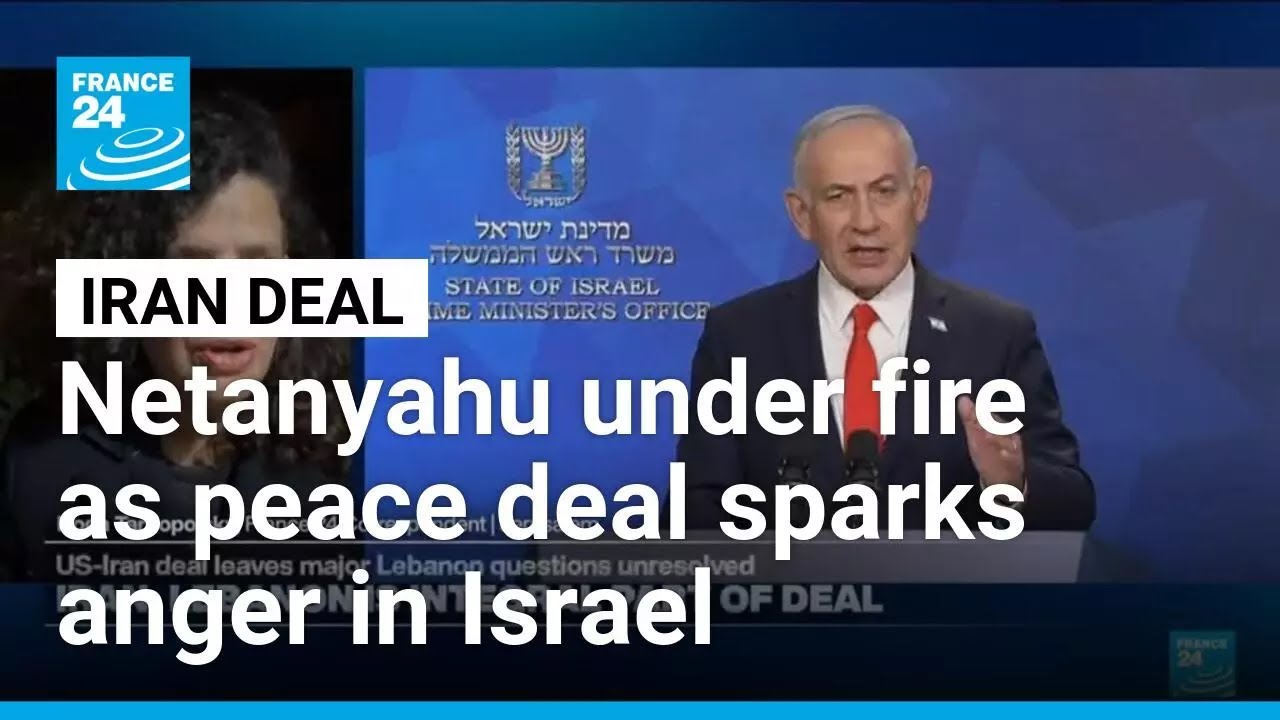
A growing divide has emerged among major American Jewish organizations over the Trump administration’s newly announced memorandum of understanding with Iran, with some groups urging caution and patience as negotiations proceed while others are expressing profound concern that the emerging framework could ultimately strengthen Tehran and weaken Israel’s strategic position.
According to a report on Monday at The Jewish Insider, the agreement has triggered a vigorous debate throughout the American Jewish communal landscape, exposing significant differences in how influential organizations assess diplomacy with the Islamic Republic and the appropriate balance between military pressure, sanctions, and negotiated settlements.
At the center of the controversy is a memorandum of understanding that reportedly establishes a 60-day period of negotiations intended to produce a more comprehensive agreement addressing Iran’s nuclear activities and broader regional issues.
While many details remain unclear, The Jewish Insider reported that the emerging framework has already generated extensive commentary from organizations spanning the political and ideological spectrum.
For some groups, the memorandum represents merely the beginning of a complex diplomatic process whose ultimate success or failure will depend on what emerges during the forthcoming negotiations.
For others, however, even the preliminary contours of the agreement raise alarm bells regarding sanctions relief, Iran’s military capabilities, support for terrorist proxies, and the security of Israel.
One of the most closely watched reactions came from the American Israel Public Affairs Committee, which issued its statement later than many other organizations.
According to The Jewish Insider report, AIPAC deliberately framed the memorandum as a preliminary diplomatic mechanism rather than a finalized agreement, emphasizing that many critical questions remain unanswered.
“The announced MOU kicks off a new 60-day window for talks,” AIPAC stated. The organization stressed that it intends to closely monitor the upcoming negotiations and assess whether the final framework adequately protects Israel’s security interests.
“We look forward to learning the full details of the framework for these negotiations, including whether the deal preserves the sovereign right of our democratic ally Israel to respond to the security threats it confronts,” the organization said.
The Jewish Insider reported that AIPAC also underscored the important role Congress will play throughout the negotiation process and during any subsequent review of a final agreement. “Congress will play a critical role in working with the administration throughout these negotiations and in reviewing the ultimate agreement,” the organization stated. AIPAC further outlined several conditions that it believes any final arrangement must satisfy.
Among them are the complete removal of enriched uranium from Iranian territory, the dismantling of enrichment infrastructure, meaningful restrictions on missile and drone programs, and an end to Tehran’s support for terrorist proxy organizations operating throughout the Middle East.
The American Jewish Committee likewise refrained from offering a definitive judgment regarding the memorandum itself. Instead, according to The Jewish Insider, the organization focused on the broader strategic objectives that any eventual agreement must achieve. The AJC stated that it “await[s] developments about the reported 60-day ceasefire agreement” while emphasizing that Iran’s long-standing threats to regional stability remain a central concern.
The organization argued that any final accord should permanently prevent Iran from obtaining a nuclear weapon, rebuilding ballistic missile capabilities, threatening American allies, supporting terrorist proxies, or using the Strait of Hormuz as leverage against the international community.
The AJC also highlighted the aspirations of ordinary Iranian citizens. “AJC also strongly supports the legitimate aspirations of the Iranian people for greater freedom, opportunity and dignity, and hopes that those aspirations are eventually realized,” the statement said. “As the contours of this and future agreements become more clear, we will continue to engage with our partners in the U.S., the Middle East, and around the world to make this vision a reality.”
While mainstream organizations largely adopted cautious language, the Zionist Organization of America delivered a much more critical assessment. According to The Jewish Insider report, the organization praised President Trump for previous military actions against Iran but voiced deep reservations regarding the diplomatic framework now taking shape. “The pending deal with Iran is concerning,” said ZOA National President Mort Klein.
Klein argued that the memorandum appears to grant Tehran substantial economic and strategic benefits without securing meaningful concessions. “The deal appears to be an ‘agreement to negotiate’ — which enables the Iranian regime to obtain massive oil revenue and time to build up its military and terror arsenals, while leaving the genocidal Iranian regime and its nuclear and missile stockpiles in place,” Klein said. He warned that the arrangement could position Iran “to continue and strengthen its 47-year war to destroy the U.S., Israel, and the West.”
“The little that we know is deeply problematic,” he added.
Klein further questioned the logic behind relaxing pressure on Tehran before more substantial concessions have been secured. “It makes no sense” for the United States to reduce its blockade measures unless Iran completely abandons its nuclear and missile programs, he argued.
Klein also voiced concern regarding reports suggesting that Israel may be expected to exercise restraint toward Hezbollah. “Pressuring Israel to not respond to threats of annihilation and attacks on her people is not, as the president called it, a ‘Great Deal [that] will bring Peace and Security to the whole Region,’” he said. “Disturbingly, the interim Iran deal does not appear to be even close to the U.S.-Israel war goals of eliminating the existential dangers of Iran’s nuclear program and ballistic missiles, ending the Iranian regime’s support for its terror proxies, and helping the Iranian people overturn the brutal, genocidal Iranian regime.”
Skepticism was not confined to conservative organizations. The Jewish Insider reported that Democratic Majority for Israel also expressed reservations regarding the framework and the administration’s approach.
CEO Brian Romick criticized what he characterized as an “incoherent and erratic strategy.”
“There are concerning details about what is and isn’t in this deal,” Romick said. He urged the administration to rely more heavily on experienced specialists during future negotiations.
According to The Jewish Insider report, Romick called on officials to work with “experienced negotiators and technical experts” rather than “friends, family, and donors.” Romick emphasized that any final agreement must permanently dismantle Iran’s nuclear weapons pathway, constrain missile development, address support for terrorism, and prevent sanctions relief from strengthening either the Islamic Revolutionary Guard Corps or its regional proxies. “Despite this tentative deal, the reality is Israel still faces constant threats from Iranian-backed terrorist groups like Hamas and Hezbollah,” he said. “President Trump must not limit or interfere with our ally’s ability to defend itself from very real threats along its border.”
Among Democratic Jewish organizations, perhaps the strongest criticism came from the Jewish Democratic Council of America. According to The Jewish Insider report, CEO Halie Soifer offered a particularly blunt assessment of the administration’s diplomacy. “Donald Trump’s deal with Iran isn’t a deal at all,” Soifer declared. “At best, it’s a statement of intention — a ‘concept of a plan’ — lacking details. At worst, it’s an admission of defeat by the United States.”
Soifer argued that the framework appears weaker than the 2015 Joint Comprehensive Plan of Action. She further contended that recent events have strengthened rather than weakened Tehran. “The reckless war gave Iran a chokehold on the U.S. and global economy that it will continue to exercise in the future,” she said.
Soifer also argued that the conflict strengthened Iran’s negotiating position and solidified the regime’s hold on power. “Today, Iran is unquestionably further from regime change — and this Iranian regime is stronger — than before the war,” she said. She additionally criticized what she described as the administration’s treatment of Israel during the negotiating process.
Standing apart from most of the criticism was J Street, which welcomed the diplomatic initiative. According to The Jewish Insider report, J Street President Jeremy Ben-Ami argued that military force alone cannot provide a sustainable solution to concerns surrounding Iran’s nuclear activities. “The lesson is the same one many experts and former security officials have warned about for years,” Ben-Ami said. “There is no sustainable military solution to the challenge posed by Iran’s nuclear diplomacy.”
“Durable constraints on Iran’s nuclear activities can only be achieved through pragmatic and sustained diplomacy.”
Ben-Ami suggested that diplomacy offers the most realistic pathway toward preventing nuclear proliferation while reducing the likelihood of future conflict. “We urge lawmakers to support this agreement to end the fighting and push to ensure future diplomatic efforts address the security threats presented by Iran,” he said.
The Jewish Insider reported that the Republican Jewish Coalition has thus far refrained from issuing a comprehensive statement regarding the memorandum. However, the organization has signaled support by highlighting President Trump’s public comments regarding the reopening of the Strait of Hormuz and related developments.
The RJC did not immediately provide additional comment.
As The Jewish Insider’s reporting illustrates, the debate over the Trump administration’s emerging Iran framework has revealed significant divisions among major Jewish organizations. Some view the memorandum as merely the opening chapter in a potentially productive diplomatic process. Others fear it may ultimately provide Tehran with economic relief, strategic breathing room, and political legitimacy without adequately addressing the fundamental security concerns that have dominated discussions about Iran for decades.
The next 60 days are likely to prove decisive. As negotiations continue and additional details emerge, organizations throughout the American Jewish community will undoubtedly continue scrutinizing every aspect of the agreement, weighing the competing promises of diplomacy, deterrence, and regional security.
For now, one conclusion is unmistakable: consensus remains elusive, and the debate surrounding Iran, Israel, and American diplomacy is far from settled.



