
















By: Tzirel Rosenblatt
A newly released United Nations report has shed disturbing light on a pattern of violence, intimidation, and extrajudicial punishment carried out by Hamas-affiliated security forces and armed operatives throughout the Gaza Strip during the conflict with Israel, revealing a campaign of public executions, severe beatings, physical mutilation, and other acts that the international body has characterized as potential war crimes.
The findings, published Tuesday by the United Nations Office of the High Commissioner for Human Rights and extensively reported on by the Associated Press, paint a grim portrait of life inside Gaza under Hamas rule during the latter stages of the war. According to the report, hundreds of documented incidents involved individuals accused of collaborating with Israel, stealing humanitarian aid, engaging in criminal activity, or maintaining ties to political rivals and competing factions.
The AP reported that investigators reviewed hundreds of allegations and compiled evidence demonstrating that many of the punishments were carried out publicly and deliberately filmed, with videos later circulated among the population. The apparent objective, according to the report, was not merely to punish alleged offenders but to instill fear throughout Gaza’s civilian population and reinforce Hamas’ authority at a time when its control was being challenged by war, displacement, and internal dissent.
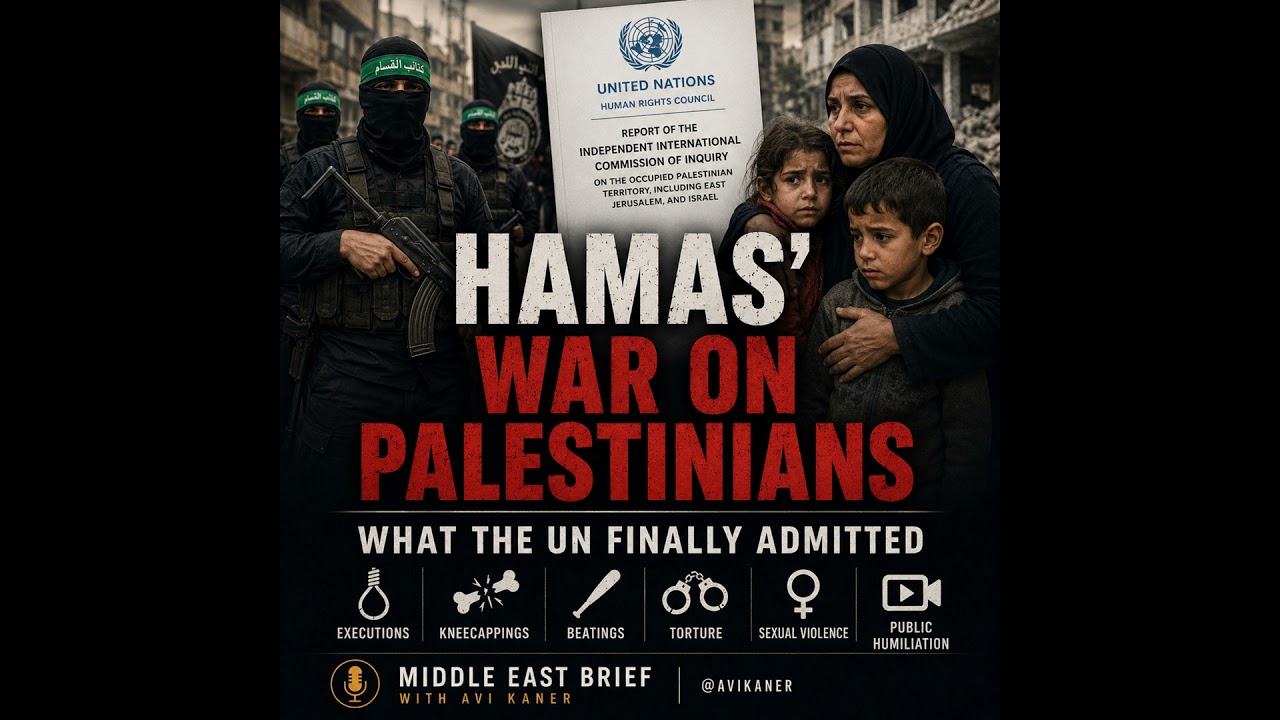
The report cataloged an array of brutal practices that included public executions, kneecappings, bone fractures inflicted with metal pipes and concrete blocks, severe beatings, and other forms of physical abuse. According to the AP report, United Nations investigators concluded that these acts bypassed any recognizable judicial procedures and were instead carried out directly by Hamas-affiliated police units and armed terrorists operating throughout the enclave.
“These cases involved executions, kneecapping, bone-breaking with metal pipes or cement bricks and beatings,” the report stated, according to the AP report. The acts were frequently justified by perpetrators as punishment for alleged collaboration with Israel, theft, looting, drug-related offenses, or affiliations with rival organizations.
The scope of the findings is significant. According to figures cited by the AP, the United Nations documented 249 incidents between August 2024 and January 2026. Those incidents reportedly resulted in 108 deaths. Investigators concluded that approximately 25% of the documented cases could be directly attributed to Hamas-linked police forces or affiliated armed groups, although the report also examined abuses carried out by other local actors operating within Gaza.
The revelations come as Hamas has sought to reassert its authority following an October ceasefire that temporarily halted more than two years of intense conflict between Israel and the terrorist organization. Having ruled Gaza since violently expelling the Palestinian Authority in 2007, Hamas has spent much of the post-ceasefire period attempting to restore administrative control over areas disrupted by warfare and internal instability.
According to the AP, the report suggests that the movement’s efforts to reestablish authority frequently relied upon coercion, intimidation, and public displays of force. Among the most disturbing findings detailed in the report were several incidents captured on video and later analyzed by investigators.
The AP reported that one such episode occurred in September 2025 near Shifa Hospital in Gaza City. According to the United Nations findings, masked gunmen publicly executed 3 blindfolded men before a crowd of onlookers. The victims had reportedly been accused of collaboration and espionage.
Another documented incident occurred the following month, when eight men were marched into a public square in Gaza City and executed before assembled spectators. As in the earlier case, accusations of collaboration with Israel were reportedly used to justify the killings.
The Associated Press noted that United Nations investigators reviewed multiple recordings of these incidents as part of their inquiry.
The report further highlights a longstanding pattern that predates the current conflict.
For years, Hamas has been accused by human rights organizations of employing executions and harsh punishments against individuals suspected of assisting Israel. Such allegations have repeatedly surfaced throughout the organization’s nearly 2 decades of rule over Gaza.
In September 2022, Hamas authorities executed two Palestinian Arabs convicted of providing information to Israel. According to reports at the time, Hamas claimed the information had contributed to the deaths of two individuals.
More recently, in July 2025, Hamas’ internal security apparatus announced what it described as a series of “high-quality” operations. According to statements cited in the report, those operations resulted in the execution of 12 individuals accused of collaborating with Israel or engaging in criminal activity.
Just two months earlier, Hamas authorities executed four people whom they accused of looting humanitarian aid convoys entering Gaza.
The AP reported that these incidents form part of a broader pattern identified by investigators, who argue that Hamas increasingly resorted to extrajudicial violence as traditional governing structures weakened during the war.
The United Nations report also examines the broader environment in which these abuses occurred.
Srinivasan Muralidhar, who headed the commission responsible for the findings, argued that the incidents took place amid conditions shaped by the ongoing conflict. According to the AP report, Muralidhar stated that Hamas-affiliated forces exploited the vacuum created by widespread destruction and the collapse of normal institutions throughout much of Gaza.
While the report sought to place the abuses within the broader wartime context, it nevertheless concluded that the perpetrators themselves bear direct responsibility for the documented acts.
The victims, according to investigators, represented a diverse cross-section of Gazan society.
Some were accused of collaborating with Israel. Others were linked to anti-Hamas opposition groups. Still others reportedly belonged to local tribal organizations, independent armed factions, or networks that emerged in areas where Hamas’ authority had weakened during the conflict.
The AP report noted that many of the punishments appeared intended not only to eliminate perceived threats but also to discourage public dissent and reestablish fear-based control. Human rights experts have long warned that wartime conditions can create opportunities for armed groups to consolidate authority through violence.
The latest findings suggest that such dynamics were particularly acute in Gaza during the conflict’s later stages. The report’s release is likely to intensify scrutiny of Hamas at a time when international attention remains focused on the future governance of Gaza.
Questions regarding who will ultimately administer the territory after the war have become increasingly central to diplomatic discussions involving Israel, regional governments, and international organizations.
The findings may also complicate efforts by Hamas to present itself as a legitimate governing authority. The AP report observed that Hamas officials did not immediately respond to requests for comment regarding the allegations detailed in the United Nations report.
The absence of an official response leaves many of the report’s conclusions unanswered. Nevertheless, the scale of the documented abuses is likely to generate continued international concern. For many observers, the report serves as a stark reminder of the profound challenges facing Gaza beyond the devastation of the battlefield itself.
The destruction wrought by war is only one dimension of the crisis. The United Nations findings suggest that many civilians also faced threats from within their own communities, where accusations of collaboration, political rivalry, or criminal activity could result in swift and brutal punishment carried out without due process or legal safeguards.
As the AP reported, investigators concluded that the public nature of many of these acts was itself significant. Executions conducted before crowds, videos circulated among residents, and highly visible punishments appeared designed to maximize fear and reinforce authority.
In doing so, the report argues, Hamas-affiliated forces transformed violence into an instrument of governance.
The release of the findings marks one of the most detailed international examinations to date of internal repression within Gaza during the war. Whether the report ultimately leads to further investigations, accountability measures, or international legal proceedings remains uncertain.
What is clear, however, is that the document presents a deeply troubling account of life under Hamas rule during one of the most turbulent periods in Gaza’s modern history—a portrait characterized not only by armed conflict with Israel but also by a campaign of internal coercion, public punishment, and violence directed against Gaza’s own population.