



|
Getting your Trinity Audio player ready...
|
By: Jeff Gorman
The annual Conservative Political Action Conference has long functioned as both a celebratory gathering and a strategic barometer for the American conservative movement. For decades, it has served as a stage upon which rising stars debut, established leaders consolidate influence, and ideological currents are tested before a receptive audience. Yet as the conference convenes today (Wednesday) in Grapevine, Texas, it does so under circumstances that suggest not unity, but fragmentation—an inflection point marked as much by who is absent as by who is present.
As reported on Wednesday by The Hill, several of the most prominent figures in contemporary Republican politics are notably missing from the 2026 gathering. Their absence, set against a backdrop of internal disagreements over foreign policy, electoral strategy, and leadership succession, has transformed what is typically a rallying moment into a revealing portrait of a party grappling with its own identity.
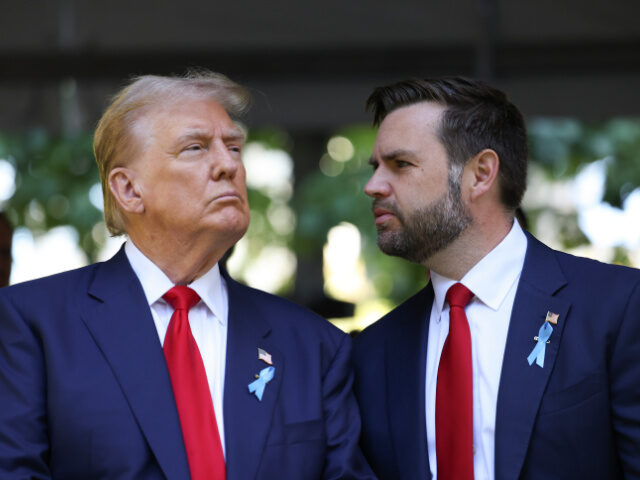
Perhaps the most consequential absence is that of President Donald Trump, whose presence at CPAC over the past decade has been virtually synonymous with the event itself. Trump’s decision to skip the conference—reportedly for the first time in ten years—carries symbolic weight that extends far beyond scheduling logistics.
According to The Hill, the president is instead slated to attend a Saudi-backed investment conference before retreating to his residence in Florida. While aides have left open the possibility of last-minute changes, the current plan underscores a shift in priorities that has not gone unnoticed by both allies and critics.
Trump’s absence is particularly striking given CPAC’s historical role as a platform for his political ascendancy. It was here that his “America First” message found an enthusiastic audience, catalyzing a transformation of the Republican Party that continues to reverberate. That he now chooses to forgo this stage suggests either a recalibration of strategy or a recognition that the conference no longer holds the same centrality it once did.
The Hill noted that this decision comes at a moment when Trump’s approval ratings have experienced a decline, driven in part by economic concerns and growing unease over the ongoing conflict with Iran. The Democratic National Committee has been quick to interpret the absence as evidence of political vulnerability, framing it as a retreat from a core constituency.
Equally notable is the absence of JD Vance, whose trajectory within the conservative movement has been closely intertwined with CPAC. Since his emergence on the national stage, Vance has used the conference as a forum to articulate his ideological credentials and to position himself within the broader Republican landscape.
As The Hill reported, Vance’s absence this year comes amid increasing speculation about the party’s future leadership. With Trump’s long-term political role uncertain, CPAC’s traditional straw poll has often served as an informal gauge of potential successors. The lack of a Vance appearance deprives observers of a key data point in assessing his standing among the party’s base.
This omission is not merely a matter of scheduling; it reflects a broader ambiguity about the direction of the Republican Party. Without the presence of either its current standard-bearer or its most prominent heir apparent, CPAC 2026 unfolds without a clear focal point.
The decision to host this year’s conference in Texas adds another layer of complexity, particularly given the high-profile Senate primary runoff between Ken Paxton and John Cornyn. This contest, as detailed by The Hill, has become a microcosm of the broader tensions within the party.
Paxton, who is scheduled to speak at the conference’s Ronald Reagan Dinner, represents a more insurgent, populist strain of conservatism. Cornyn, by contrast, embodies the institutional wing of the party, with deep ties to the Senate leadership and national campaign apparatus.
The fact that Cornyn has declined to attend—citing legislative responsibilities in Washington—has not gone unnoticed. CPAC organizers had publicly urged his participation, recognizing the symbolic importance of the race. His absence, juxtaposed with Paxton’s prominent speaking role, underscores the shifting balance of power within the party.
The Hill report highlighted that both candidates are vying for Trump’s endorsement, a factor that adds further intrigue to the race. Yet with Trump himself absent from the conference, the contest unfolds without the decisive intervention that might otherwise clarify the field.
Another conspicuous absence is that of Elon Musk, whose appearance at the previous year’s CPAC was among its most memorable moments. Musk’s theatrical presentation—complete with a chainsaw symbolizing his efforts to reduce government bureaucracy—captured the imagination of attendees and reinforced his alignment with conservative reform initiatives.
However, as The Hill reported, Musk’s relationship with the Trump administration has since deteriorated, culminating in his departure from the Department of Government Efficiency. His absence from this year’s conference reflects not only personal estrangement but also the fragility of alliances within the movement.
Musk’s trajectory illustrates a broader pattern: the difficulty of sustaining cohesion among a coalition that includes political leaders, business figures, and media personalities, each with their own priorities and perspectives.
Despite these absences, CPAC 2026 is far from devoid of influential voices. Among those scheduled to speak are a range of political figures, activists, and media personalities who continue to shape the conservative discourse.
Steve Bannon, a longtime ally of Trump and a prominent commentator, is expected to deliver remarks that address the strategic challenges facing the party. Bannon has expressed concerns that the conflict with Iran could prove politically detrimental, a perspective that resonates with segments of the conservative base wary of foreign entanglements.
Similarly, Tom Homan, serving as the administration’s border policy lead, will address attendees amid significant changes in immigration policy and leadership. His presence underscores the continued salience of border security as a defining issue for the party.
Other speakers, including former Representative Matt Gaetz, bring their own distinct perspectives, reflecting the diversity—and at times discord—within the conservative ecosystem.
Underlying the dynamics of CPAC 2026 are substantive policy disagreements that have contributed to the current sense of fragmentation. Chief among these is the question of how to approach the conflict with Iran.
As The Hill has reported, the war has exposed divisions within the party between those who favor a more assertive foreign policy and those who advocate restraint. This debate is not merely theoretical; it has tangible implications for electoral strategy, particularly as the midterm elections approach.
Economic concerns further complicate the picture. Rising costs, market volatility, and voter dissatisfaction have created a challenging environment for incumbents, adding urgency to the need for a coherent and compelling message.
Historically, CPAC has served as a unifying force, providing a platform for the articulation of shared principles and the consolidation of political momentum. Yet the current iteration of the conference suggests that its role may be evolving.
The Hill’s coverage indicated that CPAC is increasingly reflective of the movement’s internal debates rather than a venue for their resolution. The absence of key figures, combined with the prominence of competing voices, has transformed the event into a forum for contestation rather than consensus.
This transformation raises important questions about the future of the conference itself. Can CPAC continue to function as a central gathering point for conservatives, or will it become one of many venues in an increasingly fragmented political landscape?
The events unfolding in Grapevine point to a broader transition within the Republican Party. The era defined by Trump’s dominance is giving way to a more complex and uncertain phase, characterized by competing visions and emerging leaders.
This transition is not unique to the conservative movement; it is a feature of political systems more generally. Yet the speed and intensity with which it is occurring within the GOP have created a sense of volatility that is particularly pronounced.
In the final analysis, CPAC 2026 is defined as much by absence as by presence. The decision of key figures to forgo the conference has transformed it into a mirror reflecting the current state of the conservative movement—a movement at once energized and divided, confident and uncertain.
For observers, the significance of this moment lies not in any single speech or policy proposal, but in the broader patterns it reveals. The Republican Party stands at a crossroads, navigating the tension between continuity and change, unity and diversity, strategy and identity.
One conclusion emerges with increasing clarity: the future of the conservative movement will be shaped not only by its leaders but by its ability to reconcile its internal differences. Whether CPAC can play a role in that process remains an open question—one that will be answered not in a single conference, but in the unfolding dynamics of American politics.
