



|
Getting your Trinity Audio player ready...
|
By: Jeff Gorman
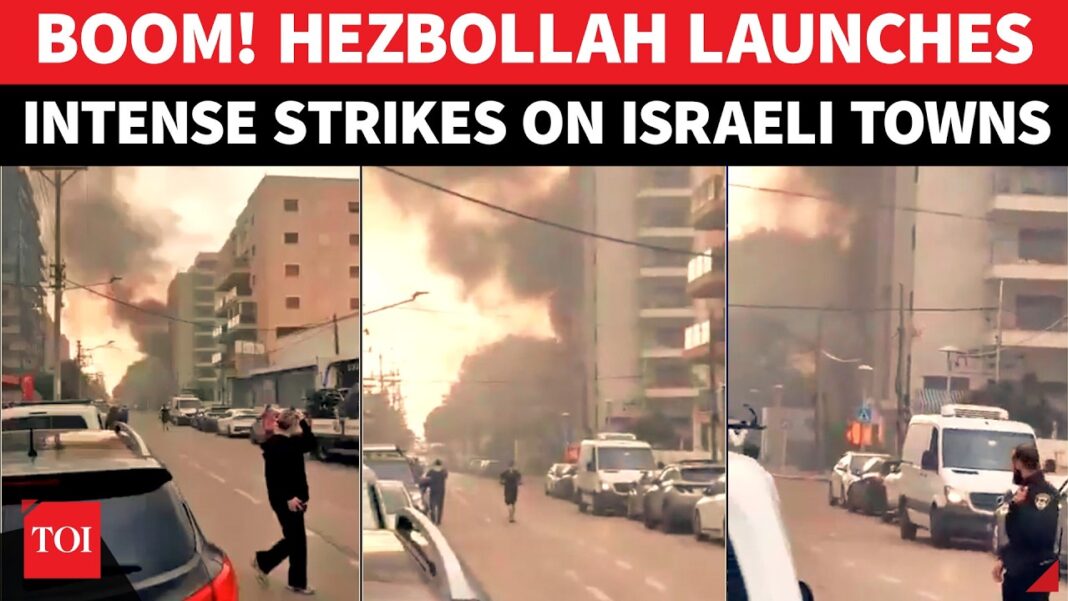
A somber pall has descended upon the northern Israeli coastal city of Nahariya following a devastating rocket strike attributed to the Lebanese militant organization Hezbollah, an attack that has once again underscored the perilous volatility of Israel’s northern frontier. The assault, which unfolded on Thursday amid a broader barrage directed at the Western Galilee, claimed the life of a man in his thirties and left at least fourteen others wounded, according to emergency responders.
The incident, reported in part by VIN News on Thursday, represents one of the most lethal strikes in recent days and highlights the intensifying tempo of hostilities between Israel and Hezbollah, a group widely recognized as one of Iran’s most formidable regional proxies. As air raid sirens pierced the morning air, residents of Nahariya found themselves once again thrust into a grim reality defined by sudden violence and existential uncertainty.
According to officials from Magen David Adom, Israel’s national emergency medical service, the rocket impacted within a populated area of the city, unleashing a blast that caused immediate and catastrophic damage. Medics arriving at the scene were confronted with a chaotic tableau of destruction, debris, and wounded civilians.
Despite rapid response efforts, emergency personnel were forced to pronounce a man in his thirties dead at the scene, marking the most tragic outcome of the strike. A second victim, a man in his fifties, sustained severe injuries from shrapnel and was rushed to hospital in critical condition.
In addition, thirteen individuals were reported to have suffered lighter wounds, primarily from shrapnel fragments and the concussive force of the explosion. Emergency teams also treated eleven people for acute psychological distress, a reminder that the toll of such attacks extends beyond physical injuries to encompass profound emotional trauma.
All told, twenty-five individuals required medical attention and were transported to nearby hospitals, a figure that reflects the indiscriminate nature of rocket fire into civilian areas. As VIN News has noted in its coverage, such incidents routinely overwhelm local emergency infrastructure, even as responders demonstrate remarkable resilience under pressure.
The strike on Nahariya did not occur in isolation. Rather, it formed part of a coordinated barrage of rockets launched from southern Lebanon toward communities across the Western Galilee. Air raid sirens sounded across multiple towns and cities, sending residents scrambling for shelter in a desperate race against time.
The scale and coordination of the attack suggest a deliberate escalation by Hezbollah, which has openly claimed responsibility for recent rocket and drone strikes targeting northern Israel. The organization’s actions are widely interpreted as part of a broader strategy aligned with Iranian interests, aimed at exerting sustained pressure on Israel’s northern border while diverting attention and resources from other fronts.
The VIN News report emphasized that such barrages are designed not only to inflict physical damage but also to disrupt daily life, instill fear, and test the limits of Israel’s defensive systems. While many incoming projectiles are intercepted by Israel’s advanced missile defense network, those that evade interception can have devastating consequences, as evidenced by the tragedy in Nahariya.
Beyond the strategic calculations and military dynamics, the events in Nahariya serve as a stark reminder of the human cost of conflict. The victims of Thursday’s strike were not combatants but ordinary civilians—individuals whose lives were abruptly and irrevocably altered by forces beyond their control.
The man who lost his life, whose identity has not yet been publicly disclosed, represents a profound personal tragedy for his family and community. His death underscores the indiscriminate nature of rocket warfare, in which the line between military and civilian targets is often blurred or disregarded altogether.
For the injured, the road to recovery may be long and uncertain. Physical wounds can heal with time and medical care, but the psychological scars inflicted by such events often linger far longer. The treatment of eleven individuals for acute anxiety highlights the pervasive sense of fear that accompanies repeated exposure to violence.
In the wake of the attack, Israeli officials have reiterated their determination to respond decisively to ongoing aggression from Lebanon. While specific details of potential retaliatory measures have not been disclosed, past patterns suggest that Israel may target Hezbollah infrastructure and personnel in an effort to deter further attacks.
The challenge facing Israeli decision-makers is a complex one. On the one hand, there is a clear imperative to protect civilian populations and uphold national security. On the other, there is a need to avoid actions that could trigger a broader escalation, potentially drawing the region into a more extensive conflict.
As VIN News has observed in its analysis, the current situation reflects a delicate balance between deterrence and restraint. Each new attack tests that balance, increasing the risk of miscalculation and unintended consequences.
Hezbollah’s continued engagement in hostilities with Israel is emblematic of its broader role as a key instrument of Iranian regional policy. The group’s arsenal, which includes thousands of rockets and missiles, poses a persistent threat to Israeli communities, particularly in the north.
The attack on Nahariya is likely to reinforce concerns about the group’s capabilities and intentions, as well as the challenges associated with countering asymmetric threats. Unlike conventional military forces, Hezbollah operates within civilian environments, complicating efforts to neutralize its infrastructure without causing collateral damage.
The broader regional context further amplifies these challenges. Tensions between Israel and Iran have escalated in recent weeks, with multiple fronts of conflict intersecting in ways that heighten the risk of a wider confrontation.
For the residents of Nahariya, the events of Thursday are a stark reminder of the vulnerabilities inherent in life along Israel’s northern border. Despite the presence of shelters and warning systems, the unpredictability of rocket fire ensures that a sense of insecurity persists.
In the aftermath of the attack, local authorities and emergency services have worked tirelessly to restore a semblance of normalcy. Yet the psychological impact of the event is likely to endure, shaping perceptions and behaviors in ways that are difficult to quantify.
VIN News has highlighted the resilience of communities such as Nahariya, where residents continue to go about their lives despite the ever-present threat of violence. This resilience, while admirable, comes at a cost—one that is measured not only in physical damage but also in the cumulative burden of fear and uncertainty.
The deadly rocket strike on Nahariya stands as both a warning and a reckoning. It underscores the enduring volatility of the Israeli-Lebanese border and the capacity of militant actors to inflict harm on civilian populations. At the same time, it highlights the urgent need for strategies that can address both the immediate threats and the underlying dynamics that sustain them.
As the region continues to grapple with escalating tensions, the events in Nahariya serve as a poignant reminder of what is at stake. Behind the headlines and strategic calculations are human lives—lives that can be irrevocably altered in an instant.
For now, the city mourns its dead, tends to its wounded, and braces for what may come next. And as VIN News and other outlets continue to document these events, the world is once again confronted with the stark realities of a conflict that shows little sign of abatinghttps://www.youtube.com/live/1YtiWYXSd1I?si=uhmtcrV-ulFFc_2R
