






















|
Getting your Trinity Audio player ready...
|
By: Fern Sidman- Jewish Voice News
In a sobering assessment that has reverberated across Israel’s political and security establishment, the Israel Defense Forces (IDF) is intensifying its warnings about a rapidly metastasizing terrorist threat in Judea and Samaria, driven by an alarming influx of Iranian-supplied weaponry and increasingly emboldened Palestinian militant factions. As reported on Wednesday by The Algemeiner, senior military officials now fear that this combination—an unprecedented proliferation of arms, escalating coordination among terrorist organizations, and growing operational sophistication—could precipitate an attack evocative of the Hamas-led invasion and mass slaughter of October 7, 2023.
According to a revelatory investigation first highlighted by The Algemeiner and subsequently detailed in a Channel 14 report, a high-ranking IDF official issued an unambiguous warning: Judea and Samaria are becoming the epicenter of Israel’s next major national security challenge, with a realistic potential for an Oct. 7-style assault on Israeli communities. The official stressed that while large-scale, multi-front threats occupy much of Israel’s strategic attention, it is the more insidious, localized dangers that may ultimately pose the gravest risk.
“We have to start from the clear fact that weapons in Judea and Samaria could upset the current stalemate,” the senior officer cautioned, echoing assessments previously cited by The Algemeiner. “A single deadly strike is enough—we must prepare with equal seriousness for localized attacks as we do for mass infiltration scenarios.” He described as “highly probable” a scenario in which a small but heavily armed terrorist unit penetrates a family home in one of the region’s many hillside communities and massacres its inhabitants before security forces can respond.
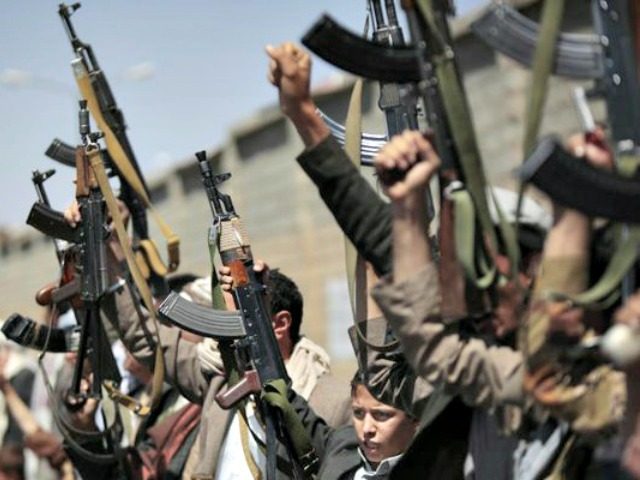
This stark prognosis is rooted in a disturbing trend uncovered by Israeli intelligence: Iran, through its network of proxy militias, has escalated the smuggling of advanced weaponry into Judea and Samaria, including antitank systems, powerful explosive charges, and standardized military-grade Iranian firearms. Such weapons, the official warned, are capable of breaching the fortified barriers that protect Israeli settlements and security outposts—raising the prospect of catastrophic loss of life.
The IDF’s concerns were further validated this past Tuesday when an elite operational unit uncovered an expansive terrorist infrastructure in the Tulkarem sector of northern Judea and Samaria. According to details reported by The Algemeiner, soldiers found three rockets in various stages of assembly, alongside a cache of explosive devices, chemical precursors for constructing improvised bombs, and a trove of operational equipment. The discovery underscores the growing ambition of local cells to adopt tactics previously associated only with Gaza-based groups such as Hamas and Palestinian Islamic Jihad.
Joe Truzman, a senior analyst at the Foundation for Defense of Democracies and a frequent source of expert commentary in The Algemeiner, emphasized that Israel must now contend with a two-pronged threat: Hamas’s ongoing reconstruction of its military infrastructure in Gaza and its parallel efforts to expand operational capacity in Judea and Samaria.
“Hamas and its allied factions understand that igniting violence in the territory would divert Israel’s attention during a critical time of rebuilding the group’s infrastructure in Gaza,” Truzman explained. The release of convicted terrorists into Judea and Samaria under the terms of the temporary ceasefire, he added, may be accelerating the reconstitution of structured terrorist networks throughout the region. As The Algemeiner noted in its coverage, Israeli officials have long warned that prisoner releases—even under tightly negotiated deals—serve as catalytic agents for organized violence.
This combustible mixture prompted the IDF to launch an intensified wave of counterterrorism operations across northern and central Judea and Samaria—operations that The Algemeiner has described as among the most sweeping in years. Israeli forces have conducted hundreds of nightly raids, arrested senior operatives from Hamas, Fatah, and smaller Iranian-aligned factions, and dismantled dozens of arms-manufacturing workshops.
Against this volatile backdrop, the IDF late last year conducted a three-day, multi-branch military exercise across Judea and Samaria known as “Lion’s Roar.” As The Algemeiner reported at the time, the drill was explicitly shaped by the lessons of the Oct. 7 massacre and aimed to test the army’s readiness for simultaneous infiltration attempts, mass-casualty events, and prolonged urban combat in densely populated Palestinian areas.
More than 180 Israeli Air Force aircraft supported ground forces through live-fire and simulated engagements in over 40 distinct scenarios. These ranged from coordinated assaults on isolated outposts across the hills of Judea and Samaria to close-quarters battles against entrenched militants in refugee camps, as well as multi-village penetration exercises designed to simulate terrorists entering several communities concurrently.
The IDF spokesperson, in remarks quoted in The Algemeiner, declared that the exercise yielded “numerous lessons that must be applied immediately” and affirmed that the military will “continue to conduct regular exercises to ensure high readiness, strengthen cooperation among all troops, and maintain the security of residents in the area and of all Israeli civilians.”
A comprehensive survey published by the Jerusalem Center for Security and Foreign Affairs earlier this year revealed just how deeply these threats have permeated the Israeli psyche. Seventy percent of all respondents, and an astonishing 81 percent of Jewish Israelis, fear an Oct. 7-style attack emerging from Judea and Samaria. By contrast, 53 percent of Arab respondents indicated that they were not concerned about such an event.
Aaron Goren, another analyst at the Foundation for Defense of Democracies whose commentary has featured prominently in The Algemeiner, warned that unless the ceasefire requirements mandating Hamas’s full disarmament in Gaza are replicated in Judea and Samaria, Israel will face a bifurcated and potentially unmanageable threat. “Otherwise,” Goren argued, “Israel may face a threat from Hamas which, unlike in Gaza, where it is relatively contained, is dispersed among Israeli communities in Judea and Samaria.”
His warnings were vindicated earlier this year when Israeli security forces arrested a joint Hamas-Fatah terror cell from Ramallah that had planned to bomb a crowded Jerusalem bus. Investigators revealed that the group intended to remotely detonate an explosive device smuggled into Israel—an unsettling reminder of the operational creativity and persistence of militants in Judea and Samaria.
According to the information provided in The Algemeiner report, IDF and Shin Bet operatives foiled nearly 1,000 terrorist plots between February of the previous year and this winter. These plots included shooting attacks, bombings, ambushes on isolated military posts, and planned mass infiltrations of settlements adjacent to the security barrier.
The sheer volume of thwarted attacks is both a testament to the efficacy of Israeli intelligence operations and a chilling indicator of the relentless determination of terrorist groups in Judea and Samaria to replicate the savagery of Oct. 7. Senior military officials, speaking on condition of anonymity to multiple media outlets including The Algemeiner, have expressed mounting unease that the law of averages may ultimately produce a catastrophic breach.
One such official remarked that the constellation of threats now arrayed against Israel in Judea and Samaria—from Iranian arms pipelines to Hamas command structures and the increasingly sophisticated bomb-making capabilities of local cells—represents the most dangerous convergence the region has witnessed in two decades.
In response, the IDF has established a special command dedicated exclusively to monitoring, intercepting, and neutralizing emerging threats in Judea and Samaria. This structural shift reflects what The Algemeiner has described as a “fundamental reorientation” of Israel’s approach to the region, moving from tactical, day-to-day counterterror raids to a coordinated, strategically integrated doctrine aimed at dismantling large-scale militant infrastructure.
The inaugural operations under this new command took place in the northern districts of Judea and Samaria, where Israeli forces launched what analysts have characterized as an unprecedented multi-division sweep. The IDF’s objective was twofold: first, to disrupt advanced weapons-manufacturing hubs; and second, to eliminate the entrenched militant enclaves that have proliferated in areas such as Jenin and Tulkarem since the early days of the Gaza war.
As The Algemeiner report observed, these operations represent not only a tactical maneuver but also a strategic message—to Iran, to Hamas, and to the constellation of Palestinian factions operating under Tehran’s patronage—that Israel will act preemptively and at scale to prevent the replication of October 7 on its eastern frontier.
What emerges from the IDF’s analysis, corroborated by independent experts is a deeply unsettling portrait of the security landscape in Judea and Samaria: a region historically prone to volatility, now infused with Iranian weaponry, increasingly coordinated terrorist networks, and operatives emboldened by prisoner releases and the perceived vulnerabilities revealed on October 7.
Yet the IDF’s response—multi-branch training exercises, intelligence surges, the establishment of new command structures, and the rapid operational tempo of counterterror raids—suggests a military apparatus that has internalized the lessons of last year’s catastrophe and is determined to forestall its repetition at any cost.
The stakes, Israeli officials warn, are existential. A single successful infiltration—whether a cell of five terrorists or a force of fifty—could shatter the fragile equilibrium in Judea and Samaria and plunge the region into a new and devastating phase of conflict. As one senior official told The Algemeiner, “We cannot afford to be caught unprepared again. Not in the south, not in the north, and certainly not in Judea and Samaria.”
Israel’s challenge, then, is as complex as it is urgent: to extinguish the embers of escalating militancy in Judea and Samaria before they ignite into a firestorm reminiscent of October 7, and to do so while preserving the delicate fabric of daily life for the hundreds of thousands of Israelis who call the region home.