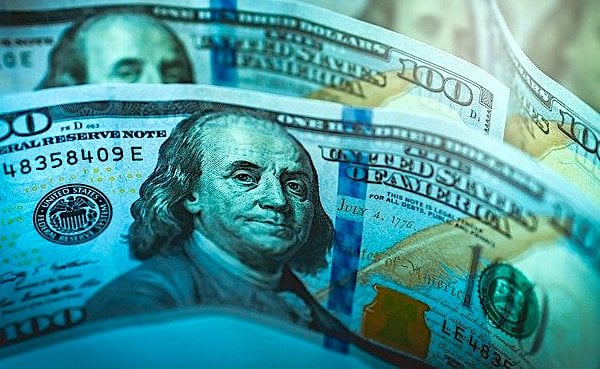
Pixabay|While federal stimulus checks ended several years ago, some states have continued to provide assistance to residents in the form of tax rebates or so-called “inflation relief” payments.
In context of such payments, the Internal Revenue Service (IRS) issued clarification earlier this year that most relief checks issued by states last year aren’t subject to federal taxes and so for the most part don’t need to be reported on 2022 tax returns.
Here’s a look at what states are offering in terms of such payments in 2023, including eligibility criteria, delivery timelines, and amounts of money either already paid out—or still coming.
Alabama
Starting in the fall of 2023, Alabama residents will begin receiving one-time tax rebate checks. The payment amounts will be determined by the filing status reported on 2021 tax year returns.
If individuals filed as single, head of family, or married filing separately, they will receive a $150 tax rebate payment. For those who filed as married filing jointly, a $300 tax rebate payment will be issued.
Not all individuals, however, are eligible for the Alabama tax rebate. If you did not file a personal Alabama income tax return for the 2021 tax year, you will not qualify for the 2023 Alabama tax rebate check.
Furthermore, estates and trusts are ineligible to receive these payments. In addition, individuals who were claimed as dependents on a 2021 federal or Alabama state income tax return will not receive a rebate payment.
California
California’s middle-class tax refunds (MCTRs) were available to California residents who filed a 2020 tax return by Oct. 15, 2021, and met specific criteria.
These criteria included not exceeding income limits, not being claimed as a dependent on another person’s 2020 tax return, and being a California resident for at least six months in 2020.
The MCTR amount ranged from $200 to $1,050, depending on factors such as income, filing status, and dependents.
Payments were generally sent out between October 2022 and mid-January 2023, with most eligible Californians set to have received them by mid-February at the latest.
The California FTB reported that nearly 32,000,000 taxpayers and their dependents benefited from the tax refund.
Colorado
Coloradans were poised to receive “cash back” payments if they met the eligibility criteria.
In order to qualify, they must have been aged 18 or older as of Dec. 31, 2021, and they must have been residents of the state for the entirety of 2021 and filed a 2021 Colorado income tax return or applied for a Colorado property tax/rent/heat credit (PTC) rebate.
The payment amount varied based on the filing status indicated on the 2021 Colorado state tax return, with eligible single filers generally receiving $750 and eligible joint filers receiving $1,500.
The majority of Colorado cash-back payments were issued by the end of September 2022, with most payments distributed by January 31, 2023.
Georgia
Qualifying Georgia residents were eligible to receive tax rebates of up to $500.
The relief payments have been set up as a one-time tax credit, also known as a surplus tax refund, for individual taxpayers who filed state income tax returns for the tax years 2021 and 2022.
To qualify for the refund, Georgia residents needed to file their tax return by the April 18, 2023, deadline. However, if they received an IRS tax deadline extension, they have until Oct. 16, 2023, to file.
Another condition of receiving a tax rebate is that the individual must have had a tax liability for the 2021 tax year. Both Georgia residents, including part-year residents, and nonresidents of Georgia are potentially eligible to receive the refund.
The specific amount of the Georgia surplus tax refund for 2023 is determined by a person’s tax liability from the 2021 tax year.
Maine
Maine residents who met certain criteria had the opportunity to receive winter energy relief payments.
These payments were designed to assist individuals and couples with their energy costs during the winter season.
Eligibility requirements included filing a 2021 Maine personal income tax return as a full-time resident by Oct. 31, 2022, and not being claimed as a dependent on another person’s tax return.
Income limits were also considered, and payment amounts varied based on filing status.
The state began distributing payments in mid-January, and residents who did not receive a payment have been given the opportunity to contact the state tax assessor by June 30, 2023, to provide necessary documentation to prove their eligibility.
The state tax assessor has until Sept. 30, 2023, to issue relief payments to eligible individuals who contacted them before the deadline.
Montana
Montana residents can expect to receive one-time income tax rebate checks in 2023.
While the specific rebate amount is determined based on the information provided in each individual’s 2021 tax return, the potential maximum amount is $2,500.
To be eligible for a payment, only Montana taxpayers who filed a 2021 Montana full-year resident tax return will be considered.
In addition, Montana residents must have filed either a part-year or full-year 2020 state tax return. The tax rebate bill sets forth several qualifying criteria, which include the following:
Filing 2020 and 2021 Montana tax returns by the 2021 tax year deadline, unless an extension was granted.
Individuals claimed as dependents on a 2021 Montana or federal income tax return are ineligible for the payment.
To receive an income tax rebate payment, Line 20 of the Montana Form 2 must indicate an amount greater than zero.
In addition, eligible residents will also receive a property tax rebate from Montana. This rebate applies to the years 2022 and 2023, with a maximum amount of $675.
In order to qualify for the property tax rebate, individuals must have owned and utilized the property as their primary residence for at least seven months in each of those years.
Furthermore, they must have made property tax payments for both 2022 and 2023.
New Mexico
Eligible residents of New Mexico can expect to receive rebate checks of up to $1,000.
In the coming weeks, New Mexico will begin the distribution of one-time rebate checks for 2023 to eligible residents, who can anticipate receiving the rebates as early as mid-June.
The payment amount will be determined based on the filing status reported on 2021 tax returns.
No application is required for the rebates, which will be sent out automatically.
Eligible individuals have until May 31, 2024, to file their 2021 tax returns and qualify for the rebate.
If the filing status for the 2021 tax year was head of household, married filing jointly, or qualifying widow(er), a payment of $1,000 can be expected.
Single filers or those who filed as married filing separately will receive a payment of $500.
For those who filed as married filing jointly, the rebate payment will be sent to the primary taxpayer listed on the 2021 New Mexico state tax return.
Pennsylvania
Pennsylvania’s Property Tax/Rent Rebate program provides payments to eligible individuals who meet certain criteria.
They must be at least 65 years old, a widow(er) at least 50 years old, or a person with disabilities who is at least 18 years old.
In addition, there is an annual income limit, with homeowners capped at $35,000 and renters at $15,000 (with 50 percent of Social Security benefits excluded).
The specific rebate amount is determined based on income and whether the individual owns or rents their home. Eligible homeowners, including some exceptions for older adults above the age of 65 who may receive a higher amount, can generally expect rebates of up to $650.
Rebate checks were initiated in August 2022, and eligible residents had until the end of 2022 to apply for a rebate. Consequently, payments will continue into 2023.
South Carolina
To qualify for a tax rebate in South Carolina, residents must have filed a 2021 South Carolina state income tax return by Feb. 15, 2023, and have a state tax liability for the 2021 tax year.
The rebate amount can reach up to $800 and will be determined based on an eligible individual’s 2021 South Carolina income tax liability after subtracting any applicable credits.
For tax liabilities below $800, the rebate amount will match the individual filer’s tax liability. However, if the tax liability exceeds the $800 cap, the filer will receive a rebate of $800.
Eligible filers should have received a rebate check by March 31, 2023.
Virginia
To be eligible for Virginia’s one-time stimulus tax rebate, taxpayers needed to file a 2021 Virginia income tax return by Nov. 1, 2022, and have a 2021 Virginia net tax liability.
It’s worth noting that even if a taxpayer received a refund after filing their 2021 state return, they could still qualify for a rebate. The rebate amount, with a maximum of $500, was based on a filer’s 2021 Virginia tax liability.
Those who filed their state tax return by Sept. 5, 2022, and met the eligibility requirements, should have received their payment by October 31 of 2022.
However, if taxpayers filed their return between Sept. 6 and Nov. 1, 2022, their payment would arrive within four months from the date they filed, which could have been as late as February 2023.
NYC Stops Funding of Companies that Provide Special Ed Services to Yeshivos as Fraud Probe is Launched
Edited by: TJVNews.com
20 companies that provide special education services to private school students are being blocked by the New York City Department of Education amid concerns of industry fraud, according to published reports.
On Thursday, the New York Times reported that those 20 companies, which primarily serve yeshiva students, provided $60 million in special education services last year alone.
A statement released by some of the companies, accused the DOE of acting unfairly, saying that the agency’s “refusal to engage in conversation with us and restore us as providers in good standing is only harming deserving students who need special education services.”
The NYT reported that in emails sent over the past few weeks, the city education department instructed employees to block the hiring of the companies to provide special education or childcare services.
The move marks a sharp change in the city’s approach to education contracting, particularly in cases of parents of private school students with disabilities seeking city-funded services, the Times reported. While parents must go through a legal process and request that a hearing officer order the funding, the city has for years had a policy of fast-tracking approvals of most such requests. The report indicated that now, the city will challenge requests for it to pay a significant number of companies.
All of the companies that the city has stopped payment to primarily serve students in private Jewish schools, known as yeshivas, especially in the fervently religious Hasidic community, the NYT report says.
The event that spurred this dramatic modification of New York City policy as it pertains to providing financial assistance to cover the cost of special education in the city’s private schools was the arrest of Martin Handler last number. He was charged with stealing millions of dollars in public money intended to pay for early education for low-income children, the NYT reported. Handler has pleaded not guilty.
Handler is an executive at some of the city’s top-earning special education providers, the report indicated.
Officials say the 20 firms all have ties to Handler or one or more of his four co-defendants or their families, the NYT reported.
“Obviously the allegations in the indictment are very serious and New York City Public Schools is taking a close look at the issues they raise,” said Nathaniel Styer, a spokesman for the city education department, in a statement.
The indictment, and the ensuing city order, followed a New York Times article in December that revealed that many special education providers in the Orthodox Jewish and Hasidic communities had received a windfall of taxpayer money in recent years for services that were sometimes not needed, or even provided, the NYT said. In response to the article, city officials say they are scrutinizing requests more closely.
The Times had reported in September that scores of Hasidic boys’ yeshivas across Brooklyn and the lower Hudson Valley have collected about $1 billion in taxpayer money in recent years while failing to provide their students with a basic secular education.
Last month, the state education department told Mayor Eric Adams’s administration that by June it must complete a long-delayed investigation into the quality of secular education at more than two dozen Hasidic yeshivas in Brooklyn. The order, signed by state education commissioner Betty Rosa, is the latest signal that the state is ramping up pressure on the city to improve yeshiva education, the Times reported. Last fall, Ms. Rosa ruled that one Brooklyn yeshiva was violating a state law requiring private schools to provide basic English and math instruction. That ruling was overturned an earlier determination by the city that the school was in compliance, the NYT reported.
The criminal case against Handler and his co-defendants could take months to work its way through the court system. According to an indictment unsealed last month in Federal District Court in Manhattan, he stole money through child care firms, some of them secretly owned, including by creating what prosecutors called a “fake after-school program” and billing for services that he never provided. FOX News reported that Handler used the money to dole out no-show jobs, buy real estate and purchase an array of historical religious artifacts at auctions, prosecutors said.
The NYT reported that firms cut off by the city included two that are linked to Handler in public records: Special Education Associates and Kids Domain Childcare Centers. Both companies are operated out of the same building in Borough Park, Brooklyn, as are Handler’s child care businesses.
But also shut out from city business were other firms, including a large company called Special Edge, which received nearly $30 million last year to provide special education in private schools, mostly yeshivas, the NYT reported.
In a statement, representatives of Special Edge and another education company, Evalcare, said none of the indicted men had ever had an ownership interest, officer position or management role in either firm, and had never been employed by Special Edge, the NYT reported.
The city’s “refusal to engage in conversation with us and restore Special Edge and EvalCare Inc. as providers in good standing is only harming deserving students who need special education services,” the statement said.