






























Authored by Aldgra Fredly via The Epoch Times,
Mexico said Tuesday it would temporarily suspend imports of certain live animals from the United States following the detection of multiple cases of the flesh-eating New World screwworm in Texas and New Mexico.
The decision was made in coordination with the U.S. Department of Agriculture (USDA) and covers imports of cattle, ruminants, pigs, sheep, goats, songbirds, and ferrets, according to Mexico’s agriculture ministry.
The ministry said health authorities, including the USDA’s Animal and Plant Health Inspection Services, also agreed to strengthen health inspections of imported pet dogs at Mexico’s points of entry and assess additional measures to verify their health status.
The measures were intended to protect livestock in the northern states of Mexico, particularly in Baja California, Baja California Sur, Chihuahua, Sinaloa, and Sonora, where no screwworm cases have been recorded, it stated.
The ministry said health officials from both nations would continue to exchange information “in order to identify goods that do not pose a health risk and to establish the measures and conditions that will allow, in due course, the orderly and safe resumption of bilateral trade.”
The USDA said in a notice on its website, updated on June 8, that the suspension of live animal exports will take effect immediately “until we have further information from Mexico.”
Five screwworm cases have been confirmed in the United States, with the latest being reported in La Salle County, Texas, on June 9. The USDA said it is working with state partners in Texas and New Mexico to lead “an aggressive response” to the pest.
Among the confirmed cases was one involving a dog in New Mexico, the state’s first New World screwworm case. The veterinarian who reported the case was based in Texas, but the dog resides at a household in Lea County, New Mexico, according to the agency.
Affecting Humans
According to the Centers for Disease Control (CDC), at least seven people have died from screwworm infections in Central America and Mexico as of Jan. 20.
This month, the CDC reported more than 185,000 cumulative animal cases in the same geographic areas, and more than 2,100 cases in people.
In the United States, one human case was reported at a Maryland hospital last August after a person returned from a visit to El Salvador.
To eradicate the spread of screwworms, the USDA said it has established a 20-kilometer quarantine zone with movement controls and heightened surveillance around confirmed detections. The agency is also releasing sterile flies in and around the infestation area.
Texas Gov. Greg Abbott last week ordered the mobilization of all state personnel, including those from Texas’s University Systems, to accelerate the shipment of sterile flies into Texas and the construction of a sterile fly production facility in Edinburg.
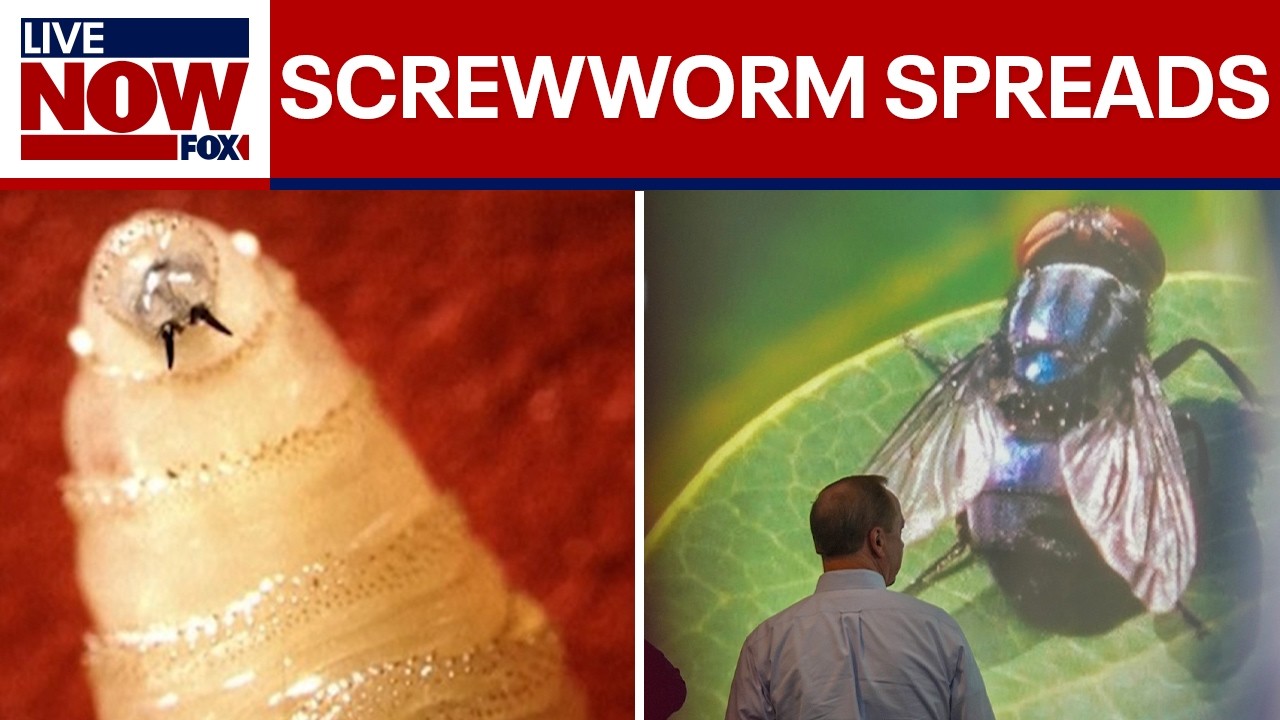
New World screwworms are flesh-eating parasites that infect livestock, wildlife, and, in rarer cases, humans. Screwworm fly maggots burrow into the living tissue of animals, causing severe wounds that can be fatal.
Signs and symptoms of screwworm infestations include irritated behavior, head shaking, a decaying odor, and the presence of maggots, or fly larvae, in wounds, according to the USDA.


