



|
Getting your Trinity Audio player ready...
|
By: Fern Sidman
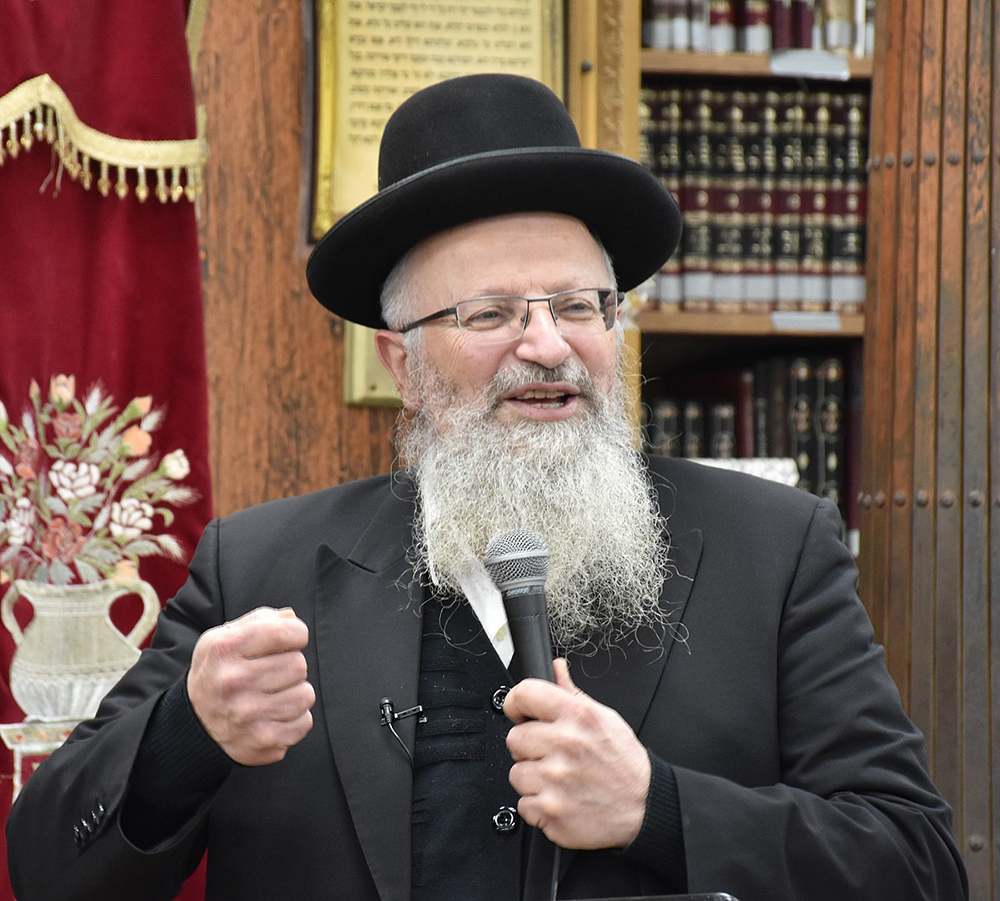
In the aftermath of a seismic shift in the Middle East’s political landscape—the confirmed elimination of Iran’s Supreme Leader Ayatollah Ali Khamenei—Rabbi Shmuel Eliyahu, the Chief Rabbi of Safed, has called on the Jewish public to increase expressions of thanksgiving and praise to the Almighty while simultaneously embracing sobriety, fasting and communal responsibility.
According to a report that appeared on Sunday at Israel National News, Rabbi Eliyahu stated that in light of the dramatic developments, the customary recitation of Tachanun—the penitential supplication included in weekday prayer services—should be suspended. “In my opinion, Tachanun should not be recited today at Shacharit and Mincha,” he said. “I recited the Hallel psalms.” The decision to substitute penitence with Hallel, the series of psalms traditionally recited in praise and thanksgiving on joyous occasions, signals his view that the elimination of Iran’s top leadership constitutes a moment of national deliverance.
The rabbi’s remarks come as Iranian authorities confirmed overnight that Khamenei had been killed in a joint American and Israeli operation. Israel National News reported that Iranian state media described the event in reverential language, declaring, “The Supreme Leader of the Islamic Republic died in holiness,” and attributing his death to what it called a “combined attack by criminal America and the Zionist regime.” The statement further framed Khamenei as a martyr who had “sacrificed his life for the exaltation of Iran and Islam.”
Subsequent confirmations indicated that Khamenei was not the only senior figure eliminated. Israel National News reported that Ali Shamkhani, head of the Supreme National Security Council, and Mohammad Pakpour, commander of the Islamic Revolutionary Guard Corps, were also killed. The removal of these three figures represents a profound disruption to Iran’s political and military command structure.
Within Iran, transitional arrangements were announced swiftly. Israel National News cited reports that Khamenei’s role would temporarily be filled by a triumvirate consisting of President Mahmoud Pezeshkian, Judiciary Chief Gholam-Hossein Mohseni-Eje’i, and a senior judge from the Guardian Council. This provisional configuration underscores the urgency of maintaining continuity in a system deeply centralized around the authority of the supreme leader.
Against this backdrop of geopolitical upheaval, Rabbi Eliyahu’s guidance reflects a theological interpretation of contemporary events. As reported by Israel National News, he framed the elimination of Iran’s leadership as a cause for spiritual gratitude rather than triumphalism. His call to omit Tachanun and recite Hallel situates the moment within a liturgical framework traditionally reserved for divine salvation.
Yet Rabbi Eliyahu coupled his call for praise with a sober admonition. With the festival of Purim approaching, he emphasized the importance of observing the Fast of Esther meticulously. “We fast on the Fast of Esther, and it is proper to observe this fast meticulously, as it is important for the success of the soldiers and the civilians,” he said, according to the report at Israel National News. “We must be careful and not rely on miracles.”
This dual emphasis—gratitude and vigilance—evokes the Purim narrative itself, in which the Jewish people faced annihilation at the hands of Haman, a senior official in the Persian Empire. In Jewish tradition, the Fast of Esther commemorates the communal fasting and prayer that preceded the reversal of that decree. Rabbi Eliyahu’s invocation of the fast in the context of contemporary conflict suggests a deliberate parallel between ancient and modern threats.
The Israel National News report highlighted that Rabbi Eliyahu also called for enhanced joy on Purim, particularly directed toward families who have borne the brunt of recent hostilities. “On Purim—we should rejoice doubly, especially bringing joy to the families of those who sacrificed their lives and those who were wounded physically or emotionally,” he said. This appeal underscores the communal dimension of celebration in times of national struggle.
The rabbi’s remarks reflect a broader current within segments of Israeli religious leadership that interpret geopolitical developments through a spiritual lens. The elimination of a figure long perceived in Israel as an existential adversary is viewed not merely as a military milestone but as a moment laden with theological significance.
At the same time, the caution embedded in Rabbi Eliyahu’s statement—“We must be careful and not rely on miracles”—signals an awareness of the volatility that remains. Israel National News reported that the IDF continues to reinforce ground forces and maintain heightened readiness across multiple fronts. The removal of Iran’s supreme leader, while symbolically powerful, does not eliminate the broader strategic challenges posed by Iran’s military infrastructure and regional alliances.
Within Iran, the official portrayal of Khamenei as a martyr suggests that the regime may seek to consolidate internal cohesion through narratives of sacrifice and resistance. The Israel National News report noted that the language used in Iranian media emphasized sanctification and continuity, potentially foreshadowing a hardened posture in the face of external pressure.
For Israeli society, the moment is layered with complexity. Relief at the removal of a long-standing adversary coexists with uncertainty about succession dynamics and the potential for retaliation. Rabbi Eliyahu’s call for increased thanksgiving can thus be seen as an attempt to channel communal emotion into structured religious expression.
The liturgical implications of omitting Tachanun are not trivial. In Jewish practice, Tachanun is associated with humility and supplication. Its omission is typically reserved for days marked by festivity or divine favor. By advocating its suspension, Rabbi Eliyahu effectively designates the day as one of spiritual celebration.
Israel National News has frequently documented Rabbi Eliyahu’s engagement with national and security issues. His latest statement situates contemporary events within a continuum of Jewish historical experience, drawing connections between ancient deliverance and modern defense.
The juxtaposition of Hallel and the Fast of Esther encapsulates a dialectic deeply rooted in Jewish tradition: celebration tempered by introspection. Rabbi Eliyahu’s guidance suggests that gratitude for perceived salvation must be accompanied by continued prayer and moral responsibility.
As Iran navigates a transitional leadership structure and regional tensions remain acute, the spiritual response articulated in Safed adds another dimension to the unfolding story. Israel National News reported that the rabbi’s words resonated with many who view the elimination of Khamenei as a watershed moment.
Whether the broader strategic landscape stabilizes or deteriorates remains uncertain. Yet in the synagogue halls of Safed and beyond, the recitation of Hallel and the observance of the Fast of Esther frame the moment within a narrative of providence and perseverance.
Rabbi Eliyahu’s message is at once celebratory and cautionary: give thanks for what has transpired, rejoice with those who have suffered, fast for protection and success—and remain vigilant, for history’s tides have not yet settled.

And don’t forget to recite Psalm 83.