




|
Getting your Trinity Audio player ready...
|
How the Rebbe helps us see the hand of G-d in history
By: David Margolin
The war in Iran began in spectacular fashion. Just a few weeks ago, a joint American-Israeli attack on Iran’s military capabilities and leadership was launched in the late hours of the morning, neutralizing dozens of dangerous enemies of the Jewish people and of civilization at large.
It would be an understatement to say that the repercussions, both in the short-term and in the long-term, are significant. And it is unsurprising that pundits of all persuasions have rushed to deliver an unending stream of commentary, ranging from middle-of-the road geo-political-blather to fringe-conspiracy-theories of the horseshoe variety. In this saturated media climate we instinctively view things through our chosen political lens, allowing “conventional wisdom” and the tired talking points of influencers, podcasters, statusers etc. etc. to cloud our vision of reality.
But how should we think about what has happened in the last few weeks? And where should we hope that these events will lead to?
For the long view, I look not to the various analysts of today but to the visionary insight, guidance, and leadership provided by the Rebbe, Rabbi Menachem M. Schneerson, of righteous memory. Over a period of more than 40 years, the Rebbe was highly attentive to geo-political events playing out in real time, and was amazingly consistent in his insistence that we should not allow ourselves to be duped into accepting the nihilistic presumption that “the world runs as the the world runs” (olam keminhago noheg). Rather, we must always remember that “there is a master to this place” (yesh baal habayit lebirah zu) and “give full attention to the miracles and wonders” that G‑d is orchestrating.
In the first of a series of three public letters issued at the conclusion of the 1991 Gulf War, the Rebbe wrote “These were revealed miracles, obvious miracles, not only for Jews but also for all nations, ‘seen in all the corners of the earth.’”
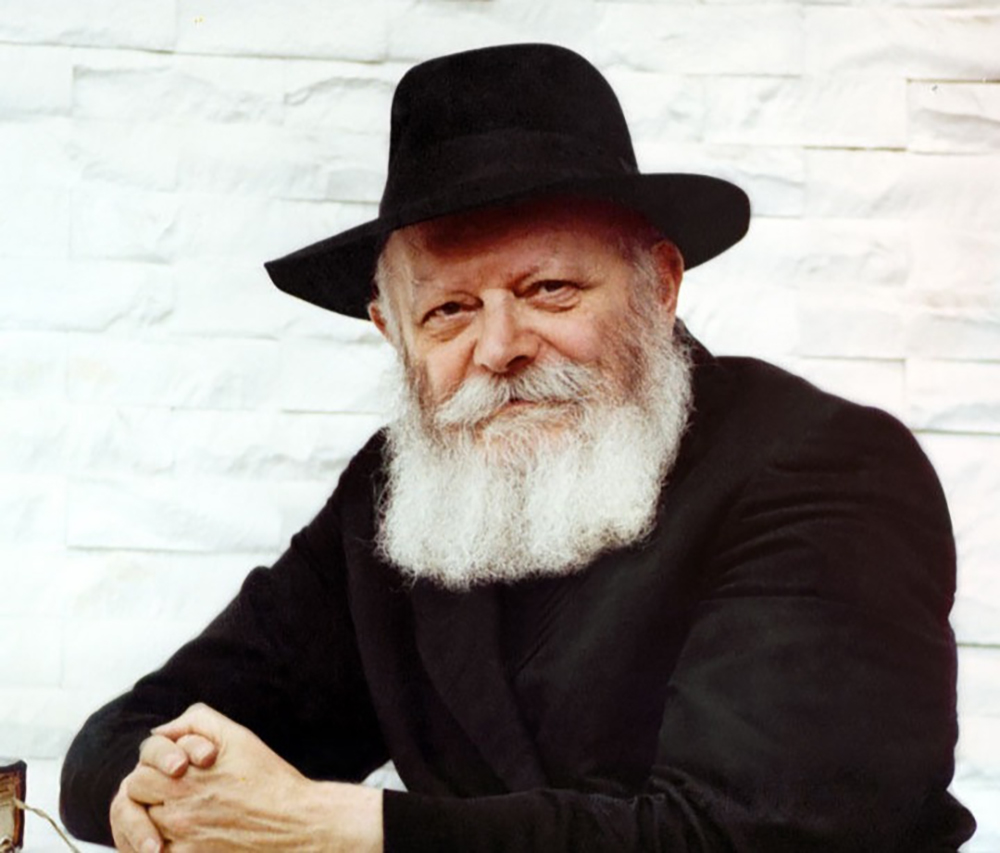
Recognizing the miracles in our lives, the Rebbe explained at the time, is especially vital as the Jewish month of Nissan begins, the month during which the Jewish people celebrate Passover and the greatest miracle of all, the Exodus from Egypt, marking their birth as a nation. Nissan is rooted in the Hebrew word nes, miracle. “Moreover, as our Sages point out, the name of the month (by its two letters nun, making it readable forward and backward) indicates a ‘multiple of miracles’ and ‘miracles within miracles,’” the Rebbe wrote then. “Thus it is certain that [G‑d] will show even greater miracles than heretofore.”1
And so, in these days between Purim and Passover, it is appropriate for us to go beyond the noise and pause, if only for a moment, and acknowledge the hand of G‑d guiding events in the Middle East, around the world and in our own lives.
Sometimes this may feel difficult, but by turning to some earlier examples of how the Rebbe addressed unfolding crises in the Middle East, perhaps we can gain some clarity about the events unfolding right now.
Mistake or Miracle?
In March 1980 the United States stunned the world by voting for United Nations Security Council Resolution 465. The leader of the Free World joined China, the Soviet Union and East Germany, among other anti-colonial luminaries, in demanding that Israel dismantle all Jewish settlements in parts of the Land of Israel re-captured in the 1967 Six Day War, including the ancient Jewish capital of Jerusalem. The U.S. said at the time that it was the Israeli government’s decision to allow Jews to live in Hebron—home to the Cave of Machpelah purchased by Abraham, the first seat of King David’s throne, and centuries of flourishing Jewish life halted only by the 1929 Hebron Massacre—that had spurred it to condemn Israel so blatantly.
Naturally, the Arabs and Europeans were thrilled. So was the State Department. “We finally came out of the closet on this one,” an unnamed diplomat gushed. “Carter’s got guts—he’s putting the pressure on the Israelis.” That the UN had condemned the Jews for being so brazen as to live on their own historic homeland was of course not in itself noteworthy. That the U.S. had thrown its lot in with what Daniel Patrick Moynihan had a few years earlier called “the tyranny of the UN’s ‘new majority’” was.
“The occasion was indeed historic,” Time explained. “For the first time, the U.S. had supported a Security Council resolution criticizing Israel.
“Or had it?”2
The UN vote had originally been scheduled for Friday, February 29. U.S. Ambassador Donald McHenry got it pushed off to the next day, Saturday, March 1. By Monday, March 3, 1980, the White House was in full-blown panic mode. Here’s how the New York Times reported what happened next: “President Carter, in an extraordinary statement released by the White House late tonight, said that the United States vote against Israel in the United Nations Security Council on Saturday was in error and had resulted from a failure of communications within his Administration about his instructions. The statement was issued at 10 P.M.”3
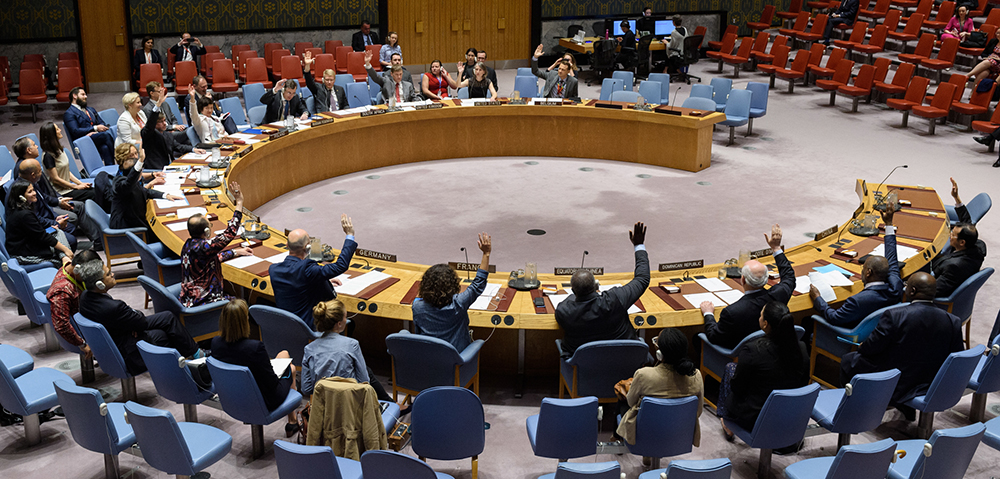
Recriminations followed. There had been a breakdown in communication between Carter, Secretary of State Cyrus Vance and Ambassador McHenry. Vance had told the president that all his edits had been incorporated in the final text, with Carter then approving a “yes” vote without reading the document. Carter was livid. There were calls on him to fire McHenry and Vance, who issued a statement taking “full responsibility for what happened.” This was all also taking place in the midst of Carter’s bruising primary race against Sen. Ted Kennedy, who called the U.S.’s vote “shameful.” While certainly an unusual turn of events, Kennedy’s victory in the New York State Democratic primary a few weeks later would indicate this was all politics-as-usual.
But the Rebbe did not see it that way.
“In these days an open miracle has occurred …,” the Rebbe pointed out a week after the UN vote. “It began on 13 Adar, the day [the Jews were granted the right] ‘to assemble and to protect themselves’ [in ancient Persia],4 and concluded on Shushan Purim.”5
Let’s recall the scheduling of the vote. In order to work on the language of the draft resolution, McHenry had successfully gotten the UN vote pushed off until March 1. That was Shabbat, 13 Adar on the Jewish calendar. Anti-Jewish plots accidentally incorporating notable dates on the Jewish calendar, especially in the month of Adar, is a recurring theme in Jewish history, whether Haman’s lottery in ancient Persia or, as it turned out, the UN vote in New York. Chabad.org’s Today in Jewish History explains the significance of the date: “On the 13th of Adar of the year 3405 from creation (356 BCE), battles were fought throughout the Persian Empire between the Jews and those seeking to kill them in accordance with the decree issued by King Achashveirosh 11 months earlier.” The Fast of Esther usually takes place on 13 Adar, but in 1980 it was held two days earlier because it fell out that year on Shabbat.6
It was also the Shabbat before Purim, Shabbat Zachor. That is the Shabbat preceding Purim, when Jews read in the Torah the exhortation to remember the evil Amalek did to them in the desert. Jews around the world celebrated Purim the next day, Sunday. Everyone, that is, but the Jews of Jerusalem—a walled city since the days of Joshua—where the holiday was marked one day after that, what’s known as Shushan Purim, that year a Monday. Monday was that busy day in Washington, when a confused and spinning White House issued what Time called its “astounding” statement walking back its “historic” vote.
The Rebbe explained (free translation):
On this past Shabbat, 13 Adar, the United States voted in favor of a decree that is against the Jews, a choice that everyone agrees is impossible to understand, for the U.S. surely knew that this decree would cause a storm and they would regret it. Nevertheless, the President of the United States voted in favor of it. Even according to the commentators who explain it as having been the result of a breakdown in communication, this itself is beyond (or beneath) the natural order of things ….
The Rebbe had on numerous occasions faulted Israel’s political leaders for the pressure they received from the U.S. and the international community. It was they who, rather than standing up and declaring with conviction that the Land of Israel belongs to the Jewish people, and that Jews have an inalienable right to live in its entirety, had equivocated and in doing so communicated their lack of certitude to friends and enemies alike.7
Conversation at the time surrounded the status of Hebron: Israel had recaptured the ancient Davidic capital more than a decade earlier. Why had Israeli leaders been so scared to allow Jews to return to their homes, to once again live in one of Judaism’s four holy cities? “In truth,” the Rebbe said on the Purim day between the vote and its withdrawal, “Jews ought to have the right to settle in Rabbat Ammon [Amman], Alexandria and Baghdad, like anyone else in the world. But here we are speaking about Hebron, which is under Jewish control and has belonged to Jews from time immemorial!”8
If that was what happened when Jews stood meekly on the world stage, then in the days following the UN vote and Carter’s stunning reversal the Rebbe pointed out the power of its opposite, conviction. Israel had with one voice slammed the motion as both “repugnant and unjustified” and “barbaric.”9 The central lesson of Purim, the Rebbe reiterated that Shabbat, was that the Jewish leader Mordechai “would neither kneel nor prostrate himself.”10 It was for this reason that “these days of Purim shall not be revoked from amidst the Jews, and their memory shall not cease from their descendents.”11 The Book of Esther was not ancient history but provided lessons for day-to-day life.
It was not an accident that the initial vote had occurred on 13 Adar, the Rebbe pointed out. On this date, back in ancient Persia, no one yet knew what would result from the great battle between the Jewish people and their enemies. The same was true as far as the UN vote went. But since the Jewish people had chosen to stand up for themselves, like Mordechai of old refusing to “kneel nor prostrate” themselves and instead declaring with unified conviction that the resolution was an utter sham, a miracle had occurred. “Indeed, on the 15 Adar [Shushan Purim] the leader of this country expressed regret for how he had voted, and this was publicized for all to see and in all ‘127 provinces.’”
The story of Purim, the Rebbe continued, was playing out right before our eyes. “One does not need to even open the Megillah in order to know its miracles,” he said. “He can just open the newspapers and see all of the miracles of the Megillah written in the language of the land!”
On the day after Carter’s dramatic withdrawal of his administration’s vote at the UN, the Rebbe wrote a letter to Joseph Ciechanover, director general of Israel’s ministry of foreign affairs. While the reversal was “an unprecedented event in U.S. history,” he noted, it was nevertheless “only verbal (without any practical import.) In reality, [Israel’s security] depends on the true strength of ‘the nation dwelling in Jerusalem,’12 and on a great miracle from Heaven (even greater than all the miracles noted above.)”13 – Chabad.org
(To Be Continued)
