



|
Getting your Trinity Audio player ready...
|
1. It Happened Six Years After the Six-Day War
In June 1967, Israel fought the Six-Day War against Egypt, Syria, and Jordan. In just six days, Israel achieved a stunning victory, gaining control of the Sinai Peninsula, the Golan Heights, and other key territories. But that victory also left its neighbors humiliated and determined to strike back. Just six years later, in 1973, Egypt and Syria launched another war, hoping to regain lost territory and destroy Israel.
Read: The Yom Kippur War
2. The Rebbe Harnessed the Power of Jewish Children
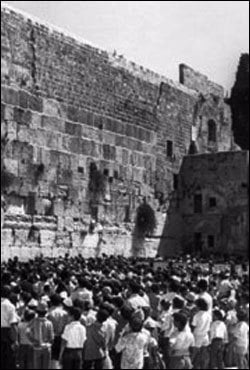
In the months before the war, the Lubavitcher Rebbe preempted the upcoming danger by launching a special campaign. Quoting the verse from Psalms, “From the mouths of babies and sucklings You have established might, to destroy the enemy and the avenger,”2 the Rebbe urged Jewish children to gather to pray and give charity for the protection of the Jewish people.3 Thousands of children joined together at the Western Wall and in cities around the world. The message was clear: Jewish survival depends not only on tanks and fighter jets, but also on spiritual strength—and that strength lies in the hands of young boys and girls.
3. The Military Was Warned Not to Strike First
In the weeks before the war, Israel picked up many signals that Egypt and Syria were preparing to attack—even King Hussein of Jordan warned them. But the government, led by Prime Minister Golda Meir, made the fateful decision not to act. Israel didn’t even call up enough reserve soldiers in advance, fearing the world would accuse them of starting the war. As the Rebbe later emphasized, this was one of the greatest mistakes of the war.4
4. Reservists Interrupted Their Prayers on the Holiest Day of the Year
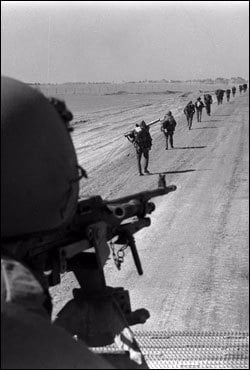
On the afternoon of Yom Kippur, 5734 (1973), while Jews across Israel were fasting and praying in the synagogue, Egypt and Syria struck from the south and the north. Tens of thousands of reservists suddenly had to leave mid-prayer, pulling off their tallits and kittels to rush to the battlefield.
5. The Bar Lev Line Was Futile
After the Six-Day War, Israel built a strong defensive system along the newly-conquered Suez Canal called the Bar Lev Line, which many believed was impenetrable. For years, the Rebbe had warned about the futility of this line of defense. He compared it to the Maginot Line in France during World War II, which failed to stop the Germans, and pointed out that advances in warfare had rendered it obsolete.5
Unfortunately, his warnings went unheeded. When the war began, Egyptian forces stormed across the Bar Lev Line with surprising ease, giving them open access to the Sinai Desert.
Read: Sage and Strategist
6. It Lasted for Twenty-One Days
The Yom Kippur War raged from October 6 to October 26, 1973. At first, Israel suffered devastating losses and seemed on the brink of collapse. But within days, the tide turned. The IDF regrouped, pushed the enemy back, and even advanced toward Cairo and Damascus.
7. Israel Suffered Tremendous Casualties …
Victory came at a very heavy price. More than 2,500 Israeli soldiers were killed, over 7,000 were wounded, and 440 were taken prisoner. Beyond the casualties, the war left the nation shaken—the euphoria and pride felt after the Six-Day War now replaced by grief and disappointment.
Watch: The Six-Day War
8. … But There Were Also Miracles
At the same time, the war was full of miracles. As the Rebbe pointed out, in those first terrifying days, there was nothing to stop the Syrians from crossing the Jordan River or the Egyptians from overrunning the Sinai, with open access to Israel’s cities. Yet, for reasons no one could explain, they stopped.6 The turnaround from near defeat to total victory was perhaps the greatest miracle in all of Israeli military history.
9. The “Valley of Tears” Was a Modern Chanukah Miracle
While Syrian forces quickly advanced across the southern Golan Heights, in the northern Golan Heights the story was very different. Despite being greatly outnumbered, Israeli forces stood their ground, inflicting significant losses on the enemy. After four grueling days, just when Israel’s defense was about to collapse, the Syrians suddenly retreated. That battlefield became known as the “Valley of Tears,” remembered as a modern-day miracle of “many in the hands of the few.”
10. The Suez Crossing Turned the Tide
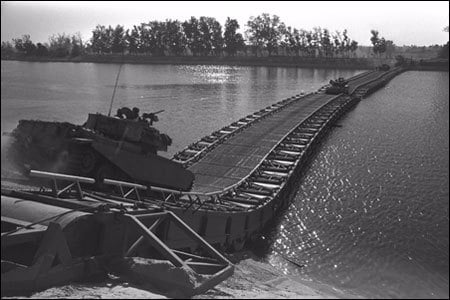
The southern front saw miracles of its own. The Egyptians had already crossed the Suez Canal, but oddly, their Second and Third Armies left a small gap between them. Taking an enormous risk, Israeli forces recrossed the canal through that gap, attacking the Egyptians from behind. This daring move shifted the momentum of the war and eventually led to Egypt’s defeat.
11. Soldiers Demanded a Spiritual Boost

After the war, the army brought comedians and entertainers to cheer up soldiers. But the soldiers wanted something deeper, longing for spiritual meaning to fill their inner void. To meet this need, the Rebbe sent his chassidim in Israel to distribute tefillin, prayerbooks, Psalms, and charity boxes—giving the soldiers the spiritual boost they so desperately needed.7
12. War Widows Faced Tremendous Challenges
The war left behind hundreds of widows and orphans. Life was incredibly hard for them in the years that followed. Chabad stepped in to offer comfort and support, organizing visits, holiday gatherings, trips, and Passover Seders. They even arranged mass bar mitzvahs for boys who had lost their fathers in battle, helping them feel remembered on their special day.
