



|
Getting your Trinity Audio player ready...
|
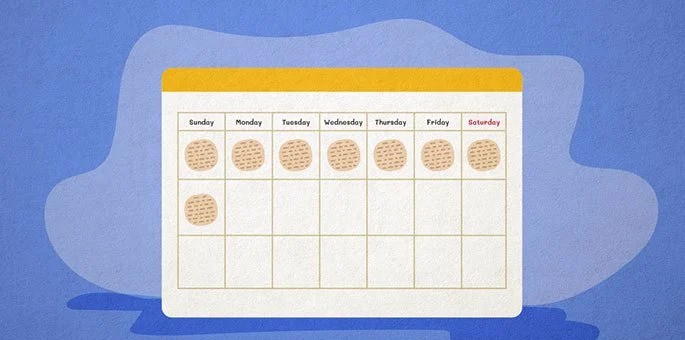
(Chabad.org) A person has an obligation to eat matzah on the first two nights of Passover (or just the first night in Israel). But what about the rest of Passover? Aside from Shabbat and holiday meals, when one must make the Hamotzi blessing,1 do we have any obligation to eat matzah?
Reply
The Torah tells us, “For seven days, you shall eat unleavened bread . . .”2 which seems to indicate that it is an obligation to eat matzah every day of Passover. However, another verse explicitly states, “On that evening, you shall eat unleavened bread,”3 referring only to the first night(s) of Passover. The Talmud reconciles these two verses based on a third verse, “You shall eat unleavened bread for six days and on the seventh day there shall be a convocation,”4 explaining that it is obligatory to eat matzah on the first night(s), whereas for the rest of Passover, it’s optional. So why does the first verse say that “you shall eat unleavened bread” for all seven days of Passover? Because if one would want bread-like food, he would need to eat matzah, given that chametz is prohibited.5
Now, there are some authorities who are of the opinion that when the Talmud says matzah is “optional,” it’s only relative to the first nights of Passover. There is still a biblical mitzvah to eat matzah the rest of Passover, it’s just not as obligatory as the first night.6
Most authorities,7 however, including Rabbi Schneur Zalman of Liadi in his Code of Jewish Law,8 are of the opinion that there is no obligation to eat matzah on the other days of Passover.
Still a Mitzvah to Eat
However, the Chassidic masters write that there is still “a bit” of a mitzvah to specifically eat matzah every day of Passover.9 The Lubavitcher Rebbe explains that this is especially true on the last day(s) of Passover.
According to the Kabbalists, eating matzah on the first days of Passover strengthens one’s faith. However, eating the matzah then is obligatory; eating on the last day(s), when it is optional, strengthens one’s faith even more. Since we learn specifically from the verse regarding the seventh day that it is optional to eat matzah on the last days (“You shall eat unleavened bread for six days and on the seventh day there shall be a convocation”), the seventh (and eighth) day is especially tied to the concept that the matzah is optional.10
Thus, although there is no obligation to eat matzah the rest of Passover, one should still endeavor to do so.
May we all merit a happy, kosher and healthy Passover!
See Shulchan Aruch Harav 475:32 that although in theory one would have been able to use “rich matzah,” i.e., matzah made with fruit juice for those meals, the custom is not to eat “rich matzah” on Passover; thus, one would need to use regular matzah for hamotzi at those meals.
Talmud, Pesachim 120a.
Gra, Maase Rav 185.
See, for example, Magen Avraham, Shulchan Aruch, Orach Chaim 639:11.
Shulchan Aruch Harav 475:32.
See Biurei Zohar of the Tzemach Tzedek, p. 96; Sefer HaMaamarim 5668, p. 171.
See Likkutei Sichot, vol. 7, p. 275; vol. 22, p. 33.
