



|
Getting your Trinity Audio player ready...
|
1. It Tells a Story of Palace Intrigue
Set in ancient Persia in the 4th century BCE, the Book of Esther recounts the dramatic events that led to the Jewish people’s salvation from the plot of the wicked Haman. With suspense, intrigue, and divine providence woven throughout, it’s no wonder this story continues to captivate us more than 2,000 years later.
2. It’s Read on Purim—Twice
One of the four primary mitzvahs of the Purim holiday is hearing the Megillah, preferably in the synagogue. We read it twice—once at night and again during the day. In true Purim spirit, the atmosphere is filled with excitement and joy as we listen carefully and absorb its timeless messages.
Read: 15 Facts About Purim
3. We Boo Haman’s Name
One of Purim’s exciting customs is making noise when Haman’s name is mentioned in the Megillah. People stomp, bang, and shake graggers (noisemakers) to symbolically “erase” his name. Kids especially love this part—it’s not every day they are encouraged to make noise in the synagogue! Just remember to keep quiet when the reader continues reading, allowing everyone to hear every word.
4. It’s Written on Parchment With Ink
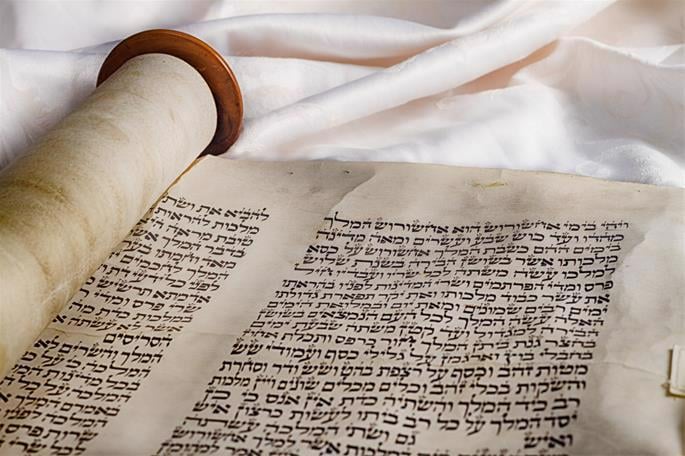
While you can find the Megillah in printed format, the official Purim reading must come from a scroll handwritten by a trained scribe. Using ink on parchment, the scribe follows strict guidelines, similar to those for writing Torah scrolls, tefillin, and mezuzot.
Read: The Scribe and His Work
5. It’s One of the 24 Books of Scripture
Queen Esther and Mordechai recorded the Purim story shortly after it occurred.1 Initially, however, their manuscript was simply a historical record, lacking the holiness of biblical texts. Only later, after Queen Esther petitioned for it,2 did the “Men of the Great Assembly” rewrite the story3 with divine inspiration, giving it the holiness of Scripture.
6. We Say Blessings Before and After Reading It
Before the first Megillah reading, we recite three blessings: one for the special mitzvah of reading it, one thanking G‑d for the miracles of Purim, and one expressing gratitude for reaching this joyous occasion. For the second reading, only the first two blessings are said.
Read: Blessings for Reading the Megillah
After reading with a minyan, we add an extra blessing. This is followed by the festive singing of Shoshanat Yaakov, a song that celebrates the Jewish people’s victory over Haman.
Listen: Shoshanat Yaakov
7. It Has Persian Words
Although the Book of Esther is written in Hebrew, it contains some unique Persian words found nowhere else in the Bible. Examples include achashdarpenim (satraps or governors)4 and achastranim (camels).5 Even the name Purim comes from a Persian word meaning “lots,” referring to the lottery Haman used to select the date for his evil plan.6 The names of several Hebrew months are also exclusive to the Megillah, such as Nissan, Tevet, and—you guessed it—Adar.7
Fun fact: The longest word in all of Scripture appears in the Megillah—veha’achashdarpenim (“and the satraps”), comprising 10 Hebrew letters (והאחשדרפנים).8
Read: The Pur of Purim
8. Some Megillahs Enlarge Haman’s Sons
When listing the names of Haman’s 10 sons in the Megillah, some scribes write them in oversized letters, filling an entire column. Others keep them the same size as the rest of the text.9
A beautiful custom in some scrolls is that the writing is spaced so that every column begins with the word hamelech (“the king”). While in the simple reading of the narrative it refers to King Ahasuerus, it also alludes to the true King of kings—G‑d—who orchestrated the entire Purim story from behind the scenes.
9. Some Are Unraveled, Others Are Folded
Megillahs come in different formats. Some are wound around a central dowel and unraveled as the reading progresses. Others are removed from a case and folded in three sections, resembling a long letter.10 This reflects the Megillah’s original form—it was first written as a letter to be sent to Jews throughout the Persian Empire.11
10. It’s Named After a Woman
The Book of Esther is one of only two biblical texts named after women. (The other is the Book of Ruth.) While Mordechai played a crucial role in the Purim story, it was Esther who put her life on the line to intercede on her nation’s behalf.12
11. G‑d’s Name Isn’t Mentioned
One of the most remarkable things about the Megillah is that G‑d’s name isn’t mentioned—not even once! But that doesn’t mean He wasn’t there. Quite the opposite—every twist and turn in the story is a hidden miracle, showing how G‑d works behind the scenes to guide history. This is one of Purim’s most profound messages: even when G‑d’s presence is not readily apparent, He is always with us, leading us by the hand through every step of life.13
12. It Is One of Five
“Megillah” is the term for a scroll devoted to a single topic or story.14 Besides the Book of Esther, four other books are called megillot in the Bible. They are:
- Eichah (Lamentations), read on Tishah B’Av
- Shir Hashirim (Song of Songs), read by some on Passover
- Ruth, read on Shavuot
- Kohelet (Ecclesiastes), read by some on Sukkot
While reading these other megillahs is a custom, reading the Book of Esther on Purim is an actual mitzvah.
Study the Megillah with in-depth commentary
13. The Purim Story Is as Relevant as Ever
Although the events of Megillat Esther took place over 2,300 years ago, its lessons are timeless. When you hear the Megillah this Purim, don’t just listen to it as an old story—see it as something happening today. Its powerful themes and eternal messages continue to illuminate and guide our lives.
So on Purim night, and again on Purim morning, head to your local synagogue and experience the Megillah along with the other mitzvahs of the day. Have a happy Purim!
Read: How to Celebrate Purim
