



|
Getting your Trinity Audio player ready...
|
By: Fern Sidman
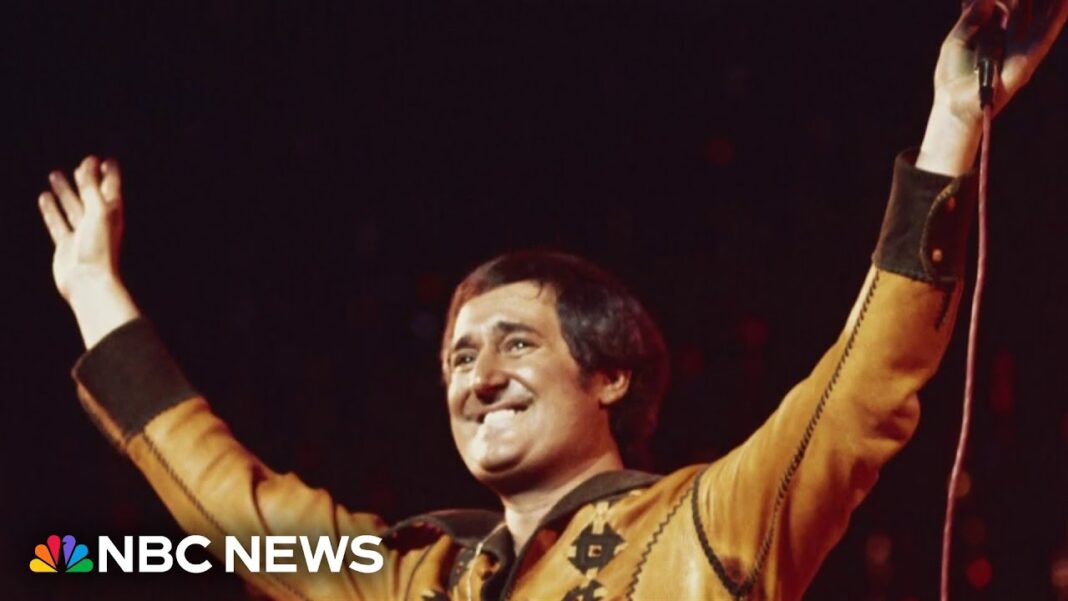
Neil Sedaka, the Brooklyn-born singer-songwriter whose indelible melodies helped define the golden age of American pop and whose career spanned more than six decades, has died suddenly at the age of 86. His family confirmed the news Friday in a statement that described him as both a “true rock and roll legend” and an “incredible human being.” As reported on Friday by The New York Daily News, Sedaka was taken by ambulance to a Los Angeles-area hospital Friday morning after feeling unwell. He died shortly thereafter. The cause of death has not yet been disclosed.
“Our family is devastated by the sudden passing of our beloved husband, father and grandfather, Neil Sedaka,” his family wrote in a message shared publicly. The New York Daily News reported that the announcement quickly reverberated across social media and music circles, where tributes poured in for an artist whose songs have endured across generations.
Sedaka’s catalog reads like a compendium of mid-20th century pop history. His signature hits — “Oh! Carol,” “Breaking Up Is Hard to Do,” and “Laughter in the Rain” — remain staples of radio playlists and nostalgic retrospectives. His 1976 album Steppin’ Out, a key milestone in his career resurgence, is scheduled to be re-released on April 10 to mark its 50th anniversary, a poignant coda to a life devoted to melody.
Just days before his death, Sedaka had shared a video of himself at the piano, singing and promoting the forthcoming anniversary release. “Good Times, Good Music, and Good Friends — that’s always been my philosophy!” he wrote, invoking the title of the song he performed. The New York Daily News report noted that the message reflected the spirit that defined his career: an unwavering commitment to joy, harmony and connection.
Sedaka was born on March 13, 1939. His father, Mordechai “Mac” Sedaka, earned his living as a taxi driver and was of Lebanese Jewish heritage. Sedaka’s paternal grandparents had emigrated to the United States from Istanbul in 1910, seeking new opportunities in America. His mother, Eleanor (née Appel), came from an Ashkenazi Jewish background with roots in Poland and Russia. He was raised in the vibrant seaside neighborhood of Brighton Beach in Brooklyn.
Sedaka displayed prodigious musical talent at an early age. He earned a piano scholarship to Juilliard’s Preparatory Division for Children, where his classical training laid the technical foundation for the pop compositions that would later make him famous. Though his mother initially hoped he would pursue a career as a classical pianist, she relented after the commercial success of his early songwriting endeavors. As The New York Daily News report recounted, a five-figure royalty check from 1960’s “Calendar Girl” provided persuasive evidence that pop music could offer both artistic fulfillment and financial stability.
After graduating from Abraham Lincoln High School, Sedaka joined classmates to form a band called the Linc-Tones. The group enjoyed modest regional success before Sedaka embarked on a solo career in 1957. The Linc-Tones, later renamed the Tokens, would go on to achieve hits of their own, but Sedaka’s departure marked the beginning of his individual ascent.
His early solo singles met with mixed commercial results. “Laura Lee,” “Ring-a-Rockin’,” and “Oh, Delilah!” failed to chart significantly, though “Ring-a-Rockin’” secured him appearances on Dick Clark’s American Bandstand. Recognizing his promise, RCA Victor signed him to a recording contract. His first major breakthrough came with “The Diary,” inspired by a moment shared with Connie Francis. The song climbed to No. 14 on the Billboard Hot 100 in 1958.
The trajectory was not without peril. Subsequent releases underperformed, and RCA reportedly considered dropping him. As The New York Daily News report detailed, Sedaka and his manager persuaded executives to grant him one final opportunity. Sedaka studied the prevailing hits of the day, analyzing structure and harmony before crafting what would become his breakthrough.
“Oh! Carol” delivered precisely the success he needed. The song reached No. 9 on the U.S. charts in 1959 and soared internationally, topping charts in Italy and Japan. Its playful origin — inspired by Sedaka’s high school acquaintance Carole King — added a personal dimension to its commercial triumph. The B-side, “One Way Ticket,” further cemented his global appeal.
The 1960s and 1970s saw Sedaka navigating the shifting tides of popular music. As rock and soul transformed the American soundscape, he continued writing, performing and adapting. His resurgence in the mid-1970s owed much to an unexpected champion: Elton John. The New York Daily News chronicled how the two met in London in 1973, leading to Sedaka’s signing with John’s Rocket Record Company.
John later described himself as a lifelong admirer of Sedaka’s work. Their collaboration facilitated Sedaka’s return to prominence in the United States, culminating in renewed chart success. Though the partnership eventually dissolved, Sedaka consistently credited John with revitalizing his American career.
Sedaka’s songwriting was marked by melodic clarity and emotional accessibility. “Breaking Up Is Hard to Do,” first released in 1962 and re-recorded in a slower arrangement a decade later, demonstrated his capacity to reinterpret his own work across eras. “Laughter in the Rain,” a lush ballad from the 1970s, showcased his evolution as a composer attuned to contemporary sensibilities.
His cultural influences were eclectic. In a 2022 interview, Sedaka reflected on growing up in Brighton Beach, a neighborhood that produced an extraordinary array of musical talent, including Carole King, Barbra Streisand and Neil Diamond. “I think there was something in the egg cream,” he joked, suggesting that the neighborhood’s vibrant creative environment nurtured an unusual concentration of artistry.
Sedaka’s linguistic versatility further underscored his international appeal. He recorded songs in Spanish, German, Hebrew, Japanese and French, and even released a Yiddish-language album, Brighton Beach Memories – Neil Sedaka Sings Yiddish. The New York Daily News report observed that such ventures reflected both personal heritage and global ambition.
Recognition followed his sustained contributions. Inducted into the Songwriters Hall of Fame in 1983, he later received the prestigious Sammy Cahn Lifetime Achievement Award. He was honored with a star on the Hollywood Walk of Fame and, in 2006, was inducted into the Long Island Music Hall of Fame.
Even in later years, Sedaka remained artistically active. During the COVID-19 lockdown, he embraced digital platforms, performing 15-minute concerts online that attracted longtime admirers and new listeners alike. The New York Daily News report noted that these virtual performances reaffirmed his enduring connection to audiences across generations.
In interviews prior to his death, Sedaka often spoke of music as a form of immortality. “Songs I wrote 50, 60 years ago I hear on the radio today,” he reflected. “So it’s a form of immortality.” He expressed pride in the notion that his compositions would outlive him, continuing to resonate long after their creator’s passing.
Sedaka is survived by his wife, Leba Strassberg, whom he married in 1962, and their two children, Marc and Dara. Their decades-long partnership provided stability amid the vagaries of the music industry.
The New York Daily News has chronicled Sedaka’s journey from Brooklyn prodigy to international icon, emphasizing the resilience that defined his career. He weathered shifts in musical fashion, navigated professional setbacks and reemerged with renewed relevance. Few artists achieve such longevity; fewer still do so while maintaining a reputation for warmth and graciousness.
His sudden death leaves an irreplaceable absence in the annals of American popular music. Yet his melodies endure — buoyant, bittersweet, indelible. In the gentle lilt of “Oh! Carol,” the aching refrain of “Breaking Up Is Hard to Do,” and the romantic sweep of “Laughter in the Rain,” listeners will continue to find the essence of a songwriter who believed deeply in “Good Times, Good Music, and Good Friends.”
As tributes continue to flow, The New York Daily News reminded readers that Sedaka’s greatest legacy may lie not merely in awards or accolades but in the simple act of singing along. In kitchens, cars and concert halls, his songs persist — an audible testament to a life spent shaping the soundtrack of joy, heartbreak and everything in between.
