



|
Getting your Trinity Audio player ready...
|
By: Russ Spencer
In the span of just a few years, artificial intelligence has evolved from a speculative frontier into an indispensable pillar of modern productivity, creativity, and enterprise. What was once the domain of research laboratories has now permeated everyday life, with a proliferating ecosystem of AI platforms—each engineered with distinct capabilities, philosophies, and practical applications.
From OpenAI’s ubiquitous ChatGPT to Anthropic’s contemplative Claude, from Microsoft’s deeply integrated Copilot to xAI’s provocative Grok, and Google’s expansive Gemini, the contemporary AI landscape is both extraordinarily rich and bewilderingly complex. As recent comparative analyses suggest, no single platform dominates across all use cases; rather, each excels within particular domains, reflecting divergent design priorities and technological architectures. ([Clarifai][1])
This article offers a comprehensive, deeply analytical examination of the leading AI platforms available today, outlining their optimal uses, strengths, limitations, and strategic guidance for maximizing their potential.
ChatGPT: The Polymath of the AI Age
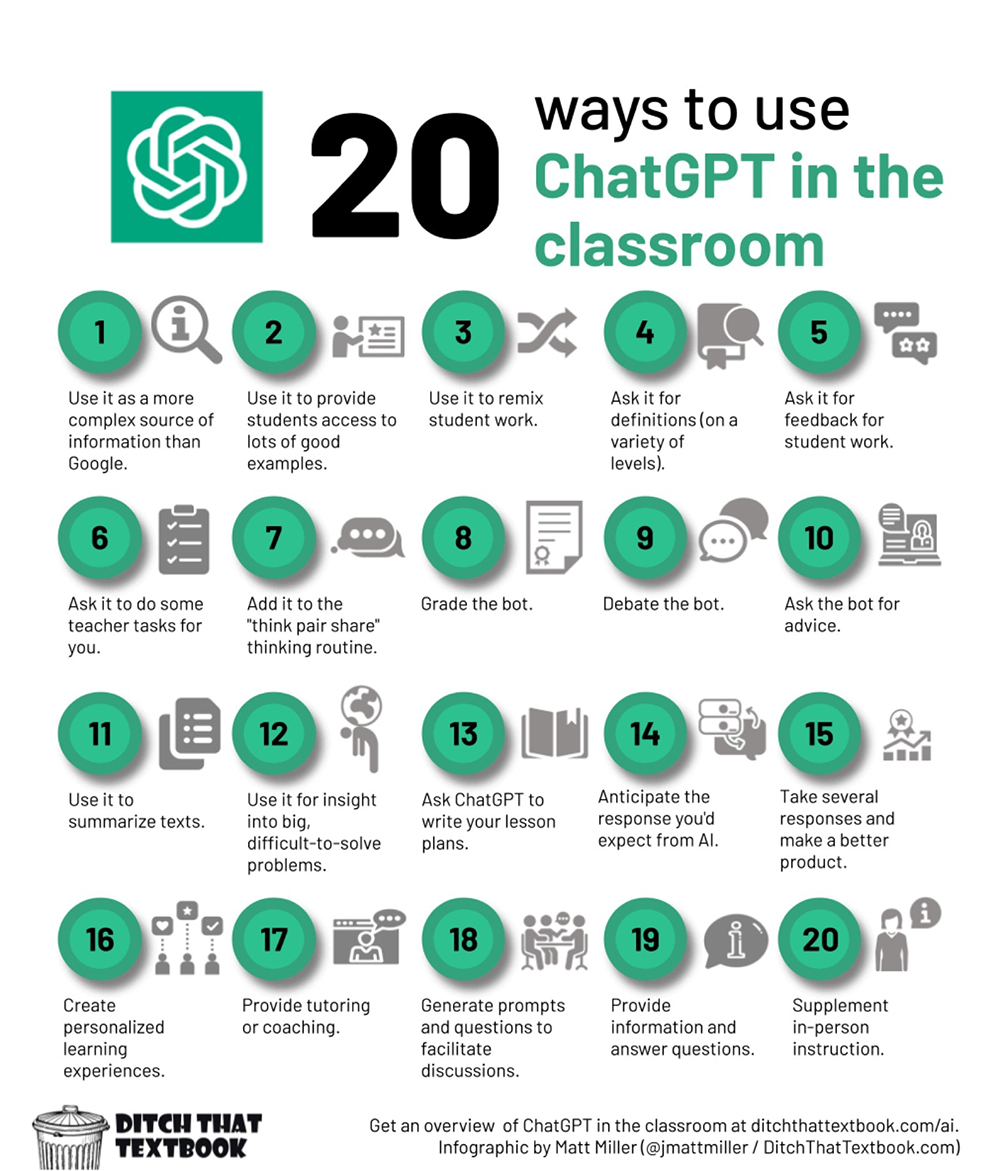
OpenAI’s ChatGPT remains the most versatile and widely adopted AI assistant, a position earned through its breadth of functionality and continuous innovation.
Primary Uses
ChatGPT excels as a general-purpose assistant. It is particularly effective in:
Writing and editing (articles, essays, reports)
Coding and debugging
Brainstorming and ideation
Image and multimedia generation (in advanced versions)
Conversational assistance and tutoring
Its multimodal capabilities—processing text, images, and even audio—have positioned it as a comprehensive digital companion. ([Tom’s Guide][2])
Advantages
Exceptional versatility: Suitable for nearly any intellectual task
Creative fluency: Particularly strong in storytelling and content generation ([Latenode][3])
Extensive ecosystem: Integrations, plugins, and customization options
Rapid iteration: Frequent updates and model improvements
Disadvantages
Occasional inaccuracies (“hallucinations”)
Inconsistent depth in highly specialized domains
Dependence on prompt quality
Optimization Tips
To extract maximum value:
Use precise, structured prompts (e.g., specify tone, format, audience)
Employ iterative refinement —ask follow-up questions to improve outputs
Leverage role prompting (“Act as a legal analyst…”)
Break complex tasks into multi-step queries
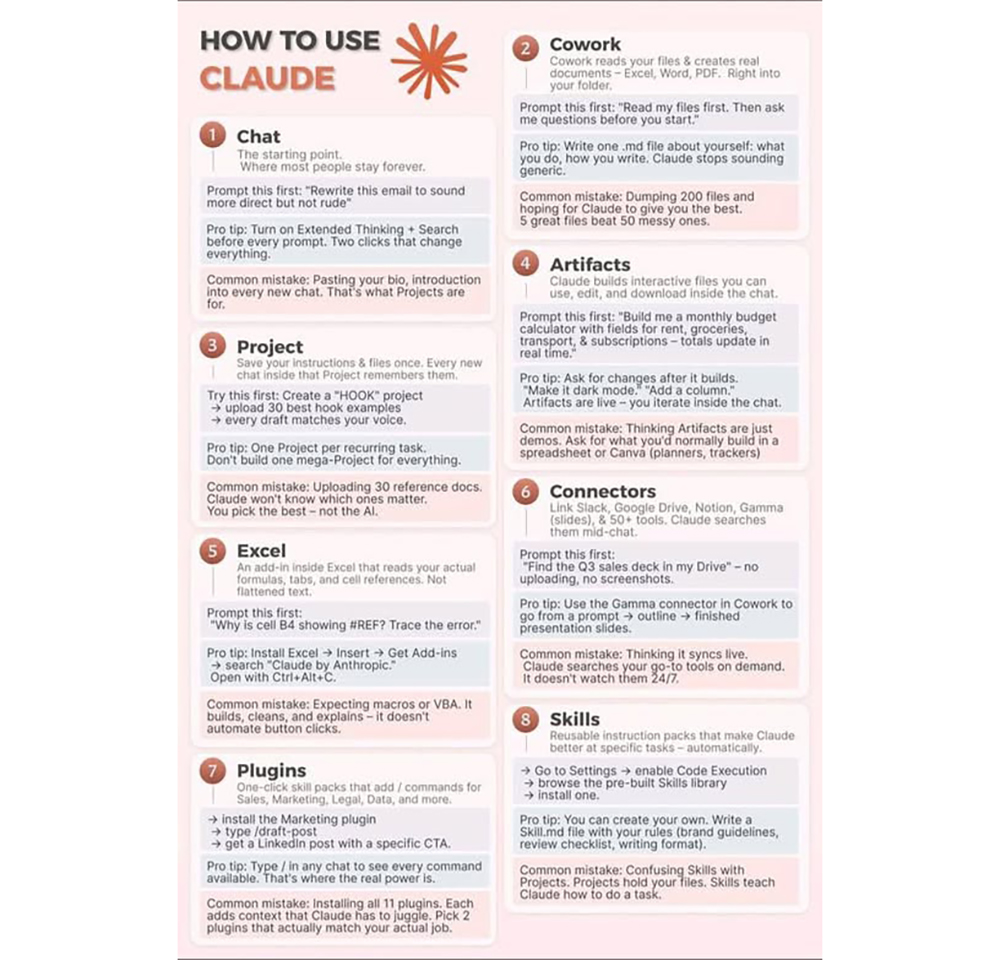
Claude: The Philosopher-Analyst
Developed by Anthropic, Claude distinguishes itself through a deliberate, methodical reasoning style and an emphasis on safety and coherence.
Primary Uses
Claude is ideally suited for:
Long-form writing and editing
Legal, academic, and policy analysis
Complex reasoning tasks
Document summarization (especially large files)
Its ability to handle extraordinarily large context windows—far exceeding many competitors—makes it uniquely effective for deep analysis. ([Tom’s Guide][2])
Advantages
Exceptional coherence and clarity
Long-context processing (hundreds of thousands of tokens)
Strong ethical safeguards ([Axios][4])
Superior performance in structured reasoning tasks
Disadvantages
Over-cautious responses in some contexts
Less dynamic or creative than ChatGPT
Limited real-time data integration
Optimization Tips
Provide large documents or datasets for analysis
Use explicit instructions for tone and depth
Take advantage of its step-by-step reasoning style
Ideal for “think through this carefully” prompts
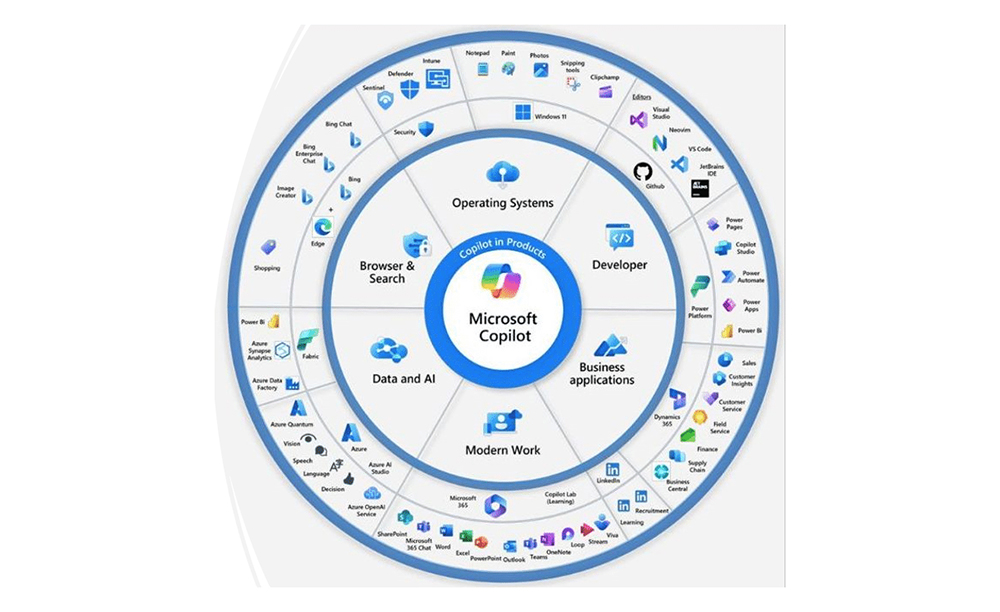
Microsoft Copilot: The Enterprise Integrator
Microsoft Copilot represents a fundamentally different paradigm: AI embedded directly within productivity software.
Primary Uses
Copilot is optimized for:
Workplace productivity (Word, Excel, PowerPoint)
Email drafting and summarization
Data analysis within spreadsheets
Meeting transcription and insights
Its seamless integration into Microsoft 365 makes it indispensable in corporate environments.
Advantages
Deep integration with Office tools
Efficiency in routine business tasks
Familiar interface for enterprise users
Comparable performance to GPT-based systems ([Data Studios–Exafin][5])
Disadvantages
Limited flexibility outside Microsoft ecosystem
Less creative than standalone AI platforms
Dependent on subscription and enterprise infrastructure
Optimization Tips
Use Copilot within documents, not as a separate chatbot
Combine data + prompts (e.g., “Analyze this spreadsheet for trends”)
Automate repetitive workflows (emails, summaries)
Pair with ChatGPT for more creative or exploratory tasks
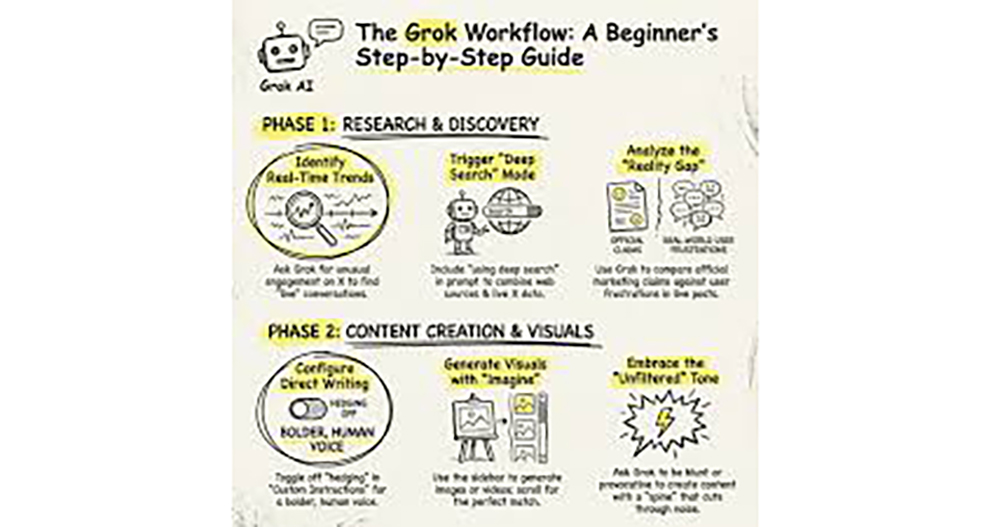
Grok: The Real-Time Maverick
Developed by Elon Musk’s xAI, Grok differentiates itself through its access to real-time data from the X (formerly Twitter) platform and its conversational tone.
Primary Uses
Grok is particularly effective for:
Real-time news and trend analysis
Technical reasoning and STEM queries
Informal, conversational exploration
Its integration with live data streams provides a distinct advantage in rapidly evolving contexts.
Advantages
Real-time information access ([Passionfruit][6])
Strong performance in technical domains ([Latenode][3])
Conversational, engaging style
Less restrictive in certain responses ([Digital Applied][7])
Disadvantages
Weaker safety controls and moderation concerns ([The Verge][8])
Less mature ecosystem
Inconsistent reliability in complex tasks
Optimization Tips
Use for current events and trending topics
Cross-check outputs with other sources
Employ **multi-step questioning** for technical depth
Combine with ChatGPT or Claude for verification
Google Gemini: The Ecosystem Powerhouse
Google’s Gemini represents a formidable contender, particularly for users embedded in the Google ecosystem.
Primary Uses
Gemini excels in:
Research and information retrieval
Integration with Google Workspace (Docs, Gmail, Sheets)
Large-context reasoning tasks
Data-driven queries
Advantages
Strong integration with Google services
Large context window (up to 1 million tokens) ([Digital Applied][7])
Real-time data validation capabilities
Competitive pricing and accessibility
Disadvantages
Less refined conversational style
Occasional inconsistency in output quality
Still evolving compared to ChatGPT
Optimization Tips
Use within Google Docs and Sheets for productivity
Leverage its search capabilities for fact-checking
Combine with other tools for creative tasks
Use structured prompts for better accuracy
Perplexity AI: The Research Specialist
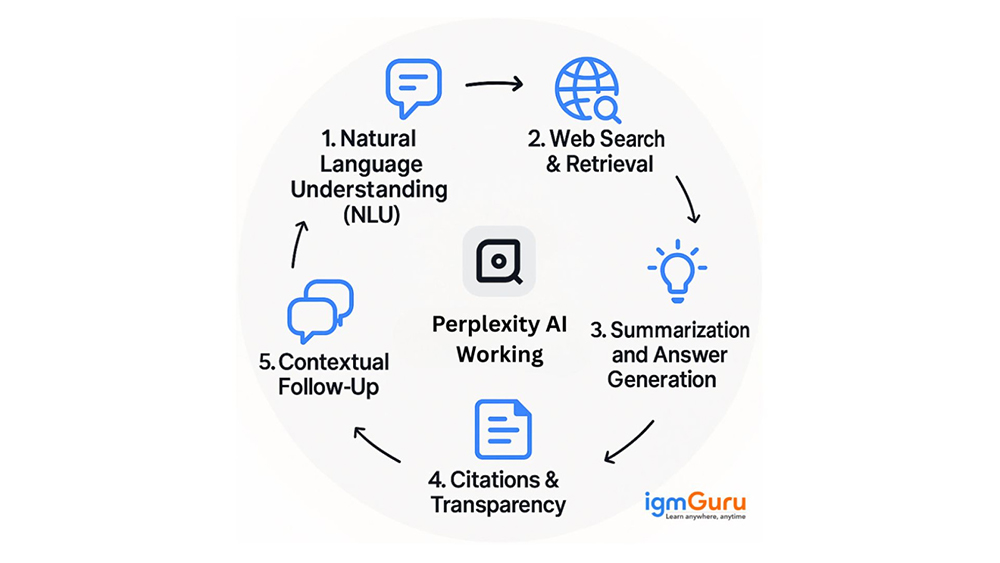
Though less discussed, Perplexity has carved out a niche as a research-focused AI assistant.
Primary Uses
Academic and professional research
Fact-checking and citation generation
Summarizing web-based information
Advantages
Strong citation-based responses
Reliable for factual queries
Search-engine hybrid functionality
Disadvantages
Less creative output
Limited conversational depth
Dependent on external sources
Optimization Tips
Use for **verification and sourcing
Combine with ChatGPT for content creation
Ask for multiple sources and perspectives
Emerging and Specialized Platforms
Beyond the major players, a constellation of emerging tools—such as DeepSeek, Meta’s Llama, and specialized coding agents—continues to expand the ecosystem.
Research indicates that no single model consistently outperforms others across all tasks; rather, effectiveness varies significantly depending on context, with some excelling in coding, others in writing, and others in reasoning. ([Appy Pie Automate][9])
Strategic Guidance: Choosing the Right AI
The modern user need not—and indeed should not—rely on a single AI platform. The most effective approach is strategic pluralism: selecting tools based on task specificity.
Best Combinations
ChatGPT + Claude: Creativity + deep analysis
Copilot + ChatGPT: Productivity + ideation
Grok + Perplexity: Real-time insights + verification
Gemini + Claude: Research + reasoning
General Best Practices
- Always verify critical information
Studies show that AI systems can produce incorrect or fabricated outputs, particularly in academic contexts. ([arXiv][10])
- Master prompt engineering
The quality of output is directly proportional to the clarity and specificity of input.
- Adopt an iterative workflow
Treat AI as a collaborator, not a one-step solution.
- Leverage strengths, avoid weaknesses
Use each platform where it excels.
Conclusion: The Era of Intelligent Collaboration
The proliferation of AI platforms represents not merely technological progress but a fundamental transformation in how knowledge is produced, disseminated, and applied. Each system—ChatGPT, Claude, Copilot, Grok, Gemini, and beyond—embodies a distinct philosophy of intelligence, from creative generalism to analytical rigor, from enterprise integration to real-time awareness.
As comparative analyses consistently demonstrate, the question is no longer which AI is “best,” but rather which AI is best suited to a given task. ([Gmelius][11])
In this evolving landscape, the most successful users will be those who cultivate not only technical familiarity but strategic discernment—those who understand that artificial intelligence, in all its forms, is not a replacement for human judgment, but an amplification of it.
The future, it seems, belongs not to any single machine, but to those who learn to orchestrate them all.
FOOTNOTES
[1]: clarifai.com/blog/gemini-3.0-vs-other-models?utm_source=chatgpt.com “Gemini 3.0 vs GPT-5.1 vs Claude 4.5 vs Grok 4.1: AI Model …” [2]: tomsguide.com/ai/claude-4-vs-chatgpt-which-ai-assistant-is-right-for-you?utm_source=chatgpt.com “Claude vs ChatGPT explained: What each AI does best–and how to choose the right one” [3]: latenode.com/blog/platform-comparisons-alternatives/ai-model-comparisons-gpt-vs-claude-vs-gemini/chatgpt-vs-grok-3-comprehensive-performance-comparison-of-leading-ai-models?utm_source=chatgpt.com “ChatGPT vs Grok 3: Comprehensive Performance …” [4]: axios.com/2024/06/20/anthropic-claude-chatgpt-competitor-ai?utm_source=chatgpt.com “Claude, Anthropic’s ChatGPT rival, has many scruples” [5]: datastudios.org/post/chatgpt-vs-microsoft-copilot-vs-claude-vs-gemini-full-report-and-comparison-accuracy-speed-inter?utm_source=chatgpt.com “ChatGPT vs Microsoft Copilot vs Claude vs Gemini” [6]: getpassionfruit.com/blog/claude-4-vs-chatgpt-o3-vs-grok-3-vs-gemini-2-5-pro-complete-2025-comparison-for-seo-traditional-benchmarks-research?utm_source=chatgpt.com “Claude 4 vs ChatGPT O3 vs Grok 3 vs Gemini 2.5 Pro” [7]: digitalapplied.com/blog/chatgpt-vs-claude-vs-gemini-vs-grok-ai-comparison?utm_source=chatgpt.com “ChatGPT vs Claude vs Gemini vs Grok AI Comparison” [8]: theverge.com/news/868925/adl-ai-antisemitism-report-grok-chatgpt-gemini-claude-deepseek-llama-elon-musk?utm_source=chatgpt.com “Grok is the most antisemitic chatbot according to the ADL” [9]: appypieautomate.ai/blog/comparison/grok-vs-deepseek-vs-openai-vs-claude-vs-qwen-vs-gemini?utm_source=chatgpt.com “Grok-3, DeepSeek R1, OpenAI o3-mini, Claude 3.7, Qwen …” [10]: arxiv.org/abs/2505.18059?utm_source=chatgpt.com “Assessing the performance of 8 AI chatbots in bibliographic reference retrieval: Grok and DeepSeek outperform ChatGPT, but none are fully accurate” [11]: gmelius.com/blog/best-ai-assistants-comparison?utm_source=chatgpt.com “ChatGPT vs Gemini vs Copilot vs Claude vs Perplexity …”