



|
Getting your Trinity Audio player ready...
|
By: Fern Sidman
A profound sense of unease has settled over Europe following a failed but deeply consequential missile launch by Iran—an event that has fundamentally altered the continent’s perception of its own security. What might have once been dismissed as distant geopolitical tension has now assumed an immediate and unsettling proximity, as evidence mounts that Iranian missile capabilities extend far beyond previously acknowledged limits.
The attempted strike on the joint United States–United Kingdom military installation at Diego Garcia, a remote base in the Indian Ocean, has become a pivotal moment in this reassessment. Although the missiles did not reach their intended target—reportedly failing midflight or being intercepted—the implications of the launch have reverberated far beyond the isolated atoll. For European policymakers, analysts, and citizens alike, the episode has raised an alarming question: how far can Iran’s missiles truly reach?
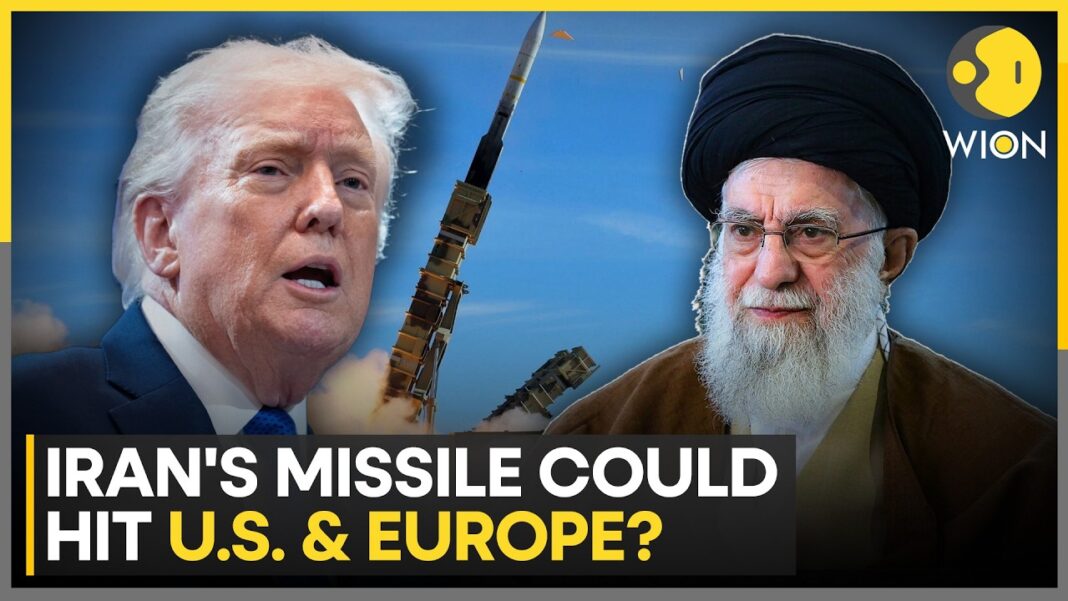
World is One News first pointed out this claim 3 weeks ago, in the above report
From a purely tactical standpoint, the launch may be categorized as unsuccessful. Yet strategically, it has proven anything but. The distance between Iran and Diego Garcia—estimated at approximately 3,700 to 4,000 kilometers—far exceeds the range that Tehran has historically claimed for its ballistic missile arsenal.
For years, Iranian officials maintained that their missile program was deliberately limited, often citing a range cap of roughly 2,000 kilometers. This assertion was presented as evidence of restraint, intended to signal that Iran did not seek to threaten distant nations. However, the recent launch has cast serious doubt on these claims, suggesting that the true capabilities of Iran’s missile systems may have been significantly understated.
Military analysts across Europe have been quick to note that a missile capable of traveling such distances could, in theory, reach a wide array of European capitals. Cities such as London, Paris, Berlin, Munich, Rome, and Oslo—long considered outside the immediate sphere of Middle Eastern missile threats—now appear to fall within a plausible range envelope.
The psychological impact of this realization cannot be overstated. What was once a theoretical concern has become a demonstrable capability, transforming abstract risk into tangible vulnerability.
The current moment has also prompted a reevaluation of past warnings issued by President Donald Trump, who consistently argued that Iran was concealing the true extent of its missile development. Throughout his tenure and beyond, Trump emphasized that Tehran’s public statements regarding its arsenal were incomplete at best and deliberately misleading at worst.
At the time, these assertions were met with skepticism in many European capitals, where diplomatic engagement and multilateral agreements were often viewed as the preferred means of managing Iran’s ambitions. The recent developments, however, have led some observers to reconsider those earlier assessments.
Media coverage has amplified this narrative shift. Broadcast analyses have highlighted the apparent alignment between Trump’s warnings and the newly revealed capabilities, with commentators noting that the Diego Garcia launch appears to validate concerns that had previously been dismissed or downplayed.
This retrospective validation has not only reshaped perceptions of past policy debates but also introduced new urgency into current strategic discussions.
For European governments, the implications of Iran’s expanded missile reach are both immediate and far-reaching. Defense planners must now grapple with the possibility that key population centers and critical infrastructure could be within striking distance of a state actor whose intentions remain a subject of intense scrutiny.
This recalibration is occurring against a backdrop of already heightened geopolitical tension. The broader conflict involving Iran, the United States, and regional actors has created a complex and volatile environment in which escalation can occur rapidly and unpredictably.
In this context, the Diego Garcia incident serves as a stark reminder that geographic distance is no longer a reliable buffer against emerging threats. Advances in missile technology have effectively compressed the strategic landscape, bringing distant regions into closer proximity in terms of potential risk.
European defense systems, including missile interception capabilities, are now under renewed examination. Questions about readiness, coverage, and coordination have taken on heightened importance, as policymakers seek to ensure that existing frameworks are sufficient to address the evolving threat.
Another critical dimension of the current situation concerns the accuracy and completeness of intelligence assessments. If Iran has indeed developed missile systems with ranges significantly exceeding its stated limits, this raises important questions about how such capabilities were evaluated and communicated within the international community.
The discrepancy between public declarations and demonstrated performance underscores the challenges inherent in assessing opaque military programs. It also highlights the potential risks associated with relying on self-reported limitations in the absence of comprehensive verification mechanisms.
For European nations, this realization may prompt a reassessment of intelligence-sharing practices and analytical methodologies. Ensuring that policymakers have access to accurate and timely information will be essential in navigating the uncertainties of the current environment.
The revelation of Iran’s extended missile capabilities is likely to have significant diplomatic repercussions. European countries, many of which have historically advocated for engagement and negotiation, may find themselves under pressure to adopt a more assertive stance.
At the same time, the situation presents a complex challenge. Escalating tensions could further destabilize an already fragile region, while inaction could be perceived as complacency in the face of a growing threat.
Balancing these considerations will require careful calibration of policy responses, combining elements of deterrence, diplomacy, and strategic communication.
The internal dynamics within Europe are also likely to be affected. Differences in threat perception and policy preferences among member states could lead to divergent approaches, complicating efforts to formulate a unified response.
Beyond the realm of policy, the developments have had a noticeable impact on public discourse. The notion that major European cities could be within range of Iranian missiles has captured public attention, contributing to a sense of unease that extends beyond traditional security circles.
Media coverage has played a significant role in shaping this narrative, with visual representations of potential strike ranges and highlighted city targets reinforcing the immediacy of the threat. Such imagery, while informative, also carries the potential to heighten anxiety and influence political debate.
In this environment, leaders face the dual challenge of addressing legitimate security concerns while avoiding the amplification of fear. Clear communication, grounded in factual analysis, will be essential in maintaining public confidence.
The attempted strike on Diego Garcia may ultimately be remembered as a turning point in how Europe perceives and responds to missile threats. By demonstrating capabilities that extend well beyond previously accepted parameters, the incident has forced a reassessment of long-standing assumptions.
For years, the focus of European security policy has been shaped by a combination of regional conflicts, counterterrorism efforts, and relations with major powers. The emergence of a credible long-range missile threat from Iran adds a new dimension to this landscape, requiring adjustments in both planning and prioritization.
This shift is likely to influence a range of policy areas, from defense spending and technological development to alliance structures and international cooperation.
As Europe grapples with the implications of Iran’s demonstrated missile reach, the broader significance of the Diego Garcia incident continues to unfold. What began as a failed strike on a remote military base has evolved into a catalyst for strategic introspection and recalibration.
The convergence of technological capability, geopolitical tension, and historical warning has created a moment of reckoning—one that compels policymakers to confront uncomfortable realities and make difficult choices.
In the final analysis, the events of recent days underscore a fundamental truth: in an era of rapid technological advancement and shifting power dynamics, assumptions about distance and security can no longer be taken for granted.
For Europe, the challenge now lies in translating this realization into effective action—ensuring that the lessons of the present are not only understood but also acted upon in a manner that enhances resilience and preserves stability in an increasingly uncertain world.
