



|
Getting your Trinity Audio player ready...
|
By: Ariella Haviv
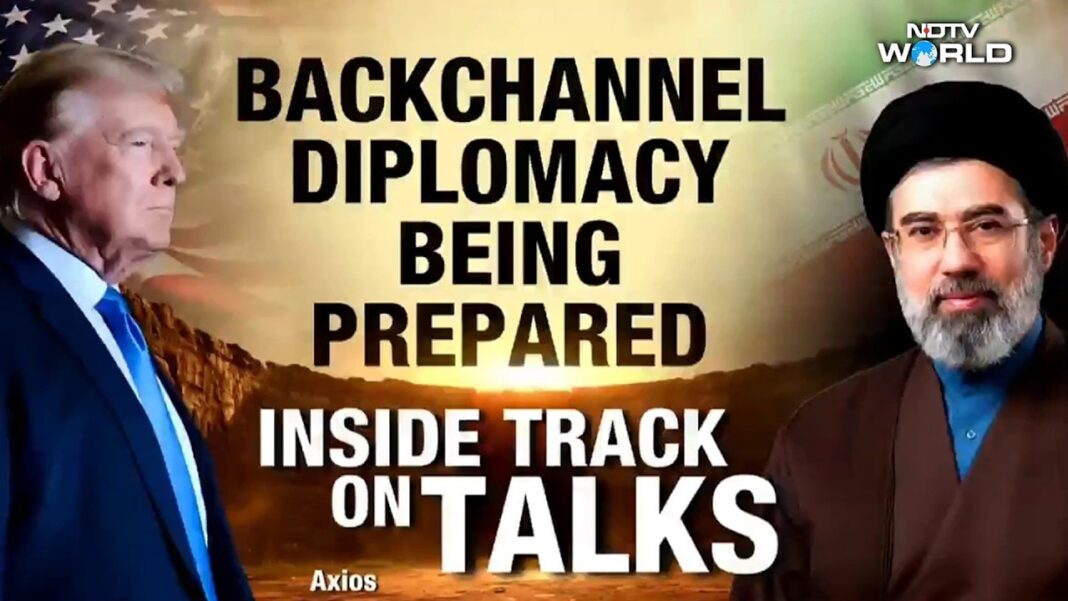
In a revelation that underscores the intricate and often opaque nature of high-stakes diplomacy, a clandestine communication channel between Tehran and Washington has come to light—one that operated beyond the awareness of key regional stakeholders and has now introduced a new layer of complexity to an already volatile geopolitical landscape. According to a report by Israel’s Yedioth Ahronoth newspaper, senior officials from Iran and the United States engaged in confidential discussions that were not only sanctioned at the highest levels of the Iranian leadership but also conducted through a direct line of communication deliberately shielded from broader scrutiny.
At the center of these covert exchanges were Abbas Araghchi, representing Tehran, and Steve Witkoff, acting as an American interlocutor. The participation of Jared Kushner further elevated the significance of the talks, suggesting that the dialogue extended beyond routine diplomatic engagement into the realm of strategic recalibration. As Yedioth Ahronoth reported, the discussions carried a message explicitly endorsed by Iran’s highest authorities, lending them a degree of legitimacy and seriousness that distinguishes them from more tentative or exploratory contacts.
Perhaps most striking is the reported exclusion of Israel from awareness of this backchannel. Despite its central role in the ongoing conflict and its profound security interests in any potential agreement with Iran, Jerusalem was neither informed of the channel’s existence nor consulted during its operation. The Yedioth Ahronoth report emphasized that Israeli officials became aware of the talks only through independent intelligence sources—a development that has inevitably raised questions about coordination and trust among allies.
The existence of the channel was later acknowledged publicly by President Trump, a disclosure that prompted an immediate and categorical denial from Tehran. Yet, as the Yedioth Ahronoth report noted, both American and Israeli officials have since confirmed that such contacts did indeed occur, highlighting the often contradictory nature of public and private diplomacy in this arena.
The substance of the discussions, as reported by Yedioth Ahronoth, reveals a negotiation framework that is both ambitious and constrained by entrenched positions. Araghchi is said to have conveyed that he was operating with full authorization from Tehran, including the explicit consent of Mojtaba Khamenei, a figure widely regarded as wielding significant influence within Iran’s power structure. His reported statement—emphasizing a desire to “close the matter as soon as possible” provided certain conditions were met—suggests a degree of urgency on the Iranian side, even as it underscores the conditional nature of any potential agreement.
Draft proposals exchanged during the talks reportedly reflected positions Iran has maintained in previous negotiations, indicating a continuity of strategic objectives rather than a fundamental shift. Among the most notable elements was the discussion of transferring Iran’s enriched uranium stockpile to Russia—a proposal that, if realized, could represent a significant step toward addressing international concerns about nuclear proliferation. The Yedioth Ahronoth report highlighted this aspect as one of the more tangible areas of potential compromise.
Yet the limitations of the dialogue are equally apparent. Iran reportedly made clear that it would not relinquish its ballistic missile program, nor would it accept a complete cessation of uranium enrichment on its own territory. These positions, long regarded as non-negotiable pillars of Iran’s strategic doctrine, present formidable obstacles to any comprehensive agreement. As the Yedioth Ahronoth report observed, they reflect a broader insistence on maintaining sovereign capabilities that Tehran views as essential to its security and regional influence.
The emergence of this backchannel must also be understood within the broader context of ongoing military operations. The United States and Israel continue to exert pressure on Iranian assets and affiliated groups, creating a dynamic in which diplomacy and force are intertwined. This dual-track approach—combining negotiation with sustained military engagement—has been a defining feature of recent policy, yet it also introduces inherent tensions.
Israeli PM Benjamin Netanyahu addressed this interplay in remarks cited by Yedioth Ahronoth, acknowledging that President Trump believes it may be possible to leverage military gains into a diplomatic outcome that preserves Israel’s interests. At the same time, Netanyahu emphasized that Israel would continue its operations against both Iran and Hezbollah, underscoring a commitment to independent action regardless of diplomatic developments.
This stance reflects a broader concern within Israeli leadership that any agreement reached without full transparency or coordination could compromise national security. The fact that Israel was not initially informed of the backchannel has only heightened these apprehensions, raising questions about the extent to which allied interests are being aligned.
For the United States, the existence of such a channel illustrates the enduring appeal of direct communication in resolving complex conflicts. By bypassing more formal diplomatic structures, backchannels can facilitate candid exchanges and expedite negotiations. However, as Yedioth Ahronoth’s reporting makes clear, they also carry risks, particularly when they exclude key stakeholders or operate without broader consensus.
The Iranian perspective, meanwhile, appears to be shaped by a combination of pragmatism and steadfastness. The willingness to engage in direct talks with American representatives suggests a recognition of the potential benefits of negotiation, particularly in the context of economic pressures and military challenges. Yet the refusal to compromise on core issues indicates a determination to preserve strategic autonomy.
Yedioth Ahronoth has noted that this duality—engagement coupled with inflexibility—has characterized Iran’s approach in previous negotiations as well. It reflects a calculated effort to balance the pursuit of relief or concessions with the maintenance of capabilities deemed essential to national security.
The broader implications of these developments are far-reaching. The intersection of covert diplomacy and overt conflict creates a fluid and unpredictable environment, one in which outcomes remain uncertain and the potential for miscalculation is ever-present. The existence of a backchannel, while potentially conducive to progress, also introduces new variables into an already complex equation.
For regional actors, the challenge lies in navigating this evolving landscape while safeguarding their own interests. Israel’s discovery of the talks through independent means underscores the importance of intelligence and situational awareness, while its continued military operations reflect a determination to shape outcomes on the ground.
For global observers, the revelations reported by Yedioth Ahronoth offer a window into the mechanisms of modern diplomacy, where secrecy and disclosure, cooperation and competition, coexist in a delicate balance. They highlight the extent to which critical decisions are often made behind closed doors, even as their consequences are felt across the international stage.
As the situation continues to unfold, the key question remains whether this backchannel will yield substantive progress or merely represent another episode in a long and complex history of negotiation. The conditions outlined by Iran, the strategic calculations of the United States, and the concerns of regional allies will all play a role in shaping the outcome.
In the final analysis, the emergence of this secret dialogue serves as a reminder that in the realm of international relations, the most consequential developments are often those that occur beyond public view.
