



|
Getting your Trinity Audio player ready...
|
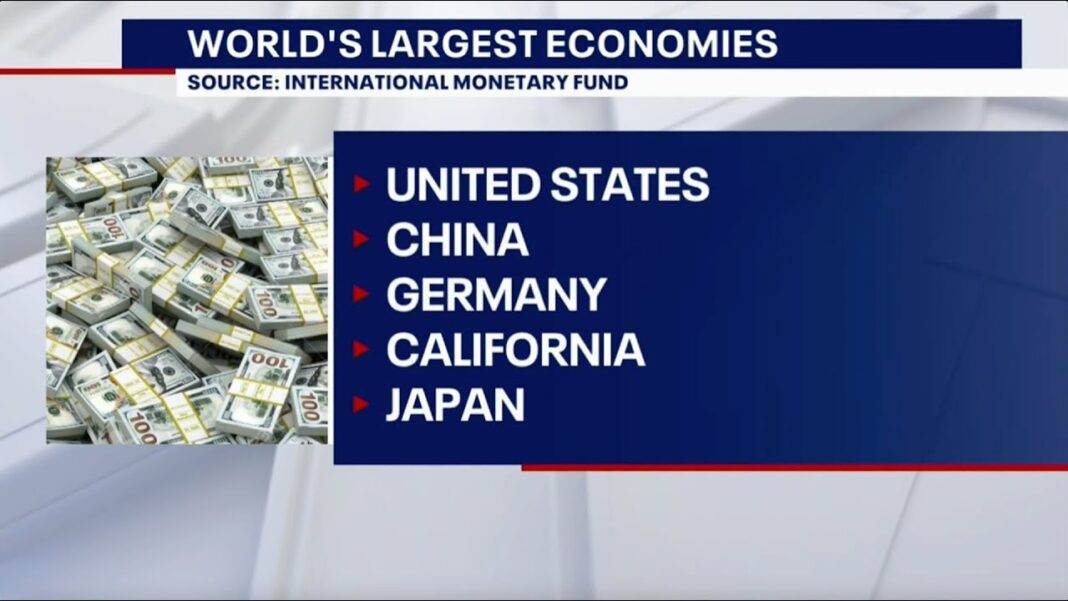
(TJV NEWS) California’s economy has quietly achieved a major global milestone, outpacing entire nations despite ongoing criticism over the state’s well-documented challenges, according to a Bloomberg report.
The Golden State, home to roughly 39 million people, has now surpassed Japan to become the world’s fourth-largest economy. Its gross domestic product has surged to more than $4 trillion, accounting for over 14% of total U.S. economic output, Bloomberg reported.
The growth has been striking not just in scale but in speed. Since 2019, California’s economy has expanded by about 40%, outpacing other major global economies. Over the same period, China’s economy grew roughly 32%, while Germany’s rose about 16%, according to data compiled by Bloomberg.
Notably, the gains were not simply the result of currency fluctuations. The U.S. dollar has appreciated only modestly—around 1.6%—since the end of 2018, meaning exchange rates played a minimal role in California’s rise, the report noted.
The milestone comes as California continues to face a barrage of negative headlines. Critics often point to persistent issues including homelessness, high housing costs, widening inequality, infrastructure concerns, and an exodus of wealthy residents and major corporations. Wildfires, drought, and other environmental pressures have also added to the perception of a state in decline.
Yet despite those challenges, California’s economic engine—fueled by technology, entertainment, agriculture, and trade—has continued to expand at a pace that rivals or exceeds many countries. The state remains a global hub for innovation, particularly in Silicon Valley, where advances in artificial intelligence and tech investment have helped drive growth.
The contrast between California’s economic dominance and its widely publicized struggles underscores a more complicated reality: while quality-of-life concerns and affordability issues persist, the state’s underlying economy remains one of the most powerful in the world.
Bloomberg’s analysis highlights that California’s rise is not just symbolic—it reflects a structural shift in the global economic landscape, where subnational regions can rival entire countries in output and influence.
