



|
Getting your Trinity Audio player ready...
|
By: Abe Wertenheim
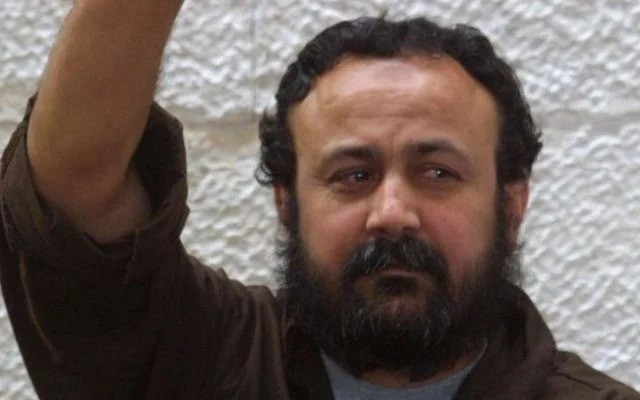
In the tense final hours of negotiations over the Gaza hostage release deal, a surprising and controversial figure reportedly entered the diplomatic fray: World Jewish Congress (WJC) President Ronald Lauder. According to a report on Sunday at VIN News, Lauder privately lobbied Israeli and international officials to secure the release of Marwan Barghouti, the imprisoned Palestinian leader serving five life sentences for orchestrating deadly terror attacks during the Second Intifada.
Lauder’s behind-the-scenes intervention, which the VIN News report described as both “unexpected and diplomatically sensitive,” was ultimately rebuffed by Prime Minister Benjamin Netanyahu’s office, amid strong opposition from senior members of Israel’s security cabinet. Sources familiar with the discussions said the proposal — to include Barghouti among the 250 Palestinian prisoners being considered for release in exchange for 48 Israeli hostages — ignited fierce internal debate within Israel’s leadership and drew sharp objections from defense officials.
The revelation, first reported by The Times of Israel and later corroborated by diplomatic sources quoted in the VIN News report, sheds new light on the high-stakes maneuvering that surrounded the delicate ceasefire and hostage exchange agreement — a deal brokered with the involvement of Egypt, Qatar, and the United States.
According to multiple diplomatic sources, Lauder — a longtime confidant of Netanyahu and a veteran philanthropist with extensive Middle East contacts — offered to personally travel to Sharm el-Sheikh, Egypt, to advocate for Barghouti’s inclusion in the deal. The site, where the final phase of the ceasefire talks are going to take place, has become a hub for shuttle diplomacy between Israeli, Egyptian, and Qatari negotiators over the past month.
VIN News reported that Lauder’s pitch went beyond humanitarian appeal. His proposal, insiders said, included options to frame Barghouti’s release as a symbolic gesture toward Saudi Arabia or other Arab states currently engaged in normalization talks with Israel. He also suggested that Barghouti, if freed, could be exiled abroad — thereby reducing the immediate political and security risks of releasing one of the most influential Palestinian figures in captivity.
However, Netanyahu’s office firmly rejected the proposal. “The Prime Minister’s position was unequivocal,” a senior official told VIN News. “Under no circumstances would Israel release an individual directly responsible for murdering Israeli civilians, especially not at a moment when the country is still grieving and under threat.”
Who is Marwan Barghouti?
To many Israelis, Barghouti, now 66, is synonymous with the violence of the Second Intifada. Once a rising star in Fatah, he was convicted in 2004 of orchestrating a series of terrorist attacks that left five Israelis dead. Sentenced to five consecutive life terms plus forty years, he has spent much of the past two decades in solitary confinement.
Yet, as the VIN News report emphasized, Barghouti’s reputation among Palestinians — and even among some international observers — remains remarkably complex. While he continues to express support for what he calls “armed resistance” to Israeli occupation, he has also long advocated for a two-state solution based on pre-1967 borders, positioning himself as both militant and moderate, revolutionary and pragmatist.
That duality has made him a potent symbol. Polls cited by Palestinian media routinely place Barghouti as one of the few leaders capable of uniting Fatah and Hamas, a rare figure with cross-factional legitimacy. Some analysts, quoted in the VIN News report, argue that his release could potentially “reset the Palestinian political arena,” providing an alternative to both the aging Mahmoud Abbas and the increasingly militant leadership in Gaza.
Others, however, see that very prospect as dangerous. “Releasing Barghouti would create a political earthquake,” a retired Israeli intelligence official told VIN News. “He’s not just another prisoner. He’s a movement unto himself. That’s exactly why Hamas wanted him out — and why Israel refused.”
Hamas Demands
Throughout the hostage negotiations, Hamas repeatedly pressed for Barghouti’s release, according to documents reviewed by The Times of Israel and cited in the VIN News report. The group reportedly described him as “the Palestinian Mandela,” a prisoner whose liberation could galvanize Palestinian unity and be leveraged as a victory symbol.
But Israeli officials quickly determined that Barghouti’s inclusion would be unacceptable. As VIN News reported, the Netanyahu government exercised one of its limited vetoes under the terms of the ceasefire framework, blocking his name from the final release roster despite pressure from mediators in Cairo and Doha.
“The government made it clear that while humanitarian considerations were part of the calculus, national security and moral integrity came first,” one Israeli diplomat told VIN News. “Barghouti’s release would have crossed both lines.”
In the final hours before the agreement was announced, Lauder’s diplomatic overture reportedly reached the Israeli Prime Minister’s office but was met with silence. Neither Lauder nor Netanyahu has publicly commented on the matter, and the World Jewish Congress has declined to issue any statement confirming or denying his involvement.
International and Domestic Fallout
The revelation of Lauder’s lobbying has drawn mixed reactions from across the political spectrum. Within Israel, many lawmakers privately expressed dismay at the idea that the head of a global Jewish organization would intervene on behalf of a convicted terrorist.
“This is not the World Jewish Congress’s role,” a senior coalition member told VIN News. “Advocating for Israel’s security, yes. But to lobby for the release of someone with blood on his hands — that crosses a red line.”
Supporters of Lauder, however, argue that his efforts were motivated by pragmatism, not ideology. One former diplomat close to him told VIN News that Lauder “was exploring every possible avenue to break the deadlock and strengthen Israel’s strategic position in the Arab world.” By tying Barghouti’s potential release to normalization overtures with Saudi Arabia, Lauder may have hoped to create a broader diplomatic payoff.
Yet that line of reasoning finds few takers in Jerusalem’s current political climate. The mere mention of Barghouti’s name continues to evoke anger among Israelis, especially the families of terror victims. For them, any deal that includes his release — no matter how strategically framed — is unthinkable.
A Shadow Over the Ceasefire’s Success
As the VIN News report noted, the episode shines a spotlight on the fragility and complexity of the Gaza ceasefire agreement, which has already drawn both praise and criticism within Israel. While the return of hostages is celebrated as a national triumph, the concurrent release of hundreds of Palestinian prisoners has reopened wounds from past exchanges — particularly the 2011 Gilad Shalit deal, in which several released militants later returned to terrorism.
Barghouti’s name, even absent from the list, has become a reminder of those tensions. The notion that his release could be entertained, even hypothetically, highlights the difficult balance Israel must strike between humanitarian pragmatism and moral red lines.
Barghouti’s Continuing Symbolism
In August, Barghouti briefly reappeared in the public eye after years in isolation, when a leaked video from National Security Minister Itamar Ben Gvir’s office showed him being transferred between cells. The footage reignited debate over his status and treatment. His lawyer has since alleged mistreatment by prison guards — accusations the Israel Prison Service has denied.
Despite his confinement, Barghouti’s political aura remains undiminished. Palestinian social media continues to circulate his image as a symbol of defiance, while some Western diplomats quietly speculate that he could one day emerge as a “compromise figure” in any future Palestinian leadership transition.
For Israel, however, his fate appears sealed — at least for now. “There are red lines that even the most delicate diplomacy cannot cross,” an Israeli security analyst told VIN News. “Releasing Marwan Barghouti would have turned a humanitarian agreement into a political earthquake.”
Ronald Lauder’s discreet intervention — and its swift rejection — reveal much about the intersection of diplomacy, morality, and realpolitik at this fraught moment in Israeli history. As the VIN News report observed, his efforts may have been rooted in genuine concern for peace and pragmatism, but they collided head-on with the hard reality of Israeli public sentiment and security policy.
In the end, Barghouti remains behind bars. The hostages are set to return home. And Lauder, who has long operated in the gray corridors of international diplomacy, has once again reminded the world that in the Middle East, even the best-intentioned gestures can reverberate far beyond their original design.
As one senior Israeli journalist told VIN News, “This story isn’t about Barghouti or Lauder alone — it’s about the limits of influence when it comes to Israel’s most sacred principle: never trading justice for appeasement.”

If true this is disgraceful, alas the old adage rings true, there is no fool like an old fool! Time to change the so called Jewish leadership especially at the ADL, they no longer represent mainstream Jewish values.