



|
Getting your Trinity Audio player ready...
|
By: Ariella Haviv
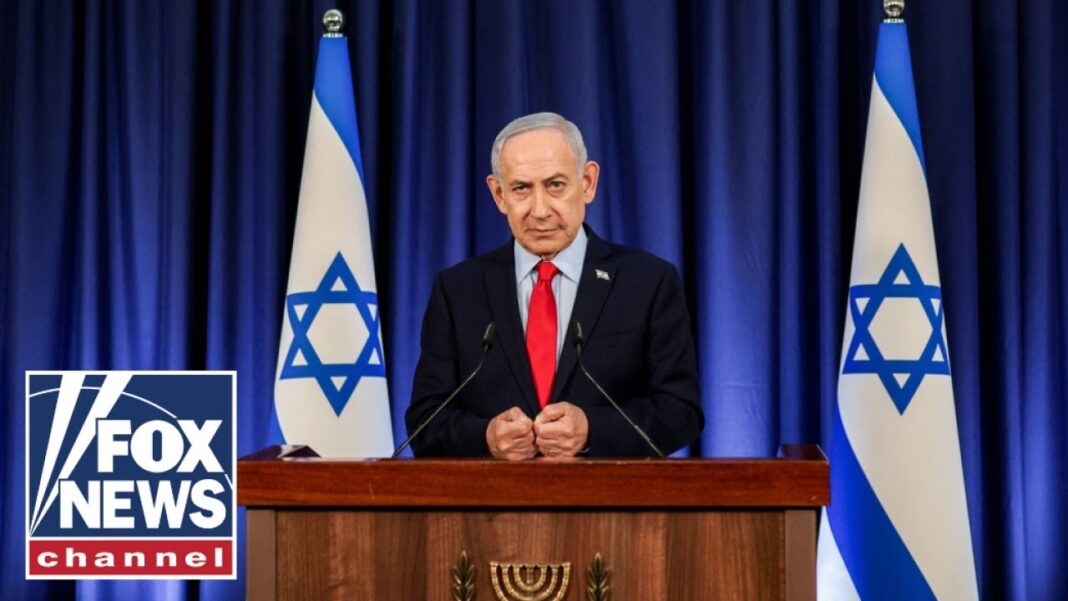
Standing amid the debris of a missile impact in the southern Israeli city of Arad on Sunday, Israeli Prime Minister Benjamin Netanyahu delivered one of his starkest warnings yet about the widening scope of the current conflict with Iran. The visit, which followed a series of escalating attacks across Israel, served not only as a show of solidarity with affected residents but also as a platform for a broader message: that the threat posed by Iran, in his view, now extends far beyond Israel’s borders and into the global arena.
According to a report by Israel National News, Netanyahu described the missile strike in Arad as a deliberate attempt to inflict mass civilian casualties. Although the attack did not result in fatalities, he emphasized that this outcome was due to circumstance rather than intent. “This was not restraint,” Netanyahu said at the scene, as cited by Israel National News. “This was chance.”
The missile that struck Arad hit a civilian area, underscoring what Israeli officials describe as a shift in targeting patterns. Israel National News has highlighted that the attack occurred in a residential environment, raising concerns about the increasing exposure of non-military populations to direct harm.
Emergency responders quickly secured the area, and while damage to infrastructure was reported, the absence of fatalities provided a narrow margin of relief. Nevertheless, Netanyahu used the moment to underscore the seriousness of the situation, arguing that the targeting of civilian zones reflects an intentional strategy rather than collateral impact.
The prime minister’s remarks align with broader Israeli assertions that recent attacks have demonstrated a willingness by Iran to escalate beyond traditional military targets. Israel National News has documented additional incidents cited by Netanyahu, including missile activity near religious sites in Jerusalem, further amplifying the sense of vulnerability.
Central to Netanyahu’s message was the assertion that Iran’s capabilities are no longer confined to regional boundaries. He referenced a recent long-range missile launch as evidence of an expanding operational reach, one that could potentially threaten areas well beyond the Middle East. “Iran is putting everyone in its sights,” he declared, a statement that Israel National News has described as indicative of a broader effort to galvanize international attention.
This framing reflects a strategic recalibration in Israel’s messaging. By emphasizing the global implications of Iran’s actions, Israeli leadership appears intent on broadening the coalition of concern, urging other nations to view the conflict not as a localized dispute but as a shared security challenge.
Israel National News has consistently reported on the growing apprehension among international observers regarding Iran’s missile capabilities, particularly in light of recent demonstrations of extended range. The Arad strike, while geographically limited, is being presented by Israeli officials as part of a larger pattern with far-reaching implications.
Netanyahu also drew attention to Iran’s actions in maritime domains, specifically its role in disrupting international shipping routes. These activities, he argued, constitute an effort to destabilize global security and exert pressure on the international community.
Israel National News has noted that the obstruction of key maritime corridors has already begun to affect global trade dynamics, particularly in the energy sector. The convergence of missile strikes and maritime disruption creates a multifaceted challenge that extends beyond traditional military considerations.
By linking these elements, Netanyahu sought to reinforce the argument that Iran’s actions are part of a coordinated strategy aimed at reshaping the regional and global order. The implication is clear: what is unfolding is not merely a bilateral conflict but a broader confrontation with systemic consequences.
A significant portion of Netanyahu’s remarks focused on Israel’s coordination with the United States, particularly under the leadership of President Donald Trump. While declining to provide specific operational details, the prime minister emphasized the closeness of the partnership. “We act together, and as much as possible, we do so discreetly,” Netanyahu stated, according to the Israel National News report.
This acknowledgment of coordination underscores the strategic alignment between the two countries, even as both navigate the complexities of escalating tensions. Israel National News has reported that such cooperation extends across multiple domains, including intelligence sharing, military planning, and diplomatic engagement.
The emphasis on discretion reflects the sensitive nature of these interactions, particularly in a context where public disclosure could have significant implications for operational security and international diplomacy.
Addressing Israel’s own military actions, Netanyahu sought to draw a clear distinction between Israel’s approach and that of its adversary. He asserted that Israeli operations are conducted “with great force” but are specifically aimed at Iranian leadership and infrastructure rather than civilian populations.
According to the Israel National News report, Netanyahu identified key targets as including the Islamic Revolutionary Guard Corps, as well as associated leadership structures, installations, and economic assets. This focus, he argued, reflects an effort to degrade the operational capacity of the Iranian regime while minimizing harm to non-combatants.
The delineation of targets serves both a strategic and communicative function. Strategically, it aligns with efforts to weaken Iran’s capabilities. Communicatively, it reinforces Israel’s claim to adherence to international norms regarding the conduct of military operations. Such distinctions are central to Israel’s messaging, particularly in the context of international scrutiny and the broader information landscape.
Netanyahu outlined two primary objectives for Israel’s ongoing campaign. The first is the dismantling of Iran’s nuclear and missile programs, which Israeli officials have long described as existential threats. The second is the creation of conditions that could enable the Iranian population to challenge its governing authorities.
These objectives reflect both immediate security concerns and longer-term strategic aspirations. The emphasis on internal change within Iran introduces a dimension that extends beyond military operations, suggesting a broader vision for regional transformation.
However, the feasibility of such goals remains a subject of debate among analysts. While military actions can degrade capabilities, the extent to which they can influence internal political dynamics is less certain.
Throughout his remarks, Netanyahu repeatedly called on other world leaders to take a more active role in addressing the threat posed by Iran. The report at Israel National News characterized this appeal as part of a sustained effort to mobilize international support.
The framing of Iran as a global threat is intended to resonate beyond traditional alliances, encouraging a wider coalition to engage with the issue. Whether this call will translate into concrete action remains to be seen, particularly given the varying priorities and perspectives of different nations.
Amid the strategic and political considerations, the visit to Arad also highlighted the human impact of the conflict. Residents of the city, many of whom witnessed the aftermath of the strike firsthand, are left to contend with the realities of living under the threat of missile attacks.
The Israel National News report documented the resilience of these communities, as well as the challenges they face in maintaining a sense of normalcy. The absence of fatalities in this instance provides a measure of relief, but the broader context ensures that uncertainty remains a constant presence.
The scene in Arad, marked by damage but not devastation, serves as a microcosm of a conflict that is both intensifying and expanding. Netanyahu’s remarks, as reported by Israel National News, reflect a leadership perspective that views the current moment as a critical juncture with implications far beyond Israel’s borders.
By framing the threat in global terms, emphasizing coordination with key allies, and outlining clear strategic objectives, Israel is seeking to navigate a complex and evolving landscape. Whether these efforts will succeed in altering the trajectory of the conflict remains uncertain.
What is clear, however, is that the stakes continue to rise. As missiles fall and rhetoric sharpens, the line between regional conflict and global confrontation appears increasingly tenuous—leaving the international community to grapple with a challenge that is as urgent as it is far-reaching.
