



|
Getting your Trinity Audio player ready...
|
By: Fern Sidman – Jewish Voice News
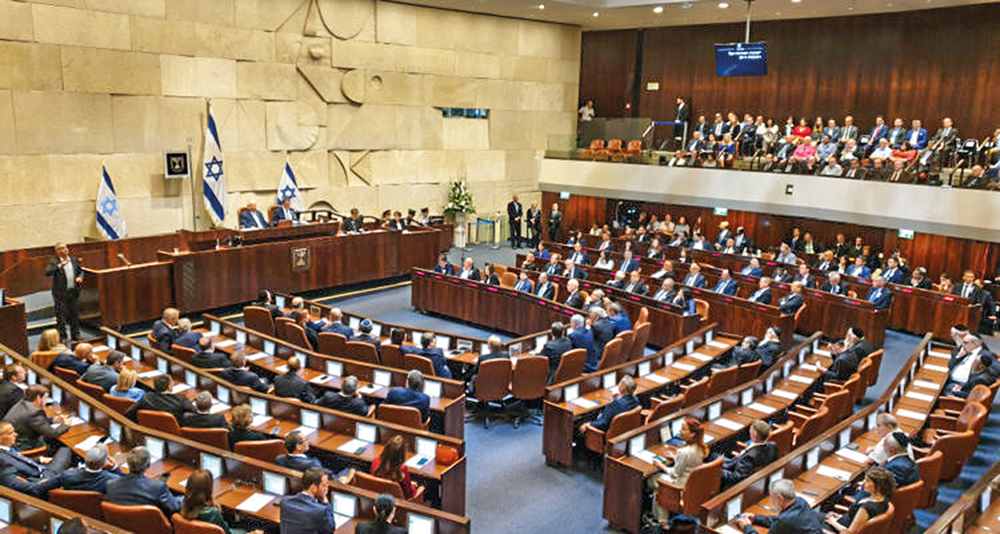
In a significant legislative move that underscores Israel’s evolving strategy in the battle over information warfare and national security, the Knesset on Monday approved the first reading of a bill that would dramatically enhance the government’s authority to bar foreign media outlets deemed hostile to the State of Israel. As reported on Monday by World Israel News (WIN), the measure—introduced by Likud Member of Knesset (MK) Ariel Kallner—passed by a vote of 50 to 41, setting the stage for committee deliberations and two additional readings before it can become law.
If fully enacted, the bill would make permanent the Communications Minister’s power to shut down foreign news organizations accused of threatening Israel’s security or serving as propaganda arms for hostile actors, without requiring the declaration of a national emergency. Currently, such powers exist only under temporary emergency legislation, renewed periodically since the war with Hamas reignited in 2023.
According to the information provided in the World Israel News report, the proposed law represents a major shift from temporary executive powers to a lasting legal framework aimed at protecting Israel’s information sovereignty.
The existing emergency legislation—passed in April 2024—authorized the Communications Minister to impose temporary bans on foreign broadcasters “posing a threat to national security.” The measure was invoked shortly thereafter to shut down operations of the Qatari state-owned network Al Jazeera, which Israeli officials accused of acting as “an operational arm of Hamas.”
Under the emergency statute, each ban was time-limited, initially requiring renewal every 45 days, later extended to 90 days, with each renewal subject to judicial review. This process forced the government to repeatedly justify its actions in court and to renew administrative orders multiple times throughout the year.
Communications Minister Shlomo Karhi (Likud)—a driving force behind the media restrictions—told the Knesset that the current framework had become untenable. “The temporary measure has expired, and therefore, the new law must be passed quickly,” he said, emphasizing that Israel could no longer afford legal and procedural delays in the face of what he described as an “aggressive and coordinated campaign of media incitement.”
As the World Israel News report detailed, the new bill seeks to eliminate those delays altogether by granting permanent banning authority to the Communications Minister and removing judicial oversight requirements for each individual order.
Perhaps most consequentially, the proposed law extends beyond traditional broadcasting. The Communications Ministry would gain explicit authority to compel internet service providers, cable operators, and satellite companies to block digital content produced by banned outlets, ensuring that hostile entities cannot simply migrate their operations online.
This expansion reflects Israel’s growing concern about the digital dissemination of anti-Israel narratives, particularly during wartime or periods of heightened tension. The move follows months of government frustration with what officials view as foreign propaganda campaigns designed to erode Israeli morale, embolden terrorism, and inflame global opinion against the Jewish state.
As World Israel News has repeatedly noted, the Israeli government’s conflict with Al Jazeera epitomizes the broader clash between press freedom and national security imperatives. Officials allege that the network’s Arabic-language broadcasts have incited violence, revealed sensitive troop movements, and glorified terrorist operatives during the ongoing conflict with Hamas.
Al Jazeera has denied these allegations, insisting that it is being targeted for its critical coverage of Israeli military actions. Nonetheless, the government has stood firm, with Minister Karhi stating that “Al Jazeera has long since ceased to be a media outlet and has become an instrument of the enemy.”
Supporters of the measure argue that Israel is confronting a new kind of warfare—one fought not only with rockets and drones but also with narratives, disinformation, and psychological manipulation. In this context, they say, traditional notions of press freedom cannot be allowed to provide cover for entities aligned with terrorist organizations.
As one Likud lawmaker told World Israel News, “Freedom of the press does not mean freedom to aid the enemy. When an outlet amplifies enemy propaganda during wartime, it becomes a weapon, not a newsroom.”
The proposed bill, supporters claim, simply codifies powers that are already necessary and justified in practice. “The government should not have to repeatedly go to court to prove that terrorist-linked broadcasters are dangerous,” another coalition MK said. “If it is clear that a foreign outlet operates on behalf of those seeking Israel’s destruction, its presence here must be terminated permanently.”
Security experts quoted in the World Israel News report echoed that view, describing the measure as a defensive response to hybrid warfare. “Terrorist groups are using global media as a strategic vector of attack,” said one retired Israeli intelligence official. “They exploit Western norms of openness to spread hate, distort facts, and undermine the legitimacy of Israel’s self-defense. This bill recognizes that the information front is no less critical than the physical battlefield.”
However, the proposed law has drawn sharp criticism from civil liberties organizations, opposition lawmakers, and international press freedom advocates. The Association for Civil Rights in Israel (ACRI) issued a statement condemning the legislation as “an unprecedented assault on freedom of expression.”
As reported by World Israel News, ACRI’s legal director, Hagar Shachter, warned that the measure “represents a fundamental shift in the balance between national security and civil liberty.” She argued that by eliminating judicial review and granting a cabinet minister unilateral power to decide which outlets may operate, the law “invites abuse and politicization.”
Shachter told World Israel News that the bill is part of a “broader campaign by the Netanyahu government to silence dissent and curtail independent journalism,” echoing similar accusations made by foreign watchdog groups such as Reporters Without Borders and Human Rights Watch.
Opposition members in the Knesset voiced similar concerns. One centrist MK called the bill “a dangerous precedent that hands the government censorship powers unseen in Israel’s democratic history,” adding, “What begins with Al Jazeera could end with any media outlet critical of the government.”
The debate over the bill encapsulates one of the defining tensions in Israeli democracy: the constant struggle to balance the imperatives of security and freedom. For many Israelis, the country’s unique security environment—surrounded by hostile actors and subject to relentless delegitimization campaigns—necessitates extraordinary measures.
Yet, as the World Israel News report pointed out, critics counter that Israel’s very strength lies in its commitment to democratic norms even under duress. They warn that normalizing censorship powers, even against overtly hostile outlets, risks eroding the moral and legal foundations that distinguish Israel from its adversaries.
Indeed, the timing of the bill’s passage comes amid heightened scrutiny of Israel’s internal politics. Prime Minister Benjamin Netanyahu’s coalition has already faced widespread protests over its judicial reform agenda, which opponents claim threatens to weaken institutional checks on government power. Against that backdrop, this new bill could become a flashpoint in Israel’s ongoing debate over governance, democracy, and identity.
With Monday’s vote, the bill now moves to the Knesset’s National Security Committee, which will review the language and consider potential amendments before returning it for second and third readings. Given the coalition’s numerical advantage, analysts told World Israel News that the bill is likely to pass, though possibly with adjustments to reintroduce some form of limited judicial oversight.
If adopted, it would formalize a permanent doctrine of defensive information sovereignty—a framework through which Israel asserts its right to restrict foreign media activity that undermines national cohesion or security. Proponents see it as an overdue modernization of Israel’s legal architecture for a new era of digital conflict. Opponents fear it may mark the beginning of a slippery slope toward state-controlled information.
For now, the debate continues to unfold in the Knesset and across Israeli society, as journalists, lawmakers, and citizens wrestle with a question that has haunted democracies for generations: how to safeguard liberty while surviving in an age of relentless hostility.
As the World Israel News report observed, the outcome of this legislative battle will reveal much about the future of Israel’s democracy—and about how the Jewish state defines both its enemies and its freedoms in an era when words, as much as weapons, can shape the fate of nations.
