



|
Getting your Trinity Audio player ready...
|
Israel Mobilizes Reservists and Expands Campaign as Regional Tensions Soar Following Strikes in Iran
By: Fern Sidman
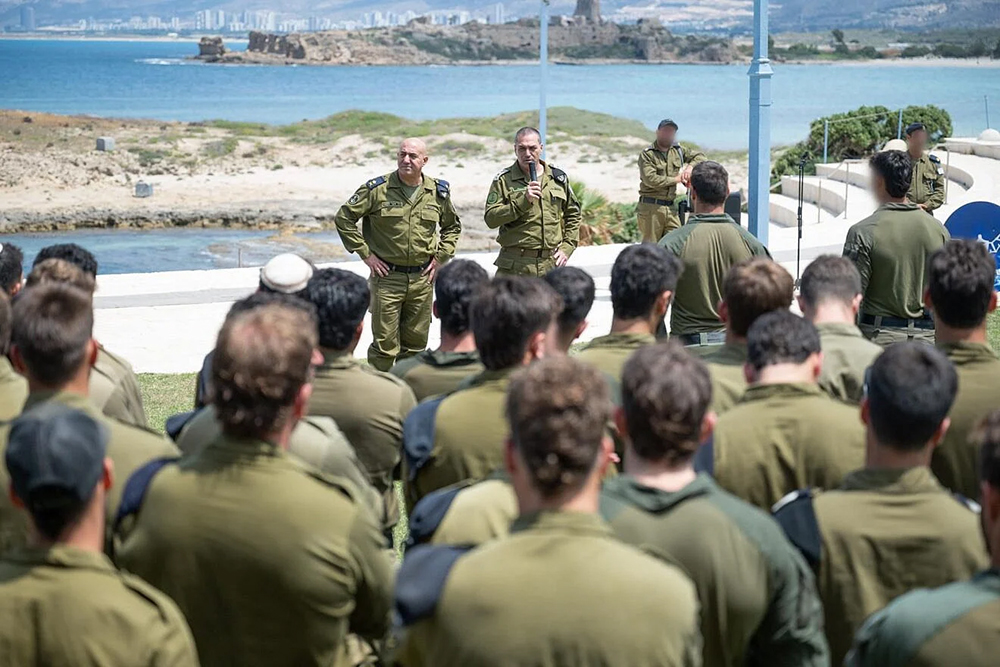
As Israel enters what military officials have described as a critical “multi-front defense and offense posture,” the Israeli Defense Forces (IDF) announced on Friday the widespread mobilization of reservists across numerous combat units. According to The Times of Israel, these troops are being deployed “to all combat arenas throughout the country” in response to escalating hostilities and the launch of a coordinated Israeli air campaign against Iran, marking one of the most consequential military operations in recent Middle East history.
The surge in manpower and readiness comes amid Operation Rising Lion, Israel’s sweeping military assault on Iranian nuclear and ballistic missile infrastructure. The IDF confirmed the offensive was initiated to neutralize what it views as an imminent existential threat—the Islamic Republic’s pursuit of a nuclear arsenal. In an official statement, the military stressed that reservist call-ups were integral to a broader strategy encompassing both domestic protection and proactive military engagement “across all arenas.”
According to the report in The Times of Israel, sirens were sounded in the Jerusalem area and parts of Judea and Samaria early Friday morning after a ballistic missile was launched from Yemen. The projectile, reportedly intercepted mid-air, underscores the regional reverberations of Israel’s operation and highlights the potential for this conflict to metastasize beyond the Israel-Iran axis. The Iranian-backed Houthi movement in Yemen, a known proxy of Tehran, appears to be activating its role in the larger confrontation, signaling a dangerous new front.
Meanwhile, on Iranian soil, the death toll from Israeli strikes in the country’s northwestern East Azerbaijan province has climbed. Agence France-Presse reported that Iran’s IRNA state news agency revised its initial count from eight to 18 fatalities, with an additional 35 individuals wounded. IRNA stated that at least 11 strategic sites across the province were targeted in what it characterized as “brutal aggression.” Among the installations reportedly hit were suspected missile production facilities and military logistics centers.
Israel’s Friday strikes, described by Israeli sources as a calculated effort to dismantle key Iranian weapons programs, targeted a number of high-value sites—including facilities suspected of housing enriched uranium and precision-guided missile systems. Iranian media also reported that the Israeli Air Force conducted sorties near the Fordo nuclear facility, a deeply-buried and heavily fortified site long associated with covert uranium enrichment. Iranian air defense forces claimed they successfully intercepted and destroyed an Israeli drone near the area, but this remains unconfirmed.
In a sign of coordinated geopolitical choreography behind the scenes, Reuters reported that the United States provided several key Middle Eastern allies with advance warning of Israel’s planned operation. Citing three diplomatic sources, the report states that Washington issued a diplomatic note on Thursday afternoon to countries including Qatar, notifying them of the impending airstrikes. However, the Trump administration has emphasized that it was neither involved in the execution of the Israeli mission nor provided operational support.
In the diplomatic message, the State Department reiterated the administration’s policy of deterring Iran from acquiring nuclear weapons. “President Trump has been very clear on his desire for peace in the region,” the memo noted, “but at the same time has been firm that Tehran cannot be allowed to obtain nuclear weapons.” The State Department has so far declined formal comment on the matter.
This latest escalation adds a significant new chapter to the longstanding Israeli-Iranian shadow war, transforming it into a more open, kinetic confrontation. IDF Chief of Staff Lt. Gen. Eyal Zamir affirmed the campaign would continue with “full force.” Speaking to the IDF general staff during a high-level assessment meeting, Zamir stated: “We are continuing with the two main efforts we defined for ourselves: the defensive effort and the offensive effort. There will be more difficult moments, and we must be prepared for the range of scenarios we have trained for.”
Analysts now widely consider the Israeli operation a deliberate gamble designed to decisively degrade Tehran’s military capability and signal to both Iran and the international community that Jerusalem will not tolerate the crossing of any nuclear threshold. As Israeli fighter jets return to bases and emergency protocols continue across Israeli cities, the military leadership warns that this may be only the beginning of a protracted confrontation.
The Times of Israel further reported that the Israeli government remains on high alert for asymmetric retaliation—either through proxy militias, cyberattacks, or direct missile strikes from Iran. With tensions stretching across the region and diplomatic backchannels working overtime to prevent a wider conflagration, the immediate question is whether Iran’s next move will mark the beginning of sustained war—or the closing act of a high-risk deterrent drama decades in the making.

Trump REFUSES Israel, bunker buster bombs:
Trump official passes on giving IDF real bunker buster to strike Iran
https://www.msn.com/en-us/news/news/content/ar-AA1ytF94?ocid=sapphireappshare