



|
Getting your Trinity Audio player ready...
|
By: Carl Schwartzbaum
In one of the most critical and tightly guarded components of Israel’s recent 12-day war with Iran, the Israel Defense Forces quietly activated an unprecedented contingency: a clandestine backup command known as the “Shadow General Staff.” As first revealed by Hebrew-language media and corroborated by defense officials, this alternative leadership structure was established in anticipation of a worst-case scenario—namely, a decapitation strike from Tehran aimed at neutralizing Israel’s military command infrastructure.
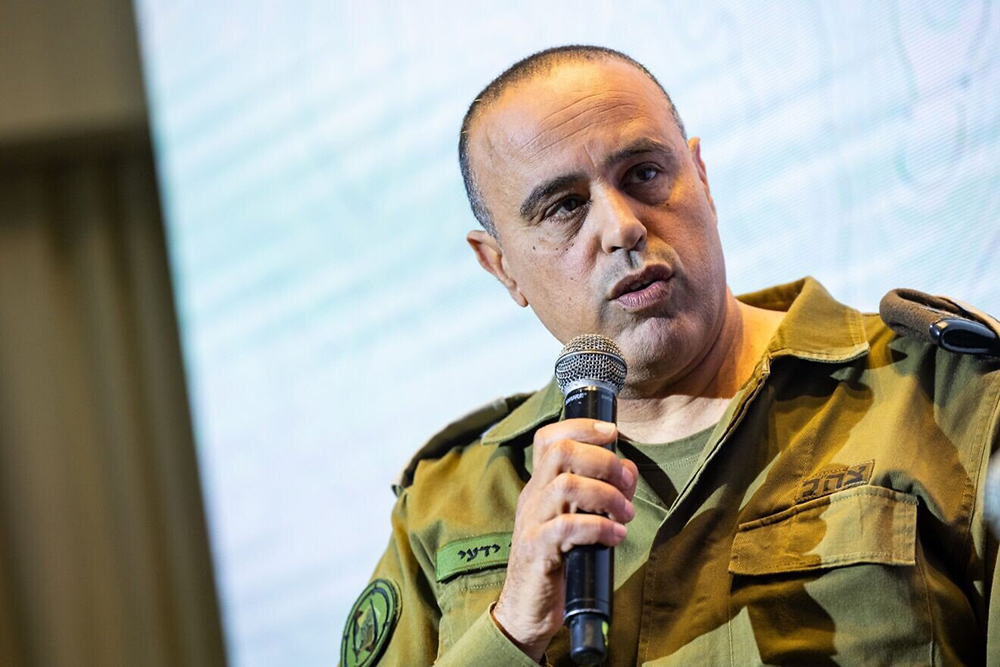
According to multiple reports cited by The Jewish News Syndicate (JNS), the Shadow General Staff was commanded by IDF Deputy Chief of Staff Maj. Gen. Tamir Yadai. Comprising a cadre of experienced reserve generals, the unit was fully briefed on operational battle plans and physically relocated to a classified location ahead of Israel’s surprise June 13 strike on Iran’s nuclear weapons facilities.
The unit remained disconnected from the IDF’s regular communication systems, operating in cyber isolation to prevent any chance of hacking or physical compromise. The intention, sources told JNS, was clear: if Iran succeeded in targeting the Kirya military headquarters in Tel Aviv or eliminated Israel’s top brass, this alternative command structure would assume immediate operational control of the war effort.
Such fears were far from theoretical. During the intense 12-day conflict, Iran launched a flurry of ballistic missiles and drones at strategic targets across Israel. According to Ynet, several missiles came dangerously close to the Kirya, striking near the Da Vinci Towers and the heavily trafficked Azrieli Center mall. A report from The Telegraph in Britain confirmed that at least five IDF installations were directly hit by Iranian projectiles.
Despite the grave risks, the primary command structure held—and the Shadow Staff was never forced to activate. Still, as JNS emphasized in its coverage, the very existence of the alternative unit reflects Israel’s growing sophistication in defensive planning against an enemy it now regards as having crossed a “strategic threshold.”
The stakes had never been higher. As JNS reported, Israel’s opening air assault on Iran resulted in the elimination of key figures within Iran’s senior military command—including, according to reports, the Islamic Republic’s own chief of staff. Over the course of the 12-day campaign, additional senior commanders were neutralized in a series of coordinated precision strikes, dealing a major blow to Tehran’s strategic and symbolic power.
Domestically, the Israeli political spectrum responded with rare unity and urgency. Opposition leader and former defense minister Benny Gantz, speaking to JNS from the Knesset, asserted that Israel must not and would not allow any incursion on its sovereignty—whether from Iran directly or via its terrorist proxies. “We have the intention and the means to stop such events from happening,” he stated firmly. “The Iranians definitely felt this.”
Yisrael Beiteinu Party chair Avigdor Liberman offered a more ominous tone. In comments to JNS, he described Iran’s current posture as one of relentless pursuit of vengeance. “Everything they’re doing right now—talking, breathing—is about revenge,” he said. “This isn’t the end of the war. Everything happening with Iran is just a ceasefire.”
The security threat, it seems, is not confined to foreign battlefields. As Channel 12 recently revealed, Iran came “very close” to assassinating Israeli Defense Minister Israel Katz, reportedly with assistance from two Jewish Israeli nationals arrested earlier this year.
