



|
Getting your Trinity Audio player ready...
|
By: Yisroel David
In the early hours of Wednesday morning, as much of central Israel lay under the uneasy quiet that has come to define nights amid escalating regional tensions, that silence was violently shattered. A deadly missile barrage launched from Iran struck multiple locations, leaving devastation in its wake and claiming the lives of two elderly civilians in the city of Ramat Gan.
The attack, which included missiles equipped with submunition warheads—devices designed to disperse smaller explosive fragments over a wide area—has intensified concerns about both the lethality and indiscriminate nature of the weaponry being deployed. According to a report filed in the wee hours of Wednesday morning by Israel National News, the victims, a man and a woman both in their seventies, were found lifeless in their apartment, unable to reach safety in time.
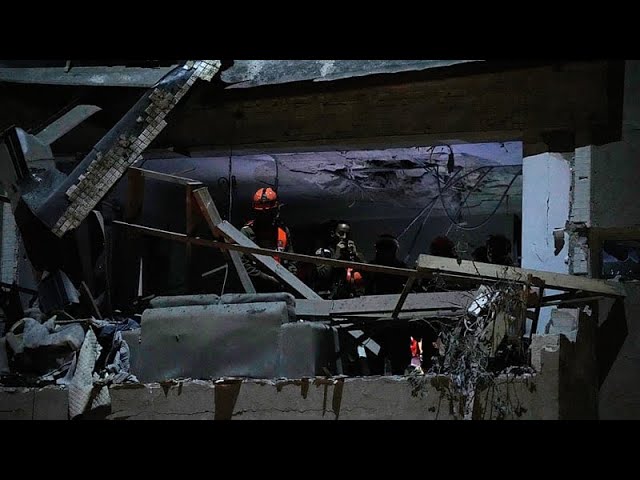
Emergency responders arriving at the scene were met with a tableau of destruction. The apartment building had sustained significant structural damage, with shattered glass, smoke, and debris strewn across the area. The victims were discovered on the fourth floor, unconscious and unresponsive.
Magen David Adom (MDA) teams immediately initiated life-saving procedures. Despite their efforts, the injuries sustained by the victims proved fatal.
Paramedic Inbar Green and medic Naftali Halberstadt, among the first to arrive, described the scene in stark terms. As recounted in the Israel National News report, they found the victims without a pulse and not breathing, their bodies bearing severe trauma consistent with the impact of explosive submunitions.
“We conducted medical assessments, but they showed no signs of life,” they reported, underscoring the futility of even the most urgent interventions in the face of such devastating injuries.
Preliminary findings suggest that the victims may not have had sufficient time to reach a protected space. In one case, a physical disability is believed to have impeded mobility, highlighting the disproportionate vulnerability of certain populations during such attacks.
The use of submunition warheads marks a particularly alarming development. Unlike conventional missiles, which detonate at a single point, submunition systems disperse multiple smaller explosives over a broad area, significantly increasing the potential for widespread damage and civilian casualties.
Military analysts cited by Israel National News note that such weapons are especially dangerous in urban environments, where dense populations and limited access to immediate shelter can amplify their destructive impact.
The attack on Ramat Gan thus represents not only a tragic loss of life but also a troubling escalation in the types of weaponry being employed.
In the aftermath of the strike, emergency services mobilized rapidly. MDA teams, alongside fire and rescue units, conducted extensive searches for additional victims and provided medical assistance to those injured.
Four individuals were reported to have sustained light injuries in the Ramat Gan area. Elsewhere, in Bnei Brak, a young man in his mid-twenties was treated for shrapnel wounds to his hand and transported to Ichilov Hospital. In Kafr Qassem, three additional individuals received treatment for minor injuries.
The Commander of the Home Front Command visited the site, describing it as “a very difficult scene.” As reported by Israel National News, he expressed condolences to the families of the victims and commended the swift and coordinated response of local authorities and emergency personnel. “Home front command forces are operating at every site,” he said, emphasizing the comprehensive nature of the ongoing response efforts.
The impact of the barrage extended beyond immediate casualties, affecting critical infrastructure in the Tel Aviv metropolitan area. Shrapnel damage near the Tel Aviv Savidor Center train station forced the temporary suspension of rail services.
According to the information provided in the Israel National News report, Israel Railways implemented emergency measures, deploying shuttle buses to maintain connectivity between key locations, including Herzliya and Ben Gurion Airport. While no injuries were reported in connection with the railway damage, the disruption underscores the broader societal impact of such attacks. Rail services were expected to resume later in the morning, with repair crews working through the night to restore normal operations.
The Ramat Gan strike was part of a broader pattern of missile launches that unfolded over the course of the night. Sirens sounded across southern Israel, prompting residents to seek shelter as additional projectiles were detected.
In those instances, interception systems successfully neutralized the incoming threats, preventing further casualties or damage. Approximately half an hour later, sirens were activated again in central Israel following another launch, believed to involve similar submunition technology. Although no injuries were reported in these subsequent incidents, fires broke out at several impact sites, further straining emergency services.
The events of Wednesday morning follow closely on the heels of another attack the previous evening, when the Hezbollah terrorist organization launched a barrage of at least 40 rockets toward northern Israel. As detailed by Israel National News, these rockets targeted a wide geographic area, from communities in the Upper Galilee to regions near Hadera. While many of the projectiles were intercepted, at least one building in Karmiel sustained a direct hit.
Remarkably, no injuries were reported in that earlier barrage, a testament to the effectiveness of Israel’s missile defense systems. Nevertheless, the cumulative effect of repeated attacks has heightened tensions and underscored the persistent threat facing civilian populations.
Beyond the strategic and operational considerations lies a deeply human story. The deaths of two elderly individuals in Ramat Gan serve as a stark reminder of the vulnerabilities that persist even in a country equipped with advanced warning systems and protective infrastructure.
For those with limited mobility, the window of time between a siren and an impact can be tragically insufficient. The inability to reach a protected space in time transforms what might otherwise be a survivable incident into a fatal one.
As Israel National News has emphasized, such cases highlight the need for continued investment in accessible safety measures and community support systems.
The use of submunition warheads, combined with the coordination of attacks from multiple fronts, suggests a deliberate effort to test and potentially overwhelm Israel’s defensive capabilities. While interception systems have proven highly effective, they are not infallible, particularly when faced with complex and sustained assaults.
The dual nature of the threat—from Iran and Hezbollah—also reflects the interconnected dynamics of the region’s security landscape. Analysts point to the possibility of coordinated strategies aimed at increasing pressure on Israel across multiple theaters.
Despite the severity of the attacks, the response from Israeli authorities and civil society has been characterized by resilience and coordination. Emergency services have operated with efficiency, infrastructure disruptions have been addressed promptly, and communities have adhered to safety protocols.
The restoration of rail services and the continued operation of emergency response units demonstrate a capacity to absorb and recover from shocks, even as the threat environment remains volatile.
The events in Ramat Gan and beyond represent more than a series of isolated incidents; they are part of an ongoing narrative of conflict, resilience, and human cost. The deaths of two civilians—ordinary individuals caught in extraordinary circumstances—serve as a poignant reminder of the stakes involved.
As reported by Israel National News, the night’s events have left an indelible mark on the communities affected. They also raise pressing questions about the trajectory of the conflict and the measures required to safeguard civilian populations.
In the face of such challenges, the balance between security and normalcy becomes increasingly difficult to maintain. Yet, as the rapid mobilization of emergency services and the restoration of daily functions demonstrate, there remains a steadfast commitment to preserving life and continuity.
The skies may have quieted—for now—but the echoes of this night will linger, a somber testament to the enduring realities of life under threat.
