



|
Getting your Trinity Audio player ready...
|
By: Tzirel Rosenblatt
In a moment that encapsulates both the peril and resilience defining daily life under sustained missile threat, newly released footage from Tel Aviv on Sunday has captured a near-fatal encounter between a civilian vehicle and an incoming strike—an incident that has reverberated across Israel and underscored the unpredictable nature of the ongoing conflict.
According to a report by Israel National News, the video documents a chilling sequence near Habima Square, one of Tel Aviv’s most prominent cultural and urban landmarks. The footage shows a vehicle approaching a crosswalk in ordinary traffic conditions, its driver unaware that within seconds, the routine moment would transform into a life-threatening ordeal.
As the car slows and comes to a halt, a sudden and violent explosion erupts mere centimeters away. The impact sends debris and fragments into the air, engulfing the vehicle in a cloud of dust, smoke, and shattered material. The proximity of the strike—so close as to appear almost inseparable from the vehicle itself—has rendered the footage one of the most striking visual records of the current wave of attacks.
The driver, Shlomo Akkad, is currently receiving treatment at Ichilov Hospital, where he is recovering from a head injury and other trauma sustained during the incident. Speaking to media outlets, his account provides a vivid and deeply personal perspective on the event. “This explosion terrified me,” Akkad recounted, as reported by Israel National News. “Suddenly, there was a great blast, and blocks flew at me from the ground.”
His description conveys the suddenness and intensity of the moment—a transition from normalcy to chaos in the span of seconds. The force of the explosion shattered all the windows of the vehicle, sending shards of glass and debris into the cabin. “I found myself full of dirt,” he continued. “All the windows shattered on me, the door, everything. There was a ton of smoke, and I was really scared.”
Perhaps most striking is Akkad’s admission that, in the immediate aftermath, he believed he might have been killed. Covered in dust and unable to fully comprehend his surroundings, he experienced what many survivors of such events describe as a moment of disorientation and existential uncertainty. “I really thought that I might be dead,” he said.
In reflecting on the moments leading up to the explosion, Akkad acknowledged that he had heard the warning siren but chose to remain in his vehicle rather than seek shelter—a decision that he now recognizes as a departure from established safety guidelines.
Israel National News has consistently emphasized the importance of adhering to instructions issued by the Home Front Command, which are designed to maximize civilian protection during missile alerts. Akkad’s experience serves as a stark reminder of the risks associated with even brief delays in seeking cover. “I looked, and I saw the explosion site a meter from the car,” he said. “I thanked G-d at that moment. He didn’t want me to die.”
This acknowledgment of survival—framed in both personal and spiritual terms—highlights the thin margin between life and death in such scenarios. It also underscores the critical role of preparedness and compliance with safety protocols.
Despite the physical injuries and psychological shock, Akkad concluded his remarks with a message that has resonated widely across Israeli society. His words, as reported by Israel National News, reflect a broader narrative of resilience that has emerged in response to sustained attacks. “Maybe this is a message to our enemies,” he said. “You can’t defeat us. No matter what you throw and no matter what you do, you will not defeat the people of Israel.”
This sentiment—combining defiance with determination—has become a recurring theme in public discourse, as communities seek to maintain morale in the face of ongoing threats.
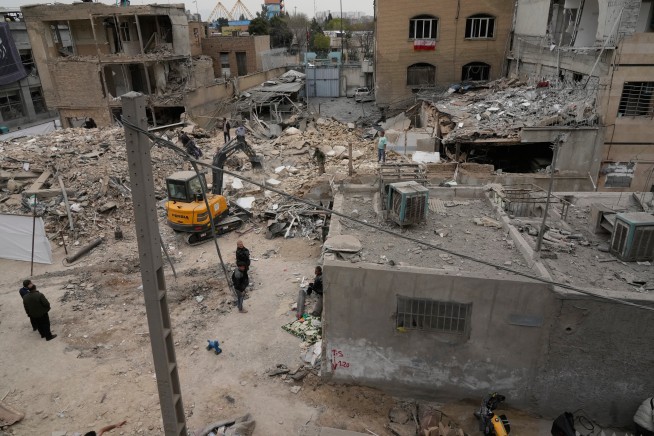
The incident near Habima Square was not an isolated event but part of a broader series of impacts across Tel Aviv and central Israel. Israel National News has reported that multiple sites were struck or affected by shrapnel and interceptor fragments following the latest missile launch.
Emergency response teams were dispatched to several locations, where they provided medical assistance and assessed damage. The scale of the response reflects both the intensity of the attacks and the preparedness of Israel’s emergency infrastructure.
Paramedics and emergency medical technicians from Magen David Adom evacuated 15 individuals to hospitals, including Beilinson Hospital and Ichilov Hospital. Among the injured was a 53-year-old man in serious condition, suffering from blast-related injuries.
Three additional individuals were classified as being in moderate condition, while the remaining victims sustained lighter injuries. Israel National News has noted that the distribution of injuries highlights the varied impact of such attacks, which can range from minor trauma to life-threatening conditions depending on proximity and circumstances.
The response of emergency services has been a critical factor in mitigating the consequences of the attacks. Magen David Adom personnel, supported by police and bomb disposal units, have worked to secure affected areas, treat the injured, and identify potential hazards.
Yitzhak Reichman, an emergency medic with Magen David Adom, described the scene encountered by responders. “We arrived at a man in his 40s who was injured by missile shrapnel,” he said, as cited by Israel National News. “He had injuries to his leg and back and was frightened.”
Reichman’s account underscores the dual challenge faced by emergency personnel: addressing both the physical and psychological needs of victims. In addition to administering medical treatment, responders must provide reassurance and stability in moments of acute distress.
He also reiterated a critical message for the public: “When a siren sounds, it is important to follow the instructions of the Home Front Command and enter a protected space—it saves lives.”
The events in Tel Aviv highlight the transformation of urban spaces into arenas of conflict. Areas such as Habima Square, typically associated with cultural activity and civic life, have become sites of sudden and unpredictable danger.
Israel National News has documented the broader implications of this shift, noting that the integration of civilian and military dimensions creates complex challenges for both defense and daily life. The presence of missile threats in densely populated areas amplifies the potential for casualties and disruption.
At the same time, the ability of emergency services to respond rapidly and effectively reflects a high level of institutional readiness. This capacity has been a key factor in limiting the impact of attacks, even as the frequency and intensity of incidents increase.
The video of the near-miss in Tel Aviv has become emblematic of the current phase of the conflict. Its stark imagery—capturing the precise moment of impact—offers a visceral illustration of the risks faced by civilians.
Israel National News has noted that such footage plays a significant role in shaping public understanding, bringing the realities of the conflict into sharp focus. For viewers, the proximity of the explosion to the vehicle serves as a powerful reminder of the unpredictability of the threat.
As Tel Aviv and other cities continue to navigate the challenges posed by ongoing Iranian missile attacks, the experience of individuals like Shlomo Akkad provides both a cautionary tale and a testament to resilience.
The events of that day—captured in a matter of seconds—reflect a broader reality in which ordinary life is punctuated by extraordinary danger. Yet, as Israel National News has consistently reported, the response of both individuals and institutions demonstrates a determination to endure and adapt.
