



|
Getting your Trinity Audio player ready...
|
By: Max Schleifer
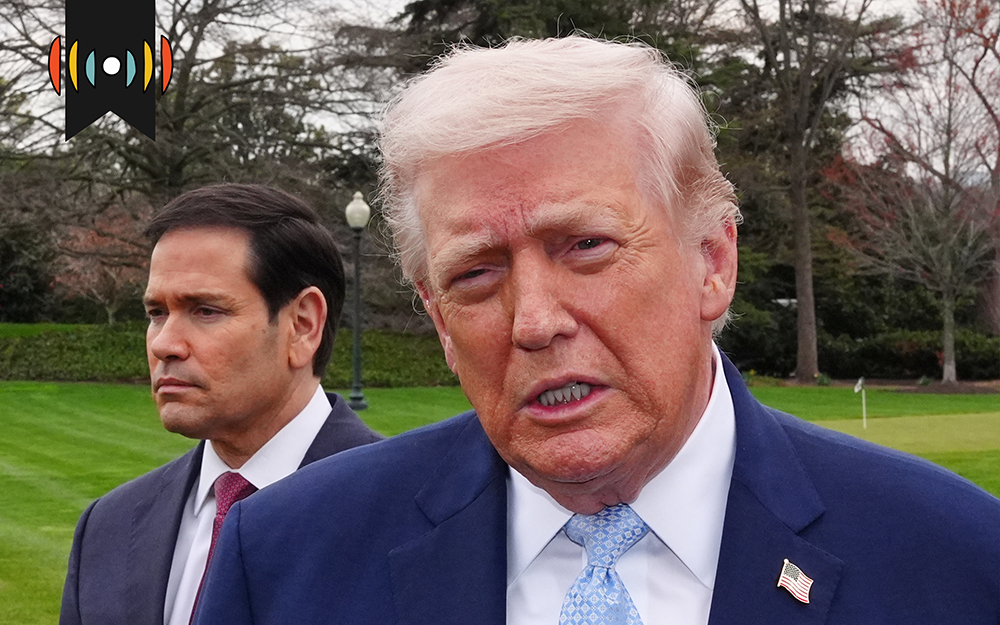
In a geopolitical drama marked by volatility, contradiction, and profound global consequence, President Donald Trump’s latest pronouncement has introduced a fleeting pause into what threatens to become one of the most unique military conflicts of the modern era. As reported by The New York Times, the president declared on Monday morning that the United States and Iran were engaged in discussions aimed at achieving a “total resolution of our hostilities in the Middle East,” even as he simultaneously delayed threatened military strikes on Iranian power infrastructure by five days.
This abrupt pivot—part conciliatory overture, part strategic recalibration—has injected a measure of ambiguity into an already opaque and rapidly evolving confrontation. It is a hallmark of Trump’s approach, one that The New York Times has frequently characterized as mercurial, even contradictory, with policy pronouncements often shifting within hours or existing in tension with prior declarations.
The events leading up to Monday’s announcement highlight the precariousness of the moment. Just days earlier, President Trump had issued a stark ultimatum: Iran must fully reopen the Strait of Hormuz within 48 hours or face targeted American strikes on its power plants. Such a threat, as The New York Times has noted in its analysis, would have carried not only strategic risks but also significant legal and ethical implications, potentially violating the Geneva Conventions by targeting civilian infrastructure.
The president’s subsequent decision to postpone those strikes reflects both the constraints of international law and the stark reality of deterrence. Iranian officials, through both state and semiofficial media channels, portrayed the delay not as a diplomatic breakthrough but as a retreat under pressure. According to accounts cited by The New York Times, Iranian narratives framed Trump’s decision as evidence that credible military threats from Tehran had successfully compelled Washington to reconsider its course.
Iran’s foreign ministry went further, dismissing the notion of ongoing negotiations altogether. Statements carried by state-affiliated outlets insisted that Tehran had not engaged in talks and characterized Trump’s claims as a tactical maneuver designed to stabilize energy markets and buy time for potential military escalation.
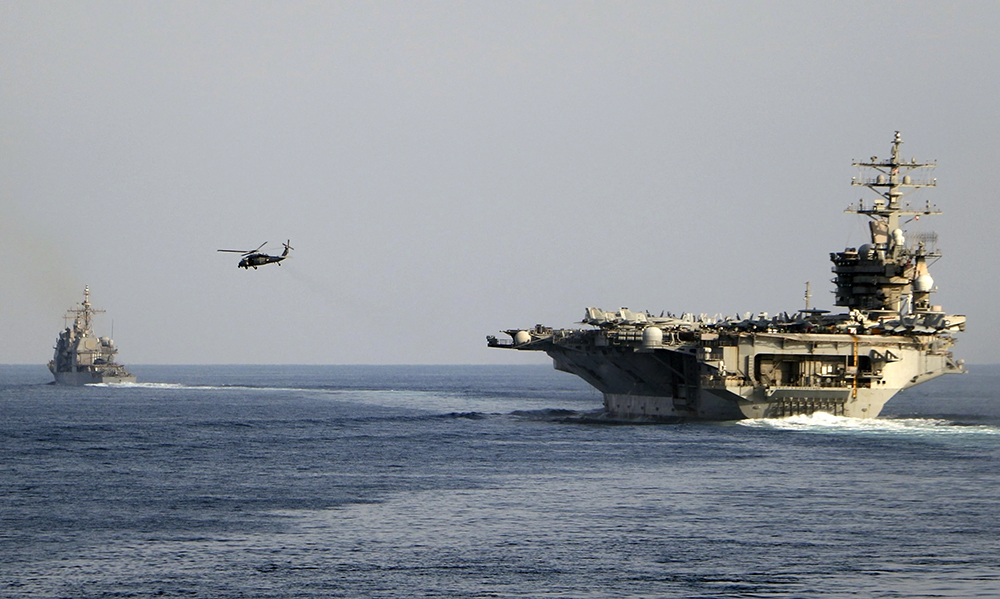
At the heart of this confrontation lies the Strait of Hormuz, a narrow maritime corridor through which approximately one-fifth of the world’s oil supply typically flows. Its closure—or even partial disruption—has immediate and far-reaching economic consequences. As The New York Times has reported, Iran has effectively impeded the passage of Western and Arab oil vessels, triggering a surge in global energy prices.
Since the onset of hostilities in late February, oil and gas prices have increased by more than 50 percent, a spike that analysts cited by The New York Times have described as surpassing even the historic oil shocks of the 1970s. The global benchmark, Brent crude, briefly approached $110 per barrel before retreating following Trump’s announcement of a potential diplomatic opening.
The reaction of financial markets underscores the extent to which geopolitical signaling has become intertwined with economic stability. The mere suggestion of negotiations was sufficient to drive oil prices down by approximately 10 percent and lift U.S. stock futures, a development that The New York Times interpreted as offering the administration a temporary reprieve from mounting economic pressure.
Yet beneath the surface of these market movements lies a fundamental question: are negotiations genuinely underway, or is the appearance of diplomacy itself a strategic instrument?
Iranian officials have been unequivocal in their denial of any direct engagement. According to The New York Times report, messages have indeed been transmitted to Tehran through regional intermediaries, but Iranian responses have remained consistent: there will be no negotiations until sufficient deterrence has been achieved. This stance reflects a broader strategic calculus, one in which Iran seeks to demonstrate resilience and impose costs on its adversaries before considering any diplomatic concessions.
The involvement of regional actors, particularly Oman, introduces another layer of complexity. Oman has historically served as a discreet intermediary between Washington and Tehran, and its foreign minister, Badr al-Busaidi, indicated that efforts were underway to secure safe passage through the Strait of Hormuz. His remarks, prominently highlighted in The New York Times, emphasized the broader economic stakes and warned of escalating global repercussions if the conflict continues.
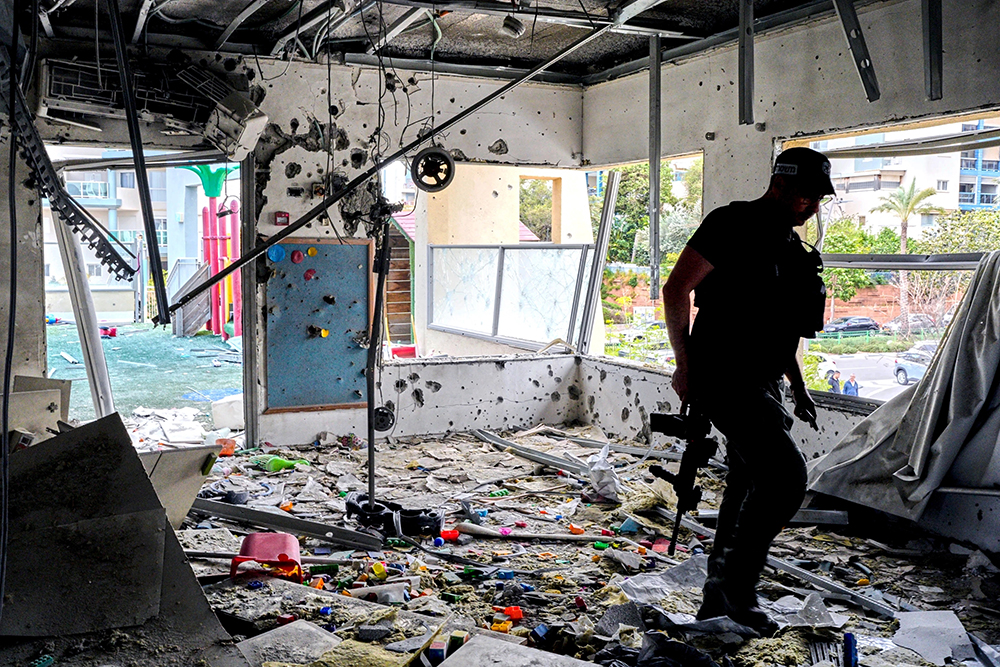
Even as diplomatic rhetoric has intensified, the military dimension of the conflict shows no signs of abating. Overnight strikes by Israeli and American forces targeted Iranian positions, while Iran responded with ballistic missiles and drone attacks across the region. In Tehran, widespread blackouts were reported following infrastructure strikes, illustrating the tangible impact of the conflict on civilian populations.
The duality of these developments—talks on one hand, intensified combat on the other—has been a recurring theme in The New York Times’ coverage. It reflects a broader pattern in which signaling and action operate simultaneously, often in contradictory ways.
U.S. military officials have sought to project confidence, with Central Command leadership asserting that operations are proceeding according to plan. Yet the absence of a clear strategic endpoint raises questions about the ultimate objectives of the campaign. As The New York Times report observed, the notion of a “complete and total resolution” remains ill-defined, encompassing a range of issues from maritime security to nuclear proliferation.
Among the most consequential of these issues is Iran’s nuclear program. Intelligence assessments cited by The New York Times indicate that Iran possesses approximately 970 pounds of near-bomb-grade uranium, stored in fortified facilities at Isfahan and Natanz. The fate of this material represents a central challenge for any prospective settlement.
The question is not merely technical but profoundly political. Any agreement that leaves Iran’s current leadership in place, along with its nuclear capabilities, risks being perceived as a failure by those who advocated for regime change. Conversely, efforts to dismantle Iran’s nuclear infrastructure through force could provoke a broader regional war with unpredictable consequences.
The human toll of the conflict continues to mount. More than 2,000 people have been killed since hostilities began, the majority in Iran and Lebanon. The expansion of the conflict into Lebanon, where Israel has engaged Hezbollah, underscores the regional dimensions of the crisis.
Incidents such as the death of an Israeli civilian due to errant artillery fire highlight the fog of war and the potential for tragic miscalculations. As detailed by The New York Times, such events -though unintended—can inflame tensions and complicate efforts at de-escalation.
For President Trump, the stakes are both international and domestic. The economic ramifications of the conflict, particularly rising energy prices, pose a direct challenge to his administration. At the same time, the perception of strength—or weakness—plays a critical role in shaping both domestic political narratives and international credibility.
The decision to delay strikes can thus be interpreted through multiple lenses. It may reflect a genuine desire to explore diplomatic avenues, a recognition of the risks associated with escalation, or a calculated effort to stabilize markets and buy time. As The New York Times report emphasized, Trump’s approach often defies conventional categorization, blending elements of brinkmanship and opportunism.
As the five-day moratorium unfolds, the path forward remains uncertain. The deadline itself may prove flexible, subject to extension or reinterpretation. What is clear, however, is that the underlying issues—control of the Strait of Hormuz, the status of Iran’s nuclear program, and the broader balance of power in the Middle East—cannot be resolved through short-term measures alone.
The coming days will test the viability of diplomacy in a context defined by deep mistrust and competing strategic imperatives. They will also reveal whether the current pause represents a genuine opportunity for de-escalation or merely a brief interlude in a conflict that continues to gather momentum.
In its ongoing coverage, The New York Times has portrayed this moment as one of profound consequence, not only for the region but for the global order. The interplay of military action, economic pressure, and diplomatic maneuvering has created a volatile equilibrium, one in which small shifts can have outsized effects.
As the world watches, the question remains whether this precarious balance can be sustained—or whether it will give way to a broader and more devastating confrontation.
Israel’s Northern Front
In a stark and unambiguous declaration that shines a proverbial spotlight on the intensifying volatility of the Middle East, Israel’s top military commander has warned that the campaign against Hezbollah is not merely continuing—it is entering a more expansive and potentially decisive phase. According to a report on Sunday by The Times of Israel, Chief of Staff Lt. Gen. Eyal Zamir has articulated a strategic vision that places Hezbollah at the center of a prolonged confrontation, one intrinsically linked to Israel’s broader conflict with Iran.
Speaking during the approval of operational battle plans at the Northern Command, Zamir conveyed a message that was at once tactical and existential. The fighting against Hezbollah, he said, “has only just begun,” a phrase that reflects not rhetorical flourish but a sober assessment of a campaign expected to stretch over an extended period and across multiple fronts.
Central to Zamir’s remarks is the notion that the wars unfolding in the region are not discrete conflicts but rather components of a unified strategic struggle. As The Times of Israel has consistently highlighted, Israeli defense officials increasingly view Hezbollah not as an isolated adversary, but as a critical extension of Iranian influence.
“Iran is our primary effort,” Zamir stated, a sentiment repeatedly underscored in The Times of Israel’s coverage of Israel’s military posture. Yet, he was equally clear that the northern arena—dominated by Hezbollah’s entrenched presence in Lebanon—constitutes a “central arena” in its own right. The two fronts, he argued, are inextricably linked, forming a network of threats that must be addressed in tandem.
This framing reflects a broader doctrinal evolution within the Israeli military establishment. Hezbollah is no longer seen merely as a regional militia but as a sophisticated proxy force operating within a coordinated Iranian strategy. According to The Times of Israel report, this perspective has driven Israel’s increasingly aggressive posture in both Lebanon and beyond.
Zamir’s remarks also contained a pointed critique of Hezbollah’s decision to enter the current conflict. By aligning itself more directly with Iran’s confrontation with Israel, the group has, in his view, committed a “grave mistake.”
