



|
Getting your Trinity Audio player ready...
|
By: Ariella Haviv
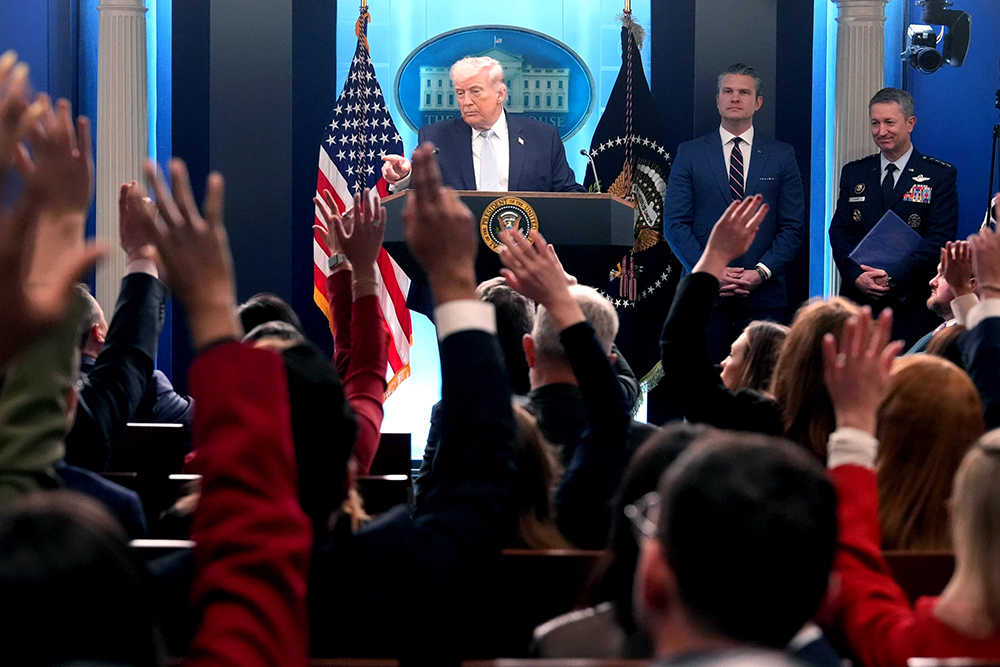
In a moment of extraordinary geopolitical tension, President Trump delivered a sweeping and deeply consequential message from the White House on Monday, one that underscored both the immense capacity of the United States military and the uncertainty of the current conflict with Iran. As reported by CNN, the president’s remarks on Monday painted a stark duality: a readiness to unleash unprecedented military force, coupled with a persistent—if tenuous—hope for a negotiated resolution.
The juxtaposition was striking. On one hand, Trump asserted that Iran could be “taken out in one night,” outlining a military contingency so comprehensive that it would leave the country’s infrastructure in ruins. On the other, he insisted that Iran remained an “active, willing participant” in diplomatic discussions, suggesting that even as warplanes circle and missiles are readied, the door to peace has not yet been closed.
The most arresting element of Trump’s address, as highlighted in the CNN report was his explicit articulation of a plan to systematically dismantle Iran’s infrastructure within a matter of hours. According to the president, American forces possess the capability to destroy “every bridge” and incapacitate “every power plant” across the country by midnight following a final deadline.
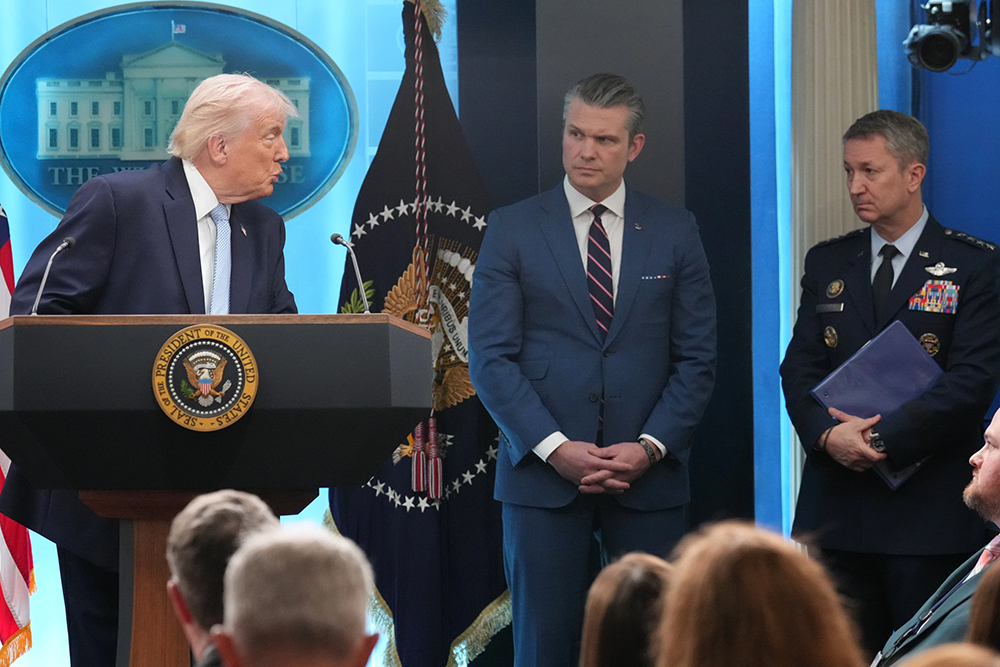
Such a scenario, if realized, would constitute one of the most expansive and devastating military operations in modern history. Analysts cited by CNN have noted that targeting civilian infrastructure on such a scale would not only cripple Iran’s economy but also inflict profound humanitarian consequences, potentially affecting millions of civilians who rely on those systems for electricity, transportation, and basic services.
Trump himself did not shy away from the magnitude of the threat. “It will take them 100 years to rebuild,” he said, framing the potential assault not merely as a tactical maneuver but as a generational recalibration of Iran’s capabilities.
Yet even as he outlined this apocalyptic vision, Trump maintained that negotiations were ongoing. According to a report in The New York Times, Iranian intermediaries—working through regional actors including Pakistan—have presented a ten-point proposal aimed at de-escalation. While the specifics of the plan remain undisclosed, American officials have already signaled that its terms are unacceptable in their current form.
Trump’s insistence that Iran is a “willing participant” in talks reflects a broader strategy that might best be described as coercive diplomacy. By coupling the threat of overwhelming force with the possibility of negotiation, the administration appears to be attempting to compel Iran into concessions that would otherwise be unattainable.
Central to these demands is the reopening of the Strait of Hormuz, a critical maritime chokepoint through which a significant portion of the world’s oil supply passes. Trump has repeatedly emphasized that any agreement must guarantee unimpeded access to this waterway, even suggesting that the United States should impose a toll on vessels transiting the strait—an idea that has drawn skepticism from international observers.
Amid the broader strategic discourse, the president devoted considerable attention to the dramatic rescue operation that unfolded deep inside Iranian territory. As detailed by CNN, the mission to recover a downed American airman became a focal point of the administration’s narrative, symbolizing both the risks of the conflict and the capabilities of the U.S. military.
The operation, described by CIA Director John Ratcliffe as a “daunting challenge,” involved an intricate combination of aerial surveillance, deception, and ground coordination. Chairman of the Joint Chiefs of Staff Dan Caine emphasized that the success of the mission owed much to the airman’s “absolute commitment to surviving,” a testament to the human element that underpins even the most technologically sophisticated operations.
Trump’s recounting of the mission revealed the extraordinary scale of the effort: 155 aircraft, hundreds of personnel, and a series of deliberate misdirections designed to confuse Iranian forces. The president’s invocation of divine providence in describing the rescue further underscored the emotional resonance of the event within the administration.
Notably, Trump acknowledged that not all of his military advisers supported the decision to launch the rescue mission. This admission, highlighted in coverage by CNN, offers a rare glimpse into the internal deliberations that accompany high-stakes military decisions.
Such dissent is not uncommon in matters of this magnitude, where the potential costs—including the loss of additional personnel—must be weighed against the imperative to recover those already in harm’s way. That the operation proceeded despite these reservations speaks to the administration’s willingness to assume significant risk in pursuit of its objectives.
While Washington deliberates its next move, Tehran has responded with defiance. Iranian officials, according to The New York Times report, have warned that any attempt to target civilian infrastructure will be met with a “much more crushing” retaliation. Such rhetoric reflects the broader dynamics of the conflict, in which each escalation begets the threat of a more severe countermeasure.
Trump’s remarks also revealed growing tensions between the United States and its traditional allies. The president openly criticized nations that have failed to support American efforts in the conflict, suggesting that the rift with NATO has deepened over time.
According to the CNN report, Trump’s grievances extend beyond the immediate context of the Iran war, encompassing broader disagreements over defense commitments and strategic priorities. His reference to Greenland—a longstanding point of contention—serves as a reminder of the multifaceted nature of these disputes.
The implications of this divergence are significant. A weakening of transatlantic unity could complicate efforts to present a cohesive front against Iran, while also raising questions about the future of international security arrangements.
Underlying much of the current tension is the question of energy. The Strait of Hormuz remains a critical artery for global oil shipments, and its closure—or even the threat thereof—has far-reaching economic consequences.
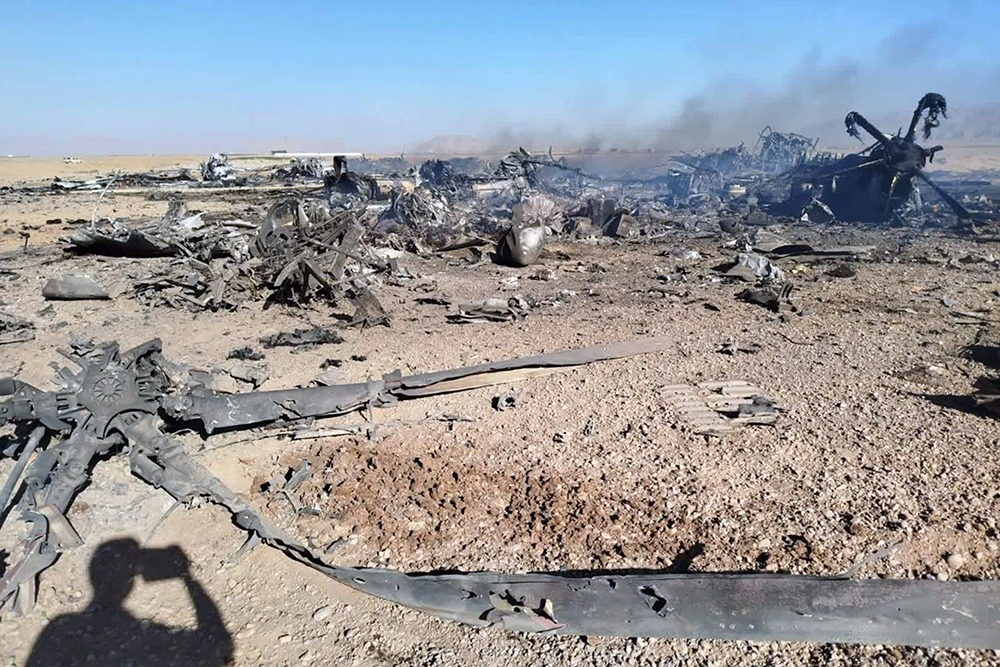
Trump’s suggestion that the United States might “take over” Iranian oil resources, as reported by CNN, reflects a broader strategic calculus in which control of energy assets is intertwined with military objectives. Such statements, however, are likely to be viewed by many as provocative, potentially complicating diplomatic efforts.
Perhaps the most striking aspect of the current situation is its ambiguity. When asked whether the war is escalating or de-escalating, Trump declined to provide a definitive answer. This uncertainty, underscores the fluidity of the conflict.
Deadlines have been set and extended, threats issued and moderated, proposals advanced and rejected. The result is a landscape in which the line between war and peace remains perilously thin.
Amid the strategic maneuvering and political rhetoric, it is essential not to lose sight of the human dimension. The rescued airmen, now receiving treatment in Germany, are a reminder of the personal stakes involved. So too are the civilians affected by missile strikes, air raids, and the broader disruptions of war.
The events of recent days have brought the United States and Iran to a critical juncture. President Trump’s remarks encapsulate the paradox of the moment: a readiness to deploy overwhelming force, coupled with a stated desire for diplomatic resolution.
Whether this approach will yield the desired outcome remains uncertain. What is clear, however, is that the stakes could scarcely be higher. The decisions made in the coming days will not only determine the trajectory of the current conflict but also shape the broader contours of international relations for years to come.
Israeli Airstrikes on Iran Continue
In a sweeping escalation of its ongoing military campaign against the Iranian regime, Israel has executed a series of meticulously coordinated airstrikes targeting some of the most critical pillars of Iran’s military-industrial infrastructure. According to a report on Monday by Israel National News, the latest wave of operations represents not merely a tactical maneuver, but a strategic effort to fundamentally degrade Tehran’s capacity to project force, sustain its weapons programs, and suppress internal dissent.
The strikes, carried out by the Israeli Air Force under the precise guidance of Israel Defense Forces intelligence, unfolded across multiple domains simultaneously—encompassing airfields, command centers, petrochemical facilities, and ballistic missile infrastructure. The breadth and depth of the operation underscore a doctrine aimed at dismantling not just individual capabilities, but the interconnected systems that sustain Iran’s military apparatus.
At the core of this operation was a deliberate targeting of the Islamic Revolutionary Guard Corps, the powerful institution that serves as both the backbone of Iran’s military operations and a central instrument of domestic control. As detailed by Israel National News, Israeli forces struck multiple IRGC installations in Tehran, including a central site used by units tasked with suppressing civilian populations.
This particular target is significant not only for its operational role but also for its symbolic weight. By striking facilities associated with internal repression, Israel appears to be sending a dual message: one aimed outward, signaling its capacity to penetrate Iran’s most sensitive defenses, and another aimed inward, highlighting the regime’s vulnerability even at the heart of its power structure.
Additional strikes were directed at key infrastructure within the IRGC’s headquarters and its air force command centers. These facilities serve as critical nodes in Iran’s command-and-control architecture, coordinating both conventional military operations and the deployment of advanced weaponry. Their degradation is likely to have a cascading effect on the regime’s ability to orchestrate complex operations.
Beyond command infrastructure, the operation placed a pronounced emphasis on Iran’s offensive capabilities, particularly its ballistic missile program. Israeli forces targeted storage facilities and launch sites intended for attacks against Israeli territory, as well as production centers responsible for manufacturing key components of missile systems.
This focus reflects a broader strategic imperative: to preemptively neutralize threats before they can be realized. Ballistic missiles, with their capacity for long-range precision strikes, represent one of the most potent elements of Iran’s military arsenal. By disrupting both the storage and production of these weapons, Israel seeks to curtail not only immediate threats but also the regime’s long-term capacity for escalation.
According to the report at Israel National News, the strikes also extended to a central site dedicated to the production of defense systems, further underscoring the comprehensive nature of the campaign. Rather than focusing on isolated targets, the operation appears designed to dismantle entire chains of capability—from raw material processing to final deployment.
Perhaps the most consequential aspect of the operation lies in its targeting of Iran’s petrochemical sector, a critical economic and industrial lifeline for the regime. Earlier on Monday, Israeli forces struck infrastructure at the largest petrochemical complex in Iran, located in Asaluyeh—a hub of immense strategic importance.
This facility plays a central role in producing and exporting chemical materials that are integral to Iran’s military supply chain. These materials are not merely commercial commodities; they are essential inputs for the manufacture of explosives, propellants, and other components used in ballistic missiles and advanced weaponry.
The significance of this strike cannot be overstated. With this latest operation, Israel has now targeted Iran’s two largest petrochemical complexes, effectively rendering more than 85 percent of the country’s petrochemical export capacity inoperable. This represents a profound disruption not only to Iran’s military capabilities but also to its economic stability.
The petrochemical industry serves as a major source of revenue for the Iranian regime, funding both domestic programs and external operations, including support for proxy groups across the region. By crippling this sector, Israel is not merely addressing immediate security concerns; it is also striking at the financial underpinnings of Iran’s broader strategic ambitions.
Central to the success of these operations is the integration of advanced intelligence capabilities with precision airpower. The strikes were conducted under the guidance of IDF intelligence, enabling Israeli forces to identify and engage high-value targets with remarkable accuracy.
This level of precision is critical in a conflict of this nature, where the distinction between military and civilian infrastructure can be both blurred and contested. By focusing on facilities directly linked to military operations and weapons production, Israel seeks to maintain the legitimacy of its actions while minimizing unintended consequences.
As highlighted by Israel National News, the coordination between intelligence and operational units reflects a sophisticated approach to modern warfare, one that leverages technological superiority to achieve strategic objectives with surgical efficiency.
These developments must be understood within the broader context of an intensifying confrontation between Israel and Iran, one that has increasingly extended beyond proxy engagements into direct military action. The targeting of infrastructure within Tehran itself marks a significant escalation, signaling Israel’s willingness to operate deep inside Iranian territory.
The implications of this shift are profound. By bringing the conflict to the heart of Iran’s capital, Israel is challenging longstanding assumptions about the limits of engagement and the sanctity of sovereign territory. This approach carries both risks and rewards: while it may enhance deterrence by demonstrating capability and resolve, it also raises the potential for further escalation.
For years, Iran has relied on a combination of geographic depth, proxy networks, and strategic ambiguity to deter direct attacks on its core infrastructure. The latest Israeli operations suggest that this deterrence is eroding.
