



|
Getting your Trinity Audio player ready...
|
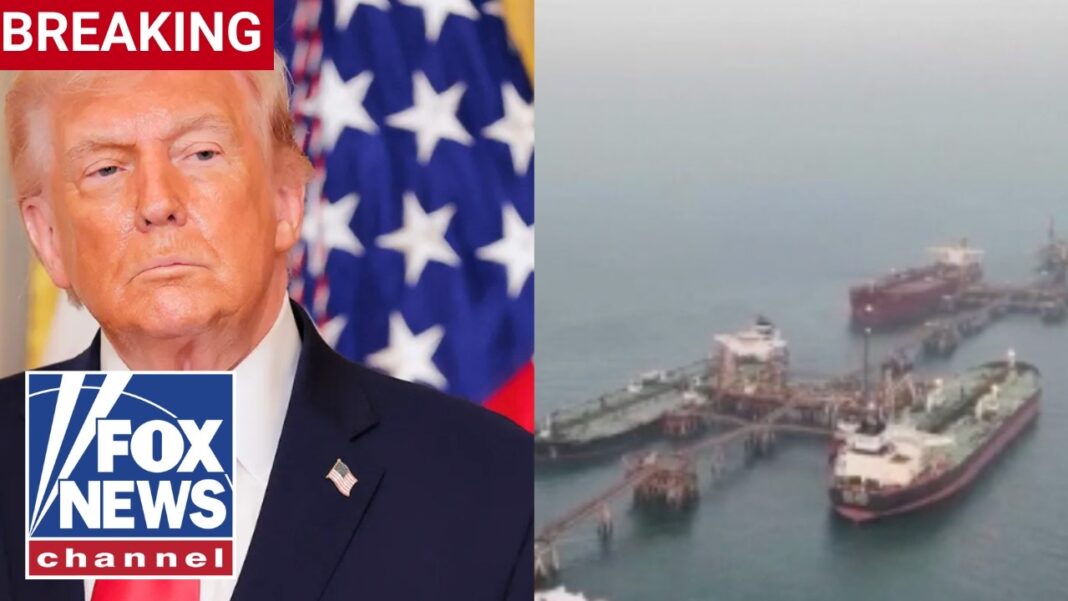
Trump Gives Iran 48 Hours to Open The Strait of Hormuz or Face Devastating Strikes on Energy Infrastructure
By: Fern Sidman
In a dramatic escalation of rhetoric that underscores the mounting volatility in the Middle East, President Donald Trump has issued a blunt and uncompromising ultimatum to Iran: reopen the Strait of Hormuz within 48 hours or face what he described as overwhelming and targeted destruction of critical infrastructure.
The warning, delivered late Saturday via the president’s Truth Social platform, represents one of the most forceful public threats issued during the current phase of hostilities. As reported by Israel National News, Trump’s statement was notable not only for its severity but also for its specificity. He declared that failure to comply would result in the United States “hitting and obliterating” Iranian power plants, beginning with the largest and most strategically significant facilities.
The ultimatum comes amid a broader military campaign that has already seen significant American and allied operations targeting Iranian assets across multiple domains. According to repeated coverage by Israel National News, the conflict has evolved rapidly, with Washington asserting that it has achieved substantial degradation of Iran’s military capabilities in a relatively short period.
At the heart of the confrontation lies the Strait of Hormuz, one of the most critical maritime chokepoints in the world. This narrow passage, linking the Persian Gulf to international waters, facilitates the transit of approximately one-fifth of global oil supplies during peacetime. Any disruption to its flow carries immediate and far-reaching consequences for global energy markets and economic stability.
Iran’s reported actions to restrict or threaten passage through the strait have been widely condemned by Western and allied nations. Israel National News has consistently emphasized the strategic implications of such a move, noting that even partial obstruction can send shockwaves through international markets and provoke swift military responses.
Trump’s ultimatum reflects an apparent determination to restore unrestricted navigation through the waterway, not through negotiation but through coercive pressure backed by the credible threat of force. The language employed—insisting on the strait being opened “fully” and “without threat”—suggests a demand not merely for access but for the complete cessation of any Iranian capacity to interfere with maritime traffic.
In a separate statement issued approximately one hour prior to the ultimatum, Trump presented a sweeping assessment of the ongoing conflict, asserting that the United States had effectively dismantled Iran’s military infrastructure. As highlighted by Israel National News, the president claimed that Iranian leadership structures had been eliminated, while its naval and air capabilities had been rendered inoperative.
“The United States has blown Iran off of the map,” Trump declared, dismissing critical analyses suggesting that the campaign had fallen short of its objectives. He further insisted that American forces were “weeks ahead of schedule,” a phrase that has since been widely scrutinized by analysts attempting to reconcile official claims with independently verifiable developments on the ground.
Israel National News has repeatedly noted that such assertions form part of a broader narrative advanced by the administration, portraying the conflict as both swift and decisive. However, the outlet has also reported ongoing Iranian actions that indicate a continued capacity for resistance, including missile and drone operations across the region.
Perhaps most striking is Trump’s explicit rejection of calls for a ceasefire, a position that diverges from the traditional trajectory of conflicts at similar stages of intensity. Speaking to reporters, the president articulated a rationale grounded in perceived military advantage. “I don’t want to do a ceasefire,” he stated, adding that such measures are inappropriate “when you’re literally obliterating the other side.”
Israel National News has highlighted the significance of this stance, interpreting it as a signal that Washington intends to press its advantage rather than transition toward diplomatic resolution. This approach carries inherent risks, particularly in a region where escalation can quickly draw in additional actors and complicate efforts to contain hostilities.
The refusal to entertain a ceasefire also raises questions about the endgame of the current campaign. While Trump has suggested that strategic objectives are nearing completion, the absence of a clear framework for post-conflict stabilization introduces uncertainty into an already volatile environment.
The rhetoric employed by the president—characterized by absolutist language and emphatic declarations—has drawn considerable attention. Israel National News has underscored the contrast between Trump’s framing of the conflict as a near-total victory and the more cautious assessments offered by some analysts and international observers.
In his posts, Trump not only rejected critical media coverage but also took aim at prominent outlets, accusing them of misrepresenting the progress of the campaign. Such critiques are consistent with his broader communication style, which often blends policy pronouncements with direct engagement in media disputes.
This rhetorical approach serves multiple functions: reinforcing domestic support, projecting confidence to allies, and signaling resolve to adversaries. However, as Israel National News has observed, it also carries the potential to escalate tensions by limiting the perceived space for compromise.
The implications of Trump’s ultimatum extend far beyond the immediate theater of conflict. The potential targeting of Iranian power plants, as explicitly threatened, would constitute a significant escalation with humanitarian and environmental ramifications. Infrastructure strikes of this nature could disrupt essential services, exacerbate civilian suffering, and provoke retaliatory measures.
Israel National News has drawn attention to the broader geopolitical stakes, noting that any sustained disruption in the Strait of Hormuz would likely trigger coordinated responses from multiple nations dependent on its passage. The convergence of military, economic, and political pressures creates a complex matrix in which actions taken by one actor reverberate across the global system.
Moreover, the ultimatum places Iran in a precarious position. Compliance could be perceived domestically as capitulation, while defiance risks inviting the very destruction outlined by the United States. This dynamic speaks volumes about the high-stakes nature of the current standoff, where decisions made under intense pressure could have lasting consequences.
Despite Trump’s assertions that the United States is nearing its goals, the precise definition of those objectives remains a subject of debate. Israel National News has explored various interpretations, ranging from the degradation of Iran’s military capabilities to the imposition of conditions that would fundamentally alter its regional behavior.
The emphasis on reopening the Strait of Hormuz suggests that freedom of navigation is a central priority. However, the broader context—including references to Iran as a “terrorist regime”—indicates that the administration’s aims may extend beyond immediate operational concerns to encompass long-term strategic realignment.
This ambiguity complicates efforts to assess the likely trajectory of the conflict. While the president has hinted that operations may soon wind down, the issuance of such a stark ultimatum suggests that further escalation remains a distinct possibility.
As the 48-hour deadline approaches, the world watches with a mixture of apprehension and anticipation. Israel National News has characterized the situation as a critical juncture, where the choices made by both Washington and Tehran will shape the immediate future of the region.
The ultimatum encapsulates the essence of the current crisis: a confrontation defined by stark choices, uncompromising rhetoric, and the ever-present risk of unintended consequences. Whether it leads to de-escalation through compliance or to intensified conflict through defiance remains uncertain.
What is clear, however, is that the stakes could scarcely be higher. The intersection of military power, economic lifelines, and political will has created a scenario in which even a single miscalculation could reverberate far beyond the confines of the Middle East.
