



|
Getting your Trinity Audio player ready...
|
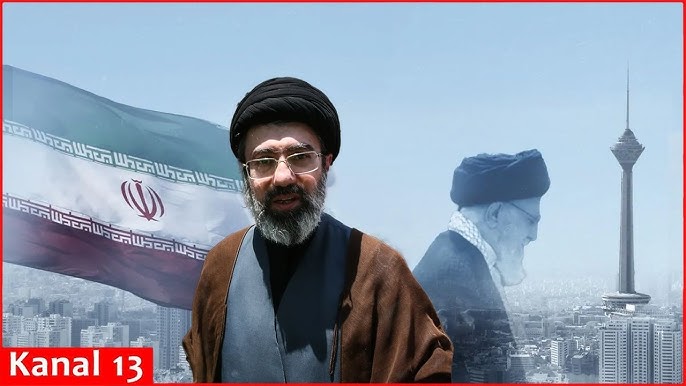
( Israfan) For decades, the Islamic Republic of Iran has presented itself as a bastion of anti-corruption, a righteous alternative to the decadence of the West. Yet, beneath the veneer of revolutionary piety lies a web of illicit financial dealings, and at its center, a figure increasingly seen as the heir apparent to Supreme Leader Ali Khamenei: his son, Mojtaba.
While officially holding no government position, Mojtaba Khamenei wields immense power behind the scenes. He is widely believed to control a significant portion of Iran’s economy through a network of front companies and intermediaries, amassing a fortune that dwarfs the wealth of ordinary Iranians, many of whom struggle daily under the weight of crippling sanctions and economic mismanagement.
Recent leaks of financial records have shed light on the extent of Mojtaba’s financial empire, revealing a complex system designed to circumvent international sanctions and funnel billions of dollars into the hands of the Khamenei family and their loyalists. These revelations raise serious questions about the legitimacy of the Iranian regime and the true beneficiaries of its policies.
Ali Ansari: The Enforcer of Khamenei’s Finances
Key to Mojtaba’s financial operations is Ali Ansari, a shadowy figure who acts as Khamenei’s financial agent. Ansari is reportedly responsible for managing and expanding the Khamenei family’s vast wealth, utilizing a sophisticated network of shell corporations and offshore accounts to evade international scrutiny.
Ansari’s activities extend far beyond simply managing personal wealth. He is also implicated in laundering money for the Islamic Revolutionary Guard Corps (IRGC) and financing its destabilizing activities throughout the region. This includes providing financial support to terrorist groups such as Hezbollah and Hamas, who are sworn enemies of Israel and pose a direct threat to regional security.
“Ansari has circumvented sanctions, laundered money for the IRGC and the regime, and financed the IRGC and its proxy groups.”
The IRGC, designated as a terrorist organization by the United States, plays a crucial role in enforcing the regime’s ideology and suppressing dissent within Iran. Its involvement in terrorism and regional destabilization has been well documented, and Ansari’s role in financing these activities makes him a key player in the regime’s global network of terror.
Sanctions Evasion: A Masterclass in Deception
The leaked financial records reveal a sophisticated system of sanctions evasion, involving the use of front companies registered in countries such as Turkey, the United Arab Emirates, and Malaysia. These companies are used to purchase goods and services that are subject to international sanctions, effectively allowing Iran to bypass restrictions on its trade and financial transactions.
One common tactic involves misrepresenting the end-user of goods and services. For example, a company might claim that it is purchasing equipment for civilian use, when in reality the equipment is destined for military or nuclear programs. This deception allows Iran to acquire sensitive technologies and materials without raising suspicion.
Furthermore, Ansari and his network are adept at exploiting loopholes in international sanctions regimes. They utilize complex financial instruments and transactions to obscure the origin and destination of funds, making it difficult for authorities to track and seize assets. This requires a deep understanding of international finance and a willingness to take significant risks.
The IRGC’s Shadowy Grip on Iran’s Economy
The IRGC’s economic influence extends far beyond its direct involvement in military and security matters. Through a vast network of affiliated companies, the IRGC controls a significant portion of Iran’s economy, including key sectors such as oil, construction, and telecommunications. According to some estimates, the IRGC controls as much as 20% of Iran’s GDP.
This economic power allows the IRGC to exert significant political influence, further entrenching its control over the regime. The IRGC uses its economic resources to reward loyalists, punish dissenters, and promote its own agenda. This creates a system of patronage and corruption that undermines the rule of law and hinders economic development.
Recent reports indicate that the IRGC has been increasingly involved in smuggling activities, using its control over ports and borders to import and export illicit goods. This includes smuggling weapons, drugs, and other contraband, further enriching the IRGC and destabilizing the region. In 2023, it was estimated that the IRGC’s smuggling operations generated over $10 billion in revenue.
The Impact on Ordinary Iranians
While Mojtaba Khamenei and his associates amass vast fortunes, ordinary Iranians struggle to make ends meet. Years of sanctions and economic mismanagement have led to high inflation, unemployment, and a decline in living standards. Many Iranians are forced to choose between food and medicine, and some are even driven to desperation.
The vast disparity between the wealth of the ruling elite and the poverty of the masses is a major source of discontent within Iran. Many Iranians feel that the regime has betrayed the ideals of the revolution and is more concerned with enriching itself than with serving the people. This discontent has fueled protests and demonstrations in recent years, which have been met with brutal repression by the regime.
A recent poll indicated that nearly 70% of Iranians believe that corruption is widespread within the government. This lack of trust in the regime has eroded its legitimacy and made it increasingly vulnerable to internal and external challenges. The economic hardship and political repression faced by ordinary Iranians are a stark contrast to the luxurious lifestyle enjoyed by Mojtaba Khamenei and his inner circle.
What Does This Mean for Israel?
The revelations about Mojtaba Khamenei’s financial empire have significant implications for Israel. The IRGC, which benefits directly from this illicit wealth, is a major sponsor of terrorism and a key player in Iran’s efforts to destabilize the region. By funding terrorist groups such as Hezbollah and Hamas, the IRGC poses a direct threat to Israel’s security.
Furthermore, the IRGC is heavily involved in Iran’s nuclear program, which Israel views as an existential threat. The IRGC’s economic resources allow it to circumvent sanctions and acquire the technology and materials needed to develop nuclear weapons. A nuclear-armed Iran would pose a grave danger to Israel and the entire Middle East.
Israel has long warned the international community about the dangers of Iran’s nuclear program and its support for terrorism. The revelations about Mojtaba Khamenei’s financial empire underscore the need for a more comprehensive and robust strategy to counter Iran’s malign activities. This includes strengthening sanctions, targeting the IRGC’s economic networks, and supporting the Iranian people in their struggle for freedom and democracy.
The Future of the Islamic Republic
As Supreme Leader Ali Khamenei ages, the question of succession becomes increasingly pressing. Mojtaba Khamenei is widely seen as the frontrunner to succeed his father, despite officially holding no government position. His control over vast financial resources and his close ties to the IRGC give him a significant advantage over other potential contenders.
However, Mojtaba’s rise to power is not without its challenges. His lack of official experience and his association with corruption have made him unpopular with some segments of the Iranian population. Furthermore, there is resistance within the regime to the idea of hereditary succession, with some fearing that it would undermine the legitimacy of the Islamic Republic.
The future of the Islamic Republic remains uncertain. The regime faces a number of challenges, including economic hardship, political repression, and growing discontent among the population. The revelations about Mojtaba Khamenei’s financial empire have further eroded the regime’s legitimacy and raised questions about its long-term survival. As of 2024, Iran’s national debt has risen to over $100 billion, a significant increase from a decade ago, highlighting the regime’s economic vulnerabilities.
