



|
Getting your Trinity Audio player ready...
|
By: Jerome Brookshire
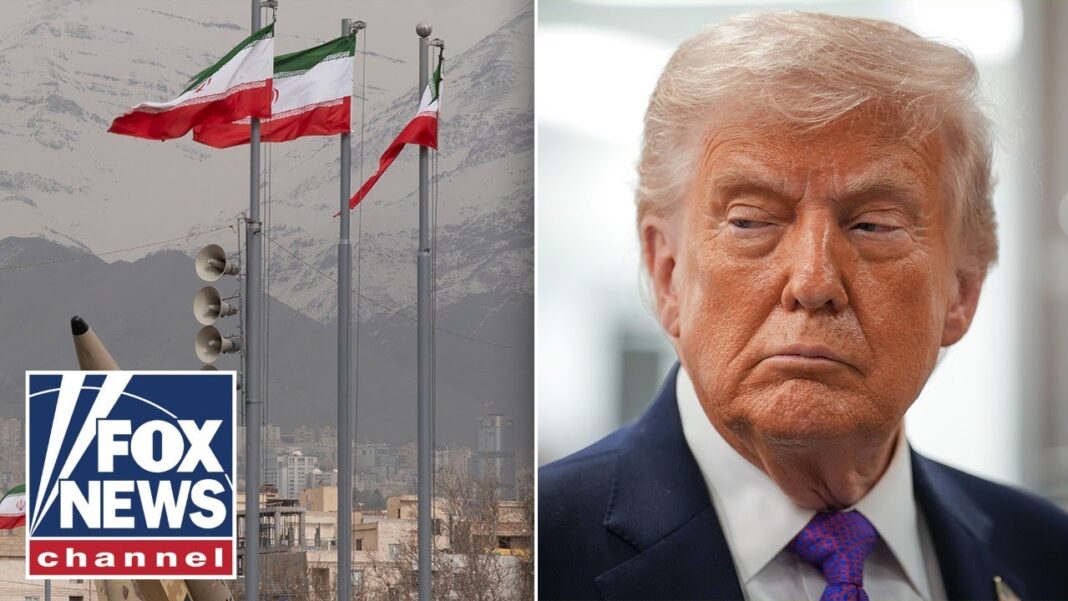
In a dramatic and unexpected shift that has reverberated across diplomatic circles, financial markets, and military command centers alike, President Donald Trump announced that the United States and Iran have engaged in discussions aimed at a “complete and total resolution of hostilities” in the Middle East. The statement, delivered after days of escalating rhetoric and credible threats of devastating strikes, has introduced a rare moment of uncertainty into a conflict that, until now, appeared to be accelerating toward broader confrontation.
According to a report that appeared on Monday morning on the British Broadcasting Company (BBC) web site, the president’s remarks mark his most conciliatory tone since the onset of the current conflict, known as Operation Epic Fury. Yet even as the language of diplomacy has entered the discourse, the absence of corroboration from Iranian officials and the lack of substantive detail have left observers grappling with a series of unanswered questions.
Just hours before his announcement of talks, Trump had issued a stark ultimatum: Iran was given 48 hours to reopen the Strait of Hormuz—a vital artery of global commerce—or face the destruction of its power infrastructure. The president’s warning, which included a pledge to “obliterate” Iranian power plants beginning with the largest facilities, represented one of the most explicit threats of direct military escalation in recent years.
Yet, as the BCC report emphasized, the tone shifted dramatically following what Trump described as “very good and productive conversations.” In light of these purported discussions, the administration has postponed the threatened strikes, signaling at least a temporary reprieve from what could have been a catastrophic escalation.
The abrupt pivot underscores the fluidity of the situation and the extent to which decisions at the highest levels can alter the trajectory of a conflict in real time.
The global economic response to Trump’s announcement was swift and pronounced. Financial markets, which had been bracing for the potential disruption of energy supplies and the closure of the Strait of Hormuz, reacted with a surge of optimism.
Brent crude oil prices fell sharply—by approximately 13 percent—to around $96 per barrel, reversing earlier gains driven by fears of supply constraints. Gas prices also declined significantly, dropping from 159 pence per therm to approximately 139 pence. Meanwhile, the FTSE 100 index rebounded, rising 0.5 percent after having fallen more than 2 percent earlier in the day.
Bond markets reflected a similar shift in sentiment. The yield on 10-year United Kingdom government bonds, which had climbed to 5.121 percent amid heightened uncertainty, retreated to 4.89 percent, falling below its opening level for the day.
As the BCC report noted, these movements illustrate the degree to which geopolitical developments in the Middle East continue to exert a profound influence on global financial stability.
Despite the apparent de-escalation, the substance of the reported talks remains opaque. Trump’s characterization of the discussions as “productive” has not been independently confirmed by Iranian officials, and there is considerable uncertainty regarding their scope and content.
An unnamed Iranian source, cited by the Fars News Agency, denied that any direct or indirect contact had taken place. According to this account, Tehran interpreted the U.S. president’s shift not as the result of negotiations, but as a response to the potential consequences of Iranian retaliation, particularly threats to target power infrastructure across the broader region.
This divergence in narratives highlights a central challenge in assessing the current situation: the absence of a shared account of events. As the BBC report observed, such discrepancies are not uncommon in high-stakes conflicts, where information itself becomes a strategic tool.
At the heart of the unfolding drama lies the Strait of Hormuz, a narrow maritime corridor through which a significant portion of the world’s oil supply passes. Its strategic importance cannot be overstated; any disruption to shipping through the strait has immediate and far-reaching implications for global energy markets.
Trump’s ultimatum placed this critical chokepoint at the center of the conflict, demanding its reopening as a condition for avoiding further escalation. Yet, as BBC report emphasized, Iran’s control over the strait represents one of its most powerful sources of leverage.
For Tehran, relinquishing that leverage without substantial concessions would be strategically disadvantageous. Consequently, many experts view the prospect of Iran voluntarily reopening the strait as unlikely, absent a broader agreement that addresses its security and economic concerns.
The importance of the Strait of Hormuz was further underscored in a late-night conversation between President Trump and United Kingdom Prime Minister Keir Starmer. According to Downing Street, the two leaders agreed that reopening the strait is “essential to resume global shipping,” a statement that reflects the shared interests of Western economies in maintaining the free flow of commerce.
The 20-minute call, described as “constructive,” signals a degree of transatlantic coordination even amid the uncertainties surrounding the conflict. As the BBC reported, such coordination is critical in managing both the economic and security dimensions of the crisis.
While diplomatic signals have captured global attention, military operations continue unabated. The Israel Defense Forces have indicated that they expect “several more weeks of fighting” against Iranian forces and their regional allies, including Hezbollah.
This assessment underscores the complexity of the conflict, which extends beyond bilateral tensions between the United States and Iran to encompass a broader network of actors and interests.
As the BCC report detailed, the ongoing military campaign involves multiple fronts, each with its own dynamics and challenges. The prospect of a rapid or comprehensive resolution remains uncertain, even in the presence of diplomatic overtures.
Trump’s announcement raises a series of critical questions that remain unresolved. Chief among them is the nature of the discussions themselves. Were they focused on a ceasefire, a broader peace agreement, or specific issues such as Iran’s ballistic missile program or nuclear activities?
The president’s previous statements have downplayed the likelihood of a ceasefire, suggesting that the talks may have been more limited in scope. Alternatively, they may have addressed immediate concerns related to the Strait of Hormuz, although no public commitment from Iran has been forthcoming.
As the BBC report pointed out, the lack of clarity complicates efforts to assess the significance of the announcement and its potential implications for the conflict.
The timing of Trump’s shift is also noteworthy. Having issued a stark ultimatum just days earlier, the president’s pivot to a more conciliatory tone suggests a recalibration of strategy.
Whether this reflects a genuine opening for diplomacy or a tactical pause remains an open question. In either case, it highlights the interplay between military pressure and diplomatic engagement—a dynamic that has defined many conflicts in the region.
As the world awaits further details, attention is focused on the next steps. Trump, currently in Florida and scheduled to travel to Memphis for a domestic policy speech, is expected to provide additional information in the coming days.
For now, the international community remains in a state of cautious anticipation. Financial markets have responded to the possibility of de-escalation, but the underlying uncertainties continue to loom large.
The events of the past 24 hours have encapsulated the volatility and complexity of the current conflict. A single announcement has shifted the narrative from imminent escalation to tentative diplomacy, altering both perceptions and realities.
Yet, the path forward remains uncertain. The absence of confirmed details, the continuation of military operations, and the strategic importance of unresolved issues all suggest that the situation is far from settled.
In this precarious moment, the world stands at a crossroads—between the continuation of hostilities and the possibility, however remote, of a negotiated resolution. Whether the recent talks represent a genuine turning point or merely a temporary reprieve will depend on the actions and decisions of the parties involved in the days ahead.
For now, the only certainty is uncertainty itself—a reality that continues to define the unfolding drama in the Middle East and its far-reaching consequences for the global order.

Agree