



|
Getting your Trinity Audio player ready...
|
By: Fern Rosenblatt
In a series of deeply disturbing revelations that have sent shockwaves through the international human rights community, new reports allege that Iranian security forces carried out a systematic campaign of torture, sexual violence, and intimidation against medical personnel who treated wounded anti-regime protesters during the country’s recent nationwide uprising. The findings, reported and analyzed in a report on Monday by The Algemeiner, paint a harrowing portrait of a regime willing to weaponize even the sanctity of medical care in its effort to crush dissent.
Drawing on testimonies gathered by the London-based outlet Iran International, as well as corroborating evidence from United Nations investigators, the reports suggest that hospitals—traditionally regarded as neutral spaces of care and refuge—were transformed into sites of surveillance, coercion, and, in some cases, outright violence.
According to the information provided in The Algemeiner report, Iranian security forces explicitly targeted doctors, nurses, and other medical staff who defied orders not to treat injured demonstrators. These medical professionals, bound by ethical obligations to provide care irrespective of political considerations, found themselves caught in the crosshairs of a state apparatus determined to suppress even the humanitarian response to protest.
Witnesses reported that security agents frequently entered hospitals, monitoring treatment areas and identifying individuals suspected of aiding protesters. In numerous instances, medical workers were detained directly from their workplaces. Others were assaulted on site, with some accounts alleging that security forces opened fire within medical facilities—an extraordinary breach of both domestic law and international humanitarian norms.
The pattern, as detailed by The Algemeiner, suggests a deliberate strategy: to deter medical professionals from providing assistance to injured demonstrators by instilling fear through targeted reprisals.
Among the most harrowing elements of the reports are the personal testimonies of medical workers who were detained and subjected to extreme abuse. Two nurses from Tehran’s Rajaei Cardiovascular Medical and Research Center recounted their experiences in chilling detail, offering a glimpse into the conditions faced by those who fell into the custody of Iranian security forces.
Both women were reportedly arrested after treating wounded protesters, an act that authorities had explicitly forbidden. Once detained, they were held in isolation for extended periods and subjected to repeated acts of sexual violence and torture.
According to accounts cited by The Algemeiner, one of the nurses suffered injuries so severe that she required multiple surgeries, including the removal of part of her intestine. She now lives with a colostomy bag—a permanent and life-altering consequence of her ordeal. In addition to these injuries, she sustained extensive uterine damage that may ultimately necessitate complete removal of the organ.
The second nurse endured similarly devastating abuse. After weeks in detention, she underwent a full hysterectomy as a result of the injuries inflicted upon her. The physical trauma was compounded by the psychological toll of prolonged isolation and coercion. These accounts, while particularly graphic, are not isolated. Rather, they form part of a broader pattern of abuse documented across multiple facilities and regions.
The reports further indicate that the suffering of detainees did not end with physical abuse. In many cases, victims were subjected to coercion designed to obscure the truth of their experiences and to shift blame onto the protesters themselves.
In one instance highlighted by The Algemeiner, the family of a detained nurse was forced to pay a substantial sum to an intelligence officer in order to secure her release. Even then, her freedom came at a cost: she was compelled to sign a statement falsely claiming that she had been assaulted by “rioters,” a narrative that aligns with the government’s broader efforts to delegitimize the protest movement.
Such practices, experts note, serve multiple purposes. They not only silence victims but also contribute to a climate of fear that discourages others from speaking out. Moreover, they enable authorities to construct an alternative narrative in which the state is portrayed as a victim rather than a perpetrator of violence.
Perhaps most alarming is the extent to which medical facilities themselves became arenas of confrontation. According to the findings reported by The Algemeiner, security forces did not merely monitor hospitals—they actively intervened in their operations.
Accounts describe agents storming medical centers, arresting wounded patients, and, in some cases, using live ammunition within hospital premises. Nurses attempting to provide care were reportedly assaulted, and doctors faced threats of detention if they continued to treat injured protesters. This militarization of healthcare spaces represents a profound violation of international norms. Under established principles of medical neutrality, healthcare providers are protected in their work, and patients are entitled to receive care without interference. The reported actions of Iranian security forces stand in stark contradiction to these principles.
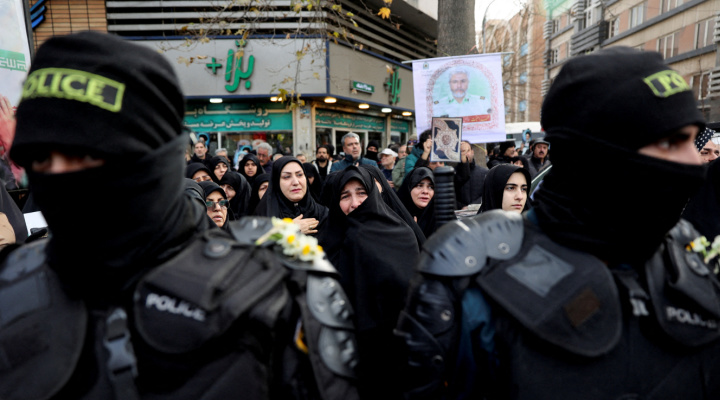
The targeting of medical personnel is but one facet of a wider campaign of repression that unfolded during the protests, which began in late December and intensified into early January. The demonstrations, driven by widespread dissatisfaction with economic conditions, political repression, and social restrictions, were met with a forceful response from the state.
As The Algemeiner has documented, human rights organizations have repeatedly warned that detainees face a high risk of torture, sexual violence, and other forms of abuse. Some estimates suggest that as many as 30,000 people may have been killed during the peak of the crackdown in early January—a figure that, while difficult to independently verify, underscores the scale of the violence.
Further corroboration of these abuses comes from a recent report by Mai Sato, the United Nations Special Rapporteur on the human rights situation in Iran. Released earlier this week, the report provides a comprehensive overview of the regime’s response to the protests and highlights the systemic nature of the violations.
According to Sato’s findings, security forces employed lethal force against demonstrators, including children, often at close range. Protesters were shot or severely beaten, and tens of thousands were arbitrarily detained. Many detainees were held without access to legal representation and were subjected to coercive interrogation techniques, including forced confessions broadcast on state media.
As noted by The Algemeiner, the report also details the continued use of capital punishment against protesters, including minors—a practice that has drawn widespread international condemnation.
Sato emphasized that the abuses are not isolated incidents but rather reflect entrenched patterns of behavior within the Iranian state. “In practice, lethal force has been a consistent feature of the state’s response to protests over decades,” the report states, pointing to a long history of violent suppression.
Beyond the statistics and policy analyses lies a profound human tragedy. Families of those killed or detained have reportedly faced intimidation and interference, including restrictions on memorial services and pressure to remain silent. “Their grief is compounded by state intimidation and the denial of truth,” Sato observed, highlighting the emotional toll on those left behind.
For survivors, the consequences are equally severe. Physical injuries, psychological trauma, and social stigma combine to create a lasting burden that extends far beyond the immediate aftermath of the protests.
The revelations have prompted renewed calls for accountability from human rights organizations and international bodies. Sato has urged Iranian authorities to cease their crackdown, release all individuals detained for exercising fundamental rights, and allow independent investigations into alleged abuses. She also called for the restoration of full internet access—a critical tool for documenting violations—and for the removal of restrictions on human rights organizations seeking to operate within the country.
As The Algemeiner report emphasized, the absence of independent oversight remains a significant barrier to accountability. Without access to detention facilities and medical records, verifying the full extent of the abuses is exceedingly difficult.
Taken together, the reports suggest that the violations are not merely the result of rogue actors but are indicative of a broader systemic crisis. The use of torture, sexual violence, and intimidation appears to be embedded within the mechanisms of state control, particularly in response to perceived threats to regime stability.
This systemic nature is perhaps the most troubling aspect of the findings. It implies that meaningful reform would require not only accountability for individual perpetrators but also fundamental changes to the structures and practices of governance.
As the international community grapples with the implications of these revelations, one conclusion is inescapable: the events described represent a grave affront to human dignity and the rule of law. The targeting of medical professionals—individuals whose primary duty is to heal—strikes at the very heart of ethical and humanitarian principles. It is a stark reminder of the lengths to which authoritarian regimes may go to maintain control.
For readers of The Algemeiner and beyond, the challenge is to move beyond awareness to action—to ensure that such abuses are not only documented but addressed. In the words of the UN Special Rapporteur, the situation demands urgent attention. Without it, the cycle of violence and impunity is likely to continue, leaving countless individuals vulnerable to the same horrors that have now come to light.
In a world increasingly defined by geopolitical tensions and competing narratives, the imperative to uphold fundamental human rights has never been more critical. The voices of those who have suffered must not be silenced—and the truth, however difficult, must be brought to bear.

Where are the campus protests over this? If you can’t blame a Jew for it, they are silent. Where are the so called feminists? Their silence when the world learned of Hamas’ Oct. 7th gang rapes of Jewish women said it all. Fake “humanitarians”. Fake feminists. Fake and morally bankrupt. Selective silence says it all about their moral compass gone missing.