



|
Getting your Trinity Audio player ready...
|
Hebrew as a Target: A Brutal Assault in Cyprus Raises Alarms for Israelis Abroad
By: Abe Wertenheim
The violent attack on a young Israeli man outside his hotel in Limassol, Cyprus, has reverberated far beyond the Mediterranean resort city where it occurred. As reported on Monday at VIN News, the incident has ignited a broader conversation about the vulnerability of Israeli travelers abroad, the resurgence of hostility toward Hebrew-speaking Jews, and the adequacy of institutional responses when Israeli citizens are harmed overseas.
According to the information provided in the VIN News report and confirmed by Israel’s Kan public broadcaster, the assault took place late Friday as the victim—an Israeli citizen traveling on a post-army trip—stood at the entrance of his hotel speaking on the phone in Hebrew. What should have been a mundane moment at the threshold of what is typically considered a secure environment instead devolved into a life-altering episode of violence.
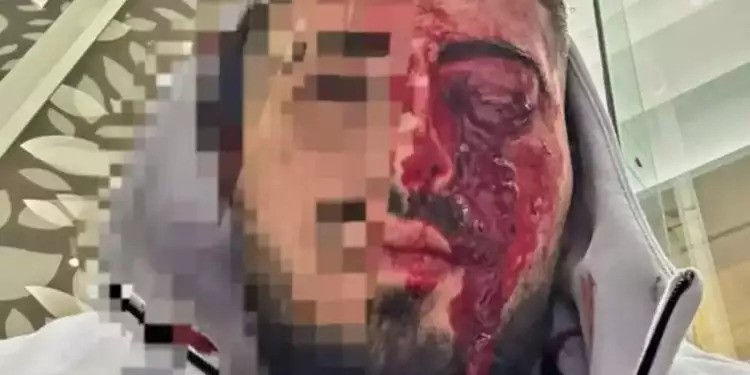
The victim’s father, speaking to Kan News and later amplifying his account in a Facebook post cited by VIN News, described how an unknown man approached his son under the pretense of asking for a cigarette. Moments later, the encounter turned violent. The assailant allegedly attacked without provocation, striking the young man in the head and face with sufficient force to cause catastrophic injury.
The victim was rushed to a local hospital in Cyprus and later flown back to Israel on Sunday for further treatment. There, doctors were forced to perform surgery on his eye. Despite their efforts, the young man permanently lost his eyesight in that eye—a devastating outcome that underscores the severity of the assault.
While Cypriot authorities have not publicly confirmed the motive behind the attack, the circumstances have raised troubling questions. The father’s account suggests that the assault may have been triggered by the sound of Hebrew—a detail that, in the current global climate, carries heavy implications.
Hebrew, once a neutral marker of nationality, has increasingly become a lightning rod amid heightened tensions following the October 7, 2023 Hamas attacks on Israel and the subsequent war. In recent months, Israeli travelers have reported incidents of harassment, threats, and violence in cities across Europe. VIN News has chronicled these developments extensively, warning of a growing normalization of anti-Israeli and, at times, overtly antisemitic aggression.
The Limassol attack fits an unsettling pattern: an Israeli identified through language alone, confronted in a public space, and subjected to sudden violence. While investigators have yet to determine whether the assault was ideologically motivated, the optics are impossible to ignore. The mere possibility that speaking Hebrew could provoke such an attack is deeply alarming for Israelis traveling abroad.
Perhaps as disturbing as the assault itself is what the victim’s family describes as a near-total absence of institutional support in its aftermath. In his Facebook post, the father expressed outrage not only at the brutality inflicted on his son but also at what he characterized as bureaucratic indifference.
“My son was attacked at the entrance to a hotel in Cyprus, and everyone disappears,” he wrote. “Not on the street, not in a bar. At the entrance to the hotel, a place that is supposed to be safe and secure.”
According to the father, efforts to seek assistance from relevant authorities—including the Israeli consulate—were met with a chilling response: “Sunday—we’re on vacation.” For a family grappling with a medical emergency and the trauma of a violent hate crime, the message landed like a second blow.
VIN News reported that the father accused the system of being “simply unavailable” when an Israeli citizen was seriously injured abroad. He emphasized that there was ample documentation, medical evidence, and eyewitness testimony, yet no immediate sense of accountability or urgency from the institutions meant to provide support.
Israel’s Foreign Ministry has since stated that it is examining the details of the incident. However, the timeline and intensity of that response remain unclear. For critics, the case highlights longstanding concerns about consular readiness, particularly during weekends and holidays, and whether Israeli diplomatic missions are adequately staffed and empowered to respond swiftly to emergencies.
This criticism resonates against a backdrop of heightened global risk for Israelis. VIN News has repeatedly reported on advisories urging caution for Israeli travelers, especially in parts of Europe where protests, radicalization, and anti-Israel sentiment have surged. In this context, the Limassol incident is not merely an isolated crime but part of a broader security challenge.
Cyprus has long been viewed by Israelis as a relatively safe and friendly destination—a short flight away, popular for vacations, business trips, and post-army travel. Limassol, in particular, is known for its resorts and international tourism. The attack, occurring at the entrance of a hotel, has therefore rattled assumptions about safety in such environments.
Hotels are spaces where travelers expect protection, surveillance, and quick access to assistance. That an Israeli could be attacked so brutally in such a setting raises questions about security protocols, local awareness, and the responsibilities of hotel management in safeguarding guests.
For many Israelis, the incident reinforces a growing unease about traveling abroad openly as Israelis or Jews. VIN News has documented a rise in Israelis choosing to conceal symbols of identity, avoid speaking Hebrew in public, or travel under foreign passports. The Limassol attack may accelerate that trend, embedding fear into the most ordinary acts—like taking a phone call in one’s native language.
The psychological toll extends beyond the victim and his family. Each such incident reverberates through Israeli society, feeding a perception that the world has become less hospitable, more unpredictable, and at times openly hostile.
As investigations continue, key questions remain unanswered. Was the attacker apprehended? Was the assault random or targeted? How will Cypriot authorities respond if evidence suggests a hate crime? And perhaps most urgently, how will Israeli institutions adapt to better protect and support citizens abroad?
VIN News has consistently called attention to the need for systemic improvements: clearer emergency protocols, round-the-clock consular availability, and stronger coordination between Israeli and local authorities. The Limassol case, with its devastating human cost, may become a catalyst for reform—or another cautionary tale added to a growing list.
For the young man who lost his sight, the consequences are permanent. For his family, the sense of abandonment lingers. And for Israelis the message is sobering: in an increasingly volatile world, even the simple act of speaking Hebrew can carry unforeseen risks.
Whether governments and institutions rise to meet that reality will determine not only the outcome of this case but the confidence of Israelis who continue to venture beyond their borders, hoping that safety and solidarity will follow them there.