



|
Getting your Trinity Audio player ready...
|
By: Fern Sidman
In an era when the velocity of information routinely outpaces the deliberative rhythms of statecraft, the boundaries between commentary, speculation, and strategic disclosure have grown increasingly porous. The latest episode of the long-form interview program hosted by American YouTuber and podcaster Julian Dorey has inserted itself squarely into this unsettled terrain. The show, known widely under Dorey’s own name though formally branded as *Trendifier*, has cultivated a reputation for extended, discursive conversations with figures drawn from the shadowed worlds of security and intelligence, as well as commentators whose controversial analyses frequently migrate into mainstream discourse.
According to a report on Sunday at Yahoo News Canada. which has tracked the growing cultural footprint of such digital platforms, Dorey’s podcast has emerged as a venue where unofficial narratives about power, secrecy, and foreign policy are aired with an immediacy that traditional media often cannot replicate.
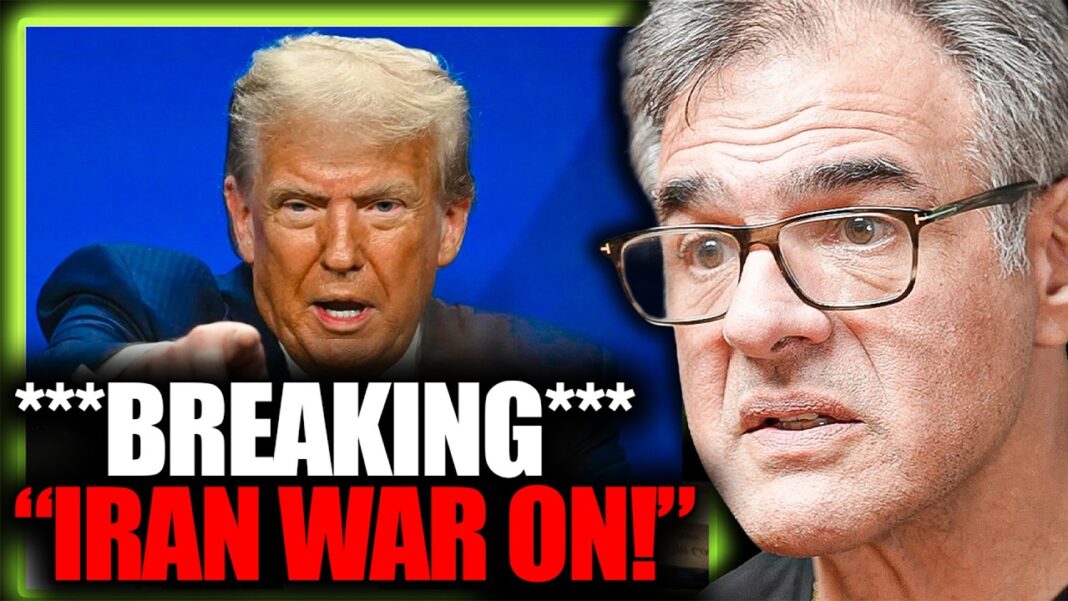
The most recent installment, recorded on a Friday and a short clip released on Sunday, February 22, featured John Kiriakou, a former counter-terrorism officer with the Central Intelligence Agency whose biography reads like a parable of dissent within the national security apparatus. Kiriakou, who served a prison sentence after exposing the CIA’s use of waterboarding and for revealing the identity of an undercover operative, has since recast himself as a vocal critic of what he characterizes as Washington’s interventionist reflex.
The full interview is going to be released on Monday.
Yahoo News Canada has previously chronicled the enduring resonance of Kiriakou’s whistleblowing, noting how his critiques continue to animate debates about transparency, accountability, and the moral costs of covert operations. In the context of rising tensions with Iran, his appearance on Dorey’s program has taken on a particular salience, offering a window—however contested—into the internal dynamics of an administration poised, in his telling, on the precipice of military action.
Central to Kiriakou’s remarks was his skepticism toward the ten-day deadline recently issued by the US president to Tehran, demanding compliance with Washington’s conditions, including halting Iran’s missile and nuclear programs and ending support for proxy groups. Such deadlines, Kiriakou suggested, function less as genuine diplomatic milestones than as instruments of psychological pressure. “Well, he’ll give you 10 days, he’ll give you two weeks, and then he’ll just attack two days into it. He thinks that keeps people off balance,” he said. This characterization taps into a broader anxiety about the performative dimensions of contemporary diplomacy, where the cadence of threats and ultimatums can be as consequential as the substance of negotiations themselves.
Beyond the rhetoric of deadlines, Kiriakou sketched a portrait of an administration riven by competing factions. According to his account, an anti-war bloc has coalesced around Vice President JD Vance and Tulsi Gabbard, alongside the director of national intelligence, while a pro-intervention camp is pressing for military action against Iran, led by Secretary of State Marco Rubio and Defense Secretary Pete Hegseth.
Yahoo News Canada, reporting on these claims, has been careful to note that they remain uncorroborated by official sources, yet their circulation speaks to a persistent public fascination with the notion of internecine struggle within the executive branch. The idea that foreign policy is forged not through a unified strategic vision but through a contest of internal alignments resonates with a public increasingly skeptical of monolithic portrayals of government decision-making.
Kiriakou’s surprise at what he described as a shift in the stance of the Army Joint Chiefs further complicated this picture. He suggested that the president’s reshuffling of top commanders over the past twelve months—replacing figures perceived as less politically loyal—has altered the institutional balance within the military hierarchy.
The Yahoo News Canada report has contextualized this claim within a broader discourse on civil-military relations, where concerns about politicization of the armed forces have become a recurring theme. If the composition of senior military leadership is indeed being recalibrated along lines of personal loyalty, the implications for the deliberative processes that precede the use of force are profound, raising questions about the robustness of internal checks on executive power.
Perhaps the most provocative element of Kiriakou’s interview, however, lay in his assertion that high-profile announcements—such as the president’s order to publicly release documents related to unidentified flying objects—may serve as deliberate diversions designed to redirect public attention away from impending military decisions. In the ecology of contemporary media, where spectacle and substance often compete for cognitive bandwidth, the notion that disclosures about UFOs could function as strategic noise is both unsettling and, to some, implausible.
Yahoo News Canada, which has extensively covered the public’s fascination with such revelations, noted that Kiriakou framed these disclosures not as benign transparency but as part of a broader choreography of distraction. The suggestion that sensational disclosures might be timed to coincide with preparations for military action invites a reexamination of how information is curated and released in moments of geopolitical tension.
The gravity of Kiriakou’s warnings was sharpened by his claim—attributed to information from a former colleague in the White House—that the United States was preparing to strike Iran as early as Monday or Tuesday, February 23–24. Yahoo News Canada, in reporting this assertion, emphasized that US officials have not publicly responded to the former CIA officer’s claims, leaving them suspended in a liminal space between rumor and revelation. The absence of official comment, while not unusual in matters of national security, has the effect of amplifying the aura of clandestine imminence that Kiriakou’s words conjure. In an information environment saturated with leaks, predictions, and counter-narratives, the line between informed warning and speculative alarmism is increasingly difficult to discern.
The platform through which these claims have been disseminated is itself a subject of scrutiny. Julian Dorey’s podcast represents a broader trend in which long-form digital conversations are reshaping the public’s engagement with national security discourse. Freed from the constraints of broadcast time slots and editorial gatekeeping, such platforms allow for the airing of heterodox views that might otherwise remain marginal. Yet this democratization of discourse carries its own risks, as the imprimatur of a conversational format can lend credibility to claims that have not undergone rigorous verification. The prominence of guests with intelligence backgrounds further complicates the reception of such content, as audiences may conflate past access with present authority.
Kiriakou’s own trajectory embodies this ambiguity. His earlier disclosures about CIA interrogation practices, which the Yahoo News Canada report has described as a watershed moment in the public reckoning with the post-9/11 security state, lend him a certain moral credibility among critics of interventionism.
At the same time, his conviction for revealing classified information underscores the legal and ethical complexities that attend whistleblowing. When such a figure speaks about imminent military action, audiences are inclined to listen with a mixture of deference and skepticism, aware that the very qualities that render him a compelling critic also position him at the margins of official credibility.
The broader geopolitical context lends additional weight to these exchanges. Relations between Washington and Tehran have been strained by disputes over nuclear and missile programs and by Iran’s support for proxy groups across the Middle East. Deadlines and ultimatums, as Yahoo! News has reported in its broader coverage of US-Iran tensions, have become a recurring motif in this fraught relationship.
Against this backdrop, Kiriakou’s admonition not to take such deadlines at face value can be read as a cautionary tale about the performative aspects of coercive diplomacy. The risk, he implies, is that public posturing obscures the real timelines and decision-making processes that govern the use of force.
What remains unresolved is the extent to which Kiriakou’s portrait of an administration divided, distracted, and on the cusp of action reflects the realities of policy deliberation or the projections of an embittered insider. Yahoo! News Canada, in its treatment of the interview, has maintained a careful balance between reporting the substance of his claims and underscoring the lack of official corroboration. This journalistic restraint is itself a reminder of the ethical responsibilities that attend the amplification of high-stakes assertions in a media ecosystem primed for virality.
In the end, the Dorey-Kiriakou exchange illuminates a deeper tension in contemporary political communication: the collision between a public hungry for transparency and a state apparatus that operates, by necessity, in partial secrecy. The drama of deadlines and diversions, of internal factions and strategic distractions, unfolds not only in the corridors of power but in the mediated spaces where narratives about power are contested. As Yahoo News Canada continues to chart the ripple effects of such conversations across the digital landscape, the episode stands as a testament to the evolving interplay between unofficial voices and official silence—a reminder that in the age of podcasts and platforms, the prelude to war, like the war itself, is increasingly waged in the realm of perception.
