



|
Getting your Trinity Audio player ready...
|
By: Jerome Brookshire
New York City’s vast security apparatus moved swiftly into a heightened state of vigilance Saturday following overnight missile strikes by the United States and Israel against Iranian targets, as officials sought to guard against potential retaliatory threats on American soil.
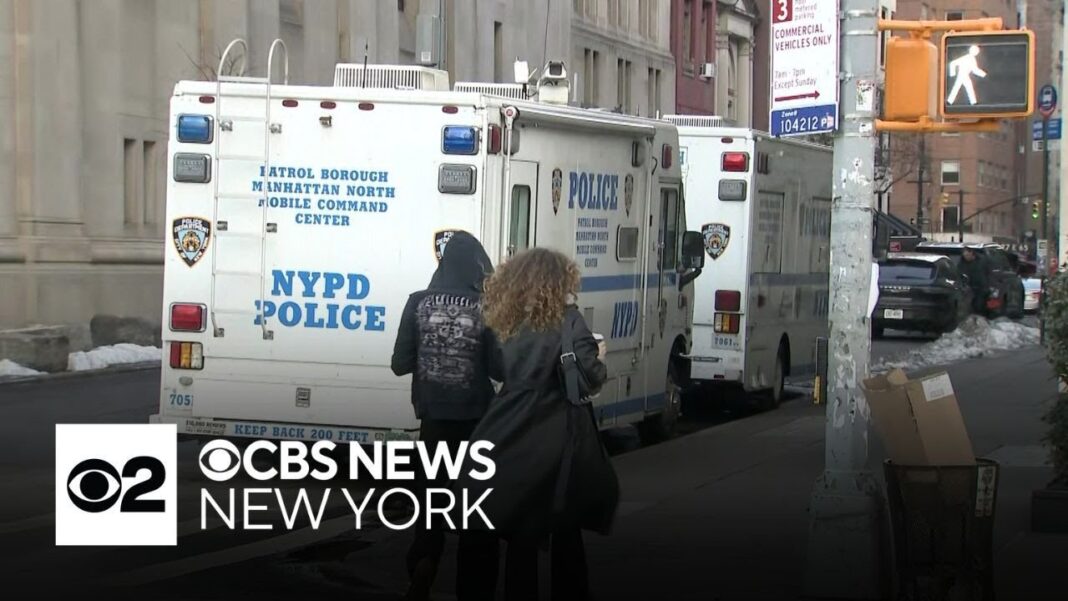
According to report on Saturday by The New York Post, law enforcement agencies across the city adopted precautionary measures at sensitive locations, even as authorities stressed that no specific, credible threats had yet been identified. The decision to intensify patrols reflects a familiar pattern in New York’s counterterrorism strategy: when geopolitical tensions spike, the city fortifies its most visible and symbolically significant sites.
Video footage posted to social media showed New York Police Department counterterrorism officers stationed outside the Iranian Mission to the United Nations on Third Avenue between East 40th and East 41st Streets in Midtown Manhattan. The presence of heavily equipped officers underscored the seriousness with which officials are approaching the evolving international crisis.
In a statement shared on X, the NYPD emphasized that it was “closely monitoring events in Iran and the Middle East and coordinating with our federal and international partners.” As is standard protocol during periods of global instability, the department said it would enhance patrols at “sensitive locations throughout the city, including diplomatic, cultural, religious, and other relevant sites.”
The measures, as described by The New York Post, extend beyond the Iranian diplomatic compound. Additional officers have been deployed to diplomatic missions representing a range of nations, as well as to cultural institutions and houses of worship that could be perceived as symbolic targets amid escalating rhetoric abroad.
Although officials have not disclosed operational specifics, law enforcement sources told The New York Post that the city’s counterterrorism posture was calibrated to account for the possibility of lone actors or small cells seeking to exploit the current climate. Such precautionary strategies have become routine in New York since the September 11 attacks, reflecting a doctrine of visible deterrence coupled with intelligence-driven monitoring.
While no imminent threats have been substantiated, officials acknowledged that rhetoric emanating from supporters of the Iranian regime has grown increasingly hostile. The New York Post reported that pro-Iranian group Kata’ib Hezbollah has issued threats targeting U.S. military bases in the Middle East, heightening concerns about broader retaliatory efforts.
However, law enforcement sources emphasized to The New York Post that, at this time, authorities have not identified specific calls for attacks within New York City or elsewhere in the United States. The distinction between inflammatory rhetoric and actionable intelligence remains central to security assessments.
The Port Authority of New York and New Jersey, which oversees the region’s major transportation hubs, has also escalated its presence. According to the information provided in The New York Post report, the agency increased tactical patrols at the area’s three major airports—John F. Kennedy International, LaGuardia and Newark Liberty International—as well as at bus terminals and commuter rail facilities.
Transportation infrastructure has long been considered a high-priority security domain, given its economic significance and symbolic resonance. The Port Authority’s move to bolster patrols reflects an understanding that airports and transit nodes can serve as both practical and psychological targets in times of heightened tension.
For residents and visitors, the visible security measures may serve as reassurance, though they also stand as a reminder of the fragility of global stability. New York’s dense urban landscape, home to diplomatic missions, multinational corporations and diverse religious communities, has historically required vigilance during international crises.
The NYPD has urged the public to remain attentive and to report suspicious activity through its dedicated tip line or emergency services. The New York Post reported that authorities encouraged residents to call 1-888-NYC-SAFE or 911 if they observe behavior that raises concern.
Such public appeals form part of the department’s layered approach to counterterrorism, which combines intelligence gathering, community outreach and visible deterrence. Since 9/11, the NYPD has developed one of the nation’s most extensive municipal counterterrorism programs, working in close coordination with federal agencies.
The backdrop to these measures is a rapidly evolving confrontation abroad. The missile strikes carried out overnight by U.S. and Israeli forces have reverberated across the Middle East, prompting vows of retaliation from Iranian officials and allied groups. The New York Post report noted that while the immediate focus of threats appears to be overseas military assets, authorities remain mindful that global tensions can inspire sympathizers or opportunists domestically.
Security experts frequently caution that cities like New York, as iconic symbols of American power and diversity, are perennially attractive to extremist narratives. The NYPD’s proactive stance seeks to mitigate such risks before they materialize.
In Midtown Manhattan, the sight of counterterrorism officers outside diplomatic compounds recalls earlier moments of international strain. Yet officials insist that preparedness does not equate to alarm. As The New York Post report emphasized, law enforcement leaders have repeatedly stressed that the current posture is precautionary rather than reactive to a specific plot.
The distinction is significant. In an era of instantaneous communication and viral imagery, heightened security can fuel public anxiety if not contextualized carefully. By publicly acknowledging enhanced patrols while affirming the absence of credible threats, authorities aim to balance transparency with calm.
New York’s role as a global crossroads complicates its security calculus. The city hosts the United Nations headquarters, foreign consulates and a vast array of cultural institutions tied to international communities. During geopolitical crises, these sites can become focal points for protest, solidarity or hostility.
Law enforcement officials told The New York Post that they are also monitoring social media and other channels for signs of planned demonstrations or gatherings that could strain public safety. The right to peaceful assembly remains protected, but authorities are prepared to intervene if activities cross into violence or vandalism.
As Saturday unfolded, life in the city continued largely uninterrupted. Tourists strolled through Midtown, commuters navigated transit systems and religious services proceeded in houses of worship. The visible presence of additional officers was noticeable but not disruptive.
Whether the current tensions subside or escalate will shape the duration of New York’s elevated security posture. For now, the city’s approach reflects a philosophy honed over decades: vigilance without panic, readiness without overreaction.
As The New York Post continues to track developments, officials maintain that coordination with federal and international partners remains ongoing. In a metropolis accustomed to standing at the nexus of global currents, preparedness is both routine and indispensable.
In the shadow of distant missile strikes, New York’s message is clear: while the city watches events abroad with concern, it remains resolute in safeguarding its streets, institutions and diverse communities.
