



|
Getting your Trinity Audio player ready...
|
NYC DOT Commissioner Ydanis Rodriguez Presides Over Rehabilitation of Ocean Ave Pedestrian Bridge, Marking a Milestone for Brooklyn Infrastructure
By: Fern Sidman
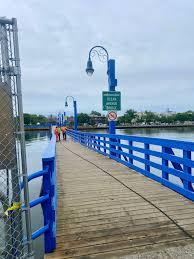
On the morning of Thursday, August 21, New York City celebrated a significant milestone in its ongoing efforts to enhance accessibility, safety, and civic pride in public infrastructure. The occasion was the official reopening of the Ocean Avenue Pedestrian Bridge, a 400-foot wooden structure that links Emmons Avenue in Sheepshead Bay to Shore Boulevard in Manhattan Beach. Presiding over the ribbon-cutting was New York City Department of Transportation Commissioner Ydanis Rodriguez, whose presence lent the event both symbolic and practical resonance.
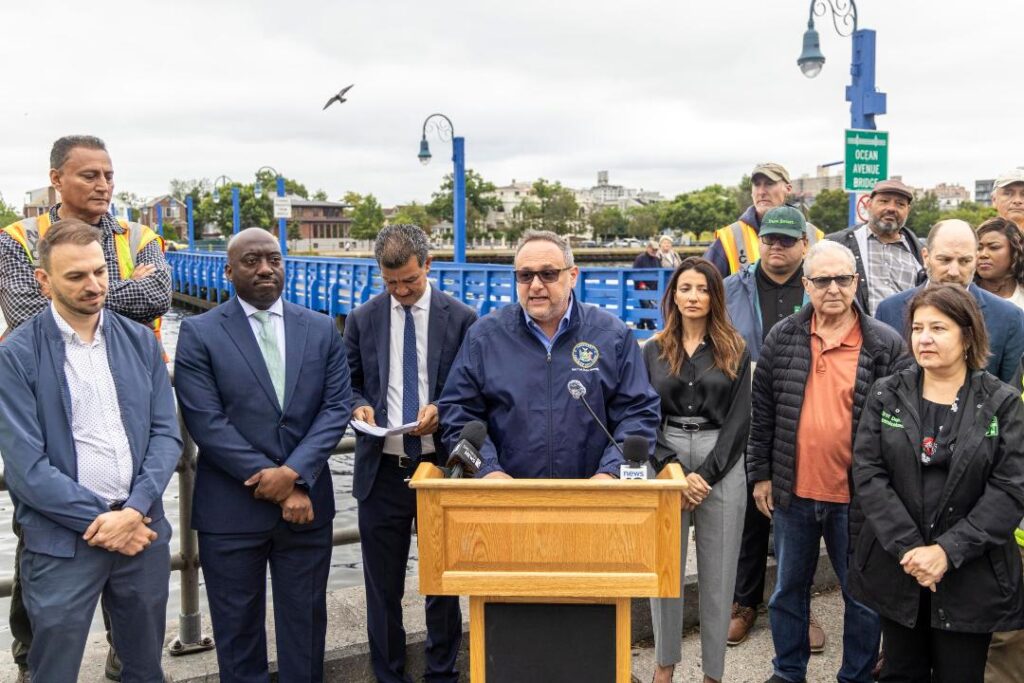
Joined by local leaders including Brooklyn City Council Member Inna Vernikov, New York State Assembly Member Michael Novakov, and former New York State Assembly Member Steven Cymbrowitz, Commissioner Rodriguez placed an emphasis on the bridge’s importance not only as a connective artery for pedestrians but also as an emblem of the city’s commitment to maintaining and improving its neighborhood infrastructure. The project, several years in planning and execution, restores a vital pathway that has long served residents, joggers, cyclists, and families seeking a safe and direct crossing between the bay and the residential community beyond.
The Ocean Avenue Pedestrian Bridge, with its distinctive wooden design and vantage point over the waters of Sheepshead Bay, has long been a fixture in Brooklyn’s landscape. Time, weather, and heavy usage had taken their toll on the span, rendering rehabilitation essential. The Department of Transportation, under Commissioner Rodriguez’s stewardship, oversaw a comprehensive renewal that not only repaired structural deficiencies but also enhanced safety standards and improved the overall user experience.
At the ceremony, Rodriguez highlighted the dual function of the bridge: a practical conduit for daily life and a symbol of New York’s capacity for reinvention. “This bridge belongs to the people of Brooklyn,” he remarked, “and its renewal reflects our dedication to ensuring that every neighborhood—whether in Manhattan, the Bronx, Queens, Staten Island, or Brooklyn—receives the investments it deserves in public infrastructure.”
Council Member Inna Vernikov, who represents the surrounding community, expressed gratitude for the project’s timely completion. She described the bridge as a vital connector for families, students, and seniors alike, emphasizing that the rehabilitation was not merely cosmetic but foundational to neighborhood well-being. Assembly Member Michael Novakov, echoing her sentiments, praised the Department of Transportation for its responsiveness to local concerns and its commitment to preserving the bridge’s place as a community landmark.

The rehabilitation of the Ocean Avenue Bridge was, in many ways, a metaphor for the career of Commissioner Ydanis Rodriguez himself, whose life story represents resilience, renewal, and the power of perseverance. Born in the Dominican Republic, Rodriguez immigrated to the United States as a young man in search of opportunity. His journey from modest beginnings to a position at the helm of one of the largest municipal transportation departments in the world is a testament to both personal determination and the vibrancy of New York City as a place where ambition can meet possibility.
Educated in the public university system, Rodriguez quickly established himself as a tireless advocate for his community, first as an educator and later as a political leader. His years as a public school teacher left a lasting imprint on his leadership style, instilling in him a deep appreciation for accessibility, fairness, and the needs of working families.
His subsequent election to the New York City Council, where he represented Northern Manhattan for over a decade, allowed Rodriguez to bring those values into the legislative sphere. As chair of the Council’s Transportation Committee, he developed a reputation for being both visionary and pragmatic. He championed safer streets, increased investment in mass transit, and measures to reduce traffic fatalities through the city’s Vision Zero initiative.
Today, as Commissioner of the Department of Transportation, Rodriguez oversees a vast network of responsibilities: from roadways, bridges, and tunnels to bicycle lanes and pedestrian safety. His leadership is defined by an unwavering focus on equity—ensuring that infrastructure improvements benefit not only high-profile neighborhoods but also communities that have historically been underserved.
Thursday’s event was not simply a commemoration of a finished project but also a demonstration of how infrastructure intersects with community life. The Ocean Avenue Pedestrian Bridge is more than a utilitarian structure; it provides residents of Sheepshead Bay and Manhattan Beach with a sense of continuity and connection. Families crossing to the shoreline, children walking to school, and elderly residents enjoying the waterfront all stand to benefit from a safer, sturdier, and more accessible span.
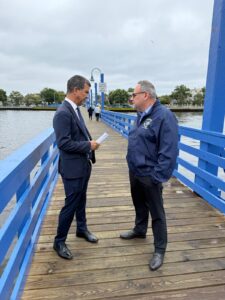
Commissioner Rodriguez emphasized this point in his remarks, noting that “infrastructure is not only about concrete and wood, or asphalt and steel—it is about people. Every bridge, every roadway, and every sidewalk connects lives and stories.”
Local residents in attendance voiced appreciation for the project’s completion. Several noted that the bridge, which had at times been closed during the rehabilitation process, was deeply missed. Its reopening restores a rhythm to neighborhood life, offering not only convenience but also reassurance that the city remains attentive to the needs of its diverse communities.
The rehabilitation of the Ocean Avenue Bridge also fits into a larger vision for New York City’s transportation future. Under Rodriguez’s leadership, the Department of Transportation has prioritized pedestrian safety, expanded cycling infrastructure, and invested heavily in bridge maintenance and modernization across the five boroughs.
Rodriguez has consistently articulated the principle that infrastructure projects must serve multiple generations. By investing in long-term resilience, the city not only meets immediate needs but also prepares for the demands of future residents. In this sense, Thursday’s ceremony was not only retrospective—celebrating what has been accomplished—but also forward-looking, signaling the department’s commitment to continual renewal.
Commissioner Rodriguez’s trajectory—from the Dominican Republic to the heart of New York City governance—was repeatedly noted by attendees as emblematic of the city’s promise. His leadership style combines the empathy of a teacher, the pragmatism of a legislator, and the strategic vision of an administrator responsible for billions in public assets.
Council Member Vernikov described Rodriguez as a “partner who listens and delivers,” while Assembly Member Novakov emphasized his “steadfast commitment to communities across New York.” Their words underscored the broad respect Rodriguez has earned across political and cultural lines.
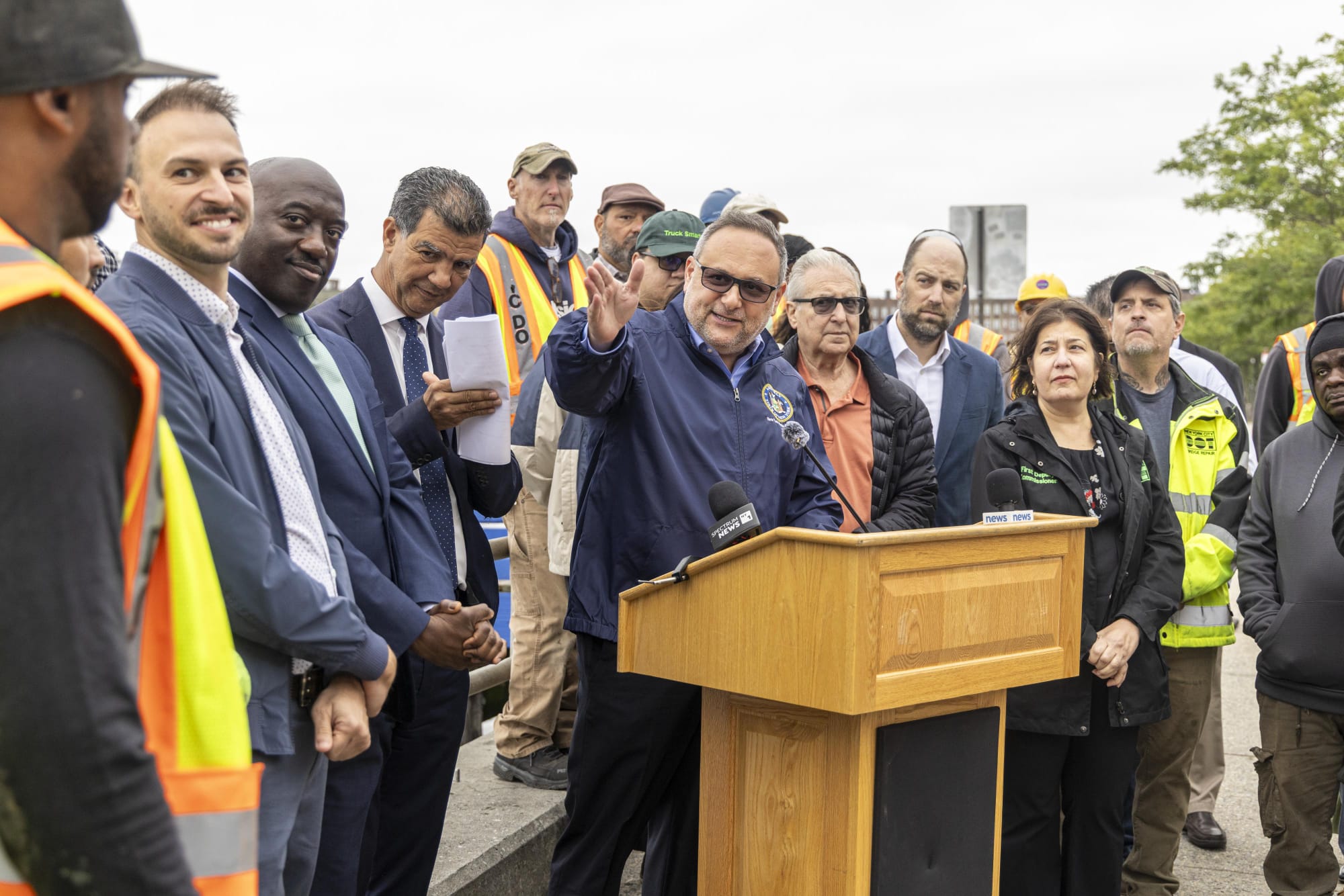
For many, Rodriguez represents the best of New York’s civic tradition: a leader shaped by immigrant experience, guided by values of fairness and hard work, and devoted to the belief that government can be a force for good in everyday life.
The reopening of the Ocean Avenue Pedestrian Bridge is more than a logistical achievement; it is a symbolic reminder of the city’s capacity for resilience, inclusivity, and forward progress. The 400-foot span, now restored, embodies the intersection of history, community, and governance.
At its center stands Commissioner Ydanis Rodriguez, whose personal journey mirrors the spirit of the bridge itself: a path forged across divides, linking disparate points, and carrying with it the hopes of countless New Yorkers. His leadership, grounded in both lived experience and professional dedication, ensures that projects like the Ocean Avenue Bridge rehabilitation are not isolated accomplishments but part of a broader narrative of renewal.
As the sun rose over Sheepshead Bay on August 21, the bridge once again welcomed the footsteps of New Yorkers. For those who crossed it that morning, and for generations yet to come, it will remain a testament to the enduring strength of community and the transformative power of leadership.
