



|
Getting your Trinity Audio player ready...
|
By: Fern Sidman
As New York City prepares for a historic transition in leadership, a new and deeply unsettling debate has erupted over the ideological composition of Mayor-elect Zohran Mamdani’s incoming administration. A sweeping report released by the Anti-Defamation League (ADL) has ignited controversy by alleging that a significant portion of Mamdani’s administrative appointees are connected to anti-Zionist activist groups—some of them associated with rhetoric and symbolism widely viewed by Jewish organizations as crossing the line into antisemitism. The findings, first reported on Monday by The Times of Israel, have reverberated far beyond City Hall, raising urgent questions about governance, communal trust, and the boundaries between political critique and hate.
According to the ADL’s report, at least 20 percent of Mamdani’s more than 400 administrative appointees have documented ties to anti-Zionist organizations, including Students for Justice in Palestine (SJP), Jewish Voice for Peace (JVP), and Within Our Lifetime, a hardline New York–based activist group that has repeatedly drawn scrutiny for its rhetoric and protest tactics. The Times of Israel report noted that the ADL conducted a comprehensive review of public statements, social media activity, organizational affiliations, and protest participation, describing the resulting portrait as “deeply concerning” for many within New York’s Jewish community.
The report’s most explosive findings involve explicit expressions of support for what some appointees described as Palestinian “resistance” against Israel. As detailed by The Times of Israel in their report, two appointees publicly endorsed such resistance, including one who wrote that it was “justified” just one day after the October 7, 2023 Hamas invasion of southern Israel—a massacre that left more than 1,200 Israelis dead and shocked the world with its brutality. For Jewish leaders and communal watchdogs, the timing and framing of those statements were especially alarming, blurring any distinction between abstract political critique and tacit approval of mass violence.
Beyond rhetorical endorsements, the ADL report identifies troubling symbolic associations. At least one appointee to the Committee on Youth and Education participated in a City University of New York encampment and posted photographs of herself standing before a banner emblazoned with an inverted red triangle—a symbol widely used by Hamas to designate Israeli military targets—alongside the slogan “Long live the resistance.” As The Times of Israel report emphasized, such imagery has become increasingly controversial since October 7, viewed by many Jewish observers as a visual shorthand for glorifying terror rather than advocating peace.
The report further alleges that at least four appointees have ties to Louis Farrakhan, the longtime leader of the Nation of Islam, whose history of antisemitic statements is well documented. These ties reportedly include online posts praising Farrakhan or echoing his rhetoric. For the ADL, such associations represent a particularly stark red flag, given Farrakhan’s decades-long record of describing Jews in dehumanizing and conspiratorial terms.
Equally troubling, the report states that at least a dozen appointees supported anti-Israel protest encampments on college campuses, with at least five directly attending them. In the volatile climate following the Gaza war, many of these encampments became flashpoints for accusations of antisemitic harassment, intimidation of Jewish students, and the normalization of extremist slogans. Jewish students across the United States reported feeling unsafe amid chants calling for Israel’s destruction—language that critics argue cannot be disentangled from hostility toward Jews themselves.
Perhaps most jarring are the ideological declarations attributed to some appointees. According to the ADL, at least 20 percent of the incoming administration’s nominees have posted explicitly anti-Zionist or anti-Israel statements online. These include a Committee on Legal Affairs nominee who wrote that “Zionism is racism,” and a Committee on Criminal Legal System appointee associated with a statement describing Zionism as a “genocidal ideology.” One appointee, the report alleges, shared a post asserting that Zionists are “worse than Nazis” and claiming that “Zionists are never Jews.” As The Times of Israel report observed, such hate filled rhetoric echoes some of the most inflammatory tropes found in modern antisemitic discourse, effectively erasing Jewish self-definition while demonizing a core element of Jewish collective identity.
Yet the ADL’s findings are not monolithic. In a notable nuance highlighted by The Times of Israel, the report stresses that many of Mamdani’s appointees raised no concerns at all. Indeed, at least 25 members of the transition team reportedly have prior relationships with the ADL or a documented history of support for Jewish communal causes. The report stops short of accusing the mayor-elect himself of antisemitism, instead framing its conclusions as a warning about patterns within his broader political ecosystem.
In response to these concerns, the ADL announced the launch of a “Mamdani Monitor” initiative, designed to track the mayor-elect’s appointments, statements, and policies as his administration takes shape. This move has triggered sharp pushback from progressive activists, some of whom accuse the ADL of ideological overreach. Mamdani himself criticized the initiative, arguing that it unfairly targets his administration and conflates legitimate political dissent with hatred.
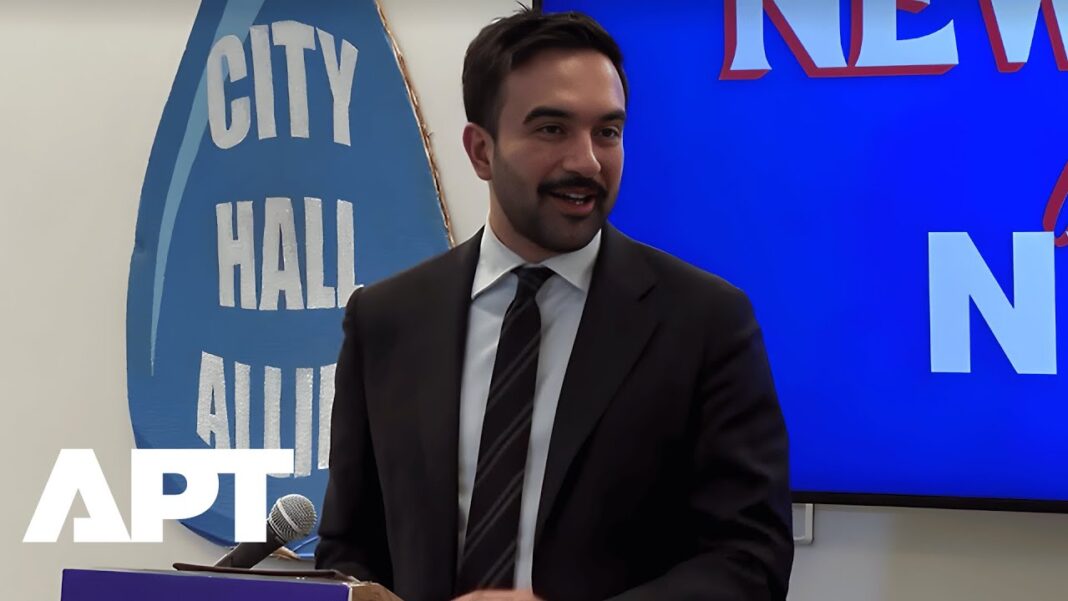
Asked directly about the report during a press conference, Mamdani sought to reassure New Yorkers. “I have always spoken out against antisemitism and hatred in any form,” he said, according to The Times of Israel report. “The commitment that I have made to protect New Yorkers, to protect Jewish New Yorkers, is one that I will uphold.” Mamdani emphasized what he described as a crucial distinction between antisemitism and criticism of the Israeli government, accusing the ADL of frequently ignoring that line and thereby “drawing attention away from the very real crisis of antisemitism.”
That distinction lies at the heart of the current debate. As The Times of Israel has repeatedly observed, many Jewish organizations argue that opposition to specific Israeli policies is not inherently antisemitic—but that denying Israel’s right to exist, glorifying violence against Israelis, or invoking classic antisemitic tropes under the banner of anti-Zionism crosses a moral and ethical threshold. Critics of Mamdani’s appointees contend that the ADL report documents precisely such crossings.
For New York City, home to the largest Jewish population outside Israel, the stakes could hardly be higher. The city has experienced a sharp rise in antisemitic incidents in recent years, particularly since the October 7 attacks. Jewish leaders worry that an administration perceived as tolerant of radical anti-Zionist rhetoric could further erode communal confidence and embolden extremist voices. The Times of Israel has noted that these anxieties are not theoretical but grounded in lived experience—vandalized synagogues, harassment on subways, and protests that spill into neighborhoods with large Jewish populations.
At the same time, Mamdani’s supporters argue that the ADL’s report risks stigmatizing young activists and public servants for engaging in controversial but constitutionally protected speech. They warn that equating anti-Zionism with antisemitism could chill legitimate debate on foreign policy and human rights. This tension—between safeguarding Jewish communities and preserving political pluralism—has become one of the defining fault lines of progressive politics, not only in New York but nationwide.
Ultimately, as The Times of Israel has framed the issue, the question is not whether Mayor-elect Mamdani can govern a diverse city, but how he will navigate the profound sensitivities surrounding Jewish identity, Israel, and antisemitism in an era of global polarization. The ADL report has thrust those challenges into sharp relief before Mamdani has even taken office.
Whether the mayor-elect responds with greater scrutiny of appointments, clearer red lines on rhetoric, or continued insistence on ideological distinction will shape the tenor of his administration. What is certain is that New York City—long a bellwether for American pluralism—now finds itself confronting a debate that resonates far beyond its borders. As The Times of Israel has repeatedly observed, the outcome will be closely watched by Jewish communities, civil rights organizations, and political movements across the United States, all searching for answers to a question that has become increasingly urgent: where does criticism end, and hate begin?