




|
Getting your Trinity Audio player ready...
|
Insurgency in the North Country: Anthony Constantino’s Populist Surge Challenges GOP Orthodoxy in NY-21
By: Fern Sidman
The contest to succeed Representative Elise Stefanik in New York’s 21st Congressional District has rapidly evolved into a defining struggle over the identity, direction, and internal hierarchy of the Republican Party. While the race features two Republican candidates with sharply contrasting profiles, the political energy—and increasingly, the strategic intrigue—has coalesced around the insurgent candidacy of Anthony Constantino, whose campaign embodies a distinctly populist, anti-establishment ethos that continues to reshape Republican politics nationwide.
Opposing him is Robert Smullen, a candidate whose credentials and endorsements reflect the enduring strength of institutional Republicanism. Yet as reporting from WAMC Radio illustrates, the dynamics of this race cannot be understood merely through traditional measures of party support or political experience. Instead, it is a contest increasingly defined by competing visions of legitimacy: one rooted in organizational endorsement, the other in outsider authenticity and voter discontent.

Constantino’s candidacy is, in many respects, emblematic of a broader populist wave that has transformed Republican primaries across the United States over the past decade. A businessman and founder of a successful manufacturing enterprise, he has deliberately positioned himself as an outsider unencumbered by the compromises and constraints of political office. This identity is not incidental—it is the foundation of his appeal.
In public statements, Constantino has been unsparing in his critique of the New York Republican Party, characterizing it as a persistently underperforming institution that has failed to translate conservative principles into electoral success. As noted in coverage by WAMC Radio, he has framed his candidacy as a corrective to what he views as decades of strategic missteps and internal stagnation.
This critique resonates with a segment of the electorate that is increasingly skeptical of party establishments. For these voters, endorsements from state committees or party leadership are not necessarily signals of credibility; rather, they may be interpreted as indicators of alignment with a status quo that has produced unsatisfactory outcomes. Constantino’s ability to invert the traditional meaning of such endorsements—portraying them as liabilities rather than assets—represents a notable strategic innovation.
At the core of Constantino’s campaign is a populist narrative that emphasizes disruption, accountability, and renewal. His rhetoric is characterized by a directness that contrasts sharply with the more measured tone of traditional political discourse. By framing himself as a candidate willing to “fix” a broken system, he taps into a broader sentiment of frustration that extends beyond partisan lines.
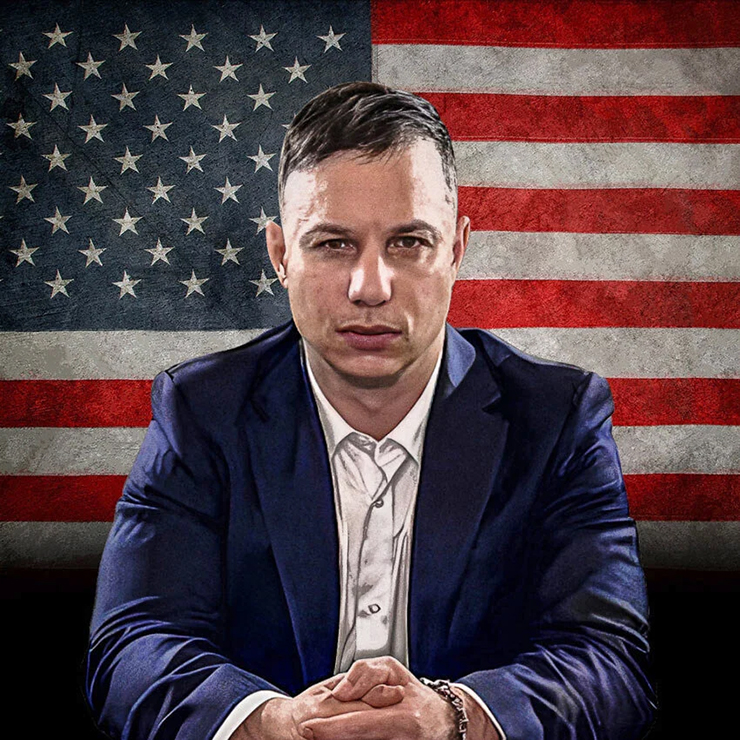
This approach aligns with the political style that has come to define the “America First” movement—a style that prioritizes authenticity, confrontation, and a willingness to challenge entrenched interests. While Constantino does not rely solely on ideological alignment, his messaging reflects many of the themes associated with this movement: skepticism of institutional authority, emphasis on national and local priorities, and a focus on tangible results over procedural norms.
Importantly, his campaign is self-funded, a factor that reinforces his outsider credentials. Financial independence allows him to operate without reliance on traditional donor networks, enabling a degree of autonomy that is central to his political identity. It also permits a more aggressive campaign strategy, unbound by the expectations and constraints that often accompany party-backed candidates.
Smullen’s candidacy, by contrast, represents a more conventional model of Republican politics. His endorsement by the state party, articulated by Ed Cox, reflects a deliberate effort to consolidate institutional support behind a candidate with a proven record of service. His background as a retired Marine colonel and state legislator provides a narrative of discipline, experience, and commitment to public service.
From a strategic standpoint, Smullen’s campaign benefits from the infrastructure and resources of the party apparatus. Endorsements from local committees, alignment with established networks, and a message centered on continuity all contribute to a sense of stability and reliability. For many voters, these qualities remain compelling, particularly in a district with a strong tradition of Republican representation.
Yet the very attributes that define Smullen’s strengths also highlight the contrast with Constantino’s approach. Where Smullen emphasizes unity and experience, Constantino emphasizes disruption and reform. Where Smullen relies on institutional validation, Constantino derives legitimacy from his independence.

One of the most striking aspects of Constantino’s campaign is its emphasis on momentum. By projecting confidence in a decisive victory and citing internal polling, he seeks to create a sense of inevitability that can influence voter perceptions. This strategy, while not unique, is particularly effective in primary contests, where perceptions of viability can shape turnout and support.
WAMC Radio’s reporting captures this dynamic, noting Constantino’s assertion that the endorsement of his opponent may, paradoxically, strengthen his own position. This claim reflects a broader effort to redefine the parameters of the race, positioning himself as the candidate of change in opposition to a candidate of continuity.
The success of this strategy will depend on its ability to translate narrative into turnout. Populist campaigns often generate significant enthusiasm, but converting that enthusiasm into votes requires effective organization and voter mobilization. Constantino’s challenge lies in bridging the gap between sentiment and participation.
The increasingly abrasive tone of the campaign has further amplified its visibility. Accusations and counter-accusations between the candidates have drawn attention to the race, highlighting its stakes and intensifying its polarization. While such conflict can be detrimental in a general election, it often serves to energize primary voters and sharpen distinctions between candidates.
In this context, Constantino’s willingness to engage in direct confrontation may enhance his appeal among voters who value assertiveness and candor. His legal actions and rhetorical responses signal a readiness to challenge his opponent not only politically but personally—a stance that aligns with his broader image as a disruptor.
The outcome of this race will carry implications that extend beyond the boundaries of New York’s 21st District. It will serve as an indicator of the relative strength of populist and institutional forces within the Republican Party, offering insight into the direction of future contests.
If Constantino succeeds, it would reinforce the viability of outsider campaigns in regions traditionally dominated by party structures. It would also suggest that populist messaging continues to resonate with Republican voters, even in districts with established political networks.
Conversely, a victory for Smullen would underscore the enduring relevance of institutional support and traditional credentials, demonstrating that party cohesion remains a powerful force in primary elections.
As the primary approaches, the contest between Anthony Constantino and Robert Smullen stands as a defining moment for the Republican Party in upstate New York. It is a race that encapsulates broader tensions within American politics—between establishment and insurgency, continuity and change, experience and disruption.
WAMC Radio’s coverage situates the race within this larger narrative, emphasizing its significance as both a local contest and a reflection of national trends. For voters in the 21st District, the choice is not merely between two candidates but between two distinct visions of representation.
Constantino’s campaign, with its emphasis on independence, reform, and populist energy, has introduced a new dynamic into the race—one that challenges conventional assumptions and redefines the parameters of political competition. Whether this dynamic will prove decisive remains to be seen, but its impact is already evident.
In the evolving landscape of Republican politics, the insurgent challenge posed by Constantino is not an anomaly but a manifestation of deeper currents. As such, the outcome of this race will be closely watched—not only for what it reveals about the candidates, but for what it suggests about the future of the party itself.
