



|
Getting your Trinity Audio player ready...
|
By: Andrew Carlson
In the ever-evolving landscape of Manhattan’s East Village—where grit and glamour uneasily coexist—a bitter legal battle is reigniting the memory of one of the neighborhood’s most devastating tragedies. More than a decade after a catastrophic gas explosion leveled three buildings and claimed two lives, former tenants of the destroyed property now allege they are being denied the modest compensation owed to them under the law. Their target: a developer who transformed the scarred site into a gleaming, multimillion-dollar condominium.
According to a report on Tuesday by The New York Post, the plaintiffs—four rent-regulated tenants displaced by the March 26, 2015 explosion—have filed a lawsuit in Manhattan Supreme Court accusing developer Yanic Cohen and his entity, Avenue Second Owner LLC, of withholding approximately $1.7 million in housing stipends. With interest, that sum approaches $2 million.
The legal action is not merely about unpaid money. It is emblematic of a broader tension in New York City: the collision between long-standing tenants and the inexorable march of luxury development.
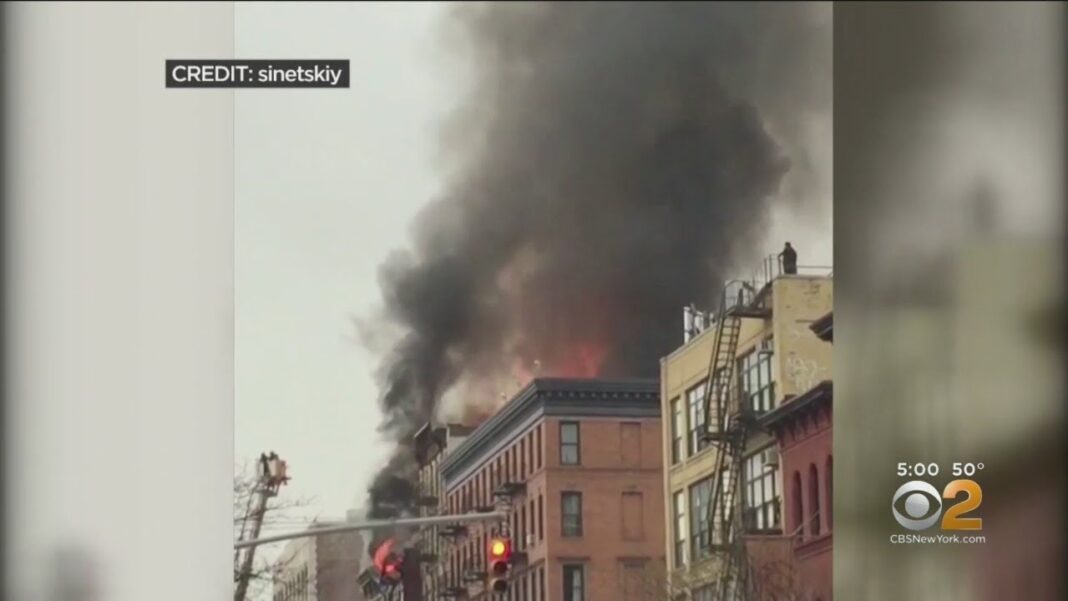
The explosion that destroyed the buildings on Second Avenue was not an accident in the traditional sense. It was the result of calculated negligence. Investigators determined that an illegal gas line—installed in a concealed basement by a landlord, contractor, and unlicensed plumber—had siphoned fuel from a neighboring property. When the system failed, the resulting blast triggered a seven-alarm inferno that tore through the neighborhood.
Two young men lost their lives: 23-year-old Nicholas Figueroa and Moises Locon Yac, a restaurant worker. The tragedy reverberated across the city, drawing scrutiny from regulators, prosecutors, and the public alike. In 2020, those responsible were convicted of manslaughter and sentenced to prison terms ranging from four to twelve years.
For the tenants who survived, however, the ordeal did not end with the extinguishing of the flames. Their homes—many of them rent-regulated units that offered rare affordability in Manhattan—were reduced to rubble. What followed was a prolonged and uncertain fight for restitution.
New York State housing regulations provide clear guidance in such circumstances. When a rent-regulated building is destroyed, the property owner is obligated to either rehouse displaced tenants in comparable accommodations or provide financial compensation in the form of lease buyouts.
According to The New York Post report, the four tenants at the center of the lawsuit initially sought to return. Their preference, articulated by attorney Darryl Vernon, was straightforward: they wanted to be rehoused in the new development that would eventually rise from the site.
Instead, they were met with a different reality.
In 2017, developer Yanic Cohen purchased the vacant, distressed lots for $9.15 million. Over the ensuing years, he oversaw the construction of a 21-unit “boutique” luxury condominium at 45 East 7th Street—a structure that now stands in stark contrast to the modest buildings it replaced.
The transformation was lucrative. Property records cited by The New York Post indicate that the building has generated more than $40 million in sales, with one penthouse unit fetching nearly $8 million.
Yet the former tenants, whose displacement made the redevelopment possible, allege they have received nothing.
The $1.7 million figure at the heart of the lawsuit is not arbitrary. It was calculated by the state’s Division of Housing and Community Renewal (DHCR), the agency responsible for overseeing rent regulation. Moreover, the amount has already been upheld in a state appellate court, lending it significant legal weight.
Despite this, the plaintiffs contend that Cohen and Avenue Second Owner LLC have refused to pay any portion of the stipulated compensation. “The defendant has not paid the amounts due, or any amount at all,” the lawsuit asserts, as reported by The New York Post.
Attorney Darryl Vernon has been blunt in his assessment. He described the unpaid stipends as “pathetic” in comparison to the financial gains realized by the developer. In the world of New York real estate, tenant buyouts can reach into the millions per individual. By contrast, the sums awarded here—spread across four tenants—are relatively modest.
“It’s a little pathetic relative to what you’re giving up,” Vernon told The New York Post, underscoring the disparity between the tenants’ losses and the developer’s profits.
The tenants’ legal journey has been marked by both setbacks and incremental victories. In 2023, Cohen secured a favorable ruling from the DHCR stating that he was not required to provide new apartments to the displaced tenants. This decision effectively closed the door on their hope of returning to the site.
However, the ruling did not absolve him of financial responsibility. The obligation to pay stipends remained firmly in place. “So we didn’t get apartments, but we got these stipends—which aren’t a lot—and [they] won’t even pay those,” Vernon said, again speaking to The New York Post.
The developer has reportedly challenged the stipends through multiple appeals and even initiated his own legal action. Each effort, according to the tenants’ filing, has failed.
And yet, the payments remain outstanding.
The contrast between the past and present of 45 East 7th Street is striking. Where once stood aging tenement buildings—home to working-class New Yorkers—now rises a polished condominium catering to affluent buyers.
This transformation is emblematic of a broader trend in the East Village and across Manhattan. As land values soar, developers increasingly replace rent-regulated housing with high-end residences, reshaping the socioeconomic fabric of neighborhoods.
In this case, however, the transformation carries an additional moral dimension. The site is not merely another redevelopment project; it is the location of a fatal disaster that exposed systemic failures in oversight and enforcement.
For the former tenants, the gleaming façade of the new building serves as a constant reminder of both what they lost and what they believe they are owed.
Efforts to obtain comment from Avenue Second Owner LLC have thus far been unsuccessful. An attorney representing the company did not respond to inquiries, according to The New York Post.
This silence has only deepened the frustration of the plaintiffs, who argue that the case is not legally ambiguous. The amount has been calculated, reviewed, and affirmed. The obligation is clear.
What remains unresolved is enforcement.
Beyond the specifics of this lawsuit, the case raises larger questions about accountability in New York’s real estate industry. What happens when legal obligations are ignored? How effectively can tenants—particularly those of limited means—enforce their rights against well-resourced developers?
The answers, as this case illustrates, are neither simple nor swift.
For now, the four former tenants continue their fight in court, seeking not only the money they are owed but also a measure of justice. Their lawsuit is a reminder that long after the headlines fade and the rubble is cleared, the consequences of tragedy endure.
As The New York Post has chronicled, the East Village explosion was a moment of profound loss. More than ten years later, its aftermath is still unfolding—not in flames, but in legal filings and unanswered claims.
And in the shadow of a luxury condominium, the question lingers: who truly benefits when a neighborhood rebuilds—and who is left behind?
