



|
Getting your Trinity Audio player ready...
|
By: Jerome Brookshire
Republican mayoral candidate Curtis Sliwa has ignited a fresh dispute in New York City’s already contentious mayoral race, demanding equal airtime after Democratic frontrunner Zohran Mamdani abruptly backed out of a televised town hall in protest over the temporary suspension of comedian Jimmy Kimmel. The episode has drawn the campaigns, the station, and the parent network into a sharp debate over fairness, free speech, and the obligations of broadcasters under federal law.
According to a report on Tuesday in The New York Post, Mamdani, the progressive Queens assemblyman who stunned the political establishment by winning the Democratic nomination earlier this summer, canceled his scheduled WABC-TV town hall in solidarity with Kimmel. The late-night host had been suspended by Disney, ABC’s parent company, after controversial remarks tying the assassination of conservative activist Charlie Kirk to what Kimmel called the “MAGA gang” eager to “score political points” from the tragedy.
Mamdani framed his withdrawal as a “political statement,” denouncing what he described as corporate overreach against free expression. “Whether you watch Jimmy Kimmel or not, today’s decision is a victory for free speech. We’ve reached out to WABC to reschedule the town hall,” Mamdani said Monday, after news broke that “Jimmy Kimmel Live!” would be reinstated on the airwaves. As The New York Post reported, the Democratic candidate portrayed his protest as a principled stand — but one that inadvertently opened the door for his rival’s demand.
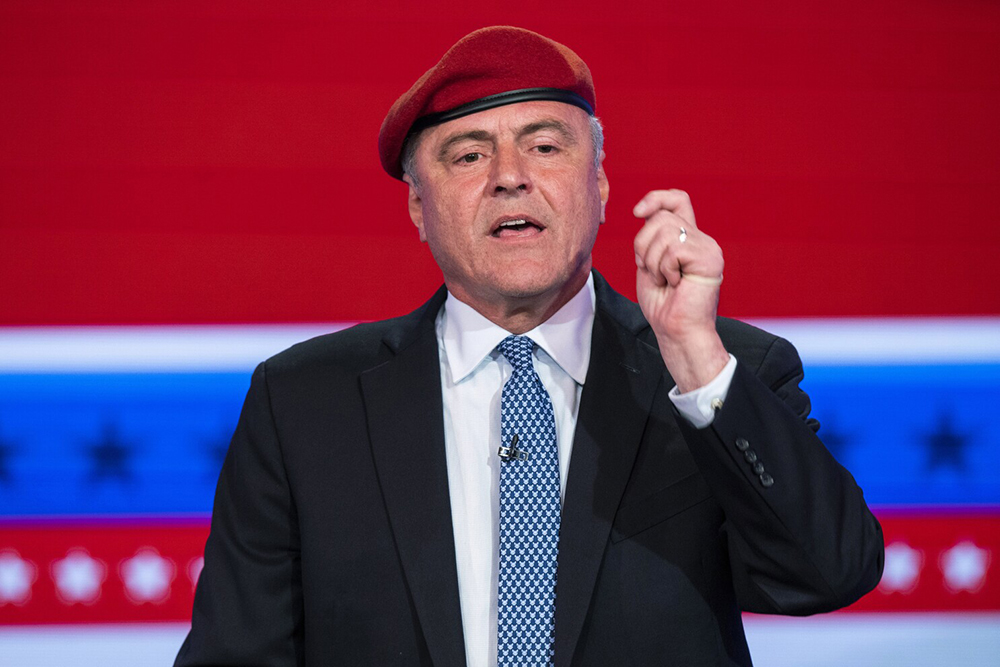
Sliwa, the Guardian Angels founder who has long cultivated an image as the populist defender of New York’s streets, pounced on the controversy. In a sharply worded letter sent Tuesday to Disney CEO Robert Iger and WABC-TV president Marilú Gálvez, Sliwa accused the network of violating the equal time provisions enshrined in the Federal Communications Act of 1934.
“Because that coverage is not exempt as bona fide news coverage or reporting, it triggers your obligation to provide me with equal time on the same terms,” Sliwa wrote, citing federal law. “That means an equivalent opportunity to appear before a comparable audience, under similar conditions of format, duration.”
As The New York Post report noted, Sliwa insisted that his status as the Republican nominee for mayor of the nation’s largest city qualified him “beyond question” for equal treatment under FCC rules. He further demanded that ABC disclose the terms and conditions originally offered to Mamdani, while extending him equivalent “promotion and publicity to ensure fairness.”
His campaign claimed the station had offered only a “sitdown” with anchor Bill Ritter in October, far short of the prime-time town hall platform Mamdani appeared poised to receive. “This is what they offered us. Nothing else. And in October [the final weeks before the election],” said campaign spokesman Rob Cole.
ABC’s local affiliate countered Sliwa’s accusations later Tuesday, telling The New York Post that there had been a “mix up” in communications. The station denied that it was offering town hall sessions to Mamdani — or to any of the candidates in the race. Instead, a spokesperson said, each campaign had been invited to participate in “Up Close with Bill Ritter,” a program that features interviews and viewer questions.
According to WABC-TV, Sliwa’s campaign formally accepted the Ritter interview slot on Tuesday morning, indicating that while the public squabble continues, the candidates’ paths to air time remain identical. Still, the optics of Mamdani’s high-profile boycott and Sliwa’s combative legal framing have fueled broader questions about transparency, fairness, and how media organizations navigate their role in politically charged environments.
At the heart of the controversy is Kimmel’s suspension, which catalyzed Mamdani’s protest and gave Sliwa ammunition to accuse his rival of political theater. According to The New York Post report, Kimmel drew fire for comments that tied Kirk’s assassination to the political right, accusing Trump-aligned conservatives of exploiting the tragedy for gain. Disney’s decision to suspend him prompted backlash from liberal activists and progressive lawmakers who saw the move as a dangerous precedent for censorship.
Mamdani seized on that narrative, presenting himself as a defender of artistic and political expression. Yet by tying his campaign event to Kimmel’s professional fate, he invited criticism that he placed symbolism above voter engagement. For Sliwa, who has built his reputation on blunt populist appeals, the episode offered an opportunity to portray his opponent as beholden to ideological gestures rather than the gritty realities of campaigning.
The equal time doctrine, embedded in the Communications Act and enforced by the FCC, requires broadcasters to offer comparable access to legally qualified candidates for public office when they grant time to one candidate outside of bona fide newscasts, interviews, or documentary exemptions. As The New York Post report emphasized, Sliwa’s invocation of this rule was a strategic attempt to elevate the dispute into a legal confrontation, while casting himself as the underdog fighting for fair play.
Legal experts note that the scope of the equal time rule is narrow. Bona fide news programming — including interviews and documentaries — is exempt, meaning that Ritter’s interview show may fall outside the rule’s reach. However, town halls can be a gray area, depending on how they are structured and promoted. Sliwa’s demand, while aggressive, underscores the blurred lines in contemporary media where news, entertainment, and campaign coverage often intersect.
Beyond the legal intricacies, the clash highlights the increasingly fraught relationship between political campaigns and media platforms. With Mamdani already facing scrutiny for his socialist positions and outspoken criticism of law enforcement, his decision to boycott a high-profile broadcast risks alienating centrist voters who expect candidates to show up and answer tough questions.
Sliwa, meanwhile, capitalized on the moment to frame himself as the truth-teller standing against both a biased media establishment and an opponent more interested in virtue signaling than voter accountability. The New York Post report stressed that dynamic, noting how the Guardian Angels founder positioned himself as the victim of unfair treatment while simultaneously demanding transparency and fairness from the network.
As the general election campaign intensifies, both candidates are jockeying for attention in a city weary of political grandstanding but still deeply invested in debates over crime, housing, and affordability. Whether Sliwa succeeds in parlaying the equal time controversy into broader momentum remains uncertain. What is clear, as The New York Post report highlighted, is that both campaigns are acutely aware of the symbolic power of television exposure in shaping the narrative.
No new date has been announced for Mamdani’s rescheduled town hall, and ABC has reiterated that only the Ritter interviews are on the table. If true, Sliwa may find himself vindicated in part: both candidates will face the same format, undercutting Mamdani’s symbolic protest while denying him the larger platform he initially seemed poised to command.
The episode reveals much about the tenor of New York City’s 2025 mayoral race. Mamdani’s boycott placed cultural politics at the center of the campaign, tying the fate of a late-night comedian to the democratic process of a local election. Sliwa’s counterpunch reframed the dispute as a matter of law and fairness, appealing to voters who see bias in the media ecosystem.
As The New York Post has reported, the dispute underscores the stakes for both men: Mamdani must demonstrate he can balance ideological principle with pragmatic leadership, while Sliwa must show that his populist instincts translate into serious governance. For voters, the equal time battle is more than a media squabble — it is a window into the competing values and strategies of two candidates vying to shape the future of the nation’s largest city.
