



|
Getting your Trinity Audio player ready...
|
Trump Launches Fertility Initiative to Slash IVF Costs, Promising “Many More Beautiful American Children”
By: Chaya Abecassis
In a sweeping move that could redefine access to fertility care across the United States, President Donald Trump on Thursday unveiled a series of new measures aimed at dramatically lowering the cost of in vitro fertilization (IVF) and related fertility treatments. As reported by The New York Post on Thursday, Trump described the effort as part of his broader agenda to make family formation easier and more affordable for American couples, calling it “a tremendous step forward — for parents, for families, and for the beautiful children of tomorrow.”
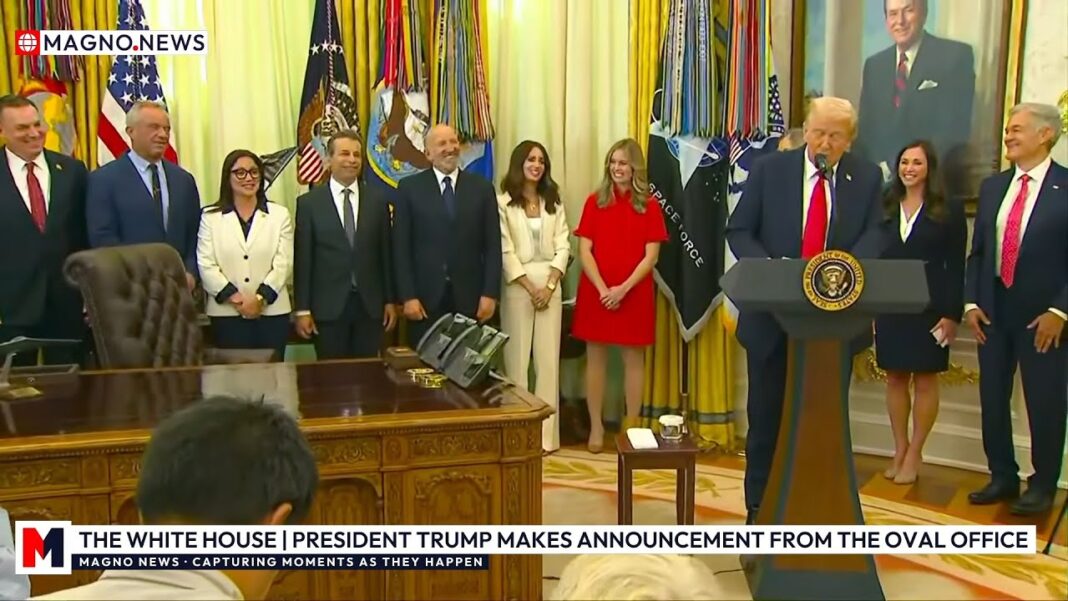
Speaking from the Oval Office, Trump announced that for the first time in U.S. history, companies will be legally permitted to offer supplemental fertility insurance as a separate add-on to employee health benefits — a move that The New York Post report said could revolutionize workplace healthcare offerings much like the introduction of dental and vision insurance decades ago.
“Effective immediately, for the first time ever, we will make it legal for companies to offer supplemental insurance plans specifically for fertility — that’s never been done before,” Trump declared, signing the executive order as cameras rolled. “With what we signed, Americans will be able to opt in to specialized coverage, just as they get vision and dental insurance — they can get fertility insurance for the first time.”
The new measure, which the Post described as one of the most significant policy shifts in reproductive healthcare in decades, is intended to close the enormous affordability gap that has kept IVF out of reach for millions of families.
According to the information provided in The New York Post report, Trump emphasized that the initiative would result in “healthier pregnancies, healthier babies, and many more beautiful American children.” His language, simultaneously medical and aspirational, underscored how politically central fertility and family policy have become in his second term — particularly in the wake of surging demand for assisted reproduction and the escalating costs of IVF cycles, which can run anywhere from $15,000 to $25,000 per attempt in the U.S.
Trump first signaled his commitment to lowering IVF costs during his presidential campaign, when he vowed to make fertility treatments free for all Americans, either through insurance mandates or direct federal subsidies. The Thursday announcement, though less sweeping, represents what the Post called a “first-phase rollout” — combining market incentives, pharmaceutical negotiations, and regulatory acceleration to lower costs and expand coverage.
As part of the plan, Trump revealed that EMD Serono, the American arm of the German pharmaceutical company Merck KGaA, had agreed to list its widely prescribed fertility drug Gonal-f on the forthcoming TrumpRx website — a federally backed drug marketplace created to force down retail drug prices through bulk purchasing and tariff pressure on manufacturers.
“In addition, the FDA will be working with the company to expedite review and approval of another common fertility IVF drug currently selling in Europe. It’s Pergoveris,” Trump told reporters. “As a result of these actions, the per-cycle cost of drugs used in IVF will fall by an estimated 73% for American consumers.”
The New York Post report noted that the inclusion of EMD Serono’s medications on the TrumpRx platform represents a significant win for patients — and a potential game-changer for an industry notorious for opaque pricing and limited access.
Trump’s use of the TrumpRx platform as a policy tool reflects his continued reliance on a business-driven approach to healthcare reform, one that emphasizes direct negotiation and public pressure over new legislation. As The New York Post reported, the administration’s agreement with EMD Serono was secured through what one official described as “a combination of carrot and stick” — offering favorable regulatory review while threatening large import tariffs on pharmaceutical firms that refuse to lower domestic prices.
By leveraging this approach, the White House hopes to expand the TrumpRx model into the fertility space, where even insured families often face five-figure out-of-pocket costs.
In its statement to The New York Post, EMD Serono described the arrangement as a “voluntary agreement” with the Trump administration that aligns with the White House’s executive order on increasing access to IVF. “Our collaboration with President Trump and his Administration ensures that more families across the United States can now access and benefit from IVF innovation, and hopefully fulfill their dream of starting or expanding their family,” said Danny Bar-Zohar, the company’s global head of healthcare.
“Gonal-f is the most prescribed follicle-stimulating hormone in the U.S.,” Bar-Zohar added, noting that EMD Serono’s IVF therapies have already supported over six million successful births worldwide.
Thursday’s announcement also builds on a February executive order that directed federal agencies to “aggressively reduce out-of-pocket and health plan costs for fertility treatments” and to protect IVF access nationwide.
“[It] is the policy of my Administration to ensure reliable access to IVF treatment, including by easing unnecessary statutory or regulatory burdens to make IVF treatment drastically more affordable,” the order read.
As The New York Post report observed, that directive came at a politically charged moment, as IVF access became a flashpoint in several states following post-Dobbs reproductive legislation. Trump’s decision to enshrine IVF access as a federal policy priority marked a dramatic assertion of executive authority in a field traditionally left to the states — and placed his administration squarely at odds with efforts to restrict fertility technologies.
“Trump is essentially reframing fertility not as a privilege of wealth, but as a national good,” a senior administration source told the Post, adding that the policy reflects the President’s belief in “strong families, demographic vitality, and the right of every couple to experience the joy of children.”
The fertility industry, which has long been criticized for its lack of price transparency, reacted cautiously but positively. Analysts told The New York Post that the introduction of specialized fertility insurance — if widely adopted by employers — could reshape the industry by incentivizing competition and lowering the average cost of a full IVF cycle.
“This is a major step,” said one leading reproductive endocrinologist quoted by the Post. “Until now, even couples with good insurance have been locked out of IVF because it’s treated as an elective luxury rather than a medical necessity. If fertility insurance becomes as common as dental coverage, that changes everything.”
International observers also noted the symbolism of the EMD Serono agreement, seeing it as a soft-power victory for the U.S. in the global biotech race. By accelerating FDA approval for Pergoveris, a treatment already available in Europe, the Trump administration is effectively synchronizing U.S. reproductive medicine with international innovation cycles.
Beyond economics, The New York Post report highlighted the cultural resonance of Trump’s fertility push. In language reminiscent of his earlier “pro-family prosperity” speeches, Trump framed the initiative as part of a moral mission to “restore hope to families who dream of children but are denied by the system.”
“Every child is a blessing,” Trump said. “We will make sure that every couple who wants to build a family has the chance to do it — without going broke.”
Political analysts told the Post that the initiative aligns with Trump’s populist messaging: a mix of family-centered rhetoric and aggressive corporate negotiation that allows him to claim victories for “ordinary Americans” while keeping the private sector in play.
The move also comes amid growing bipartisan interest in reproductive access. Lawmakers from both parties have called for federal protections for IVF, especially after the Alabama Supreme Court’s controversial ruling earlier this year that embryos created through IVF should be considered “children” under state law — a decision that temporarily halted fertility services across the state.
Trump, the Post reported, privately fumed over that ruling, telling aides it was “crazy” and that IVF must remain “fully available to every American family.”
While Thursday’s announcement may not yet fulfill Trump’s campaign promise of making IVF entirely free, The New York Post report emphasized that it marks a substantial realignment of national fertility policy — shifting it from niche medical care to a recognized element of reproductive rights and healthcare equity.
With drug prices set to fall sharply, FDA acceleration on key medications, and the introduction of fertility insurance as a workplace norm, the administration’s actions could have far-reaching consequences for both public health and demographic policy.
“This is about creating life, strengthening families, and ensuring that the miracle of birth is within reach for everyone,” Trump said, concluding his remarks.
As The New York Post report noted, the President’s words may resonate far beyond the policy world: “In a time when birth rates are falling and family costs are soaring, Trump’s fertility reforms represent not just an economic initiative, but a moral vision — one that promises, in his own words, ‘many more beautiful American children.’”
