
































By: Ariella Haviv
In a landmark achievement that may reshape the future of pediatric neurological medicine, Israeli physicians and researchers have successfully performed what is being described as the world’s first direct gene therapy treatment delivered into the brain of an infant suffering from a rare and often fatal form of inherited epilepsy. The pioneering procedure, reported by The Times of Israel on Monday, represents a remarkable convergence of decades of scientific inquiry, advanced genetic engineering, and cutting-edge pediatric neurosurgery.
The historic intervention was carried out on an 8-month-old infant diagnosed with a catastrophic genetic disorder linked to mutations in the WWOX gene, a critical genetic component essential for normal neurological development and brain function. The procedure took place at Schneider Children’s Medical Center in Petah Tikva and is already being hailed by many in the medical community as a potentially transformative milestone in the treatment of severe genetic neurological diseases.
According to The Times of Israel report, the infant has since been discharged from the hospital and remains in stable condition, raising cautious but profound optimism among physicians, researchers, and families confronting similarly devastating diagnoses around the world.
The breakthrough represents the culmination of years of scientific work led by Prof. Rami Aqeilan of the Lautenberg Center for Immunology and Cancer Research at the Hebrew University of Jerusalem’s Faculty of Medicine. Through extensive research into the biological role of the WWOX gene, Aqeilan and his colleagues laid the scientific foundation that ultimately made the unprecedented treatment possible.
For families affected by WWOX deficiency, the stakes could hardly be higher. Children born with severe mutations of the gene often face a grim prognosis marked by relentless epileptic seizures, profound developmental impairment, severe neurological deterioration, and a significantly elevated risk of early mortality.
The Times of Israel reported that the specific mutation addressed in this groundbreaking procedure is especially prevalent among individuals of Yemeni Jewish ancestry, although WWOX-related disorders have been identified across numerous populations worldwide.
Medical experts describe the condition as one of the most severe forms of inherited epilepsy known to modern medicine. Traditional therapies frequently provide only limited relief, leaving families and physicians with few effective treatment options.
For years, treatment has focused primarily on symptom management rather than addressing the underlying genetic cause of the disease. Anticonvulsant medications, dietary interventions, and supportive therapies have often been employed, yet many patients continue to experience debilitating seizures and progressive neurological decline.
The newly developed gene therapy seeks to fundamentally alter that paradigm.
Rather than attempting merely to suppress symptoms, the treatment directly addresses the genetic deficiency responsible for the disorder. According to the information provided in The Times of Israel report, the procedure involved delivering healthy copies of the missing WWOX gene directly into the infant’s brain cells through a single targeted injection.
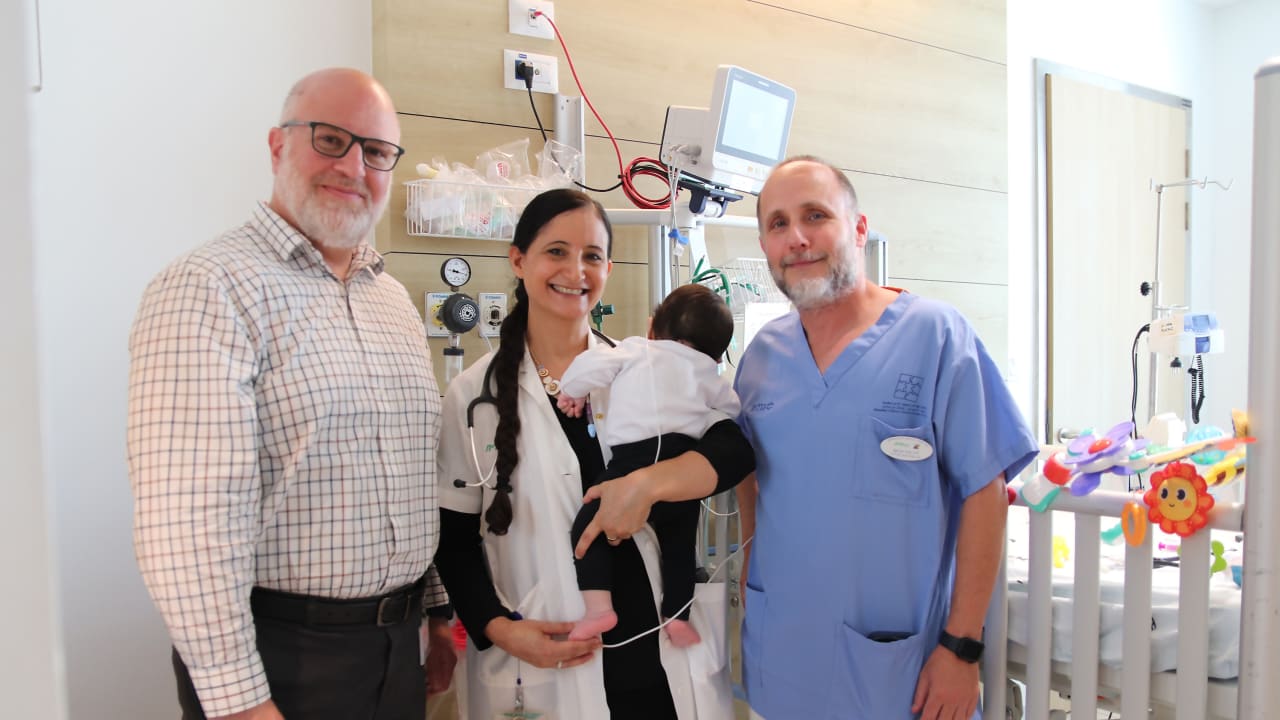
The operation was performed by Dr. Naama Orenstein and Dr. Dror Kraus at Schneider Children’s Medical Center, whose surgical expertise played a critical role in translating years of laboratory research into a clinical reality. The significance of the intervention extends far beyond the treatment of a single patient.
Gene therapy has emerged as one of the most promising frontiers in modern medicine, offering the possibility of correcting genetic defects at their source rather than simply managing their consequences. While gene therapies have been successfully used in certain blood disorders, retinal diseases, and other genetic conditions, direct delivery of gene therapy into the brain of an infant with a devastating neurological disorder marks an entirely new frontier.
The human brain remains among the most complex organs in the body, presenting unique challenges for therapeutic intervention. Delivering genetic material safely and effectively into neuronal cells requires extraordinary precision and careful consideration of both short-term and long-term consequences.
The success of this procedure therefore represents not only an achievement in pediatric neurology but also a significant advance in the broader field of genetic medicine. Researchers involved in the project emphasize that years of fundamental scientific investigation were necessary before such a treatment could even be contemplated.
The path from laboratory discovery to clinical application is often long and uncertain, particularly in fields involving rare genetic disorders. Prof. Aqeilan’s work on the WWOX gene helped illuminate its crucial role in brain development and neurological stability. By understanding how the gene functions and what occurs when it is absent or defective, researchers were able to begin envisioning therapeutic strategies capable of compensating for its loss.
Reflecting on the achievement, Aqeilan underscored the extraordinary journey that led to the breakthrough. “What began as a scientific effort to understand the biological function of a gene has now become a potential treatment for children suffering from one of the most severe forms of epilepsy,” he said.
That statement captures the broader significance of the accomplishment. It illustrates how basic scientific research—often conducted years before any clinical application appears possible—can ultimately lead to life-changing medical innovations.
The Times of Israel report noted that the infant’s current stable condition offers an encouraging early indication that the therapy may have been successfully administered. Nevertheless, researchers caution that long-term monitoring will be essential to fully assess the treatment’s effectiveness and safety.
Gene therapies often require extensive follow-up periods to evaluate durability, neurological outcomes, developmental progress, and potential side effects.
As a result, the coming months and years will be closely watched by scientists around the world. The implications of a successful outcome could be profound.
Should the therapy demonstrate sustained effectiveness, it could pave the way for similar approaches targeting a broad range of neurological disorders caused by single-gene mutations. Researchers have increasingly identified genetic factors underlying numerous pediatric neurological diseases, many of which currently lack effective treatments.
The ability to replace missing or defective genes directly within brain tissue could potentially open new therapeutic pathways for conditions previously regarded as untreatable.
Israel has long maintained a reputation as a global leader in medical innovation, biotechnology, and scientific research. The latest achievement further strengthens that reputation and highlights the country’s prominent role in advancing treatments for rare diseases.
Institutions such as the Hebrew University of Jerusalem and Schneider Children’s Medical Center have frequently contributed to significant breakthroughs in genetics, neuroscience, and pediatric medicine. The collaboration between academic researchers and clinical practitioners proved especially critical in this case.
Scientific discoveries made in research laboratories were translated into a real-world treatment through close cooperation among geneticists, neurologists, neurosurgeons, and pediatric specialists. Such multidisciplinary collaboration increasingly defines modern medical innovation, particularly in highly specialized fields such as gene therapy.
The emotional significance of the breakthrough cannot be overlooked. For families confronting severe genetic disorders, medical advances often represent more than scientific milestones—they embody hope where little previously existed.
Parents of children diagnosed with rare neurological conditions frequently face daunting prognoses and limited treatment options. The possibility that genetic medicine may offer new avenues of intervention carries enormous emotional and practical importance. At the same time, researchers emphasize the importance of measured optimism.
Although the procedure represents a remarkable achievement, additional studies and continued observation will be required before broader conclusions can be drawn regarding its long-term efficacy.
Medical history is filled with promising breakthroughs that required years of further validation before becoming standard therapies. Nevertheless, the accomplishment stands as an extraordinary testament to the power of scientific perseverance, innovation, and collaboration.
As reported by The Times of Israel, the successful treatment of this infant may ultimately mark the beginning of a new chapter in the fight against devastating genetic neurological diseases. What began as an effort to understand the intricate biology of a single gene has evolved into a groundbreaking medical intervention with potentially global implications.
For physicians, researchers, and families around the world, the procedure offers something that has long been in short supply for those confronting severe inherited epilepsy: a tangible reason to believe that the future may hold treatments capable of changing lives in ways once thought impossible.



