19.9 F
New York

tjvnews.com

Tuesday, February 3, 2026
CLASSIFIED ADS
LEGAL NOTICE
DONATE
SUBSCRIBE
Home Blog

Trump Holds Back on Iran Strike as Quiet Diplomacy Re-Emerges

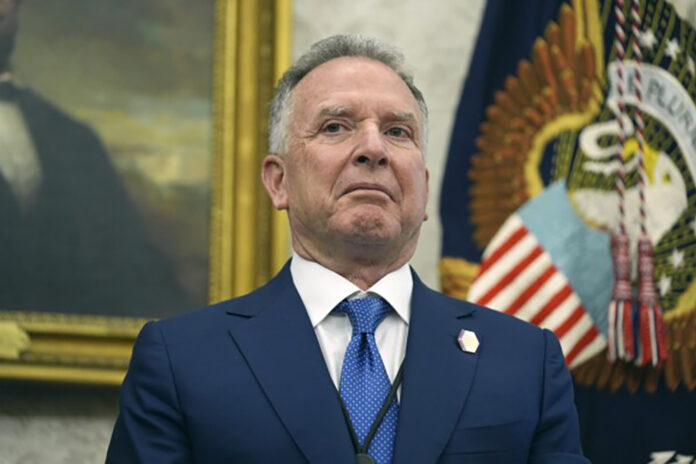
Steve Witkoff is President Trump’s special envoy to the Middle East and the administration’s lead negotiator in hostage talks. Credit: AP

Jared Evan

(TJV NEWS) Despite last week’s heated rhetoric and warnings of possible military action, it increasingly appears President Trump is not yet prepared to order a major U.S. strike on Iran. Instead, signs are emerging that Washington and Tehran may be edging back toward direct diplomatic engagement.

According to Axios, U.S. Middle East envoy Steve Witkoff and Iranian Foreign Minister Abbas Araghchi are expected to meet Friday in Istanbul to discuss the contours of a potential nuclear deal. If the meeting goes forward, it would mark the first face-to-face contact between senior American and Iranian officials since negotiations collapsed following the 12-day war in June.

However, the talks remain far from certain. Axios cautioned that the meeting represents a “best case scenario,” with one source familiar with the planning stressing that nothing is final until both sides are actually seated at the table. Any escalation in rhetoric or regional tensions before then could derail the effort entirely.

Araghchi has publicly signaled Tehran’s openness to renewed diplomacy, saying Iran is “ready for diplomacy,” while also warning that negotiations cannot proceed under threats or coercion. “Diplomacy is incompatible with pressure, intimidation, and force,” the Iranian foreign minister has said, according to Axios. Still, Iranian officials appear cautiously optimistic about the possibility of renewed direct or indirect contacts with Washington.

Behind the scenes, regional players are reportedly scrambling to prevent a wider conflict. Axios notes that Egypt and Qatar, in particular, have been active in quiet diplomatic efforts aimed at de-escalation and reviving dialogue.

Washington’s core demands, however, have not changed. The Trump administration continues to insist on zero uranium enrichment by Iran and significant restrictions on Tehran’s ballistic missile program, Axios reports. Those conditions remain non-starters for Iranian leaders.

Tehran has indicated it is willing to negotiate on the nuclear issue but has flatly rejected any limits on its missile capabilities. Iranian officials argue that reducing their defenses would amount to national self-destruction—especially given Israel’s unwillingness to impose similar limits and Iran’s claim that it has already been subjected to unprovoked Israeli attacks.

In comments highlighted by Clash Report, President Trump recently reflected on Iran’s military leadership, saying the late Qasem Soleimani had been a formidable figure. Speaking on The Dan Bongino Show, Trump suggested that Iran’s strategic posture would be different today had Soleimani not been killed, implying Tehran lacks comparable leadership now.

In an interview with CNN, Araghchi said indirect contacts with Washington, facilitated by regional intermediaries, had been “fruitful,” while warning that a broader war would be “a disaster for everybody.”

Meanwhile, the prospect of imminent U.S. airstrikes appears low. Over the weekend, The Wall Street Journal reported that American officials say strikes are not imminent, noting that the Pentagon is instead moving additional air defenses into the region to protect Israel, Arab allies, and U.S. forces in the event of Iranian retaliation and a prolonged conflict.

For now, the administration appears to be keeping military options on the table—while quietly testing whether diplomacy still has a pulse.

Clintons agree to testify in House Epstein investigation ahead of contempt of Congress vote

(AP) — Former President Bill Clinton and former Secretary of State Hillary Clinton agreed late Monday to testify in a House investigation into convicted sex offender Jeffrey Epstein, but the Republican leading the probe said an agreement had not yet been finalized.

Rep. James Comer, the chair of the House Oversight Committee, continued to press for criminal contempt of Congress charges against both Clintons Monday evening for defying a congressional subpoena when attorneys for the Clintons emailed staff for the Oversight panel, saying the pair would accept Comer’s demands and “will appear for depositions on mutually agreeable dates.”

The attorneys requested that Comer, a Kentucky Republican, agree not to move forward with the contempt proceedings. Comer, however, said he was not immediately dropping the charges, which would carry the threat of a substantial fine and even incarceration if passed by the House and successfully prosecuted by the Department of Justice.

“We don’t have anything in writing,” Comer told reporters, adding that he was open to accepting the Clintons’ offer but “it depends on what they say.”

House Democrats release photos of Trump, Clinton and Andrew from Epstein’s estate
The last-minute negotiating came as Republican leaders were advancing the contempt resolution through the House Rules Committee — a final hurdle before it headed to the House floor for a vote. It was potentially a grave moment for Congress, the first time it could hold a former president in contempt and advance the threat of prison time.

As Comer and the Clintons negotiated over the terms of the depositions, the House Rules Committee postponed advancing the contempt of Congress resolutions.

Comer earlier Monday rejected an offer from attorneys for the Clintons to have Bill Clinton conduct a transcribed interview and Hillary Clinton submit a sworn declaration. He insisted that both Clintons sit for sworn depositions before the committee in order to fulfill the panel’s subpoenas.

A letter from the committee to attorneys for the Clintons indicated that they had offered for Bill Clinton to conduct a 4-hour transcribed interview on “matters related to the investigations and prosecutions of Jeffrey Epstein” and for Hillary Clinton to submit a sworn declaration.

“The Clintons do not get to dictate the terms of lawful subpoenas,” Comer said.

The former president and secretary of state had resisted the subpoenas for months after the Oversight panel issued subpoenas for their testimony in August as it opened an investigation into Epstein and his associates. Their attorneys had tried to argue against the validity of the subpoena.

However, as Comer threatened to begin contempt of Congress proceedings, the Clintons started negotiating towards a compromise. The Republican-controlled Oversight committee advanced criminal contempt of Congress charges last month. Nine of the committee’s 21 Democrats joined Republicans in support of the charges against Bill Clinton as they argued for full transparency in the Epstein investigation. Three Democrats also supported advancing the charges against Hillary Clinton.

Republicans push Bill Clinton’s involvement

Bill Clinton’s relationship with Epstein has reemerged as a focal point for Republicans amid the push for a reckoning over Epstein, who killed himself in 2019 in a New York jail cell as he faced sex trafficking charges.

Clinton, like a bevy of other high-powered men, had a well-documented relationship with Epstein in the late 1990s and early 2000s. He has not been accused of wrongdoing in his interactions with the late financier.

The Clintons have remained highly critical of Comer’s decision, saying he was bringing politics into the investigation while failing to hold the Trump administration accountable for delays in producing the Department of Justice’s case files on Epstein.

“They negotiated in good faith. You did not,” a spokesperson for the Clintons, Angel Ureña, said in response to Comer’s threats on Monday. “They told you under oath what they know, but you don’t care.”

Still, the prospect of a vote raised the potential for Congress to use one of its most severe punishments against a former president for the first time. Historically, Congress has given deference to former presidents. None has ever been forced to testify before lawmakers, although a few have voluntarily done so.

House Democratic leader Hakeem Jeffries said earlier Monday that his caucus would have a discussion on the contempt resolutions later in the week but remained noncommittal on whipping votes against them.

Jeffries said he was a “hard no” on contempt and accused Comer of focusing on political retribution rather than investigating the delayed release of case files. Democrats also say the Justice Department has not yet released all the material it has on the late financier.

“They don’t want a serious interview, they want a charade,” Jeffries said.

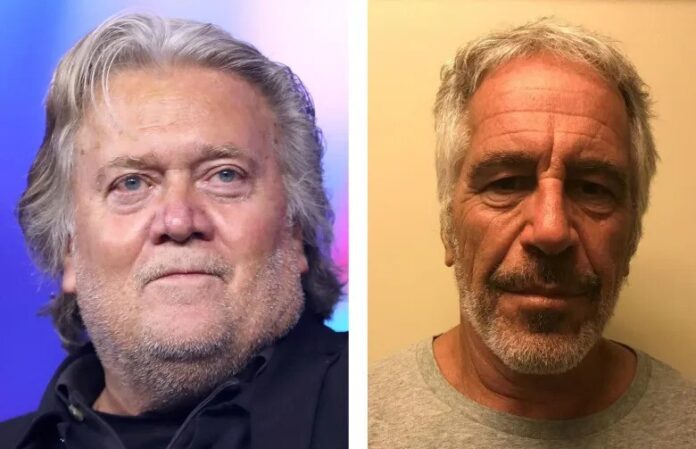
Epstein Files Unleash a Torrent of Power, Politics and Nightmarish Allegations — With Steve Bannon at the Center

By Jared Evan

(TJV NEWS) The Justice Department’s release of more than three million pages of records tied to Jeffrey Epstein has pulled back the curtain on a world where political power, elite access and unverified horror stories coexist — exposing both documented relationships with influential figures and a shadow archive of extreme allegations submitted to federal authorities over decades.

The link to the trove of files : (Click Here) 

As Politico reported, the files confirm Epstein maintained deep, ongoing ties with political operatives, billionaires and foreign officials long after his criminal conduct was known. Most striking among those documented relationships is Steve Bannon, the former Trump White House chief strategist, whose extensive communications with Epstein position him as the most politically significant figure to emerge from the latest disclosures.

At the same time, the files include raw FBI tip sheets and complaint summaries containing some of the most disturbing allegations ever associated with Epstein — allegations the Justice Department itself warns were never substantiated, corroborated or acted upon.

Steve Bannon: The Most Consequential Political Tie

According to thousands of text messages and emails released Friday, Epstein and Bannon maintained a close, sustained and wide-ranging relationship from at least 2018 through mid-2019 — well after Epstein’s prior conviction and amid mounting scrutiny of his trafficking operation.

As Politico reported, the communications reveal a partnership that extended far beyond casual contact. The two men exchanged messages about reshaping European governments, applying pressure on China, cultivating Middle Eastern business ties and influencing media narratives in the United States and abroad.

Epstein offered Bannon access to his private jet, Paris apartment, Palm Beach home and private Caribbean island, while joking that he was Bannon’s “assistant” and “the most highly paid travel agent in history.” Bannon, in turn, provided Epstein with media training, strategic advice and coaching on how to navigate growing press scrutiny — even advising him on personal presentation, including how long to keep his beard.

Their exchanges also show Epstein venting angrily about trafficking allegations while seeking reassurance from Bannon, who had left the Trump administration under strained circumstances but remained deeply connected to conservative political circles.

The messages occasionally drifted into crude humor and mockery of political figures, including President Donald Trump. Epstein joked that Trump should be called a “re-grifter,” while Bannon privately referred to the president as the “stable genius” and speculated that Trump was “out of gas,” according to Politico.

Bannon has not responded to requests for comment on the newly released messages. The Justice Department declined to comment on the correspondence.

A Broader Pattern of Influence

The files reinforce earlier indications that Epstein served as a behind-the-scenes connector, using his wealth and access to link political figures, financiers and foreign officials.

As Politico reported, Epstein maintained contact with European diplomats, Russian-linked officials and Middle Eastern power brokers. He arranged meetings for allies like Bannon with foreign leaders and bantered with senior officials while discussing geopolitics, elections and international pressure campaigns.

The documents show Epstein corresponding with officials tied to the Council of Europe, foreign ministers and international “fixers,” underscoring how deeply embedded he was in elite global circles.

Howard Lutnick’s Island Visit Emails

Among the more concrete contradictions in the files are emails involving Commerce Secretary Howard Lutnick, who previously denied meaningful contact with Epstein after 2005.

The newly released emails show Epstein and Lutnick coordinating logistics for a 2012 visit near Epstein’s private island, including discussions about docking a 188-foot yacht. An Epstein aide later relayed a message saying, “Nice to see you.”

Lutnick has since said he spent “zero time” with Epstein. The Commerce Department said his interactions were limited and involved his family, denying wrongdoing.

Trump: Explicit Allegations Contained in FBI Tip Sheets

The newly released files include multiple allegations involving President Donald Trump, all of which appear in FBI tip spreadsheets and complaint logs — not criminal indictments or sworn testimony.

One entry describes a caller alleging that a 13- or 14-year-old girl was forced to perform oral sex on Trump roughly 35 years ago in New Jersey, allegedly arranged through Epstein. According to the complaint, the girl was struck after biting Trump during the assault.

The FBI log notes that the tipster was contacted and the information forwarded to the bureau’s Washington field office. No outcome, corroboration or charges are recorded.

Other complaints allege the existence of a sex trafficking ring operating at Trump-owned properties in the mid-1990s, with Ghislaine Maxwell allegedly acting as a broker. One complainant claimed she was threatened by Trump’s head of security if she ever spoke publicly. In that instance, the FBI explicitly recorded that the complainant was “deemed not credible.”

Additional entries describe alleged “calendar girl” parties at Mar-a-Lago and a limousine driver claiming knowledge of underage victims linked to Epstein and Trump. Investigators noted many of these tips were impossible to verify or lacked sufficient identifying information.

The White House dismissed all allegations as false and unfounded, and the Justice Department emphasized that the release includes unverified public submissions, warning that credible claims would have been pursued long ago.

Prince Andrew and the International Elite

The files also reinforce Epstein’s long-documented ties to Prince Andrew, whose name appears hundreds of times in the newly released material.

One 2010 email shows Epstein attempting to set Andrew up on a date, describing a woman as “26, russian, clevere beautiful.” Andrew responded that he would be “delighted” to meet her.

Andrew has denied wrongdoing but settled a civil lawsuit brought by Virginia Giuffre, who alleged Epstein trafficked her to the prince when she was underage. Andrew paid an undisclosed sum without admitting liability.

Giuffre died by suicide last year at age 41.

George Bush 1: Cannibalism, Ritual Abuse and DOJ Warnings

Among the most disturbing material in the files is a single FBI interview summary referencing a purported Epstein victim who made extraordinary claims involving “George Bush 1.”

The document does not clarify whether the reference is to former President George H.W. Bush. No corroborating evidence was offered, and no legal action followed.

According to the summary, the individual alleged that:

  • He was raped by Epstein and by “George Bush 1”

  • He witnessed ritualistic abuse aboard a yacht

  • He saw African American males having sex with white blonde females who were bleeding

  • He claimed to have witnessed babies being dismembered, their intestines removed, and individuals eating feces from those intestines

  • He described a form of ritual cutting involving a scimitar, though investigators noted no scarring

The same document explicitly states that the individual offered no supporting or corroborating evidence or witnesses, and that parts of the account were relayed through third parties associated with conspiracy-driven media sources.

The DOJ included this material under a transparency mandate but did not validate any aspect of the claims.

Bill Clinton Also Named — Without Charges

The same interview summary also alleges rape by former President Bill Clinton, again without corroboration, witnesses or follow-up action. Clinton has denied wrongdoing and has said he had no knowledge of Epstein’s abuse.

No victim who has gone public has accused either Trump or Clinton of criminal conduct, and neither man has been charged.

Why These Allegations Were Released Anyway

As the Associated Press reported, the Justice Department acknowledged that the release includes duplicate records, inconsistent redactions and raw investigative material, including tips that were never vetted.

Survivor advocacy groups criticized the release for exposing victim details while failing to clearly identify enablers or conspirators. Lawmakers have demanded access to unredacted files to assess whether names were improperly shielded.

What Is Proven — and What Is Not

What the files prove:

  • Epstein maintained deep ties to political and business elites

  • Steve Bannon had extensive, documented contact with Epstein

  • Federal prosecutors once prepared a sweeping indictment that was never brought

  • Epstein continued operating with elite access long after his crimes were known

What the files do not prove:

  • The extreme allegations contained in FBI tip sheets

  • Claims involving cannibalism, ritual abuse or murder

  • Criminal wrongdoing by Trump, Bush, Clinton or others named only in complaints

An Unfinished Reckoning

Epstein died by suicide in federal custody in 2019. Ghislaine Maxwell is serving a 20-year sentence. No other accomplices have been charged.

What the Epstein files ultimately reveal is a dual reality: a documented web of power and influence, and a parallel archive of unverified horror that federal authorities logged but never substantiated.

Both now sit in the public record — leaving the country to confront not only what happened, but what was never fully answered.

News United Nations UN survey finds almost 80% of European teachers have witnessed student Jew-hatred

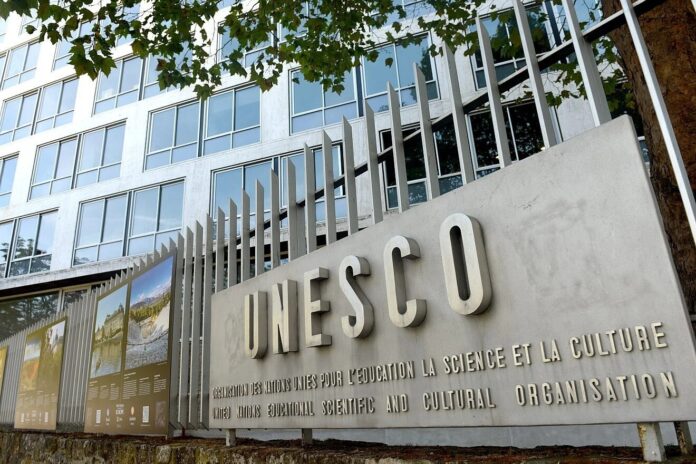
The logo of the UNESCO on the main building in Paris, France. Photo by Bumble Dee/Shutterstock

(JNS) Some 78% of European teachers have seen students commit antisemitic acts, and 27.4% witnessed nine or more such incidents, according to a survey by the United Nations.

“Following almost a decade of work addressing antisemitism in education across more than 30 countries, UNESCO experts were not surprised by the clear and urgent need for stronger teacher training on antisemitism in Europe,” the U.N. Educational, Scientific and Cultural Organization told JNS.

UNESCO told JNS that though its experts weren’t surprised, “several findings remain deeply alarming.”

The Paris-based U.N. agency surveyed more than 2,000 teachers in 23 European countries. The European Union supported the poll. (JNS sought comment from the Israeli embassy in France.)

The survey is “the first European study on trends in teachers’ perceptions and experiences of antisemitism in the classroom,” UNESCO said. “Equally concerning were gaps in teachers’ understanding of what constitutes antisemitism.”

Some 61% of teachers cited observing Holocaust denial or distortion, and 44% said that they had seen the use of Nazi symbols. Among teachers, 16% didn’t consider saying things like “Jews are wealthy” to be antisemitic, and 32% thought that those sorts of statements, which draw on longstanding antisemitic tropes, had context-dependent meanings.

A smaller number (13%) of teachers said that believing that “Jews control the global financial system” isn’t antisemitic, and 24% saw such a statement’s meaning as context-dependent. Barely over half said unequivocally that the statement is Jew-hatred.

“Perhaps most worryingly, one in 20 teachers (5%) did not consider the use of derogatory terms to refer to Jewish individuals or groups to be antisemitic at all,” UNESCO said.

Per the survey, 70% of teachers said that they hadn’t received any professional training about how to recognize and address contemporary Jew-hatred, and less than one-third had participated in outside antisemitism training courses.

“In most countries, the only space where teachers receive any training, support or guidance on teaching about antisemitism is in history education, and in particular through Holocaust education,” UNESCO told JNS.

“While this field of education is of critical importance, it is not sufficient to prevent or educate about contemporary forms of antisemitism,” the agency said.

It is possible to find “curricula avenues” to teach about forms of Jew-hatred, such as in citizenship education, social sciences, language education, and arts and culture. But “contemporary antisemitism often intersects with current debates around geopolitics, social media, conspiracy thinking and identity politics,” UNESCO told JNS.

That means that at times, “educational decision makers are paralyzed by a concern that investing in education about contemporary antisemitism projects a particular political position,” the agency said.

Survey data suggested that teachers often said it was a challenge when students expressed “hateful comments about Israel.”

“Highly emotive discourse about the conflict is entering nearly half of European schools, while teachers report feeling unprepared to address such comments or discourse,” UNESCO said.

That’s particularly true when “discussions risk becoming polarized or are presented as controversial,” the agency said.

“Teaching tends to default to historical forms of antisemitism that feel ‘settled,’ rather than engaging with how antisemitic tropes manifest today,” UNESCO said.

Jew-hatred is often home-bred, which is why UNESCO told JNS that it recommends “creating events that invite parents and grandparents, as well as, for example, members of the local faith communities, police officers, shopkeepers, local government representatives and school bus drivers to share in learning to address antisemitism and broader civic issues.”

“Hate speech, notably antisemitism and Holocaust denial, has reached levels not seen since World War II,” stated Khaled El-Enany, director-general of UNESCO.

“Most teachers have never received specific training to confront this reality, including the consequences related to AI development,” El-Enany said. “UNESCO provides policymakers with unique tools to empower teachers in more than 30 countries—from classrooms and campuses to sports clubs—and soon even more.”

Anti-Israel, former president of Chile nominated as next UN secretary-general

(JNS) Backed by Mexico and Brazil, Gabriel Boric, Chile’s outgoing president, nominated former Chilean president Michelle Bachelet, a harsh critic of the Jewish state, to be the next secretary-general of the United Nations.

Boric, who is also anti-Israel, made the announcement on Monday. José Antonio Kast, a right-wing politician set to assume the Chilean presidency next month, would be unlikely to nominate Bachelet, 74, for the role.

Bachelet, who was Chile’s president twice—from 2006-10 and 2014-18—was the first head of U.N. Women and served as U.N. high commissioner for human rights.

She was a frequent critic of the Jewish state, which broke ties with her office in 2020 over her decision to implement a U.N. Human Rights Council resolution mandating the publication of a blacklist of companies engaged in business in Judea and Samaria and eastern Jerusalem.

According to U.N. Watch, Bachelet issued 14 comments about Israel, more than any democratic country. She made the same number of statements about Syria and fewer about Iran, according to the watchdog.

Bachelet used her final hours in office to decry Israel over its denial of visas to her staff. She ignored antisemitic comments made by a member of the Human Rights Council’s commission of inquiry on the Israeli-Palestinian conflict, for which the commissioner later apologized.

The United Nations has never had a female secretary-general. The other nominees are Rebeca Grynspan, former second vice-president of Costa Rica and currently secretary-general of the U.N. Conference on Trade and Development; Mexican environment and natural resources secretary Alicia Bárcena; and Barbados Prime Minister Mia Mottley.

Rafael Grossi, the Argentinian head of the International Atomic Energy Agency, has also been nominated.

Latin America is up next in the traditional U.N. rotation of world regions. Portugal’s António Guterres is secretary-general until the end of the year.

Israeli Police Detain Local Officials Suspected of Pocketing Aid Sent After Oct 7 Attack

FILE - Israeli flags decorate rooms of Israelis who evacuated from cities and towns along the border with Lebanon, in kibbutz Ginosar hotel, northern Israel, Tuesday, March 5, 2024. (AP Photo/Ariel Schalit, file)

(AP) — Israeli authorities on Monday detained a group of local officials and businesspeople that investigators suspect siphoned off millions in wartime aid, announcing a fraud inquiry involving donations that poured in after the Hamas-led attack on southern Israel in 2023.

Israeli police said in a statement that in the months leading up to Monday’s arrest, investigators had tracked unnamed local leaders on the suspicion that they had diverted and pocketed an equivalent of millions of dollars sent in the context of the Israel-Hamas war.

The arrests come after donations surged following the attack on Israel on Oct. 7, 2023, when Hamas-led militants killed about 1,200 people, mostly civilians and took 251 people hostage. Synagogues, corporations and Jewish organizations around the world sent aid to Israeli charities and municipalities in need.

Israel’s Diaspora Affairs Ministry said in a March 2024 report that at least $1.4 billion had been donated by that time, as local councils worked alongside nonprofits worldwide to strengthen social services to support evacuees. The ministry report said that local authorities and associated municipal businesses “received a substantial amount” of the funds, particularly the councils near the Gaza border.

More than 120,000 Israelis were displaced from communities near Gaza and along the northern border with Lebanon early in the war, according to the office of Israel’s prime minister. It sent municipalities scrambling to provide services to constituents who were displaced from homes that were either destroyed in the attack or endangered by rockets that Hezbollah was launching toward Israel from Lebanon.

Anti-Jewish hate crimes up 182% in New York City in Mamdani’s first month as mayor, per NYPD

According to findings from StopAntisemitism, 72% of Jewish students feel unwelcome in certain campus spaces. Credit: collegeaidservices.net

Overall, the NYPD hate crimes task force investigated 152% more incidents last month (58) compared to January 2025 (23), including 31 anti-Jewish hate crimes last month compared to 11 in January 2025.

The antisemitic hate crimes “accounted for more than half of all the hate crime incidents in January,” the NYPD stated. About 10% of New Yorkers are estimated to be Jewish.

Scott Richman, director of the Anti-Defamation League’s New York region, called the one-year jump “staggering.”

“From swastikas at a playground in Borough Park to a car ramming at Chabad headquarters in Crown Heights, the Jewish community in New York City is very much on edge,” Richman told JNS.

“In the face of this, we urge Mayor Mamdani to quickly name the next head of the Mayor’s Office to Combat Antisemitism and to appoint a leader who will both represent this diverse Jewish community and confront all forms of antisemitism,” he said.

According to NYPD statistics, there were seven anti-Muslim incidents in January in the city, compared to zero in January 2025.

The 31 anti-Jewish incidents in January were much more than incidents that targeted or were related to Muslims (7), Asians (5), sexual orientation (5), religion (3), blacks (2), gender (2), age (1), Hispanics (1) and whites (1), per the NYPD.

Zohran Mamdani, who has called for the city to divest from Israel Bonds and has said he would have the Israeli prime minister arrested in the Big Apple, became mayor on Jan. 1.

Jessica Tisch, NYPD commissioner, stated that “for the first month of the year, the women and men of the NYPD delivered the fewest shooting incidents, victims and murders in recorded history.”

“These results show that this department remains focused on building on the historic public safety gains made last year. Our strategy is simple: don’t just get tough on crime, get smart,” Tisch said. “Deploy the best police officers in the nation to get it done and make New York safer.”

In January, NYPD recorded 47 victims in 40 shooting incidents, which was lower than what it said were all-time lows of 50 in 2025 and 56 in 2019. “Murders declined to their lowest level for January, shattering the previous record of 22 set in 2018 and 2022,” the department stated. “Manhattan and Staten Island went the entire month without a single murder.”

NYPD also said that retail theft was down 16% in January due to what it said was its “data-driven strategy” and that “school safety zones reduced overall crime by more than 50%.”

“These results drove an overall decline in major crime and continued the historic reductions achieved in 2025,” the NYPD said.

Reported rapes (167) were much higher in January that in prior years, including 2025 (157), 2024 (106), 2023 (135), 2022 (132) and 2021 (101), per the NYPD.

Iran Summons EU Ambassadors to Protest Revolutionary Guard Being Listed as a Terror Group

(AP) — Iran said Monday it had summoned all of the European Union ambassadors in the Islamic Republic to protest the bloc’s listing of the paramilitary Revolutionary Guard as a terror group.

The move came as Turkey tried to organize a meeting between the U.S. special envoy Steve Witkoff and Iranian officials, seeking to jump-start talks to ease the threat of U.S. military action against the Islamic Republic, two Turkish officials said.

The American military has moved the USS Abraham Lincoln and several guided-missile destroyers into the Mideast. It remains unclear whether President Donald Trump will decide to use force, though regional countries have engaged in diplomacy in an effort to halt a new Mideast war breaking out.

“Trump is trying to calibrate a response to Iran’s mass killing of protesters that punishes Iranian leaders without also embroiling the United States in a new, open-ended conflict in the region,” the New York-based Soufan Center think tank said Monday.

“Some Trump aides seek to exploit Tehran’s weakness to secure major concessions from the regime, but Trump has set conditions for a diplomatic resolution that Tehran cannot accept.”

EU sanctions draw Iran’s anger

The EU agreed to list the Guard as a terror group last week over its part in the bloody crackdown on nationwide protests in January that killed thousands and saw tens of thousands detained.

Other countries, including the U.S. and Canada, have previously designated the Guard as a terrorist organization. While the move is largely symbolic, it does add to the economic pressure squeezing Iran, particularly has the Guard has a major influence on the country’s economy.

Iranian Foreign Ministry spokesman Esmail Baghaei told journalists that the ambassadors had begun to be summoned on Sunday and that process went into Monday as well.

“A series of actions were reviewed, various options are being prepared and were sent to the related decision-making bodies,” Baghaei said. “We think that in coming days, a decision will be made about a reciprocal action by the Islamic Republic of Iran toward the illegal, unreasonable and very wrong move by the EU.”

Iran’s parliament speaker said Sunday that the Islamic Republic now considers all EU militaries to be terrorist groups, citing a 2019 law.

The Guard emerged from Iran’s 1979 Islamic Revolution as a force meant to protect the Shiite cleric-overseen government and was later enshrined in its constitution. It operates in parallel with the country’s regular armed forces and has expanded into private enterprise, allowing it to thrive.

The Guard’s Basij force likely was key in putting down the demonstrations, starting in earnest from Jan. 8, when authorities cut off the internet and international telephone calls for the nation of 85 million people. Videos that have come out of Iran via Starlink satellite dishes and other means show men likely belonging to its forces shooting and beating protesters.

Turkey tries to organize Iran-U.S. talks

In Turkey, officials have been trying to organize talks with Iran and Witkoff there, two Turkish officials said. They spoke on condition of anonymity as they were not authorized to brief journalists. One described the goal as trying to have Witkoff meet the Iranians by the end of the week, if possible.

Iranian Foreign Minister Abbas Araghchi and Witkoff met multiple times last year in negotiations over Iran’s nuclear program in Rome and Oman, but never finalized a deal. On June 13, Israel launched a series of attacks on Iran that sparked a 12-day war between the countries, effectively halting those talks. The U.S. during the war bombed three Iranian nuclear sites.

Baghaei declined to give any specifics about the possibility of talks in Ankara.

“What is clear is that we are engaged with reviewing either principles and details related to this diplomatic process,” he said. “It is natural that regional countries have intensified their efforts.”

Axios first reported on the possible talks in Turkey.

Guard drill in Strait of Hormuz ‘ongoing’

Baghaei also said a drill by the Guard in the Strait of Hormuz, the narrow mouth of the Persian Gulf through which a fifth of all oil traded passes, was “ongoing based on its timetable.” Iran warned ships last week that a drill would be carried out on Sunday and Monday, but prior to Baghaei’s comments had not acknowledged it taking place. The U.S. military’s Central Command issued a strong warning to Iran not to harass its warships and aircraft, or impede commercial vessels moving through the strait.

Satellite photos taken Sunday by Planet Labs PBC and analyzed by The Associated Press showed small vessels moving at speed in the strait between Iran’s Qeshm and Hengam islands, some distance away from the corridor commercial vessels take. The Guard relies on a fleet of small, fast-attack ships in the strait.

Asked about whether Iran could face a war, Baghaei told the public “don’t worry at all.” He declined, however, to discuss whether Trump set a deadline for Iran to respond to America’s demands.

Iran state TV host faces charges for mocking dead

Iran’s state-run IRNA news agency reported on Monday that prosecutors in Tehran filed charges against the head of state television’s Ofogh channel, as well as producers and the host of a program who mocked those killed in the crackdown.

The program, which aired Saturday, saw the host reference allegations made abroad about Iran hiding bodies of the dead in freezers to bring out as victims if the U.S. attacks the country.

The host asked viewers a multiple-choice question about where Iran would hide the bodies, listing things like ice cream freezers and supermarket refrigerators.

Musk Joins His Rocket and AI Businesses Into a Single Company Before an Expected IPO This Year

(AP) — Elon Musk is joining his space exploration and artificial intelligence ventures into a single company before a massive planned initial public offering for the business later this year.

His rocket venture, SpaceX, announced on Monday that it had bought xAI in an effort to help the world’s richest man dominate the rocket and artificial intelligence businesses. The deal will combine several of his offerings, including his AI chatbot Grok, his satellite communications company Starlink, and his social media company X.

Musk has talked repeatedly about the need to speed development of technology that will allow data centers to operate in space, a goal that may become easier in the combined company.

German-Israeli Soldier Sues Newspapers for False War Crimes Claims

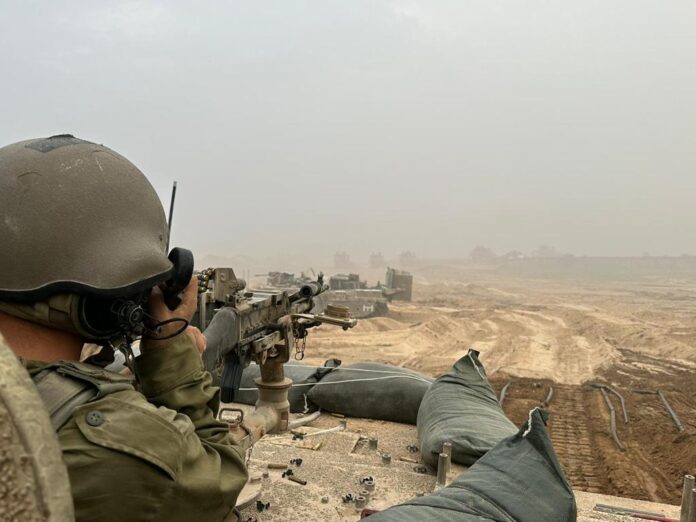
(AP) — A German-Israeli soldier has taken legal action against The Guardian and several German publications for falsely identifying him as an Israeli Defense Forces (IDF) sniper involved in civilian killings in Gaza.

The soldier, referred to as G., was wrongly named and pictured in reports stemming from a 2025 article that described the actions of a sniper team. G.’s lawyer, Joachim Nikolaus Steinhoefel, said G. was not present during the incidents and that the articles were based on a misleadingly edited interview.

After signing a cease-and-desist with The Guardian, G. also sought an injunction in German courts to prevent further publication of false claims about him. German outlets Der Spiegel, ZDF, and Abendzeitung had already circulated his identity widely, leading to social media threats and accusations of war crimes.

“The evidence used to accuse him was unreliable and manipulated,” Steinhoefel told The Jerusalem Post. “Publishing his name and photo exposed him to almost irreversible danger.” The court has issued an interim injunction against Abendzeitung to stop further defamatory reporting.

Netanyahu is correct: Gaza cannot be rebuilt until Hamas is disarmed

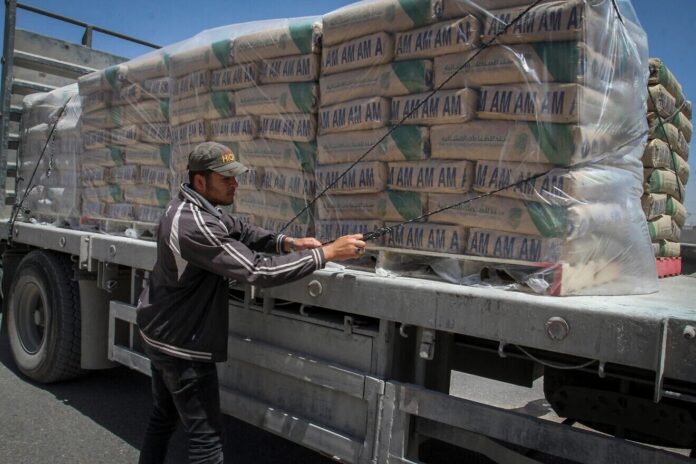
A Palestinian worker adjusts internationally funded bags of cement, which were loaded onto a truck after it entered the southern Gaza Strip from Israel through the Kerem Shalom border crossing in Rafah, April 29, 2015. Photo by Abed Rahim Khatib/Flash90
Moshe Phillips

Did Artificial Intelligence Really Drive Layoffs at Amazon and Other Firms? It Can Be Hard to Tell

(AP) – The one thing N. Lee Plumb knows for sure about being laid off from Amazon last week is that it wasn’t a failure to get on board with the company’s artificial intelligence plans.

Plumb, his team’s head of “AI enablement,” says he was so prolific in his use of Amazon’s new AI coding tool that the company flagged him as one of its top users.

Many assumed Amazon’s 16,000 corporate layoffs announced last week reflected CEO Andy Jassy’s push to “reduce our total corporate workforce as we get efficiency gains from using AI extensively across the company.”

But like other companies that have tied workforce changes to AI — including Expedia, Pinterest and Dow last week — it can be hard for economists, or individual employees like Plumb, to know if AI is the real reason behind the layoffs or if it’s the message a company wants to tell Wall Street.

“AI has to drive a return on investment,” said Plumb, who worked at Amazon for eight years. “When you reduce head count, you’ve demonstrated efficiency, you attract more capital, the share price goes up.”

“So you could potentially have just been bloated in the first place, reduce head count, attribute it to AI, and now you’ve got a value story,” he said.

Plumb is atypical for an Amazon worker in that he’s also running what he describes as a “long shot” bid for Congress in Texas, on a platform focused on stopping the tech industry’s reliance on work visas to “replace American workers with cheaper foreign labor.”

But whatever it was that cost Plumb his job, his skepticism about AI-driven job replacement is one shared by many economists.

“We just don’t know,” said Karan Girotra, a professor of management at Cornell University’s business school. “Not because AI isn’t great, but because it requires a lot of adjustment and most of the gains accrue to individual employees rather than to the organization. People save time and they get their work done earlier.”

If an employer works faster because of AI, Girotra said it takes time to adjust a company’s management structure in a way that would enable a smaller workforce. He’s not convinced that’s happening at Amazon, which he said is still scaling back from a glut of hiring during the COVID-19 pandemic.

A report by Goldman Sachs said AI’s overall impact on the labor market remains limited, though some effects might be felt in “specific occupations like marketing, graphic design, customer service, and especially tech.” Those are fields involving tasks that correlate with the strengths of the current crop of generative AI chatbots that can write emails and marketing pitches, produce synthetic images, answer questions and help write code.

But the bank’s economic research division said in its most recent monthly AI adoption tracker that, since December, “very few employees were affected by corporate layoffs attributed to AI,” though the report was published Jan. 16, before Amazon, Dow and Pinterest announced their layoffs.

San Francisco-based Pinterest was the most explicit in asserting that AI drove it to cut up to 15% of its workforce. The social media company said it was “making organizational changes to further deliver on our AI-forward strategy, which includes hiring AI-proficient talent. As a result, we’ve made the difficult decision to say goodbye to some of our team members.”

Pinterest echoed that message in a regulatory disclosure that said the company was “reallocating resources to AI-focused roles and teams that drive AI adoption and execution.”

Expedia has voiced a similar message but the 162 tech workers the travel website cut from its Seattle headquarters last week included several AI-specific roles, such as machine-learning scientists.

Dow’s regulatory disclosures tied its 4,500 layoffs to a new plan “utilizing AI and automation” to increase productivity and improve shareholder returns.

Amazon’s 16,000 corporate job cuts were part of a broader reduction of employees at the ecommerce giant. At the same time as those cuts, all believed to be office jobs, Amazon said it would cut about 5,000 retail workers, according to notices it sent to state workforce agencies in California, Maryland and Washington, resulting from its decision to close almost all of its Amazon Go and Amazon Fresh stores.

That’s on top of a round of 14,000 job cuts in October, bringing the total to well over 30,000 since Jassy first signaled a push for AI-driven organizational changes.

Like many companies, in technology and otherwise, but particularly those that make and sell AI tools and services, Amazon has been pushing its workforce to find more efficiencies with AI.

Meta CEO Mark Zuckerberg said last week that 2026 will be when “AI starts to dramatically change the way that we work.”

“We’re investing in AI-native tooling so individuals at Meta can get more done, we’re elevating individual contributors, and flattening teams,” he said on an earnings call. “We’re starting to see projects that used to require big teams now be accomplished by a single very talented person.”

So far, Meta’s layoffs this year have focused on cutting jobs from its virtual reality and metaverse divisions. Also driving job impacts is the industry shifting resources to AI development, which requires huge spending on computer chips, energy-hungry data centers and talent.

Jassy told Amazon employees last June to be “curious about AI, educate yourself, attend workshops and take trainings, use and experiment with AI whenever you can, participate in your team’s brainstorms to figure out how to invent for our customers more quickly and expansively, and how to get more done with scrappier teams.”

Plumb was fully on board with that and said he demonstrated his proficiency in using Amazon’s AI coding tool, Kiro, to “solve massive problems” in the company’s compensation system.

“If you weren’t using them, your manager would get a report and they would talk to you about using it,” he said. “There were only five people in the entire company that were a higher user of Kiro than I was, or had achieved more milestones.”

Now he’s shifting gears to his candidacy among a field of Republicans in the Houston area looking to unseat U.S. Rep. Dan Crenshaw in the March primary.

Cornell’s Girotra said it’s possible that increasing AI productivity is leading companies to cut middle management, but he said the reality is that those making layoff decisions “just need to cut costs and make it happen. That’s it. I don’t think they care what the reason for that is.”

Not all companies are signaling AI as a reason for cuts. Home Depot confirmed on Thursday that it was eliminating 800 roles tied to its corporate headquarters in Atlanta, though most of the affected employees worked remotely.

Home Depot’s spokesman George Lane said that Home Depot’s cuts were not driven by AI or automation but “truly about speed, agility” and serving the needs of its customers and front-line workers.

And exercise equipment maker Peloton confirmed on Friday that it is reducing its workforce by 11% as part of a broader cost-cutting move under its CEO Peter Stern to pare down operating expenses.

No Cement Before Security: Why Gaza’s Reconstruction Must Wait for Hamas’s Complete Disarmament

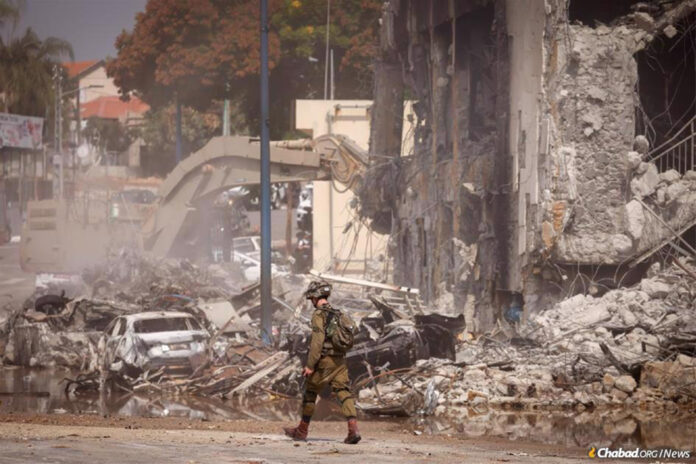
In Sderot, a soldier walks past a police station that was occupied by Gaza terrorists on Saturday and destroyed on Sunday by IDF forces. Photo by Chaim Goldberg/Flash90


By: Fern Sidman

As international pressure mounts to accelerate reconstruction in Gaza, a leading pro-Israel organization has drawn a firm and uncompromising line: there can be no rebuilding until Hamas is fully disarmed and Gaza is irreversibly demilitarized. The position, articulated forcefully by Americans for a Safe Israel, aligns squarely with Israeli Prime Minister Benjamin Netanyahu and reflects a hard-earned skepticism shaped by decades of conflict, broken assurances, and the deadly misuse of humanitarian materials.

At the heart of the debate lies a deceptively simple question: can reconstruction proceed while Hamas remains entrenched in Gaza? For Israel and its supporters, the answer is unequivocal. Netanyahu recently dismissed reports suggesting that rebuilding might be permitted before demilitarization, stating bluntly, “I’m hearing even now claims that Gaza’s reconstruction will be allowed before demilitarization—this will not happen.” That declaration was immediately welcomed by Americans for a Safe Israel (AFSI), which argued that anything less would amount to a dangerous act of collective amnesia.

Israeli officials have long warned that Gaza’s reconstruction cannot be treated as a neutral or purely humanitarian undertaking so long as the territory remains under the control of Hamas, the terrorist organization that has ruled Gaza for nearly two decades. The concern centers on so-called “dual-use” materials—items that have legitimate civilian applications but can just as easily be repurposed for military ends. Cement, steel, piping, and heavy machinery are indispensable for rebuilding homes and infrastructure. They are also the essential raw materials of an underground war machine.

AFSI’s argument is rooted in bitter experience. Time and again, international donors and agencies have authorized the entry of construction materials into Gaza under the assumption that they would be used for civilian recovery. Time and again, Hamas diverted those materials to expand a sprawling network of attack tunnels, command bunkers, and fortified positions. Those tunnels were not abstract threats; they were engineered corridors of death, used to infiltrate Israeli communities, kidnap civilians and soldiers, and stage massacres.

“Concrete for the foundation of a building can also be used to make tunnels, as Hamas has demonstrated again and again,” said Moshe Phillips, underscoring the grim reality that distinguishes Israel’s security dilemma from that of any other nation. “Israel is the only country in the world whose next-door neighbors have built dozens of tunnels into its territory to perpetrate massacres of civilians.”

That observation is not rhetorical flourish; it is a statement of historical record. Prior to October 7, Israel had fought multiple rounds of conflict against Hamas and Palestinian Islamic Jihad. Each time, ceasefires were brokered, aid flowed in, and reconstruction began—often under international supervision. Each time, Hamas exploited the lull to rebuild its military capabilities beneath the surface. The October 7 terrorist invasion, which shattered any lingering illusions about Hamas’s intentions, did not emerge from nowhere. It was made possible by years of tunnel construction that relied on imported cement and steel.

For AFSI, these facts alone render the notion of reconstruction under Hamas rule not merely naïve but reckless. Allowing rebuilding to proceed before demilitarization, the organization argues, would guarantee a repetition of the same cycle: aid, diversion, rearmament, and renewed bloodshed. The victims of that cycle are not only Israelis, but also Gazans, whose homes and lives are repeatedly sacrificed to Hamas’s militarism.

Netanyahu’s insistence on demilitarization first is therefore framed not as collective punishment, but as a prerequisite for any sustainable future. Reconstruction, in this view, is not a gift to be bestowed unconditionally; it is a process that must be anchored in security guarantees. Without the dismantling of Hamas’s weapons, tunnel networks, and command structures, rebuilding Gaza’s surface infrastructure would amount to pouring concrete over a powder keg.

AFSI’s stance also challenges a broader international narrative that tends to separate humanitarian concerns from security realities. While the impulse to alleviate suffering in Gaza is understandable and necessary, AFSI contends that humanitarianism divorced from accountability has repeatedly backfired. Aid that strengthens Hamas, even indirectly, prolongs the very conditions that generate humanitarian crises in the first place.

Established in 1970, Americans for a Safe Israel has spent decades positioning itself as a counterweight to what it sees as one-sided or ahistorical portrayals of the Israeli-Palestinian conflict. Independent of any political party in the United States or Israel, AFSI’s advocacy has consistently emphasized Israel’s right—and obligation—to defend its citizens against terrorism. In the current debate, that perspective translates into a clear hierarchy of priorities: security first, reconstruction second.

Critics argue that delaying reconstruction will exacerbate Gaza’s humanitarian plight and deepen despair. AFSI does not deny the severity of conditions in Gaza, but it rejects the premise that Hamas’s continued rule is compatible with meaningful relief. In its view, Hamas bears primary responsibility for Gaza’s devastation, having systematically invested in weapons and tunnels rather than civilian welfare. To rebuild while Hamas remains armed would be to reward that behavior and entrench its grip on power.

The organization’s support for Netanyahu’s position also reflects a broader concern about precedent. If the international community signals that armed groups can wage war, suffer defeat, and then receive unconditional reconstruction aid without disarming, it risks incentivizing similar strategies elsewhere. Demilitarization, by contrast, establishes a baseline expectation: reconstruction follows peace, not the other way around.

Netanyahu’s statement, echoed by AFSI, is thus less about punishment than about sequencing. Demilitarization is not an abstract demand; it entails the physical dismantling of tunnels, the removal of weapons, and the elimination of Hamas’s capacity to wage war. Only then, proponents argue, can cement truly be cement—used to build schools, hospitals, and homes rather than subterranean arsenals.

There is also an implicit moral argument at play. Israel, AFSI contends, has the right to insist that its neighbors not prepare for its destruction under the cover of humanitarian aid. No other nation is expected to accept the systematic construction of attack tunnels beneath its borders as a tolerable risk. To ask Israel to do so is to apply a double standard that erodes the very concept of sovereignty.

The debate over Gaza’s reconstruction is far from settled. International actors continue to explore mechanisms for oversight, monitoring, and phased rebuilding. Yet AFSI’s intervention serves as a stark reminder that technical solutions cannot substitute for political and security realities. Oversight regimes have failed before, not because of lack of intent, but because Hamas has proven adept at deception and coercion.

As the dust settles from the latest round of conflict, the choices made now will shape Gaza’s future for years to come. Netanyahu’s refusal to allow reconstruction before demilitarization, backed by Americans for a Safe Israel, is a wager that security is the foundation upon which any genuine recovery must be built. It is a wager informed by history, hardened by loss, and driven by the conviction that rebuilding without disarming Hamas would condemn both Israelis and Palestinians to yet another cycle of devastation.

In the end, the argument is stark but simple: concrete can either shelter families or conceal weapons. Until Hamas is removed from the equation, Israel and its allies insist, the risk that it will do the latter remains intolerably high.

Trump Plans to Lower Tariffs on Indian Goods to 18% After India Agreed to Stop Buying Russian Oil

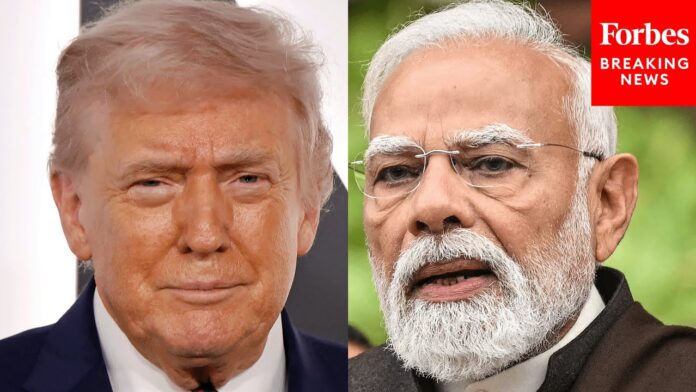
(AP) — President Donald Trump said Monday that he plans to lower tariffs on goods from India to 18%, from 25%, after Indian Prime Minister Narendra Modi agreed to stop buying Russian oil.

The move comes after months of Trump pressing India to cut its reliance on cheap Russian crude. India has taken advantage of slacked Russian oil prices as much of the world has sought to isolate Moscow for its February 2022 invasion of Ukraine.

Trump said that India would also start to reduce its import taxes on U.S. goods to zero and buy $500 billion worth of American products.

“This will help END THE WAR in Ukraine, which is taking place right now, with thousands of people dying each and every week!” Trump said in a Truth Social post announcing the tariff reduction on India.

Modi posted on X that he was “delighted” by the announced tariff reduction and that Trump’s “leadership is vital for global peace, stability, and prosperity.”

“I look forward to working closely with him to take our partnership to unprecedented heights,” Modi said.

Trump has long had a warm relationship with Modi, only to find it complicated recently by Russia’s war in Ukraine and trade disputes.

Trump has struggled to make good on a campaign pledge to quickly end the Russia-Ukraine war and has been reluctant since his return to office to place pressure on Russian President Vladimir Putin. He has simultaneously imposed tariffs without going through Congress to achieve his economic and foreign policy aims.

The announcement of the agreement with India comes as his special envoy, Steve Witkoff, and son-in-law Jared Kushner are expected to hold another round of three-way talks with Russian and Ukrainian officials in Abu Dhabi later this week aimed at finding an endgame to the war, according to a White House official who requested anonymity to describe the upcoming meeting.

Trump has voiced that he believes that targeting Russia’s oil revenue is the best way to get Moscow to end its nearly four-year war against Ukraine, a view that dovetails with his devotion to tariffs.

In June, Trump announced the United States would impose a 25% tariff on goods from India after his administration felt the country had done too little to narrow its trade surplus with the U.S. and open up its markets to American goods. In August, Trump imposed additional import taxes of 25% on Indian products because of its purchases of Russian oil, putting the combined rate increase at 50%.

Historically, India’s relationship with Russia revolves more around defense than energy. Russia provides only a small fraction of India’s oil but the majority of its military hardware.

But India, in the aftermath of the Russian invasion, used the moment to buy discounted Russian oil, allowing it to increase its energy supplies while Russia looked to cut deals to boost its beleaguered economy and keep paying for its brutal war.

The announced tariff reduction comes days after India and the European Union reached a free trade agreement that could affect as many as 2 billion people after nearly two decades of negotiations. That deal would enable free trade on almost all goods between the EU’s 27 members and India, covering everything from textiles to medicines, and bringing down high import taxes for European wine and cars.

The deal between two of the world’s biggest markets came as Washington targets both the Asian powerhouse and the EU bloc with steep import tariffs, disrupting established trade flows and pushing major economies to seek alternate partnerships.

In recent months, India has accelerated a push to finalize several trade agreements. It signed a deal with Oman in December and concluded talks for a deal with New Zealand.

Trump seemed to hint at a positive call with Modi on Monday morning, posting to social media a picture of the two of them on a magazine cover.

When the pair met last February, the U.S. president said that India would start buying American oil and natural gas. But the talks faltered and the tariffs imposed last year by Trump did little to initially change India’s objections.

While the U.S. has been seeking greater market access and zero tariff on almost all its exports, India has expressed reservations on throwing open sectors such as agriculture and dairy, which employ a bulk of the country’s population for livelihood, Indian officials said.

The Census Bureau reported that the U.S. ran a $53.5 billion trade imbalance in goods with India during the first 11 months of last year, meaning it imported more than it exported.

At a population exceeding 1.4 billion people, India is the world’s most populous country and viewed by many government officials and business leaders as geopolitical and economic counterbalance to China.

When Memory Is Attacked: The Defacement of Primo Levi Mural & the Fragile Frontiers of Holocaust Remembrance


By: Fern Sidman

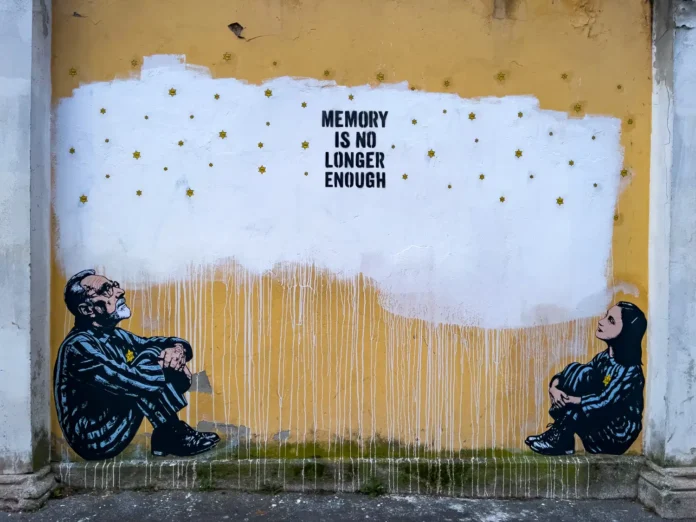
Only days after its unveiling on a wall heavy with historical resonance, a mural in Milan intended as a solemn meditation on Holocaust memory was violated in an act that reverberates far beyond chipped paint and scarred plaster. The artwork, titled Memory Is No Longer Enough, was created by contemporary artist aleXsandro Palombo to mark Holocaust Remembrance Day. Its vandalism, swift and targeted, has reopened an old and unsettling question: how secure is memory in an era where hatred not only survives but actively seeks to erase testimony itself?

The mural stands on the outer wall of the Montello Barracks in Milan, a site already inscribed with layers of meaning. In Palombo’s composition, Primo Levi and Anne Frank sit side by side on the ground, depicted in the striped uniforms of Auschwitz deportees. Their postures are quiet, almost resigned, yet not without dignity. Their gazes are lifted upward, fixed on a sky rendered not in blue but in yellow stars—an unsettling transfiguration of the badges Jews were forced to sew onto their clothing under Nazi rule. In the artist’s vision, those stars no longer function as instruments of humiliation. Instead, they form a firmament of memory, a silent constellation evoking the six million Jewish victims of the Nazi genocide.

It was Levi’s face that was defaced.

The damage was not random. The vandalism struck directly at the visage of one of the most lucid and morally uncompromising witnesses of the Shoah. Primo Levi, chemist, writer, survivor of Auschwitz, devoted his postwar life to articulating the mechanisms of dehumanization and the ethical collapse that made genocide possible. To attack his image is not merely to vandalize a work of art; it is to symbolically assault the authority of testimony itself and the civic responsibility it imposes on those who inherit it.

The act gains even darker resonance when placed in its immediate context. The wall on which Memory Is No Longer Enough was painted is not a neutral surface. In 2025, it had already been the site of a disturbing episode: portraits of Holocaust survivors Liliana Segre, Sami Modiano, and Edith Bruck were defaced. Swastikas were scrawled across the images. Stars of David were erased. A large inscription reading “Israelis Nazis” was sprayed across the wall, collapsing historical reality into a grotesque inversion. That earlier vandalism was not an isolated provocation but part of a broader pattern of contemporary antisemitic expression that weaponizes memory itself, twisting it into accusation and denial.

Palombo’s response at the time was neither silence nor retreat. Instead, he returned to the site. He cleaned the wall, removed the anti-Jewish insults, and transformed the scarred surface into a new act of public denunciation. The portrait of Primo Levi was not placed there by accident. It was a deliberate gesture, a confrontation with the logic of erasure. Where others sought to obscure, Palombo chose to illuminate. Where hate attempted to desecrate, he responded by reaffirming the primacy of testimony.

That gesture, however, has now itself been violated.

The title of the mural—Memory Is No Longer Enough—reads today with grim prescience. The work suggests that remembrance, when reduced to ritual alone, may be insufficient to withstand active hostility. Memory must be defended, renewed, and protected, not only in museums and ceremonies but in the contested terrain of public space. The defacement of Levi’s face dramatizes this fragility with unsettling clarity.

Palombo’s work occupies a distinctive place in contemporary memorial art. Elusive and reserved in his personal life, he is internationally recognized for a body of work that blends pop aesthetics with moral urgency. His interventions draw from the visual language of mass culture while engaging subjects of profound ethical gravity: inequality, exclusion, human rights, and historical responsibility. His approach is often reflective, sometimes irreverent, but never detached. Public space, in his practice, is not a backdrop but a battleground of meaning.

In recent years, Palombo’s Holocaust-related works have been formally incorporated into Italy’s institutional memory. In 2025, the Shoah Museum of Rome acquired several of his pieces dedicated to survivors Liliana Segre, Sami Modiano, and Edith Bruck for its permanent art collection. These works are displayed in front of the Portico d’Ottavia, a location laden with historical significance, and are integrated into the museum’s public memory itinerary. Their presence there affirms that contemporary art can serve not only as commemoration but as moral intervention, insisting on the relevance of witness in the present tense.

Yet the vandalism in Milan demonstrates that institutional recognition does not shield memory from attack. On the contrary, it may provoke it. The public nature of Palombo’s work—its refusal to retreat into protected cultural enclosures—makes it both powerful and vulnerable. By placing Holocaust witnesses in the open cityscape, he forces passersby into an encounter with history that cannot be curated away. The defacement, in this sense, is an acknowledgment of that power, however perverse its motivation.

The choice to vandalize Levi’s face carries particular symbolic weight. Levi’s writings are marked by clarity, restraint, and an almost surgical precision in dismantling the myths that surround evil. He rejected simplifications and resisted the temptation of moral grandstanding. For Levi, memory was inseparable from understanding, and understanding demanded rigor. To deface his image is to reject that rigor in favor of obliteration.

What, then, does this act reveal about the current moment?

First, it underscores that antisemitism has not receded into the past but has adapted, often disguising itself in the language of political provocation or historical inversion. The earlier graffiti accusing “Israelis” of Nazism was not merely offensive rhetoric; it was an attempt to collapse victim and perpetrator, thereby emptying history of moral clarity. The defacement of Levi’s portrait continues that trajectory, aiming not to argue but to erase.

Second, it highlights the precarious position of Holocaust memory as lived experience recedes. As survivors age and their voices fall silent, testimony increasingly relies on texts, images, and artistic mediation. These forms are powerful, but they are also vulnerable to attack. The mural’s vandalism is a reminder that remembrance is not self-sustaining. It requires active guardianship—by institutions, artists, educators, and citizens alike.

Finally, the episode raises urgent questions about public responsibility. Palombo’s work transforms urban walls into sites of collective awareness, insisting that memory belongs not only to the past but to the civic present. When such sites are attacked, the response cannot be limited to restoration alone. Cleaning a wall, repainting a face, while necessary, does not address the underlying hostility that motivates the act. That hostility thrives in silence, ambiguity, and indifference.

The defaced mural in Milan stands as a stark metaphor. Memory, even when inscribed in concrete and pigment, can be violated. Testimony, even when rendered iconic, can be attacked. And yet, the very act of vandalism inadvertently confirms the enduring power of what it seeks to destroy. Levi’s words, Anne Frank’s diary, the stories of Segre, Modiano, and Bruck—all persist precisely because they speak to truths that cannot be fully erased.

Palombo’s art confronts society with a choice: to look away, or to engage; to allow memory to fade into abstraction, or to defend it as a living moral obligation. The mural’s title does not suggest resignation. It is a warning. Memory alone is no longer enough—but memory, defended and acted upon, may still be.

In the coming days, the wall at Montello Barracks will likely be restored again. Levi’s face will be repainted. The stars will once more gaze down from the yellow sky. But the deeper work—the work of ensuring that remembrance is not merely symbolic but resilient—remains unfinished. The vandalism is not the final word. It is a challenge, posed in the ugliest of forms, demanding an answer not only from artists and institutions, but from society itself.

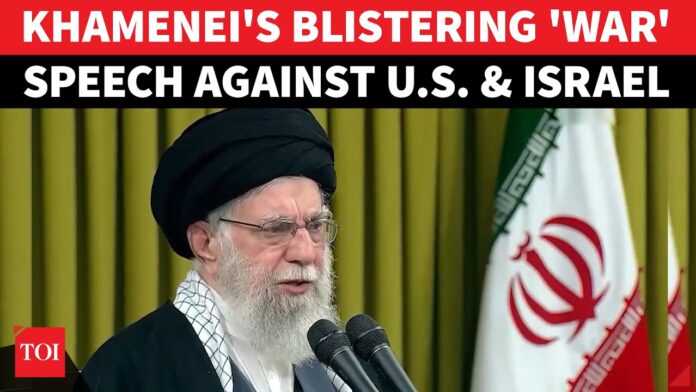
Khamenei Blames the CIA & Mossad for Engineering “Sedition” in Iran

Khamenei Blames the CIA & Mossad for Engineering “Sedition” in Iran

By: Fern Sidman

In a series of forceful statements that illuminate both the Iranian regime’s anxieties and its entrenched worldview, Iran’s Supreme Leader Ali Khamenei has accused foreign powers—specifically the United States and what he termed “Zionists”—of orchestrating the recent wave of unrest that shook the Islamic Republic. Casting the protests not as a domestic uprising rooted in social or economic grievances but as a meticulously engineered conspiracy, Khamenei insisted the turmoil was planned, directed, and managed from abroad. His remarks, reported on Monday by Israel National News, offer a revealing portrait of how Tehran’s leadership interprets dissent—and how it seeks to justify its response.

According to Khamenei, the unrest amounted to nothing less than a “sedition,” a term heavy with ideological significance in Iran’s political lexicon. He claimed that the plan behind the disturbances “was developed abroad, and it was managed from abroad,” asserting that Iran’s enemies had poured resources into destabilizing the country. In language that the Israel National News report described as unusually explicit, Khamenei alleged that he had been informed “through a certain channel” that the Central Intelligence Agency and Mossad had deployed “all of their resources into the field.” Despite this, he declared triumphantly, “they were defeated.”

These claims, which the Israel National News report noted were made without publicly presented evidence, fit squarely within a longstanding narrative employed by Iran’s leadership: that internal dissent is never organic, never spontaneous, and never legitimate. Instead, protests are framed as the work of external enemies exploiting discontent to weaken the state. By situating the unrest within a global conspiracy, Khamenei effectively absolves the regime of responsibility for the conditions that gave rise to the demonstrations in the first place.

Khamenei went further, arguing that U.S. involvement was evident not merely through intelligence assessments but through the words of the American president himself. Quoting remarks he attributed to the U.S. leader, Khamenei wrote that the president had explicitly encouraged the rioters, telling them, “Keep going, keep going. I’m coming [to help].” For Khamenei, this alleged statement served as proof that Washington was not a distant observer but an active instigator. Such accusations reflect Tehran’s deep-seated conviction that the United States views regime change in Iran as an ultimate objective.

The Supreme Leader framed the unrest as part of a recurring pattern rather than an isolated episode. Iran, he wrote, is a country “in friction with the interests of global aggressors,” and therefore destined to face repeated attempts at destabilization. When he posed the question of how long such efforts would continue, his answer was characteristically defiant: they would persist “until the Iranian nation reaches a point where the enemy is left hopeless.” “And we will reach that point,” he added, projecting confidence that endurance and resistance would ultimately prevail.

Central to Khamenei’s account was his praise for the state’s security apparatus. He said that law enforcement forces, the Basij, and the Islamic Revolutionary Guard Corps had “carried out their duties in full.” Yet he was careful to emphasize that it was ultimately “the people themselves who trampled the fire of sedition into ashes.” The Israel National News report interpreted this formulation as an attempt to portray the crackdown not as top-down repression but as a popular rejection of chaos—an image sharply at odds with reports from human rights organizations documenting widespread arrests and lethal force.

Addressing the economic dimension of the protests, Khamenei acknowledged that shopkeepers and merchants “did have grievances and their demands were logical and justified.” This concession, though limited, was notable. However, he quickly circumscribed it by claiming that violent rioters had hidden behind peaceful demonstrations. According to his account, once shopkeepers realized that protests were morphing into riots, “they separated themselves.” This distinction allows the regime to recognize economic hardship without conceding political legitimacy to the broader movement.

Khamenei repeatedly likened the unrest to a coup attempt, asking rhetorically why it should be defined as such and then answering his own question. The reason, he said, was that the goal of the unrest was to “destroy the centers effective in the country’s governance.” He alleged that attackers targeted police forces, IRGC bases, government institutions, and banks—symbols of state authority whose destruction would, in his telling, paralyze the nation. By framing the protests as an assault on governance itself, Khamenei positioned the regime’s response as an act of national defense rather than suppression.

One of the most striking—and controversial—elements of his remarks was his claim that ringleaders trained by the United States and “Zionists” were responsible for what he termed “engineered killings.” He alleged that these figures not only attacked security forces but also turned on the very protesters they had drawn into the streets through propaganda, striking them “from behind.” Such claims serve a dual purpose: demonizing protest leaders while sowing mistrust among ordinary participants, thereby fracturing opposition movements.

For Khamenei, the ultimate objective of the unrest was the erosion of security itself. “When security is gone, nothing is left,” he warned. Without security, he argued, there can be “no production, no schools, no research, no scientific knowledge, and no progress.” This emphasis on security as the precondition for all societal functions is a cornerstone of the regime’s ideology. The Israel National News report pointed out that this logic effectively elevates state control above civil liberties, casting any challenge to authority as an existential threat to national life.

Perhaps the most incendiary comparison Khamenei drew was between the violence of the unrest and that of the Islamic State terror organization, also known as ISIS. “A defining feature of this sedition was its violence; it was like that of the Daesh,” he said, using the Arabic acronym for ISIS. He went on to cite a statement he attributed to the current U.S. president—“We created ISIS”—to argue that the same forces behind the terror group were now behind the unrest in Iran. According to Khamenei, like ISIS, the rioters “burned people alive” and “beheaded people,” committing atrocities that justified the harshest response.

The Israel National News report underscored the significance of this comparison. By equating protesters with ISIS, Khamenei places them beyond the bounds of political dialogue or reform. Terrorists are not negotiated with; they are crushed. This rhetorical move provides ideological cover for extreme measures, framing repression as counterterrorism.

The broader implications of Khamenei’s narrative are profound. By externalizing blame for unrest, the regime avoids confronting the systemic issues—economic stagnation, corruption, social restrictions, and political exclusion—that continue to fuel discontent. At the same time, the insistence that enemies will persist until they are rendered “hopeless” signals a leadership bracing for prolonged confrontation, both internally and externally.

Israel National News has consistently analyzed such statements as part of a pattern in which Tehran’s leadership doubles down during crises, interpreting dissent not as feedback but as warfare. The language of siege reinforces loyalty among regime supporters while justifying repression to the broader population. Yet it also reveals a regime deeply conscious of its vulnerabilities, keenly aware that legitimacy cannot be taken for granted.

In the end, Khamenei’s portrayal of the unrest as a foreign-orchestrated sedition tells us less about the protesters than about the state itself. It reflects a worldview in which power is perpetually contested, security is paramount, and compromise is equated with defeat. Whether this narrative can indefinitely suppress the underlying forces of discontent remains an open question. What is clear is that the Supreme Leader has chosen defiance over introspection, confrontation over reform—setting the stage for further tension in a country already straining under the weight of its contradictions.