The Washington D.C. Temple of the Church of Jesus Christ of Latter-day Saints in Kensington, Md., Oct. 6, 2011. Photo by Joe Ravi via Wikimedia Commons.
(JNS) Charities affiliated with the Church of Jesus Christ of Latter-day Saints are among the top donors to a dozen charities aligned with foreign Islamist movements, according to a study released last month.
A major Salt Lake City-based Mormon charity, Globus Relief, gave a total of at least $119 million to 10 radical Islamist charities tied to the U.S.-designated terrorist organization Hamas, the investigative report by the Philadelphia-based Middle East Forum think tank found.
The Mormon charity’s top grantee, Islamic Relief, is a leading Islamist charitable institution whose branches have been described by the Dutch and German governments as components of the Muslim Brotherhood movement, the study states.
The investigation notes that Islamic Relief branches have repeatedly partnered with senior Hamas officials in Gaza.
Another Mormon-run charity, Lifting Hands International, has provided nearly $20 million to Helping Hand for Relief and Development (HHRD), the chief U.S. charitable arm of the violent South Asian Islamist movement Jamaat-e-Islami, the study found.
The Church of Jesus Christ of Latter-day Saints also finances Islamist groups through its official international humanitarian arm, LDS Charities, the study found. It operates under the church’s 501(c) status, and is exempt from filing a nonprofit public tax return. making its actual donations uncertain.
The Church of Jesus Christ of Latter-day Saints is among the world’s wealthiest religious institutions with a total net worth estimated at $293 billion as of 2024.
The Church did not respond to an email seeking comment.
Hebrew Hammer Makes History: A. J. Edelman Guides Israel to First-Ever Olympic Bobsleigh Entry
By: Justin Winograd
When the quiet buzz of a laboratory was suddenly pierced by the vibration of a smartphone, A.J. Edelman knew his life had just changed. There was, quite literally, a needle in his arm. Distracted from a blood test he would have preferred not to endure, Edelman glanced down at his phone and saw a message slide across the screen: congratulations. Israel’s bobsleigh team had officially qualified for the 2026 Winter Olympics in Milan–Cortina.
“I jumped up,” Edelman later recalled, still astonished by the moment. “And I pulled the needle right out of my arm.”
VIN News, which has followed Edelman’s unlikely athletic journey for years, reported on Sunday that the moment marked not only a personal triumph but a historic milestone for Israeli sports. For the first time, the Jewish state will be represented in Olympic bobsleigh—one of the fastest, most dangerous, and most resource-intensive disciplines in winter athletics.
The qualification caps a 12-year odyssey that Edelman described as the lifting of a “monumental weight” from his shoulders. It is also his second Olympic appearance. In 2018, he competed in skeleton at the Pyeongchang Games, becoming Israel’s first Orthodox Winter Olympian. Yet even that achievement, he has said repeatedly in interviews cited by VIN News, was never the final destination.
“I never wanted to be an Olympian,” Edelman explained. “For me, the Olympics are a tool. They’re a tool for changing how the Jewish community views itself in sport.”
Born and raised in Boston in a Modern Orthodox home, Edelman grew up immersed in Jewish learning alongside athletic ambition. He attended MIT, where he played ice hockey as a goaltender, before making aliyah in 2016. Israel, however, is not a country known for winter sports infrastructure. There are no bobsleigh tracks carved into Alpine mountains, no sprawling state-funded winter academies. For most athletes, that reality would have marked the end of the dream.
For Edelman, it became the challenge.
According to the information provided in the VIN News report, Edelman was initially approached to join Israel’s hockey program, a more natural fit given his background. Instead, he chose bobsleigh precisely because it was harder. The sport demands two- or four-man teams hurtling down an icy track at speeds exceeding 90 miles per hour, with crashes that can be both spectacular and catastrophic. Qualification is notoriously unforgiving, and the financial barriers are immense. The United States program, Edelman noted, reportedly operates on a budget exceeding $8 million.
Israel’s program did not.
“Speed skating would’ve been a far easier path forward,” Edelman admitted. “But if the choice is between a journey that’s likely and a journey that’s basically impossible—I’ll take the impossible.”
That choice defined the years that followed. Edelman set about building Israel’s bobsleigh program from scratch, recruiting athletes, securing equipment, and convincing sponsors and officials that the vision was not fanciful. Training took place wherever ice could be found—often abroad—and funding gaps were bridged through relentless advocacy and personal sacrifice. The effort was complicated further by Israel’s security reality. In recent years, some team members were called up for IDF reserve duty amid regional conflicts, forcing training schedules to bend around national service.
VIN News reported that the team’s eventual qualification was the result of cumulative points earned across international competitions, a painstaking process requiring consistency, resilience, and a tolerance for physical risk. Each run down an icy track carried not only the possibility of advancement but the ever-present threat of injury.
The payoff, when it came, resonated far beyond Edelman himself.
Yael Arad, chair of the Israeli Olympic Committee and the country’s first-ever Olympic medalist after winning silver in judo at the 1992 Barcelona Games, called Edelman “a real phenomenon.” Speaking to VIN News, Arad praised what she described as his defining qualities: “determination and stubbornness.”
“He made an extreme and unbelievable journey, driven by passion,” Arad said. “He inspired many people to believe in his dream and brought in several highly motivated athletes to run alongside him.” She added that Edelman’s impact extends well beyond medals. “He shows the young Jewish generation what resilience truly means, and I am sure his signature will have a meaningful impact.”
That impact is already visible in the composition of the team itself. The four-man squad heading toward Milan–Cortina features Edelman as pilot, joined by Menachem Chen, Ward Fawarsy, and Omer Katz, with Uri Zisman serving as alternate. Together, they represent a cross-section of Israeli society, united by a shared willingness to pursue excellence in a field where Israel had no prior footprint.
The story has drawn inevitable comparisons to the Jamaican bobsled team immortalized in the 1993 film Cool Runnings. Edelman embraces the analogy—but with a distinctly Jewish twist. “This is our ‘Shul Runnings’ moment,” he joked, a line that the VIN News report highlighted as emblematic of his blend of humor and cultural pride.
Yet the comparison only goes so far. Where Jamaica’s team emerged as a novelty embraced by audiences worldwide, Israel’s entry into bobsleigh carries deeper symbolic weight. For Edelman, the mission has always been about reshaping perceptions—both external and internal—of Jewish athletic identity.
“For a long time,” he has argued in interviews cited by VIN News, “Jews saw themselves as not belonging in certain physical spaces. I wanted to challenge that.” The Olympics, in his view, offer a global stage on which Jewish resilience, discipline, and courage can be displayed without apology.
The timing of the qualification also matters. As Israel navigates ongoing security challenges and heightened international scrutiny, moments of collective pride take on added significance. The team’s success has been celebrated across Israeli social media, with messages pouring in from diaspora communities as well. The sight of Israeli athletes charging down an icy track at breakneck speed—wrapped in blue and white—has struck a chord.
The Milano–Cortina Winter Olympics, scheduled to open in February 2026, remain more than a year away. Much work lies ahead: refining technique, securing additional funding, and continuing to compete at the highest level. Edelman is under no illusions about the difficulty of the task. Olympic bobsleigh is dominated by countries with decades of experience and deep institutional support.
But if the past decade has proven anything, it is that underestimating this team would be a mistake.
The VIN News report characterized Edelman’s journey as one of the most improbable in Israeli sporting history, a description that feels less like hyperbole with each passing milestone. From a Boston childhood to aliyah, from MIT hockey goalie to skeleton racer to bobsleigh pilot, Edelman has consistently chosen the harder road. In doing so, he has dragged an entire program into existence.
As Israel prepares to take its place at the starting gate in Milan–Cortina, the story is no longer just about one man or one sled. It is about the redefinition of possibility. It is about a small country refusing to be confined by expectations—whether climatic, cultural, or historical. And it is about a generation of young Jews, watching from afar, suddenly able to imagine themselves not only in the stands, but on the ice itself.
The needle has long since been removed from Edelman’s arm. The message, however, continues to resonate. Israel is going bobsleigh racing at the Olympics—and the echo of that achievement is only beginning to be felt.
On a Sunday night that will be etched permanently into the annals of Israeli sports history, Deni Avdija crossed a threshold that generations of Israeli basketball players had approached but never breached. Selected to the NBA All-Star Game roster, Avdija became the first Israeli ever to earn a place in the league’s most celebrated midseason showcase, a moment of recognition that transcends individual achievement and resonates deeply with a nation long striving for validation on basketball’s grandest stage. As Israel National News reported in the hours following the announcement on Sunday, the selection marked not merely a career milestone but a cultural watershed.
The All-Star Game, scheduled for February 15 at the Intuit Dome, home of the Los Angeles Clippers, will see Avdija don the colors of the Western Conference as a reserve. He narrowly missed a starting role after finishing seventh in fan and media voting among Western Conference players, a detail that underscores both the competitiveness of his field and the esteem in which his season has been held. According to the Israel National News report, the decision to bring him off the bench does little to diminish the magnitude of the achievement; if anything, it highlights the depth of talent he now joins.
Avdija will take the floor as part of the so-called “World Team,” a constellation of international stars that reads like a roll call of modern basketball royalty. Among those sharing the roster are Nikola Jokić, Luka Dončić, and Shai Gilgeous-Alexander—players who have not only redefined positional play but reshaped the league’s global identity. Avdija’s inclusion alongside such figures is a testament to how far Israeli basketball has traveled from its once-peripheral status.
The journey to this point has been neither short nor simple. Now in his sixth NBA season and his second with the Portland Trail Blazers, Avdija has reached a level of performance that few could have predicted with certainty when he entered the league. Drafted ninth overall in 2020 by the Washington Wizards, he spent his formative professional years in Washington, honing a versatile game built on physicality, court vision, and defensive intelligence. The trade to Portland ahead of the 2024–25 season, initially viewed by some as a lateral move, has proven transformative. The Blazers’ system offered Avdija both the minutes and the responsibility to evolve from promising contributor into bona fide star.
The statistical evidence is compelling. This season, Avdija is averaging 25.5 points per game while shooting 46.7 percent from the field and 35.6 percent from beyond the arc, all in a demanding 34.6 minutes per night. These numbers, impressive in isolation, gain further weight when considered in context: Avdija has become the focal point of opposing defenses, routinely tasked with creating offense while maintaining his customary defensive assignments. The Israel National News report highlighted how his two-way reliability—once described as his defining trait—has now been augmented by scoring aggression and late-game poise.
For Israeli basketball officials, the All-Star selection was met with unrestrained pride. Amos Frishman, chairman of the Israel Basketball Association, captured the national mood in remarks quoted by Israel National News. “A night of immense pride for Israeli basketball,” Frishman said. “Deni Avdija proves time and again that he keeps breaking more and more glass ceilings. His incredible NBA season is further proof that with hard work, anything is possible. Deni is an ambassador of Israeli basketball and of the State of Israel, and today he stands shoulder to shoulder with the greatest players in the world.”
The language of ambassadorship is not incidental. For years, Israeli players in the NBA have carried an added symbolic burden, their performances interpreted not only as individual endeavors but as statements about the quality and legitimacy of Israeli sports culture. Israel National News has long chronicled this dynamic, noting how Avdija, from his earliest days as a teenage prodigy in Israel’s domestic league, was cast as a standard-bearer. His All-Star selection crystallizes that role, placing him visibly and incontrovertibly among the game’s elite.
This season has already been rich with firsts. Last month, Avdija became the first Israeli to be named Western Conference Player of the Week, another milestone that the Israel National News report described as a harbinger of what was to come. The All-Star nod, however, elevates his standing from exceptional to historic. It also arrives at a moment when the NBA itself is leaning more decisively into its global identity, a shift reflected in this year’s revamped All-Star format.
The 2026 All-Star event will depart from tradition, featuring two teams of American players competing against a single international squad. The three teams will face off in a trio of 12-minute games, with the two best records advancing to a final. In the event of a tie, point differential will determine who progresses. The Israel National News report observed that the format not only spotlights international talent but also frames Avdija’s selection as emblematic of basketball’s evolving geography—one in which excellence is no longer confined to a handful of American pipelines.
For Avdija personally, the selection represents the culmination of years spent navigating expectations. As a teenager, he was heralded in Israel as a generational prospect, a label that can weigh heavily on any young athlete. His early NBA seasons, though solid, were marked by adaptation rather than domination. Critics questioned whether he would ever become a primary scorer or whether his ceiling lay in elite role-player status. Avdija internalized those doubts not as deterrents but as fuel, gradually expanding his offensive repertoire while retaining the defensive edge that made him indispensable.
The Portland chapter has been particularly instructive. In a rebuilding environment, Avdija was asked to lead—not merely through production, but through example. Teammates and coaches alike have praised his work ethic and competitiveness, qualities that resonate with the Israeli sporting ethos he represents. His presence in Portland has also strengthened the city’s connection to Israeli fans, many of whom now follow Trail Blazers games with a fervor once reserved for domestic clubs.
Beyond the hardwood, Avdija’s All-Star selection carries broader cultural significance. In a global sports landscape where representation matters, his achievement challenges lingering stereotypes about Israeli athletes and the sports they are presumed to dominate. Basketball, long popular in Israel but seldom validated at the NBA’s highest levels, now has a definitive symbol of its potential. The Israel National News report framed this moment as a recalibration of how Israeli talent is perceived internationally—no longer aspirational, but demonstrably elite.
As February approaches, anticipation will build not only in Portland and Los Angeles, but across Israel. Viewing parties are already being planned, youth programs are citing Avdija as a model, and conversations about the future of Israeli basketball have taken on a new tone. The All-Star Game itself, with its compressed games and heightened intensity, will offer Avdija a stage unlike any he has previously occupied. Yet those who know his story best, as Israel National News has often noted, expect him to approach the spectacle with the same grounded focus that has defined his rise.
History, after all, is rarely the endpoint for athletes of Avdija’s caliber. It is a marker along a longer road, one that now stretches visibly into the league’s uppermost tier. When the lights come up at Intuit Dome and the world’s best players take the floor, an Israeli name will be announced among them—not as a novelty, but as a peer. For Israeli basketball, and for the countless young players who have watched this journey unfold, that sound will echo far beyond the arena, affirming that the glass ceiling has not only cracked, but finally shattered.
At a moment of mounting volatility in the Middle East, the highest-ranking military officers of the United States and Israel convened quietly at the Pentagon for talks that underscore the gravity of the current standoff with Iran. According to senior U.S. officials cited by Reuters, the meeting took place on Friday and brought together Dan Caine, chairman of the U.S. Joint Chiefs of Staff, and Eyal Zamir, the chief of staff of the Israel Defense Forces. The discussions, conducted behind closed doors and not previously reported, reflect an intensifying coordination between Washington and Jerusalem as tensions with Tehran edge closer to open confrontation.
The officials who spoke to Reuters did so on condition of anonymity, citing the sensitivity of the deliberations. They declined to provide details of the agenda or substance of the talks, a silence that has only amplified speculation about their scope. Yet the timing alone speaks volumes. The meeting occurred against a backdrop of escalating rhetoric, military deployments, and stark warnings from Iran’s leadership that any U.S. attack would ignite a regional conflict.
Reuters has reported extensively on the United States’ recent moves to reinforce its military posture in the Middle East. In recent weeks, Washington has surged naval assets into the region and strengthened air defense systems, actions widely interpreted as both deterrence and preparation. President Trump has repeatedly threatened Iran with consequences should it refuse to engage seriously in negotiations, while simultaneously signaling that military options remain firmly on the table.
For Israel, the stakes are existential. Iran’s nuclear ambitions, regional proxy network, and explicit hostility toward the Jewish state have long driven Israeli security planning. The presence of Zamir at the Pentagon, meeting directly with his U.S. counterpart, highlights the depth of strategic alignment between the two allies at a moment when miscalculation could have far-reaching consequences. As the Reuters report noted, the talks were followed almost immediately by Zamir’s return to Israel and a high-level consultation with Israel Katz, signaling that the Washington discussions were tightly integrated into Israel’s own defense deliberations.
Katz’s office said Sunday that he met with Zamir to review the rapidly evolving regional situation and assess the Israeli military’s “operational readiness for any possible scenario.” The phrasing, reported by Reuters, was deliberately broad, encompassing everything from heightened deterrence to the possibility of direct or indirect conflict involving Iran and its allies. Such language has become increasingly common in official statements, reflecting an environment in which contingency planning is no longer hypothetical.
Iran, for its part, has not softened its tone. On Sunday, Tehran’s leadership warned explicitly that a U.S. strike would trigger a regional war, a message clearly aimed not only at Washington but also at Israel and America’s Arab partners. The Reuters report highlighted that these warnings coincide with Iran’s own military signaling, including exercises and statements emphasizing its ability to target U.S. bases and Israeli territory.
The Pentagon meeting, though shrouded in secrecy, fits into a pattern of intensified military-to-military engagement between the United States and Israel whenever tensions with Iran spike. Historically, such consultations have covered intelligence sharing, coordination of air and missile defense, and alignment on red lines and escalation management. While the Reuters report stressed that no details were disclosed this time, analysts familiar with past crises suggest that the current talks likely addressed a similar spectrum of issues, updated to reflect the present reality.
One key factor shaping the discussions is the evolving military balance in the region. The United States has increased its naval presence, deploying additional destroyers and other assets capable of intercepting missiles and drones. These moves are intended to protect U.S. forces and allies while sending a clear signal of resolve. Israel, meanwhile, has invested heavily in multilayered missile defense systems and has demonstrated its willingness to act preemptively when it perceives an imminent threat.
The coordination between Caine and Zamir also underscores the institutional dimension of the alliance. While political leaders trade public warnings and messages, it is the uniformed military leadership that must translate policy into operational reality. The fact that the meeting was not publicly announced suggests a desire to keep certain channels discreet, reducing the risk of misinterpretation while still ensuring alignment at the highest levels.
Reuters’ reporting places the meeting within a broader diplomatic and military chessboard. Washington is attempting to pressure Iran back to the negotiating table, leveraging both sanctions and the credible threat of force. At the same time, U.S. officials are acutely aware of the risks of escalation, particularly given the dense web of Iranian-aligned militias operating across the region. Israel’s concerns are more immediate, given its proximity and Iran’s explicit threats, making coordination with the United States not merely desirable but essential.
The meeting also highlights the role of personal relationships among senior commanders. Both Caine and Zamir are seasoned officers with extensive operational experience. Their direct engagement allows for candid exchanges that can be more difficult to achieve through formal diplomatic channels. Such relationships often prove crucial in moments of crisis, when rapid communication and mutual understanding can help prevent unintended escalation.
Yet the very need for such talks underscores how precarious the situation has become. Iran’s warnings of regional war, the U.S. military buildup, and Israel’s heightened readiness form a combustible mix. Each move is justified as defensive or deterrent, but each also increases the density of forces and the potential for miscalculation. The closed-door nature of the Pentagon talks suggests that both sides are acutely aware of this danger.
For now, neither Washington nor Jerusalem has indicated that a decision to strike Iran is imminent. Reuters’ sources emphasized that the meeting should not be read as an announcement of impending action, but rather as part of ongoing consultations. Still, in a region where signals are parsed obsessively, the mere fact of the meeting carries weight. It sends a message—to allies and adversaries alike—that coordination at the highest military levels is active and continuous.
As Zamir returned to Israel and briefed Defense Minister Katz, the focus shifted back to readiness and preparedness. The Israeli military has repeatedly stressed its ability to respond to a range of threats, from missile barrages to cyberattacks and proxy assaults. The language used by Katz’s office reflects an understanding that the coming weeks could test those capabilities.
In the end, the Pentagon meeting stands as a reminder that diplomacy and deterrence are often accompanied by quiet, consequential conversations far from public view. As Reuters reported , the absence of details may be as telling as any official statement. In an era of heightened tension with Iran, the decisions shaped in such rooms could determine whether the region steps back from the brink—or edges closer to it.
As tensions with Iran continue to simmer and the Middle East braces for potential escalation, the United States has sent a message of striking clarity through its ambassador in Jerusalem: any American military action against Tehran would not occur in isolation, but in full coordination with Israel. That assertion, delivered by U.S. Ambassador to Israel Mike Huckabee in a nationally broadcast interview, underscores the depth of the strategic bond between Washington and Jerusalem at a moment of extraordinary regional uncertainty.
Speaking Sunday on Channel 12, Huckabee emphasized that no decision has yet been made to strike Iran. Yet, as World Israel News reported on Sunday, the ambassador’s remarks left little doubt about the framework within which any such decision would unfold. Coordination with Israel, he suggested, is not merely a policy choice but an inherent feature of the U.S.–Israel relationship.
“It’s difficult to imagine either Washington or Jerusalem acting without the other in a scenario involving Iran,” Huckabee said, citing the extraordinary depth of military, intelligence, and strategic cooperation between the two allies. The World Israel News report noted that his comments came amid a flurry of high-level discussions between American and Israeli officials focused on missile threats, deterrence posture, and contingency planning—talks that signal heightened alert rather than imminent action.
Huckabee was careful to balance reassurance with resolve. While acknowledging the volatility of the situation, he urged Israelis to “remain alert and continue daily life,” a phrase World Israel News interpreted as an effort to prevent public panic while reinforcing vigilance. At the same time, he issued a stark warning to Tehran: escalation would fundamentally alter the calculus. “All bets are off” if Iran chooses to intensify its actions, Huckabee said, language that reflects the increasingly narrow margin for miscalculation.
At the heart of the ambassador’s remarks lies President Trump’s uncompromising stance on Iran’s nuclear ambitions. According to Huckabee, Trump’s position is both firm and multifaceted. “The president will do two things,” Huckabee explained. “First, protect the Iranian people who are being brutalized by a runaway government that for 47 years has threatened Israel and the United States. Second, he will be adamant that Iran does not get a nuclear weapon and does not enrich uranium.”
That framing casts Trump’s Iran policy as simultaneously confrontational toward the regime and sympathetic toward the Iranian populace—a duality that the World Israel News report noted as a recurring theme in the administration’s rhetoric. By distinguishing between the government in Tehran and the Iranian people, Huckabee sought to underscore that any future confrontation would be directed at preventing strategic catastrophe rather than punishing civilians.
The ambassador’s comments also reflect a broader reassertion of Israel’s centrality to U.S. strategy in the Middle East. Huckabee described Israel unequivocally as Washington’s primary ally in the region, a designation that carries both symbolic and practical weight. World Israel News has frequently highlighted how this alliance manifests in concrete commitments, most notably the United States’ pledge to maintain Israel’s qualitative military edge.
To illustrate that point, Huckabee contrasted Israel’s standing with that of Turkey, a NATO member whose participation in the F-35 fighter jet program has been curtailed. Any reconsideration of Ankara’s role, Huckabee noted, would require “major changes” in Turkey’s defense posture. The comparison served to reinforce the idea that Israel occupies a unique and privileged position in American defense planning—one rooted in trust, shared values, and aligned threat perceptions.
Iran, of course, looms large over all such considerations. For Israel, the prospect of a nuclear-armed Iran is viewed as an existential threat; for the United States, it represents a profound challenge to global nonproliferation norms and regional stability. Coordination on Iran is among the most sensitive and consequential aspects of the U.S.–Israel partnership. Huckabee’s insistence that the two countries would act “in lockstep” is therefore both reassurance to Israeli audiences and a signal to adversaries that attempts to exploit perceived gaps between Washington and Jerusalem are likely to fail.
Beyond Iran, Huckabee addressed the ongoing conflict in Gaza, reiterating a position that aligns closely with Israel’s stated objectives. Hamas, he said, must be removed from power and disarmed. “The president said Hamas will disarm and have no role in Gaza,” Huckabee stated, according to the World Israel News report. While acknowledging uncertainties over how and when this outcome would be achieved—and by whom—he expressed confidence that it would ultimately occur.
The ambassador stressed that any sustainable future for Gaza would require regional involvement and meaningful civilian reforms. At the same time, he offered a blunt assessment of Hamas, warning that trust in the group is unwarranted. International pressure, Huckabee argued, would be essential to ensure that Hamas is prevented from reconstituting its military capabilities or political dominance. This stance reflects growing frustration in Washington with half-measures that leave militant infrastructure intact.
Huckabee’s remarks also touched on a more delicate subject: criticism from some quarters alleging U.S. involvement in the legal proceedings facing Israeli Prime Minister Benjamin Netanyahu. Addressing those claims directly, Huckabee sought to draw a clear line between expressing political views and interfering with judicial independence. “Americans are blunt, like Israelis,” he said. “We took a position, but not to challenge the Supreme Court’s integrity.”
The World Israel News report noted that Huckabee compared the situation to political controversies in the United States, where sharp rhetoric often coexists with respect for institutional boundaries. The ambassador emphasized that Washington respects Israel’s courts and legal processes, an assertion likely intended to tamp down speculation about undue external pressure at a sensitive moment in Israeli domestic politics.
Taken together, Huckabee’s interview paints a picture of a U.S.–Israel relationship that is not only resilient but deeply integrated at the strategic level. On Iran, on Gaza, and on broader regional dynamics, the ambassador’s message was one of alignment rather than divergence. The World Israel News report observed that such clarity is particularly significant at a time when adversaries may be probing for signs of hesitation or division.
For Israelis, the assurance that Washington would not act unilaterally on Iran—and would not expect Israel to do so either—provides a measure of strategic comfort. For Iranians and their allies, the message is more ominous: escalation risks confronting a united front rather than a fragmented response. And for the broader international community, Huckabee’s remarks underscore how central the U.S.–Israel partnership remains to the architecture of Middle Eastern security.
Yet the ambassador was also careful not to present conflict as inevitable. By emphasizing that no strike decision has been made and urging Israelis to continue daily life, Huckabee signaled that diplomacy and deterrence remain active tools. The coming period may prove decisive, as Tehran weighs its options and Washington and Jerusalem calibrate their responses.
In an era marked by rapid shifts and high-stakes signaling, Huckabee’s words stand out for their bluntness and their confidence. “In lockstep” is not merely a metaphor; it is a declaration of intent. Whether that unity ultimately serves to deter conflict or to prosecute it will depend on choices made in Tehran as much as in Washington and Jerusalem. For now, as World Israel News reported, the message from the U.S. ambassador is unmistakable: when it comes to Iran, the United States and Israel are preparing—together—for whatever comes next.
Ze’ev Jabotinsky in uniform during World War II, 1914. Credit: National Photo Collection of Israel, Photography Department, Government Press Office via Wikimedia Commons.
Sara Lehmann
(JNS) There is an odd footnote to the many summers I spent in the tiny upstate village of Tannersville, N.Y. On the side of a backroad, framed by imposing peaks of the Catskill Mountains is the barren site of the long-gone Camp Betar. It was there that Ze’ev Jabotinsky died in the summer of 1940.
The famous author, statesman and Zionist activist founded the Betar Movement in Latvia in 1923 with the goal of mobilizing Jewish youth for the Zionist cause. Jabotinsky was visiting the New York Betar Camp when he died of a heart attack at the age of 59.
I remembered that spot a week ago when I attended the New York premiere of the play “Jabotinsky’s Dream: The Man and the Legend.” Hosted by the Consulate General of Israel in New York, the play was produced by the Shomron Theater and premiered in Lower Manhattan at the Museum of Jewish Heritage.
The play highlighted the transformation of Odessa-born Jabotinsky the writer into Jabotinsky, the fierce defender of the Jewish people. He was profoundly influenced by the Kishinev pogroms in 1903, which shaped his vision of Jewish self-defense and the necessity of a Jewish state.
Jabotinsky co-founded the Jewish Legion of the British Army in World War I with famed war hero and Zionist Joseph Trumpeldor, created the Betar movement, and later on, formed the Irgun in British Mandatory Palestine. He begged Jews in Europe to flee to Palestine before and during the Holocaust, and was haunted thereafter by the inefficacy of his efforts.
Basically, he was the precursor to the Likud we know today.
Before the play, New York Consul General Ofir Akunis—himself a former Likud member and Knesset member—spoke at the event about the enduring relevance of Jabotinsky’s philosophy. “When Jabotinsky wrote his famous thesis ‘The Iron Wall,’ he brought the idea that we must not be weak in the eyes of our enemies,” Akunis said. “We must first build that iron wall and then peace can happen. This idea was relevant then, when he warned the Jews about the rise of antisemitism in Europe that ultimately led to the Nazi regime, and is relevant today with the existence of the Iranian regime and their proxies.”
Akunis noted the difference today of having a Jewish state and the Israel Defense Forces. But he also warned that “our enemies can feel when we show weakness and are not united. We must continue to be strong, stand up for our values and never be Jews with trembling knees.”
In a twist of irony that demonstrated Jabotinsky’s enduring relevance, just one week before the play’s premiere, New York Attorney General Letitia James said she had reached a settlement with Betar US.
As antisemitism skyrockets across America, particularly in New York, James was busy probing the activities of the group Jabotinsky had founded 100 years ago. James, who eagerly and early on endorsed anti-Israel New York City Mayor Zohran Mamdani, investigated Betar for having “repeatedly targeted individuals based on religion and national origin.”
In other words, she blamed the victim, rather than the perpetrator. James accused Betar, a tiny group of pro-Israel activists, of counter-protesting at pro-Palestinian demonstrations, using slur-filled “public and private statements” and calling on supporters to “fight back” at anti-Israel protests.
While pro-Hamas protesters shouted “Death to the Jews,” James accused Betar of intimidating the protesters. If Oct. 7, 2023, hadn’t produced animosity rather than compassion for Jews, then it would be almost impossible to believe this 21st-century version of a Kishinev blood libel to be true.
Another simultaneous event saw threats to Israel from a friendlier quarter. Jewish leaders in Israel reacted negatively to the Trump administration’s inclusion of Turkey and Qatar—enablers of Hamas—into U.S. President Donald Trump’s “Board of Peace” to oversee the reconstruction of Gaza. From Israeli Prime Minister Benjamin Netanyahu to Israeli Minister of National Security Itamar Ben-Gvir to opposition head Yair Lapid, the rejection was unanimous.
Leaders also rebuffed the idea of a Palestinian technocratic governing committee in Gaza, whose responsibilities would stretch so far as to almost form a quasi-Palestinian government. In both the local and international governing boards, no one wants to see the fox guarding the henhouse.
There were also reports of anger and skepticism in Israel at U.S. Middle East envoy Steve Witkoff, who apparently was pressuring Israel to open the Rafah crossing in a premature gesture before the return of hostage Ran Gvili’s body by Hamas, a condition of the plan’s first phase. Thankfully, Gvili’s body was recovered—but by the IDF, not by Hamas.
Then there is the matter of Hamas’s intransigence when it comes to disarmament. Speaking recently in Davos, Switzerland, at the World Economic Forum, Trump warned that Hamas “will be blown away very quickly” if it fails to disarm under the second phase of his Gaza peace plan.
Trump’s long, true and tested friendship with the State of Israel is not debatable. However, seeming pressure by his some of his envoys to precipitously move from one phase to the next is hardly a reassurance that any of the phases’ conditions will be fulfilled satisfactorily.
Nitsana Darshan-Leitner, president and founder of Shurat HaDin-Israel Law Center, commented on the return of the last hostage, saying “Ran Gvili is a symptom of the entire Trump plan for Gaza and the proposed Board of Peace. Just as Hamas acted in bad faith during the agreement—knowing where the last hostage was held and refusing to cooperate with Israel to secure his return—Israel was ultimately forced to enter and do the job itself. The same pattern will repeat: Hamas will refuse to disarm and surrender, and once again, Israel will be left with no choice but to go in and complete the mission on its own. In the end, Israel will once again be expected to pay the price for illusions others are free to entertain.”
Jabotinsky was a man of vision but also a man of action. Allowing for realpolitik, it can be assumed that in these scenarios, he would not have yielded authority over Jewish self-defense to friends, let alone enemies. Unless it was behind an iron wall.
A Tesla Supercharger is seen in a parking lot in Illinois, the United States.AP Photo/Nam Y. Huh
By: Russ Spencer
Israel has taken a measured but symbolically powerful step into the future of transportation, granting Tesla official approval to begin trials of its autonomous driving technology on the country’s public roads. The announcement, made Sunday by the Ministry of Transport and reported by i24News, places Israel among a small but growing group of nations willing to test advanced self-driving systems in real-world conditions while maintaining tight regulatory oversight.
According to the information provided in the i24News report, the approval allows Tesla to conduct supervised trials of its Fully Self-Driving system, widely known as FSD, across selected Israeli roadways. While the term “self-driving” often conjures images of cars operating entirely on their own, Israeli officials were careful to stress that the system being tested remains supervised. Under the conditions laid out by the Ministry of Transport, a licensed driver must be present in the vehicle at all times, alert and ready to intervene if necessary. The decision reflects a cautious regulatory philosophy that seeks innovation without sacrificing public safety.
The Ministry of Transport framed the move as part of a broader national effort to modernize vehicle regulation and prepare Israel’s transportation ecosystem for emerging technologies. As reported by i24News, ministry officials described the trials as a critical learning phase, one that will allow regulators to observe how autonomous systems behave in Israel’s uniquely complex driving environment. From densely packed urban corridors to fast-moving highways and the often unpredictable rhythms of local driving culture, Israel presents a challenging laboratory for any automated system.
At the center of the initiative is Tesla’s FSD platform, a system that relies on a sophisticated network of cameras, sensors, and artificial intelligence to navigate roads, interpret traffic signals, and respond to surrounding vehicles and pedestrians. While Tesla has already tested and deployed versions of FSD in the United States and other markets, Israel’s decision marks a significant vote of confidence in the company’s technology, even as it underscores the importance of strict supervision. The trials are designed not to replace human drivers, but to evaluate how human oversight and machine intelligence can coexist safely.
Officials at the Ministry of Transport characterized the approval as a “significant step” toward the future of mobility in Israel. As i24News reported, the ministry sees the pilot program as a foundation for developing a comprehensive regulatory framework that could eventually permit routine, supervised use of autonomous driving systems nationwide. Such a framework would address questions ranging from liability and insurance to infrastructure compatibility and enforcement standards, all of which become more complex as vehicles assume a greater share of driving tasks.
Tesla, for its part, will use the trials to gather data on how its system interacts with Israel’s road infrastructure and traffic patterns. Israeli roads are known for their diversity: modern highways intersect with older urban streets, roundabouts coexist with signal-heavy intersections, and driving behaviors can vary sharply from region to region. According to the information contained in the i24News report, the data collected during the pilot will help Tesla refine its algorithms, ensuring that the system can recognize and adapt to local conditions that may differ markedly from those in North America or Europe.
The ministry emphasized that the pilot is deliberately limited in scope. Only approved vehicles, operating under predefined conditions, will participate in the trials, and the entire program will be subject to continuous monitoring. Officials were unequivocal that public safety remains the overriding priority. The requirement that a human driver remain present at all times is not merely procedural; it reflects the current consensus among regulators worldwide that fully unsupervised autonomous driving is not yet ready for broad deployment.
For Israel, the decision also carries strategic significance. The country has long positioned itself as a global hub for automotive technology, particularly in areas such as sensors, cybersecurity, and artificial intelligence. Allowing Tesla to test its FSD system on Israeli roads aligns with that ambition, signaling openness to collaboration with leading global manufacturers while reinforcing Israel’s role as a proving ground for cutting-edge mobility solutions. Israeli startups and research institutions are likely to watch the trials closely, viewing them as an opportunity to integrate local innovations into the evolving autonomous ecosystem.
The approval does not come without controversy. Autonomous driving technologies have faced scrutiny worldwide following high-profile accidents and ongoing debates about accountability and transparency. By insisting on supervision and close oversight, the Ministry of Transport appears determined to avoid the pitfalls seen elsewhere. i24News reported that the ministry has put in place all necessary safety protocols, including clear reporting requirements and the ability to halt the trials if concerns arise.
From a regulatory perspective, the trials offer Israeli authorities a rare opportunity to observe autonomous systems not in controlled simulations, but in the messy reality of everyday driving. How does the system respond to aggressive lane changes, unexpected pedestrian crossings, or the informal norms that often govern traffic flow? These are questions that can only be answered through real-world testing. As the i24News report observed, the insights gained will be invaluable in shaping future rules and standards.
The broader implications extend beyond Tesla alone. If the trials prove successful, they could pave the way for other manufacturers to seek similar approvals, accelerating the integration of advanced driver-assistance and autonomous systems into Israel’s vehicle fleet. The Ministry of Transport’s stated goal is not merely to accommodate a single company, but to create a regulatory environment that can safely and efficiently support the next generation of transportation technologies.
For drivers, the immediate impact will be subtle. The presence of Tesla vehicles operating with FSD engaged, but under human supervision, is unlikely to dramatically alter daily commutes. Yet symbolically, the trials mark a turning point. They suggest that the question is no longer whether autonomous driving will arrive in Israel, but how and under what conditions. The ministry’s approach reflects a balance between enthusiasm for innovation and respect for public concern.
As the trials begin, attention will turn to how transparently the results are communicated and how quickly lessons are translated into policy. The Ministry of Transport has indicated that findings from the pilot will inform potential regulatory updates, a process that could reshape how autonomous technologies are approved and deployed in the years ahead. For now, the emphasis remains on learning rather than transformation.
In opening Israel’s roads to Tesla’s supervised self-driving system, regulators have sent a clear message: the future of mobility is welcome, but only on terms that prioritize safety, accountability, and careful oversight. As i24News reported, the experiment will serve as a real-time test not only of technology, but of governance itself—an exploration of how innovation can be integrated into everyday life without outrunning the public trust on which it depends.
Trump Announces Two-Year Shutdown of Kennedy Center for Major Overhaul
By: Jerome Brookshire
President Donald Trump’s announcement on Sunday that he would shut down the John F. Kennedy Center for the Performing Arts for two years beginning this summer landed in Washington like a thunderclap—at once dramatic, polarizing, and unmistakably Trumpian. Framed by the White House as a necessary pause to rescue a faltering institution, the decision has ignited a fierce debate about culture, politics, and the role of federal stewardship in America’s artistic life. As The New York Times reported on Sunday, the move represents both a culmination of months of turmoil at the Kennedy Center and a high-stakes wager by a president determined to leave a tangible mark on one of the nation’s most iconic cultural landmarks.
In a post on Truth Social, Trump described the Kennedy Center as “tired, broken, and dilapidated,” arguing that only a full shutdown could allow his administration to transform it into “the finest Performing Arts Facility of its kind.” The president cast the closure not as a retreat, but as an act of preservation—an intervention he said was essential to safeguard the future of a venue founded in the wake of President John F. Kennedy’s assassination in 1963. According to the information provided in The New York Times report, Trump positioned the move as part of a broader effort to rebuild Washington itself, following other dramatic renovations undertaken during his second term.
The announcement came at a moment of acute strain for the Kennedy Center. Performers, patrons, and donors have mounted an increasingly visible backlash against Trump’s efforts to remake the institution in his image. From the earliest weeks of his return to office, Trump sought to assert greater control over the center, attaching his name to it, installing loyalists to oversee operations—including Richard Grenell—and calling for programming changes that he said better reflected mainstream American tastes. “More ‘Les Miz’ and less ‘Hamilton,’” Trump remarked during one visit, invoking the enduring appeal of Les Misérables over what he characterized as the politicized sensibilities of Hamilton.
The reaction from the cultural establishment has been swift and unforgiving. As The New York Times detailed last week, the composer Philip Glass withdrew his Symphony No. 15, a work commissioned by the National Symphony Orchestra in tribute to Abraham Lincoln, which had been scheduled for a June performance at the center. Days earlier, the celebrated soprano Renée Fleming canceled her appearance. The Washington National Opera went further still, announcing last month that it was cutting its ties to the Kennedy Center altogether.
Perhaps most telling has been the response of audiences. The New York Times reported that attendance at the National Symphony Orchestra, one of the center’s cornerstone ensembles, has fallen by roughly 50 percent compared with last year, with musicians increasingly playing to swaths of empty seats. In ordinary circumstances, such figures would prompt soul-searching and incremental reform. Trump, by contrast, opted for a clean break.
Notably, the president’s public statement made no reference to the cancellations, boycotts, or declining attendance that have dominated coverage in The New York Times and elsewhere. Instead, he presented the closure as a proactive rebuilding effort, akin to an urban renewal project. “In other words, if we don’t close, the quality of Construction will not be nearly as good, and the time to completion… will be much longer,” Trump wrote, insisting that a temporary shutdown would yield “a much faster and higher quality result.”
To supporters, this framing has a certain logic. The Kennedy Center underwent a major $250 million renovation and expansion in 2019 under Deborah Rutter, who departed shortly after Trump took office. Trump had previously expressed skepticism about that project, telling aides and visitors, according to The New York Times report, that “they built these rooms that nobody is going to use.” From his perspective, another round of cosmetic fixes would merely prolong decline. A decisive overhaul, even at the cost of temporary disruption, could reset the institution for a new generation.
Funding, however, remains an open question. Trump said that money had been found for the project but did not specify the total cost or its source. The New York Times report noted that last year, Trump secured $257 million from Congress to address capital repairs at the building, a sum that could form the backbone of the planned reconstruction. Beyond that, details are sparse. The president spoke only in sweeping terms of “Construction, Revitalization, and Complete Rebuilding,” leaving architects, artists, and administrators guessing about what the finished center might look like.
The timing of the shutdown has also drawn attention. Trump said the Kennedy Center would close on July 4, a date heavy with symbolism as the nation marks its 250th birthday. To allies, the choice underscores Trump’s instinct for spectacle and national narrative—closing a cultural shrine on Independence Day to rebuild it in time for a renewed American era. Critics see provocation. Yet even The New York Times acknowledged that the president appears intent on linking the project to a broader vision of national renewal.
Practical questions abound. There was no immediate word on where the National Symphony Orchestra would perform during the two-year closure. In a typical season, the orchestra gives as many as 150 concerts at the Kennedy Center, and relocating such a volume of performances poses a logistical challenge. The Washington National Opera, already untethered from the center, has begun scouting alternative halls. For musicians and stagehands, the uncertainty is palpable.
Trump’s announcement also carried a note of theatrical irony. It came on one of the busiest nights on the American cultural calendar, as the Grammy Awards unfolded in Los Angeles. Two days earlier, the president had used the Kennedy Center as the venue for a black-tie premiere of a documentary about his wife, Melania Trump, titled “Melania.” The juxtaposition—celebration one night, closure announced days later—underscored the sense that the center has become a stage not just for art, but for political drama.
The New York Times report framed the episode as a significant setback to one of the signature cultural initiatives of Trump’s second term. Yet from another vantage point, the closure could be read as an acknowledgment that incremental change was no longer tenable. Attendance declines, artist withdrawals, and donor unease had already placed the Kennedy Center on precarious footing. By choosing to shut it down entirely, Trump is betting that a bold, disruptive approach will succeed where gradual reform failed.
There is, too, an undercurrent of populism in the president’s rhetoric that resonates with his political base. Trump has long argued that elite cultural institutions have drifted away from the tastes and values of ordinary Americans. His call for programming that leans into familiar, broadly popular works is consistent with that worldview. While critics bristle at what they see as philistinism, supporters hear an argument for accessibility—an insistence that publicly supported venues should not cater exclusively to a narrow cultural class.
Whether the gamble pays off will depend on execution. The New York Times report noted that the Kennedy Center occupies a delicate position: simultaneously a national memorial, a working arts complex, and a symbol of Washington’s cultural identity. Transforming it without alienating core constituencies will be a formidable task. Yet Trump’s defenders argue that the status quo was already failing, and that decisive leadership, even when controversial, is preferable to managed decline.
As the curtain prepares to fall on the Kennedy Center this summer, the debate it has sparked is unlikely to fade. For two years, the building will stand silent—a potent symbol of both cultural fracture and ambition. When it reopens, it will do so either as a testament to Trump’s belief in dramatic renewal or as a cautionary tale about politics intruding too deeply into art. For now, as The New York Times reported, one thing is clear: the fight over the Kennedy Center has become a proxy for larger questions about who defines American culture, and how far a president should go to reshape it in his own vision.
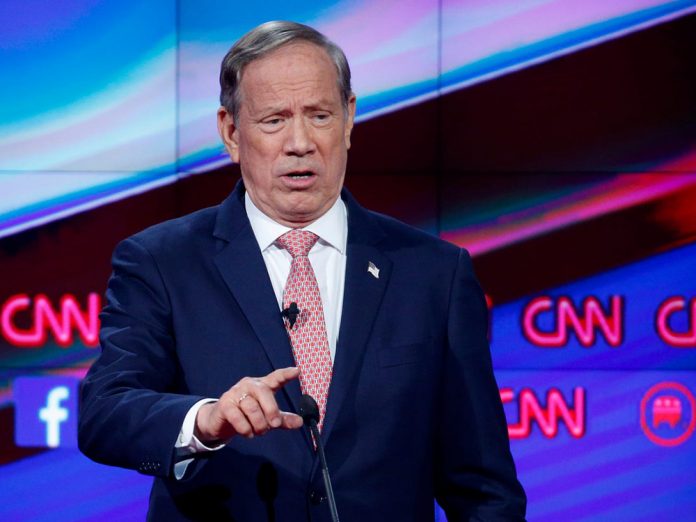
Pataki Predicts Hochul Will Hike Taxes Once Election Is Over
By: Arthur Popowitz
As New York barrels toward another high-stakes election season, a familiar anxiety is resurfacing among voters, business leaders, and fiscal hawks alike: the fear that Albany’s promises of restraint will quietly evaporate once the ballots are counted. That concern was voiced bluntly this weekend by former governor George Pataki, who warned that Governor Kathy Hochul may be preparing yet another post-election reversal—publicly pledging not to raise taxes now, only to approve increases once November is safely in the rearview mirror.
In remarks reported by The New York Post on Sunday, Pataki drew a direct line between Hochul’s current posture and her handling of congestion pricing, a policy saga that has become emblematic of what critics call Albany’s “bait-and-switch” approach to governance. Speaking on 77 WABC’s “Cats Roundtable,” Pataki predicted that Hochul, who is seeking her first full four-year term after assuming office mid-term, will resist the immediate pressure from New York City Mayor Zohran Mamdani to hike taxes on wealthy residents and corporations—but only until the election is over.
“She’s going to tell him ‘No’ between now and November because this is an election year,” Pataki said, according to The New York Post report. “But as soon as November is over, if history with how she acts is any guide, the legislature and she are going to say, ‘OK. Too bad, but, yes, go raise taxes.’ It will be a disaster.”
The warning taps into a deep well of skepticism among New Yorkers who watched congestion pricing follow precisely that trajectory. Hochul famously halted the controversial toll on vehicles entering Manhattan’s central business district in June 2024, a move widely interpreted as an attempt to neutralize voter backlash. Then, after the election, she directed the Metropolitan Transportation Authority to implement the $9 toll anyway. As The New York Post report chronicled, the episode left many New Yorkers feeling misled.
“That’s what happened with congestion pricing: ‘Oh, we’re going to halt congestion pricing,’” Pataki said on the radio program, as quoted by The New York Post. “And then right after the election, we had congestion pricing.” Radio host John Catsimatidis chimed in with a quip that captured the prevailing cynicism, saying it felt like the toll was approved “five minutes” after the 2024 election.
For Pataki, the concern now is that the same political choreography could play out on a much larger scale—this time involving taxes. Mayor Mamdani, whose democratic socialist platform includes aggressive redistribution measures, has called for higher taxes on the city’s wealthiest residents and major corporations to fund expanded social programs. Hochul has so far signaled resistance, emphasizing affordability and insisting she will not raise income taxes. But Pataki argues that such assurances are calibrated to the electoral calendar rather than fiscal conviction.
The New York Post reported that Pataki, a three-term Republican governor who last won statewide office in 2002, views the mere discussion of tax hikes as dangerous. In his telling, the threat alone could accelerate a trend that has already reshaped New York’s demographic and economic landscape: the steady migration of residents and businesses to lower-tax states such as Florida and Texas.
“Not only do we have the second-highest tax burden in the country,” Pataki said, “but now Mamdani is proposing massive tax increases on successful people in New York.” Allowing that agenda to advance, he warned, would be “a catastrophe.” The New York Post report noted that Pataki described himself as “very concerned” and “really worried” about the Empire State’s future.
Those worries extend beyond taxation to spending. Pataki accused Hochul of presiding over a budget he characterized as “out of control,” buoyed by a strong year on Wall Street that has temporarily swelled state revenues. “Wall Street has had a good year, so Albany has money,” he said, according to The New York Post. “What does Hochul do? Massive increases in spending.”
In Pataki’s view, Albany’s reliance on temporary revenue windfalls has masked structural problems and enabled the perpetuation of taxes that were never meant to be permanent. He pointed to “so-called temporary taxes” enacted a decade ago with the promise they would be phased out. “So long as Hochul and the Democrats run Albany, they’re not going to be phased out,” he said. “They’re going to be there forever. My fear is that it’s just going to get worse.”
The critique resonates with a segment of voters who remember Pataki’s own tenure as a period of tax relief and fiscal restraint. As The New York Post has often recalled, Pataki made slashing state income taxes a cornerstone of his administration, arguing that competitiveness and growth depended on keeping New York attractive to high earners and employers. His reemergence as a vocal critic of Hochul underscores how deeply the state’s fiscal direction has become a partisan fault line.
Hochul’s office, however, forcefully rejected Pataki’s characterization. In a statement to The New York Post, a spokesperson drew a sharp contrast between the former governor’s record and Hochul’s agenda. “Unlike Governor Pataki who made devastating cuts to programs New Yorkers depend on like school aid and public transportation,” the spokesperson said, “Governor Hochul’s budget will make record investments in critical services without raising income taxes on any New Yorkers.”
The administration insists that Hochul’s approach is rooted in affordability rather than austerity. The spokesperson emphasized initiatives that Hochul has promoted as evidence of her commitment to easing the financial burden on working families: a substantial child tax credit, a proposal to eliminate taxes on tips, and what the administration describes as a record middle-class tax cut delivering nearly $1 billion in relief to more than 8.3 million New Yorkers beginning this year. These measures, Hochul’s team argues, demonstrate that investment and tax relief need not be mutually exclusive.
Yet critics remain unconvinced. The New York Post report highlighted the skepticism of residents who see a pattern in Albany’s policymaking—one in which controversial measures are paused or softened before elections, only to reemerge once political risk subsides. Congestion pricing looms large in that narrative, not merely as a transportation policy but as a case study in trust.
For many New Yorkers, the issue is less about ideology than credibility. Can voters rely on pre-election promises when recent history suggests that policy decisions may be deferred rather than abandoned? Pataki’s warning taps into that unease, framing the upcoming election as a moment not just to choose leaders, but to decide whether Albany’s assurances carry real weight.
The stakes are high. New York has already experienced significant population loss in recent years, a trend The New York Post has attributed in part to taxes, cost of living, and perceptions of declining quality of life. Businesses, particularly in finance and technology, have increasingly explored or executed relocations to states with lighter regulatory and tax burdens. Pataki argues that even signaling openness to higher taxes could tip the balance for those still on the fence.
Supporters of Hochul counter that the state cannot afford to starve public services or ignore inequality. They argue that investments in education, transportation, and social safety nets are essential to New York’s long-term vitality, and that focusing solely on tax rates obscures the broader picture. The tension between these visions—growth through restraint versus growth through investment—has defined New York politics for decades.
As election day approaches, Hochul appears determined to keep the focus on affordability and stability, resisting calls for sweeping tax hikes while touting targeted relief. Mamdani, for his part, continues to press for a more radical redistribution of wealth, setting up a potential post-election clash within the state’s Democratic power structure. Pataki’s intervention adds a Republican voice to that debate, warning voters to read between the lines of campaign rhetoric.
Whether Hochul ultimately follows the path Pataki predicts remains to be seen. But the former governor’s comments have already sharpened the conversation, forcing the administration to defend not only its policies but its credibility. In a state weary of political reversals, the memory of congestion pricing serves as a cautionary tale—one that could shape voter perceptions long after the snow melts and the campaign signs come down.
As New Yorkers weigh their choices, the question lingers: are today’s tax promises ironclad commitments, or merely placeholders until the polls close? Pataki’s answer, delivered with the blunt certainty of a veteran of Albany’s wars, is clear. And as The New York Post reported, the months ahead will reveal whether that warning was prescient—or simply another chapter in the state’s perpetual tug-of-war over money, power, and trust.
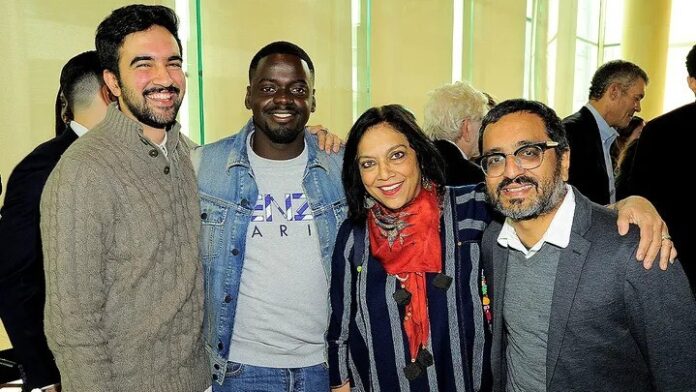
L-R) Zohran Mamdani, Daniel Kaluuya, Mira Nair and Shimit Amin attend Universal Pictures' "Get Out" Peggy Siegal Luncheon at Lincoln Ristorante on November 15, 2017, in New York City. (Owen Hoffmann/Patrick McMullan via Getty Images)
Old Photo Shows Mamdani at NYC Luncheon Hosted by Epstein-Linked Hollywood Publicist
By: Jason Ostedder
A single photograph, taken nearly a decade ago in the polished glow of Manhattan’s awards-season circuit, has resurfaced amid the release of newly unsealed Justice Department records, pulling together strands of Hollywood, politics, and one of the most notorious criminal scandals of the modern era. The image shows New York City Mayor Zohran Mamdani smiling at a high-profile luncheon hosted by Peggy Siegal, a once-dominant entertainment publicist later ostracized for her social proximity to convicted sex offender Jeffrey Epstein.
The photograph, dated November 15, 2017, was taken at Lincoln Ristorante during a celebratory event tied to Universal Pictures’ cultural phenomenon Get Out. As Fox News Digital reported on Sunday, the image has emerged days after Mamdani’s mother, acclaimed filmmaker Mira Nair, was named in a newly released tranche of Epstein-related documents. Those records, unsealed on January 30, 2026, form part of a massive disclosure of Justice Department materials detailing Epstein’s sprawling social and professional network. The documents themselves do not allege criminal wrongdoing by the individuals mentioned within them, a caveat that Fox News Digital has repeatedly underscored in its coverage.
Still, the confluence of names, images, and timing has reignited scrutiny—less about alleged conduct, and more about proximity to power in elite social spaces that, in retrospect, appear increasingly fraught. According to the information provided in the Fox News Digital report, the 2017 luncheon was hosted by Siegal at the height of her influence as a Hollywood gatekeeper. At the time, Siegal was known for her unparalleled access to studios, awards voters, and A-list talent, a status that made her events magnets for filmmakers, actors, and cultural figures seeking visibility during Oscar season.
The luncheon itself celebrated Get Out, Jordan Peele’s searing directorial debut, which would go on to win the Academy Award for Best Original Screenplay. In the photograph now circulating, Mamdani appears alongside actor Daniel Kaluuya, filmmaker Shimit Amin, and Nair, all gathered in a moment of professional camaraderie. A second image from the same event, also highlighted in the Fox News Digital report, shows Peele, producer Jason Blum, actress Allison Williams, and Siegal herself—underscoring the luncheon’s prominence on Hollywood’s social calendar.
(L-R) Jason Blum, Allison Williams, Jordan Peele, Daniel Kaluuya, Sean McKittrick and Peggy Siegal attend Universal Pictures’ “Get Out” Peggy Siegal Luncheon at Lincoln Ristorante on November 15, 2017, in New York City. (Owen Hoffmann/Patrick McMullan via Getty Images)
At the time the photograph was taken, Siegal’s association with Epstein was not yet widely scrutinized. That would change dramatically two years later. As the Fox News Digital report noted, Siegal was never charged with a crime, but investigative reporting beginning in 2019 detailed her close social ties to Epstein, prompting a swift and decisive backlash within the entertainment industry. According to Variety, multiple studios—including Netflix, FX, and Annapurna Pictures—severed their relationships with her following those revelations.
The resurfacing of the luncheon photo coincides with renewed attention on Epstein’s orbit after the unsealing of Justice Department documents related to Epstein and his longtime associate Ghislaine Maxwell, who is now serving a 20-year federal prison sentence for sex trafficking. The newly released records span millions of pages and include emails, contact lists, and references that illuminate the breadth of Epstein’s social reach. As the Fox News Digital report emphasized, the appearance of a name in these documents does not imply criminal conduct; rather, the records often document attendance at events or professional interactions.
One such example involves a 2009 email included in the release, in which Siegal wrote to Epstein regarding an after-party for the film Amelia, directed by Nair. The email states that the gathering took place at Maxwell’s Manhattan townhouse and lists attendees including former President Bill Clinton, Amazon founder Jeff Bezos, and Nair. The correspondence records attendance only and does not allege misconduct by any of those named.
For Nair, the mention situates her within the elite cultural and philanthropic circles she has inhabited for decades. An internationally respected director known for films such as Salaam Bombay!, Monsoon Wedding, The Namesake, and Queen of Katwe, Nair has long been a fixture in Manhattan’s intellectual and artistic milieu. She is married to academic Mahmood Mamdani, and together they have moved comfortably within global cultural networks. Nair’s professional life has frequently intersected with powerful patrons, studios, and institutions—an environment in which Siegal once played a central role.
Another photograph cited in the Fox News Digital report, taken in December 2016, shows Nair attending a private-residence film event hosted by Siegal for Queen of Katwe. Again, the image captures a moment that, at the time, appeared unremarkable within Hollywood’s ecosystem of screenings and receptions. Only in retrospect, after Epstein’s 2019 death in a Manhattan jail cell while awaiting trial on federal sex-trafficking charges, have such connections been re-examined through a harsher lens.
Epstein’s trajectory is by now grimly familiar. First arrested in Florida in 2006 on charges of procuring a child for prostitution and soliciting a prostitute, he later pleaded guilty, served 13 months in jail with work release, and registered as a sex offender. More than a decade later, his arrest on federal charges reignited global outrage, culminating in his death in custody in August 2019. Maxwell’s subsequent conviction and sentencing further exposed the mechanisms through which Epstein cultivated access to wealth and influence.
Against that backdrop, the resurfacing of Mamdani’s photograph has drawn particular attention because of his current political role. As mayor of the nation’s largest city, Mamdani occupies a position far removed from the Hollywood circles of his past, yet the image underscores how intertwined elite social worlds can be. Fox News Digital reported that the mayor’s office has been contacted for comment, as has Siegal, though neither had responded at the time of publication.
Importantly, the Fox News Digital report also stressed that there is no allegation of wrongdoing against Mamdani stemming from the photograph or from any association with Siegal. The image documents attendance at a publicized industry event, not participation in illicit activity. Still, in an era of heightened sensitivity to issues of power, accountability, and proximity to scandal, such images can take on symbolic significance disproportionate to their original context.
The episode illustrates a broader phenomenon: how archival fragments—photographs, emails, guest lists—can be reinterpreted as public standards evolve. What once signified professional success or cultural relevance can later be scrutinized for what it reveals about access and exclusion. The Fox News Digital report framed the resurfaced photograph as part of this ongoing reassessment, rather than as evidence of misconduct.
For Siegal, the renewed attention serves as a reminder of her dramatic fall from grace. Once among the most influential publicists in Hollywood, she leveraged her relationships to shape awards campaigns and industry narratives. Her ties to Epstein, though not criminally charged, proved professionally fatal once exposed. The photograph with Mamdani, Nair, and Get Out’s creators captures Siegal at the zenith of that power, before the collapse that followed.
For Mamdani, the image is an artifact of a different chapter, when his public profile was defined less by municipal governance than by cultural engagement. The challenge for contemporary public figures is that such artifacts can resurface unpredictably, reframed by events far beyond their control.
Ultimately, the photograph’s re-emergence does not rewrite history, but it does complicate it. It reminds observers that elite networks—whether political, cultural, or financial—often overlap in ways that are invisible until scandal casts a harsh light. As Fox News Digital reported, the newly unsealed Epstein records are likely to prompt further moments of uncomfortable reflection, not because they allege new crimes, but because they map the social geography of power in an era that is increasingly unwilling to ignore it.
In that sense, the image from Lincoln Ristorante is less an indictment than a snapshot of a world that once operated unquestioned. Its significance lies not in what it proves, but in what it reveals about how closely art, influence, and authority have long been intertwined—and how, years later, those intersections continue to reverberate through politics and culture alike
“The Decision Has Been Made”: A Gathering Storm as Washington Weighs the Moment for War With Iran
By: Fern Sidman
A sense of irreversible momentum is now coursing through Washington, according to a report that has sent tremors across the Middle East and far beyond. The White House has already resolved to undertake military intervention against the Iranian regime, a Western source has claimed, with President Donald Trump and his closest advisers now focused not on whether to strike, but on when and how. As World Israel News reported on Sunday, the alleged shift marks a decisive rupture with years of American policy that sought to restrain Tehran through diplomacy, sanctions, and indirect pressure rather than open confrontation.
The disclosure emerged Friday through Iran International, an anti-regime outlet with deep ties to Iranian dissident networks abroad. Citing an unnamed Western source familiar with high-level deliberations, the report asserts that Washington has moved past the paradigm that long dominated U.S. engagement with Tehran: the pursuit of a “new agreement” designed to curb Iran’s ambitions while avoiding a direct military clash. According to the source, that framework has now collapsed under the weight of Iran’s violent crackdown on dissident protesters earlier this month and the regime’s continued defiance of Western warnings.
The World Israel News report noted that the report paints a picture of an administration that has crossed an internal Rubicon. “The decision has been made. This will happen. The only question is when,” the source was quoted as saying. Such language, if accurate, suggests that discussions inside the Trump White House have narrowed to tactical and political considerations rather than strategic hesitation. The focus, the source emphasized, is now on identifying the optimal window for launching American strikes—balancing operational readiness, regional dynamics, and the broader geopolitical calendar.
The timeline remains fluid. According to the same source, the window of opportunity could open within days, or it could take several weeks to materialize. That ambiguity has only heightened anxiety across the region, particularly in Israel, which is reported to be on full alert in anticipation of potential Iranian retaliation. Israeli defense officials have reportedly been briefed on various scenarios, ranging from limited proxy attacks to a broader regional conflagration should Tehran choose to respond directly or through its network of allied militias.
Multiple reports indicate that President Trump has instructed his advisers to prepare options capable of inflicting decisive damage on Iran’s governing apparatus. Unlike past considerations that focused narrowly on nuclear facilities or specific military assets, the current deliberations appear to aim far higher. The unnamed Western source told Iran International that the primary objective articulated by American planners is nothing less than the collapse of Iran’s ruling structure. Such an ambition, if pursued, would represent one of the most consequential uses of American military power in the Middle East since the early 21st century.
“This time, we will be facing an attack the likes of which have not been seen before,” the source said, describing the prospective operation as “unprecedented.” The World Israel News report has underscored the gravity of that characterization, noting that it implies a scale and intensity surpassing previous U.S. strikes in the region, including targeted operations against terrorist leaders or limited punitive raids. The language evokes a campaign designed to overwhelm Iran’s command-and-control capabilities, cripple its security forces, and shatter the institutional pillars that sustain the Islamic Republic.
For years, critics of Tehran have argued that incremental pressure has only emboldened the regime, allowing it to weather sanctions while brutally suppressing internal dissent. The recent wave of protests inside Iran—met with lethal force by security services—appears to have reinforced that view within segments of the Trump administration. World Israel News has reported extensively on the crackdown, which dissident groups say has left hundreds, possibly thousands, dead and countless others imprisoned or disappeared. For proponents of intervention, these events have crystallized the moral and strategic case for decisive action.
Yet the prospect of war carries profound risks, particularly for Israel. The Western source cited in Friday’s report warned that if Israel is drawn into the conflict—as many analysts expect—the scope of the operation would expand dramatically. In that scenario, the source said, the scale of hostilities would make the 12-day conflict in June appear “very small” by comparison. The World Israel News report highlighted this remark as a stark reminder of Iran’s capacity to unleash its proxies across multiple fronts, from Hezbollah in Lebanon to armed groups in Syria, Iraq, and Gaza.
Israeli officials, speaking anonymously to regional media, have emphasized that the country’s defenses are prepared for a range of contingencies. Air defense systems have been reinforced, reserve units placed on standby, and coordination with U.S. forces intensified. Israeli planners are particularly concerned about the possibility of sustained missile and drone barrages, cyberattacks, and efforts to target critical infrastructure. The memory of previous confrontations, though limited in duration, looms large as a cautionary tale of how quickly escalation can spiral.
Inside the United States, the reported decision has already begun to reverberate through political circles. Supporters of the administration argue that decisive action could finally end decades of instability emanating from Tehran and deliver a blow to a regime they describe as the world’s leading state sponsor of terrorism. Critics, however, warn that an attempt to engineer regime collapse through military force could unleash chaos, empower extremist elements, and entangle the U.S. in another protracted conflict. World Israel News has observed that these debates echo earlier arguments over intervention in the Middle East, though the stakes in Iran—a country of more than 80 million people with a complex social fabric—are arguably even higher.
What distinguishes the current moment, according to analysts cited by World Israel News, is the convergence of internal Iranian unrest and external military pressure. The protests that erupted earlier this month, sparked by longstanding grievances over economic hardship, corruption, and repression, appear to have shaken the regime’s confidence. While Tehran has repeatedly survived such challenges in the past, the scale and persistence of the dissent have fueled speculation that the Islamic Republic is more vulnerable than at any point in recent years.
The Western source’s claim that Washington now seeks the regime’s collapse rather than behavioral change suggests a recalibration of American objectives. For years, U.S. policy oscillated between containment and engagement, with successive administrations debating whether Tehran could be moderated through incentives or deterred through pressure. If the source’s account is accurate, the Trump administration has concluded that neither approach has succeeded—and that only a decisive rupture can alter the trajectory.
Still, the fog of uncertainty remains dense. The White House has not publicly confirmed the report, and officials have declined to comment on specific operational plans. As the World Israel News report has cautioned, anonymous sourcing and the high stakes involved demand careful scrutiny. Yet the consistency of the claims with other recent signals—such as heightened U.S. military deployments and increasingly blunt rhetoric from senior officials—has lent the report a measure of credibility among regional observers.
For Iran’s leaders, the prospect of an American assault poses a stark dilemma. A restrained response could be interpreted domestically as weakness, potentially emboldening protesters and internal rivals. An aggressive retaliation, however, risks triggering the very conflagration that Washington appears prepared to unleash. The World Israel News report noted that Tehran’s strategic calculus will likely hinge on its assessment of American resolve and the extent of Israeli involvement.
As the world watches, the question of timing looms large. Days or weeks could separate tense anticipation from open warfare. Markets, diplomats, and military planners alike are parsing every signal, searching for clues about when—or if—the moment will arrive. Regardless of the outcome, the current juncture represents one of the most perilous in recent Middle Eastern history.
If the unnamed source is correct, the era of ambiguity is drawing to a close. The decision, as he put it, has been made. What remains uncertain is whether the coming campaign will indeed achieve its stated aim of collapsing Iran’s governing structure—or whether it will unleash forces that reshape the region in ways no one can fully predict. In the meantime, the world stands on the edge of a precipice, awaiting the moment when deliberation gives way to action and history takes a sudden, violent turn.
Khamenei Issues Stark Warning: U.S. Strike on Iran Would Ignite Regional Conflict
By: Fern Sidman
The Middle East edged closer to a precipice this weekend as Iran’s Supreme Leader, Ayatollah Ali Khamenei, issued his most explicit warning yet to Washington: any American military strike on Iran would not remain a contained confrontation, but would ignite a regional war. The declaration, reported by Iran’s semi-official Tasnim news agency and closely analyzed by The Times of Israel in a report on Sunday, came amid a rapidly intensifying standoff marked by U.S. naval deployments, simmering domestic unrest in Iran, and a widening international rift over Tehran’s conduct.
“The Americans should know that if they start a war, this time it will be a regional war,” Khamenei was quoted as saying on Sunday. For an 86-year-old leader known for calibrated rhetoric, the remark stood out for its bluntness and breadth. As The Times of Israel report noted, it marked the most direct and expansive threat Khamenei has made during the current crisis, suggesting that Tehran is prepared to activate a network of allies and proxies stretching across the Middle East should hostilities erupt.
The warning came against the backdrop of a visible American military buildup. The United States has surged naval assets into the region, with President Donald Trump repeatedly threatening intervention if Iran refuses to accept limits on its nuclear program or halt its lethal repression of protesters. According to U.S. defense officials cited in The Times of Israel report, the Navy now maintains six destroyers, one aircraft carrier, and three littoral combat ships in regional waters—an unmistakable signal of readiness and resolve.
Khamenei sought to project defiance rather than alarm. “[Trump] regularly says that he brought ships,” he said, according to Tasnim. “The Iranian nation shall not be scared by these things; the Iranian people will not be stirred by these threats.” He added that Iran does not seek to initiate conflict, but would respond forcefully to any attack. “We are not the initiators and do not want to attack any country,” he said. “But the Iranian nation will strike a strong blow against anyone who attacks and harasses them.”
For analysts quoted by The Times of Israel, the remarks underscore Tehran’s effort to deter Washington by raising the perceived costs of intervention—not only for U.S. forces, but for Israel and other American partners in the region. Iranian officials have already warned that if Trump orders strikes, Iran will target Israeli territory and American military assets across the Middle East, a threat that has prompted heightened alert levels in Jerusalem.
At the same time, the Iranian leadership has been careful to leave the door ajar to diplomacy. Even as Khamenei issued his warning, Tehran reiterated that it remains open to “fair” negotiations—provided they do not curtail what Iran describes as its defensive capabilities. Trump, for his part, said on Saturday that Iran is “seriously talking” with Washington, a comment that The Times of Israel interpreted as an attempt to maintain leverage while keeping diplomatic channels nominally open.
Yet diplomacy is unfolding in the shadow of profound internal turmoil within Iran. Khamenei devoted a significant portion of his remarks to condemning the wave of anti-government protests that erupted late last year, initially over economic hardship but rapidly morphing into the most severe political challenge to the Islamic Republic since its establishment in 1979. State media reported that Khamenei likened the unrest to a “coup,” accusing protesters of orchestrating a coordinated assault on the state.
“They attacked the police, government centers, IRGC centers, banks, and mosques, and burned the Quran,” Khamenei said. “It was like a coup.” He added that “the coup was suppressed,” a phrase that carried a grim resonance given the scale of the regime’s response. Iranian authorities have acknowledged thousands of deaths linked to the unrest, though independent verification remains elusive.
Official figures place the death toll at 3,117. However, the U.S.-based Human Rights Activists News Agency (HRANA) said on Sunday that it had verified at least 6,713 deaths so far. Reuters noted it could not independently confirm either figure, a caveat echoed in The Times of Israel report, which has emphasized the opacity surrounding casualty counts amid widespread arrests, internet shutdowns, and media restrictions.
The ferocity of the crackdown has reverberated far beyond Iran’s borders. It was a key factor behind Trump’s decision to dispatch an aircraft carrier group to the region, a move The Times of Israel report described as both a warning to Tehran and a reassurance to U.S. allies. It also galvanized European leaders to take a step long advocated by Israel: formally designating Iran’s Islamic Revolutionary Guard Corps (IRGC) as a terrorist organization.
On Thursday, the European Union announced that it had added the IRGC to its list of terrorist groups, citing the Guards’ central role in violently suppressing the protests. The decision aligned Europe with similar classifications already enacted by the United States, Canada, and Australia. “Repression cannot go unanswered,” EU foreign policy chief Kaja Kallas wrote on X. “Any regime that kills thousands of its own people is working toward its own demise.”
Iran’s response was swift and incendiary. On Sunday, lawmakers in Tehran voted to designate European armies as terrorist organizations in retaliation. State television footage showed legislators wearing the green uniforms of the IRGC in a dramatic display of solidarity. As they convened, chants of “Death to America,” “Death to Israel,” and “Shame on you, Europe” echoed through the chamber.
Parliament speaker Mohammad Bagher Ghalibaf slammed the EU’s move as “irresponsible,” declaring that under “Article 7 of the Law on Countermeasures Against the Declaration of the IRGC as a Terrorist Organization, the armies of European countries are considered terrorist groups.” He claimed the EU decision, “which was carried out in compliance with the orders of the American president and the leaders of the Zionist regime,” would hasten Europe’s slide into irrelevance in a changing world order.
What immediate practical impact Iran’s counter-designation will have remains unclear. European officials have downplayed its legal significance, while analysts cited by The Times of Israel suggest it is largely symbolic—intended to rally domestic support and signal defiance rather than alter military realities. Ghalibaf himself acknowledged that the move had already boosted internal backing for the Guards, a key objective for a regime eager to shore up loyalty amid dissent.
The symbolism of Sunday’s parliamentary session was heightened by its timing. It coincided with the 47th anniversary of the return from exile of Ruhollah Khomeini, the revolutionary cleric who founded the Islamic Republic in 1979. For the leadership, the anniversary served as a reminder of the regime’s origins in upheaval—and as a warning against challenges to its authority.
The IRGC itself occupies a uniquely powerful position within Iran’s political and economic system. Established after the 1979 revolution to safeguard the Shiite clerical order from internal and external threats, the Guards have evolved into an ideological army with sweeping influence. As The Times of Israel report has documented, the IRGC controls vast segments of Iran’s economy, exerts decisive sway over the armed forces, and oversees the country’s ballistic missile and nuclear programs. Its designation as a terrorist organization by the EU thus strikes at the heart of Iran’s power structure.
Israel, which has long pressed European governments to take such a step, welcomed the decision. Foreign Minister Gideon Sa’ar hailed it as “historic,” calling the IRGC “the number one force behind the spread of terror and the destabilization of the region.” According to the information provided in The Times of Israel report, Sa’ar said the move would help thwart the Guards’ activities in Europe and send “an important message to the men and women of the Iranian people who are fighting for their freedom.”
France and Italy, previously hesitant to endorse the designation, lent their support this week, reflecting a hardening European stance. For Israel, the alignment of U.S. and European policy represents a diplomatic victory—but also raises the stakes. Iranian officials have repeatedly warned that pressure on the IRGC is tantamount to pressure on the state itself, a red line that could accelerate confrontation.
Within Iran, the protests that so rattled the leadership have now abated, at least for the moment, following a campaign of repression. Yet observers cited in The Times of Israel report caution that the underlying grievances—economic despair, corruption, and demands for greater freedom—remain unresolved. Khamenei’s characterization of the unrest as a foreign-backed “sedition” may serve to delegitimize dissent in official discourse, but it does little to address its root causes.
Against this volatile backdrop, the risk of miscalculation looms large. Khamenei’s warning of a regional war appears designed to deter Washington by invoking the specter of a multi-front conflict involving Israel, U.S. bases, and shipping lanes. Trump’s dispatch of naval forces, in turn, signals that the United States is prepared to absorb and respond to such risks if necessary. Both sides are engaging in a high-stakes game of signaling, each seeking to project strength without crossing the threshold into open war.
Whether diplomacy can still avert that outcome remains an open question. Trump’s assertion that Iran is “seriously talking” suggests that channels of communication persist, even as rhetoric hardens. Tehran’s insistence on “fair” negotiations hints at a willingness to engage, albeit on terms it deems acceptable. Yet trust is scarce, and the accumulation of grievances—nuclear concerns, human rights abuses, regional proxy warfare—has narrowed the space for compromise.
As the crisis deepens, the implications extend well beyond Washington and Tehran. For Israel, the prospect of being drawn into a regional conflagration is a tangible and immediate concern. For Europe, the confrontation tests its resolve to uphold human rights principles in the face of potential retaliation. And for Iranians themselves, the clash between external pressure and internal repression threatens to shape the country’s trajectory for years to come.
In issuing his stark warning, Khamenei sought to draw a clear line: an American attack would not be answered in isolation, but with a response reverberating across the Middle East. Whether that warning deters or provokes remains to be seen. As The Times of Israel has repeatedly observed, the current moment represents one of the most perilous junctures in U.S.–Iran relations in decades—an inflection point where words, deployments, and decisions could determine whether the region steps back from the brink or plunges into a conflict of unprecedented scope.
(AP) — The United Nations chief is warning that the world body faces “imminent financial collapse” unless its financial rules are overhauled or all 193 member nations pay their dues — a message likely directed at the United States and the billions it owes.
Secretary-General Antonio Guterres said in a letter to all U.N. member nations obtained Friday by The Associated Press that cash for its regular operating budget could run out by July, which could dramatically affect its operations.
“Either all member states honor their obligations to pay in full and on time — or member states must fundamentally overhaul our financial rules to prevent an imminent financial collapse,” he said.
While Guterres didn’t name any country in the letter, which was reported earlier by Reuters, the financial crisis comes as the U.S., traditionally the largest donor, has not paid its mandatory dues to the United Nations.
President Donald Trump has repeatedly said the United Nations has potential but has not lived up to it. His administration has withdrawn from U.N. organizations like the World Health Organization and the cultural agency UNESCO, while pulling funding from dozens of others.
The U.S. now owes $2.196 billion to the U.N.’s regular budget, including $767 million for this year and for prior years, according to U.N. officials, who were not authorized to comment publicly and spoke on condition of anonymity.
The U.S. also owes $1.8 billion for the separate budget for the U.N.’s far-flung peacekeeping operations, and that also will rise.
The country second on the list for not paying dues is Venezuela, which owes $38 million, the official said. The country, whose economy was struggling before the U.S. military raid this month that deposed then-President Nicolás Maduro, has already lost its right to vote in the General Assembly for being two years in arrears.
Guterres said the U.N. ended 2025 with a record $1.568 billion in outstanding dues, more than double the amount outstanding at the end of 2024. The U.N. official said the Trump administration did not pay any dues last year.
Because so much is owed, the U.N.’s liquidity reserves nearly have been exhausted, Guterres said, and unless payments drastically improve, the U.N. will not be able to fulfill the $3.45 billion regular budget for 2026 approved unanimously in December by the assembly’s 193 members.
The secretary-general stressed another major problem that he has raised repeatedly: Under U.N. financial rules, the organization is required to pay back unspent money from the regular budget to member states — even if it hasn’t received that money in payments. He urged U.N. member nations to change the requirement immediately.
“I cannot overstate the urgency of the situation we now face,” he said. “We cannot execute budgets with uncollected funds, nor return funds we never received.”
The U.S. mission to the U.N. didn’t immediately respond to a message seeking comment.
Trump Picks Kevin Warsh—Ronald Lauder’s Son-in-Law—as Next Federal Reserve Chair
By: Andrew Carlson
The nomination of Kevin Warsh to succeed Jerome Powell as chair of the United States Federal Reserve has sent ripples through Washington, financial markets, and international capitals alike. According to Reuters, President Trump has selected Warsh—a former Federal Reserve governor and a veteran of U.S. economic policymaking circles—to take the helm of the world’s most influential central bank when Powell’s term expires in May 2026. As The Jerusalem Post reported on Sunday, the choice is notable not only for its economic implications, but also for its intricate intersections with politics, global finance, and organized Jewish life.
Warsh, 55, is a familiar figure to policymakers and investors who remember the crucible of the 2008–2009 financial crisis. Appointed to the Federal Reserve Board of Governors at just 35, he became the youngest member of the board in decades, working alongside then-chair Ben Bernanke as the central bank unleashed unprecedented emergency measures to stabilize collapsing financial markets. The Jerusalem Post report noted that Warsh’s tenure during that period cemented his reputation as a steady hand during systemic turmoil, a credential that now looms large as global economies confront inflationary pressures, geopolitical shocks, and fragile growth.
President Trump, announcing the nomination, projected confidence that Warsh’s confirmation would be swift and relatively uncontroversial. He argued that Warsh should have “no trouble” winning Senate approval and even suggested that the nominee could attract support from Democrats. Yet, as The Jerusalem Post report highlighted, the early signs point to a confirmation process fraught with political turbulence rather than smooth sailing.
Within hours of the announcement, Senator Thom Tillis, a Republican member of the Senate Banking Committee, publicly declared that he would block Warsh’s confirmation until a Justice Department inquiry involving Powell is “fully and transparently resolved.” According to Reuters and echoed in The Jerusalem Post report, the investigation centers on cost overruns tied to a renovation project at the Federal Reserve’s Washington headquarters. Powell has denied any wrongdoing, characterizing the probe as a pretext to pressure the central bank over monetary policy—an accusation that has further politicized the succession process.
The standoff underscores the delicate position Warsh now occupies. Though he is not personally implicated in the inquiry, his path to the chairmanship is entangled in a broader struggle over the Federal Reserve’s independence, a principle that has long been considered sacrosanct in U.S. governance. The Jerusalem Post report emphasized that the Fed chair is expected to operate at arm’s length from political power, even as presidents from both parties have sought to influence interest-rate policy.
Warsh’s own views on monetary policy are closely watched. Reuters reported that Trump has repeatedly pressed for major interest-rate cuts and told reporters he expects Warsh to lower rates, while also insisting he has not sought specific commitments. The tension between expectation and independence will likely form a central theme of Warsh’s confirmation hearings, should they proceed. For markets, the prospect of a Fed chair perceived as dovish—or politically aligned—has already sparked intense debate.
Beyond Washington, the nomination resonates globally, including in Israel. The Jerusalem Post has frequently underscored how U.S. interest-rate decisions reverberate through Israel’s economy, influencing everything from currency strength to the cost of capital for startups and growth companies. High U.S. rates tend to tighten global financial conditions, making financing more expensive for emerging sectors, while expectations of rate cuts can ease pressure across credit markets. In this sense, the future Fed chair’s philosophy is not merely an American concern but a global one.
Adding another layer of complexity is Warsh’s family connection to one of the most prominent figures in organized Jewish life. Warsh is married to Jane Lauder, making him the son-in-law of Ronald Lauder, the billionaire philanthropist and longtime president of the World Jewish Congress. The Jerusalem Post has repeatedly profiled Lauder as a central actor in global Jewish advocacy, particularly in Europe and Israel. Since assuming leadership of the World Jewish Congress in 2007, Lauder has remained a tireless advocate for Jewish education, memory, and security, founding the Ronald S. Lauder Foundation, which supports dozens of Jewish schools, kindergartens, and camps across Eastern Europe.
Lauder’s influence extends well beyond philanthropy. His biography, highlighted by institutions such as the Conference of Presidents of Major American Jewish Organizations and often cited by The Jerusalem Post, includes close ties to Yad Vashem, the Tel Aviv Museum of Art, and other pillars of Israeli cultural and historical life. In May 2025, Israeli President Isaac Herzog awarded Lauder Israel’s Presidential Medal of Honor following his re-election at the World Jewish Congress plenary assembly in Jerusalem.
Warsh’s own religious identity is less clearly documented. Mainstream biographies, including Reuters’ profile, focus almost exclusively on his economic career and family ties, without explicit reference to his faith. However, Jewish community publications such as JWeekly have described Warsh as Jewish in the context of “Jewish candidates” for senior Trump roles, while Jewish Insider has similarly referred to him as Jewish in coverage tied to his nomination. The Jerusalem Post has noted this ambiguity, reflecting a broader trend in which public figures are often identified through family associations rather than personal religious practice.
Jane Lauder herself is most frequently profiled through her executive roles at The Estée Lauder Companies and her leadership within the family business. Corporate disclosures and company materials describe her as Ronald Lauder’s daughter, and her Jewish connection is primarily understood through her family lineage. For Warsh, the connection is familial rather than institutional; he holds no formal role in Jewish communal organizations. Nevertheless, as The Jerusalem Post report observed, the proximity of a prominent Jewish communal leader to the helm of the Federal Reserve is symbolically significant, even if it carries no formal authority over monetary policy.
That symbolism has already prompted debate in some quarters, though analysts caution against overstating its implications. The Federal Reserve’s structure is designed to insulate decision-making from personal affiliations, and Warsh’s professional record suggests a deep commitment to institutional norms. Still, the nomination brings questions of perception into sharper relief at a moment when central banks worldwide are navigating public skepticism and political pressure.
Warsh’s post-government career has further burnished his credentials. After leaving the Fed in 2011, he joined Stanford University’s Hoover Institution and lectured at Stanford’s Graduate School of Business, bridging academic inquiry and policy practice. He also worked with the family office of billionaire investor Stanley Druckenmiller, a role that immersed him in the realities of global capital markets. The Jerusalem Post report pointed out that this blend of academic rigor and market experience positions Warsh as a candidate attuned to both theoretical and practical dimensions of economic policy.
Yet that very background may complicate his confirmation. Progressive critics are likely to scrutinize his ties to elite financial circles, while populist voices may question his alignment with Wall Street interests. At the same time, Republicans skeptical of central bank activism may probe his role during the financial crisis, when the Fed expanded its balance sheet and intervened aggressively to stabilize markets. As The Jerusalem Post report has noted, Warsh’s record offers ample material for both praise and criticism, depending on one’s ideological lens.
The Senate Banking Committee now stands as the arena in which these debates will unfold. The committee’s dynamics—shaped by partisan divisions, the Powell-related inquiry, and broader disagreements over monetary policy—will determine the pace and prospects of Warsh’s confirmation. Trump’s assertion that the process will move quickly may prove optimistic, particularly if lawmakers use the nomination as leverage in their disputes with the administration or the Fed itself.
For Israel and Jewish communities worldwide, the nomination carries a more subtle resonance. Ronald Lauder’s longstanding advocacy for Israel and Jewish causes has made him a familiar figure to readers of The Jerusalem Post, and his family’s proximity to the Federal Reserve chairmanship invites reflection on the interconnectedness of global elites. While Warsh’s role, if confirmed, would be strictly professional, the symbolism of that connection at a time of heightened global uncertainty is not lost on observers.
Ultimately, Kevin Warsh’s nomination crystallizes several defining tensions of the current moment: between independence and influence, expertise and politics, global markets and national priorities. As The Jerusalem Post report emphasized, the Federal Reserve’s decisions ripple outward, shaping economic conditions far beyond U.S. borders. Whoever leads the institution in the coming years will wield extraordinary power—not only over interest rates, but over confidence itself.
As the confirmation process looms, Warsh stands at the nexus of these forces, a seasoned policymaker whose career has spanned crisis management, academia, and high finance. Whether he can navigate the political crosscurrents now gathering around his nomination will determine not only his personal trajectory, but the direction of monetary policy at a pivotal juncture for the global economy.
An unsettling account emerging from Washington has cast a harsh light on the culture inside parts of America’s immigration enforcement apparatus, after a recently demoted senior Border Patrol official was accused of deriding the Jewish faith of a top federal prosecutor during a call with Justice Department lawyers. According to a report in The New York Times and closely followed by VIN News in a report that appeared on Saturday, the remarks have sparked alarm within legal and Jewish communal circles, raising broader questions about professionalism, religious tolerance, and the exercise of power at the highest levels of federal law enforcement.
At the center of the controversy is Gregory Bovino, a prominent field leader within U.S. Border Patrol during the Trump administration and a figure long associated with aggressive immigration enforcement strategies. During a January conference call with Justice Department attorneys, Bovino allegedly made disparaging comments about the religious observance of Minnesota’s U.S. attorney, Daniel N. Rosen, who is an Orthodox Jew. Sources familiar with the call told The New York Times that lawyers present were visibly unsettled by what they heard.
According to those accounts, Bovino used the phrase “chosen people” in a derisive manner and questioned whether Rosen understood that “Orthodox Jewish criminals don’t take weekends off.” The comment was widely interpreted as a jab at Shabbat observance, the Jewish Sabbath, which runs from Friday evening to Saturday night and during which Orthodox Jews refrain from work. VIN News reported that the remark struck many as a crude stereotype, conflating religious observance with professional negligence and implying that adherence to Jewish law was incompatible with the demands of federal prosecution.
The alleged comments were not made in a vacuum. They arose during a discussion in which Bovino was reportedly pressing the Minnesota U.S. attorney’s office to pursue a more aggressive posture on immigration-related criminal charges. Rosen’s office declined to comment publicly on the matter, and the Justice Department has not issued a formal statement. The silence has only intensified scrutiny, with the VIN News report noting that the absence of an official response has fueled speculation about how seriously such allegations are being taken within the administration.
For many observers, the episode underscores a deeper unease about the intersection of personal prejudice and institutional authority. The invocation of “chosen people,” a theological concept deeply rooted in Jewish tradition, has historically been weaponized as an antisemitic trope. Its alleged use here, particularly in a professional setting, was seen by Jewish advocacy voices as crossing a line from policy disagreement into religious mockery.
The timing of the incident has further amplified its impact. Bovino was reassigned earlier this month from his high-profile role in Minneapolis amid broader scrutiny of federal immigration operations. While officials have not explicitly linked his reassignment to the January call, the proximity of events has raised questions about whether internal concerns over conduct played a role. Bovino’s Minneapolis posting placed him at the forefront of contentious enforcement debates, making any allegations of misconduct particularly consequential.
The Department of Homeland Security, which oversees Border Patrol operations, did not immediately respond to requests for comment from The New York Times. That silence, too, has drawn criticism. As the VIN News report emphasized, DHS has in recent years pledged to strengthen internal accountability and promote diversity and inclusion within its ranks. Allegations of religious mockery by a senior official test those commitments and invite scrutiny over whether they are being enforced consistently.
For Rosen, the episode touches on a long-standing tension between religious accommodation and professional expectation. Orthodox Jewish officials across government have historically navigated the challenge of observing Shabbat while fulfilling demanding public roles. Courts and agencies have generally recognized such observance as protected under federal law. The implication that Shabbat observance might hinder effective prosecution, as suggested by Bovino’s alleged remark, was therefore seen by legal experts as both inaccurate and discriminatory.
The reaction among Justice Department lawyers on the call was telling. Sources told The New York Times that participants were “unsettled,” a word that suggests more than casual discomfort. In the hierarchical culture of federal law enforcement, such reactions are rare unless a clear norm has been violated. The reported unease hints at a shared recognition that the remarks, if accurately described, fell outside acceptable professional discourse.
Beyond the immediate personalities involved, the incident has broader implications for the credibility of immigration enforcement efforts. Bovino has been a visible symbol of the Trump-era approach to border security, which emphasized maximal enforcement and often clashed with local prosecutors and civil rights advocates. Allegations that a leading figure in that movement engaged in religious mockery risk reinforcing perceptions that enforcement zeal has sometimes been accompanied by cultural insensitivity or worse. Such perceptions can erode public trust, particularly among minority communities.
Jewish organizations monitoring antisemitism have taken note, even as they await fuller information. The alleged comments fit a pattern, they argue, in which Jewish religious practices are trivialized or portrayed as obstacles to civic responsibility. VIN News reported that several advocates see the case as emblematic of a broader need for training and accountability around religious diversity within federal agencies.
At the same time, some caution against drawing conclusions before all facts are established. Bovino has not publicly responded to the allegations, and no transcript of the call has been released. As the VIN News report emphasized, due process remains essential, even as serious questions are raised. Yet the consistency of the accounts provided to The New York Times has lent weight to the claims, making them difficult to dismiss as misunderstanding or exaggeration.
The episode also highlights the precarious position of federal prosecutors like Rosen, who must balance independence with cooperation across agencies. Pressured to adopt a more aggressive enforcement posture, Rosen’s office found itself the target of remarks that critics say crossed from policy advocacy into personal disparagement. For many legal observers, the line between forceful debate and discriminatory rhetoric is clear—and, if crossed, demands accountability.
As the story continues to unfold, its significance extends beyond Minnesota or one conference call. It raises fundamental questions about how power is exercised, how difference is respected, and how institutions respond when allegations of bias surface within their ranks. Whether the incident leads to formal investigation, disciplinary action, or policy reform remains uncertain. What is clear is that the alleged remarks have already left a mark, unsettling those who heard them and prompting a broader reckoning over professionalism and prejudice in America’s immigration enforcement system.
In an era when public confidence in institutions is fragile, moments like this resonate far beyond their immediate context. They challenge agencies to demonstrate that authority is matched by integrity, and that diversity—religious or otherwise—is not merely tolerated but respected. For now, the controversy stands as a stark reminder that words spoken behind closed doors can still echo loudly, shaping perceptions and demanding answers long after the call has ended.
In a development freighted with humanitarian urgency and security calculation, the Israel Defense Forces on Sunday unveiled video footage of a newly established military checkpoint in southern Gaza’s Rafah area, offering the clearest picture yet of how Israel intends to manage the partial reopening of the Rafah Border Crossing after more than a year of near-total closure. As detailed in a report that appeared on Sunday at VIN News, the facility—known as the “Regavim” checkpoint—represents a hybrid model of direct Israeli control, remote technological oversight, and international supervision, reflecting both the fragility of the ceasefire arrangements and the enduring mistrust that defines Israel’s relationship with Hamas-run Gaza.
The checkpoint sits in territory firmly under Israeli military control, just outside the Egypt–Gaza crossing. According to the Israel Defense Forces, its purpose is straightforward in theory but complex in execution: Palestinians returning from Egypt will undergo Israeli security screening before they are permitted to proceed into Hamas-administered areas of the enclave. The screening process, the military says, will involve identity verification against approved lists compiled by Israel’s defense establishment, alongside thorough inspections of luggage and personal effects. Only those who clear these checks will be allowed to pass onward.
For Israel, this arrangement is presented as a necessary compromise between easing humanitarian pressure and preserving hard-won security gains. For Palestinians and international observers, it is a reminder that even the most basic movement across Gaza’s borders remains subject to layers of scrutiny shaped by the ongoing war. The reopening, though limited, marks the first pedestrian access through Rafah since Israeli forces seized the crossing in 2024 amid the intensification of the Israel–Hamas conflict, effectively severing Gaza’s primary outlet to the outside world.
The partial reopening is being rolled out in stages. A pilot phase began quietly over the weekend, with Israeli officials indicating that the scope of pedestrian movement is expected to expand on Monday. The initial priority, according to information provided in the VIN News report, is to facilitate the return of Gazans who fled to Egypt during the height of the fighting. Alongside this, humanitarian aid deliveries from the Egyptian side are resuming, offering a modest but symbolically significant lifeline to a population battered by months of war and deprivation.
Yet the mechanics of the reopening spotlight how profoundly the status quo has shifted. For Palestinians seeking to leave Gaza for Egypt, Israel will not maintain a physical presence at the crossing itself. Instead, the IDF has opted for remote oversight. Officers stationed in a control room will employ facial recognition technology to confirm that departing individuals appear on pre-approved lists. Once verified, Israeli personnel will remotely open the gate, allowing travelers to proceed. On-site screening for those exiting Gaza will be conducted by Palestinian Authority personnel, with European Union monitors observing the process.
This multilayered system is intended to balance competing imperatives. Israeli officials, as quoted by VIN News, argue that remote control reduces friction and limits direct contact between Israeli forces and Palestinian civilians, while still ensuring that individuals deemed security risks cannot exploit the crossing. The involvement of the Palestinian Authority and EU monitors is meant to lend a degree of international legitimacy and transparency to the process, echoing mechanisms used earlier in 2025 before the most recent escalation rendered them obsolete.
Central to the operation is COGAT, Israel’s Coordinator of Government Activities in the Territories. COGAT emphasized that all movement through Rafah—whether into or out of Gaza—requires prior Israeli security clearance and close coordination with Egypt. The EU’s supervisory role, officials stressed, is designed to mirror earlier arrangements while adapting to the new reality of Israeli military dominance over the area.
For Israel, the Regavim checkpoint is as much a statement of principle as a logistical node. By situating the screening facility in IDF-controlled territory and insisting on Israeli approval lists, Jerusalem is signaling that the era of largely unmonitored passage through Rafah is over. The fear, repeatedly articulated by Israeli security officials is that any loosening of controls could allow terrrorists, weapons, or intelligence assets to slip through under the cover of humanitarian movement.
At the same time, the reopening acknowledges the mounting international pressure to alleviate Gaza’s humanitarian crisis. The closure of Rafah since 2024 had cut off a critical artery for civilians seeking medical treatment abroad, families attempting reunification, and aid organizations struggling to deliver supplies. By allowing limited pedestrian movement and resuming aid deliveries, Israel is seeking to demonstrate compliance with ceasefire understandings brokered in part under U.S. auspices, even as it retains decisive leverage over the process.
The introduction of facial recognition technology adds another layer of controversy. Human rights groups have long warned that such systems, particularly when deployed in conflict zones, raise serious privacy and due process concerns. VIN News has reported that Israeli officials defend the technology as a precision tool that minimizes arbitrary decision-making and speeds up processing, reducing the need for prolonged questioning or detention. Critics counter that reliance on opaque databases and algorithms risks errors with life-altering consequences for those affected.
For Palestinians on the ground, the experience of passing through Regavim is likely to be fraught with uncertainty. Even those cleared to return from Egypt must submit to Israeli screening before setting foot back in Gaza, a reality that underscores the extent of Israel’s control over the enclave’s borders. Conversely, those seeking to leave Gaza face the prospect of being vetted by multiple authorities, with approval contingent on factors beyond their visibility or influence.
The broader political context cannot be ignored. The Rafah crossing has long been a symbol of Gaza’s tenuous connection to the outside world, and its control has been a point of contention among Israel, Egypt, the Palestinian Authority, and Hamas. Israel’s seizure of the crossing in 2024 was justified as a security necessity amid intensified fighting, but it also deepened Gaza’s isolation. The current partial reopening, as the VIN News report has observed, reflects neither a return to the pre-war status quo nor a fully new arrangement, but rather an improvised structure born of ceasefire diplomacy and ongoing hostilities.
Egypt’s role, while less visible in the immediate mechanics of the Regavim checkpoint, remains crucial. Cairo has coordinated closely with Israel on the reopening, balancing its own security concerns in Sinai with pressure to alleviate Gaza’s humanitarian plight. The resumption of aid deliveries from the Egyptian side is a reminder that Egypt remains an indispensable intermediary, even as Israel asserts unprecedented control over the crossing.
Internationally, the European Union’s involvement is being closely watched. EU monitors at Rafah serve as a buffer of sorts, offering a measure of oversight that both Israel and the Palestinian Authority can point to as evidence of good faith. Yet their mandate is limited, and their presence does not alter the fundamental asymmetry of power at play. The EU’s role is supervisory rather than decisive, leaving ultimate authority in Israeli hands.
Whether the pilot phase will indeed expand smoothly remains an open question. Past experience at Rafah suggests that even minor incidents can prompt sudden closures or tightening of procedures. Israeli officials have been explicit that the reopening is contingent on calm and compliance, a caveat that hangs over every step of the process. Any perceived abuse of the crossing, they warn, could lead to an immediate reassessment.
For now, the Regavim checkpoint stands as a concrete manifestation of Israel’s attempt to square an almost impossible circle: responding to humanitarian imperatives without relinquishing security control. The video footage released by the IDF appears designed to project order and professionalism, emphasizing structured procedures and technological safeguards. Whether that image aligns with the lived experience of those passing through remains to be seen.
In the broader arc of the Israel–Hamas conflict, the partial reopening of Rafah is unlikely to be a turning point. Yet it is a significant marker of how borders, technology, and diplomacy are being reshaped by war. As Gazans tentatively begin to move again through their southern gate, every passport scanned and gate remotely opened will serve as a reminder that even limited freedom of movement in Gaza is now mediated by an elaborate apparatus of control.
For Israel, the message is clear: humanitarian access will be granted, but only on terms defined by security considerations. For Palestinians, the reopening offers a narrow corridor of hope shadowed by uncertainty. And for the international community, as the VIN News report emphasized, the Regavim checkpoint is a test case—an experiment in whether humanitarian relief and military oversight can coexist in one of the world’s most volatile conflict zones without collapsing under the weight of mutual distrust