



|
Getting your Trinity Audio player ready...
|
By: Chaya Sora Jungreis-Gertzulin
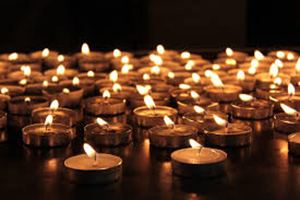
Yizkor. To remember. On Yom Kippur we remember the loved ones who are no longer with us.
Those who are fortunate to still have their parents, leave the shul prior to the recitation of Yizkor. What should they do while they wait outside for the davening to resume? Talk about the weather? Catch up on what’s new in everyone’s family? Discuss what’s on the menu for the break-fast?
My brother, Rabbi Yisroel, shared that Rebbetzin Batsheva Kanievsky a”h would say that those fortunate enough not to be saying Yizkor, should also daven. Make a personal tefilla that their parents be healthy, strong and well. That next year IY”H, they will once again be amongst those who merit to leave the shul during Yizkor.
As Jews, we believe that a person is comprised of both physical and spiritual elements. When one passes away, the physical departs from this world, but the spiritual, the eternal neshama, lives on. The neshama is forever watching over us. While the neshama can no longer perform mitzvos, we, the living, can do for the neshama, elevating the soul to attain higher levels of kedusha, purity. A person should never feel saddened that once a parent has departed, they can no longer do for them. Yes, the loss and pain are real, but we can do mitzvos in their name and connect to them through our good deeds.
Yom Kippur is translated as Day of Atonement. In the Torah, it is referred to as Yom Ha Kippurim. The Rama suggests that the plural – Ha Kippurim – signifies a double atonement, for both the living and the neshamos above. By pledging to give tzedaka as part of the Yizkor tefilla, we ask of Ha Shem, “¬May the departed be bound b’tzror hachaim, in the bond of life, together with the souls of Avraham, Yitzchok and Yaakov; Sara, Rivka, Rochel and Leah”.
Additionally, by saying Yizkor and mentioning the names of relatives no longer with us, we recall their good deeds as a merit for us.
There is a separate Yizkor prayer for those who died al kiddush Ha Shem, the martyrs who died sanctifying the name of Ha Shem. “The holy and pure ones who were killed, murdered, slaughtered, burned, drowned and strangled…” I think of the zeides and bubbas I never met. The lives cut short in the Holocaust. All the lives lost in the wars in Israel, and particularly over these past two years in Gaza. The suffering and torture so many endured.
May all their souls be elevated to a place on high. Yizkor – we must remember always.
It was the winter of 1946. Simon Wiesenthal, then a 38-year-old Holocaust survivor was in a Displaced Persons camp in Germany. The camp had an American rabbi serving as a chaplain, there to give guidance and comfort to the broken-hearted.
The American government learned that the Nazis created an exhibition of Jewish artifacts and Judaica.
It was to be a museum to show that Jews once lived. Hitler and the Nazis believed that the Final Solution would, G-d forbid, succeed in obliterating the Jewish race, and our nation would become a relic of the past.
The Jewish chaplain was asked to go to view the collection and report back on his findings. He asked Wiesenthal to accompany him, and the two were off.
They found candlesticks and kiddush cups that graced many a Shabbos table. Candlesticks that heard the brachos of so many women, as they ushered in the Shabbos. The whisper of many-a-mother’s private prayers as she lingered before the flames. Kiddush cups that once held wines of blessing, bringing kedusha into the home every Shabbos and Yom Tov. They saw sifrei Torah, siddurim and tefillin. Both the chaplain and Wiesenthal were alone in their thoughts, surveying the rooms, thinking of the lives lost.
And then, Wiesenthal heard a piercing cry. The chaplain was holding a siddur, his hands trembling, as he pointed to an inscription. There, in a woman’s handwriting, was the following:
“I am begging for whomever finds this siddur, to help avenge the death of the Jews of Europe.”
There was a signature beneath the message. In a shaky voice, the chaplain said, “It’s my sister”. While he managed to escape Europe in time, his sister was ensnared in the vast Nazi killing machine.
Under the signature were haunting, chilling words. “The murderers are among us. I hear them in the next house. Avenge our death.”
A young woman’s cry to be remembered. Yizkor!
“The Murderers Among Us” became the title of Wiesenthal’s book on Nazi criminals. The poignant message inscribed in the siddur never left Wiesenthal’s heart and soul. It shaped his life and became his mission.
(The full story can be found in Small Miracles for the Jewish Heart, by Yitta Halberstam and Judith Lowenthal)
The New York Times Magazine relates a story of Simon Wiesenthal spending a Shabbos at the home of a Holocaust survivor, who became a successful jeweler. Prior to the war, Wiesenthal was an architect. His jeweler friend asked him why he never went back to designing homes. Simon Wiesenthal replied, “You are a religious man. You believe in G-d and life after death. I also believe that when we come to their world and meet the millions of Jews who died in the camps, and they ask us ‘What have you done?’, there will be many answers. You will say I became a jeweler… but I will say I didn’t forget you.”
Yizkor. We Remember.
Shabbat Shalom!
Chaya Sora
Chaya Sora can be reached at csgertzulin@gmail. com
This article was written L’zecher Nishmas /In Memory Of Ha Rav Meshulem ben Ha Rav Osher Anshil Ha Levi, zt”l and Rebbetzin Esther bas Ha Rav Avraham Ha Levi, zt”l
