



|
Getting your Trinity Audio player ready...
|
By: Chaya Sora Jungreis-Gertzulin
Growing up, I would come home from school with stories of the Pilgrims and Indians joining together for a Thanksgiving feast. My mother would say that for a Jew, every day is Thanksgiving Day. From the moment we wake up, before we even step out of bed, the words of Modeh Ani are on our lips. Words of thanks. A prayer of gratitude.
Modeh Ani – Thank You HaShem. Unfortunately, we don’t always concentrate on the words. Sometimes, we wake up bleary eyed, still in need of some sleep, and the words are mumbled in a daze. At other times, there is the hectic morning rush; leaving to work, early appointments, getting kids out to school, and we do a speedy job on Modeh Ani. Either way, we say the words without internalizing their meaning.
Modeh Ani l’fanecha… I am grateful to HaShem for a new day. While the word modeh, is closely tied to the words hoda’ah and todah, expressions of thankfulness and gratitude, modeh also means to acknowledge. For, by saying thank you, we acknowledge the good bestowed upon us.
Sheh’heh’cheh’zarta bee nishmasee – Who has returned my soul to me. Every night, our soul ascends to the Heavens above, and is returned to us upon rising. Nishmasee – my soul. A soul personalized for each individual, made to bring out the best in each one of us, and help us overcome whatever hurdles the day may bring.
B’chemla – with kindness and compassion. While our soul may be tainted, HaShem returns it to us each morning cleansed and pure, ready for a new day. Rabba emunasecha – how great is HaShem’s faith in us. A faith so strong, that HaShem gifts us another day to do and accomplish.
A small, but inspiring prayer. When our day starts with a heartfelt Modeh ani, it takes on a new trajectory. Everything looks brighter and better.
In Tehillim, Dovid HaMelech writes, “Tov l’hodos l’HaShem, It is good to thank HaShem.” Gratitude is good for our very being. To focus on the blessings in our lives, rather than dwelling on the problems and aggravations. The pasuk concludes, “L’hagid ba’boker chasdecha, v’emunascha ba’leilos, To say Your praise in the morning, and to have faith at night.” (Tehillim 118:1) When we live with an attitude of gratitude, it serves us well, not only in the “daytime”, when light shines and all is good, but it strengthens us at “night”, during times of darkness and difficulty.
This week’s parsha, Vayeitzei, tells us of Leah, who turned to HaShem with words of gratitude, upon the birth of her fourth son. Leah named him Yehuda, saying “ha’pa’am odeh ess HaShem, this time I will thank HaShem.” (Bereishis 29:35)
Four sons. Four future shevatim. Leah realizes how truly fortunate she was. She concentrated on the brachos in her life, instead of the difficulties. She could have been disillusioned, depressed, even angry and bitter. After all, she was living in Rochel’s shadow, knowing that her sister was Yaakov’s first choice as a life partner. Instead of walking around with a chip on her shoulder, comparing her life to Rochel’s, Leah concentrated on the blessings in her own life, the bracha of children.
Rabbi Yochanan says, “From the day that HaShem created the world, no one thanked Him, until Leah came and thanked HaShem upon giving birth to Yehudah. (Talmud Berachos, 7b). Though others before Leah expressed gratitude to HaShem, it was Leah who lived in a state of constant thankfulness, with an attitude of gratitude.
Despite all the pain she endured, Leah chose to thank HaShem. She named her son Yehuda, from the word hoda’ah. As a nation, we are called Yehudim, a people who give thanks, who appreciate the blessings in life. Who understand that thankfulness is not just words of expression, but defines who we are.
Leah teaches to live a life of thankfulness. To want what you have. There will always be someone with more, better, nicer. Someone with a more luxurious home, a more up-to-date kitchen, a more extravagant wardrobe, a more impressive car, or taking more exotic vacations. It’s toxic to be measuring and comparing to others. Count your blessings, and be grateful for what you do have.
And in my own life, I was blessed to see Leah’s approach to gratitude embodied in my maternal grandmother, Rebbetzin Miriam bas HaRav Tzvi Hirsch HaKohein a”h, who’s yahrtzeit is on the sixth of Kislev, which this year was November 26. Like our matriarch Leah, Mama was appreciative of everything around her. She didn’t have the easiest of lives, yet saw every day as a gift from HaShem.
Mama loved children, all children. To her, each one was special. Each one a proof that, even after the Holocaust, our nation stands strong and is thriving.
During the summer months, Mama often joined us at our bungalow upstate. At that time, our bungalow was quite small – one bedroom (which I shared with three children) and a kitchen. Mama would sleep in the kitchen, and get up early in the morning, with the biggest smile, ready to take my baby out for a walk. She was happy just to look at HaShem’s world around her. To listen to the birds, watch the sun rise and take in the scent of the pine trees. Mama’s greatest pleasure was watching the children in the colony, especially all the babies. She had true Yiddishe nachas just seeing a new generation. Mama didn’t see a small bungalow; she saw a beautiful world. She taught me a lesson in appreciation.
On one occasion, Mama joined our family on a trip to FAO Schwartz. She didn’t know where to look first. The stuffed animals, the dolls, the toy cars and trucks, the likes of which she had never seen growing up in Hungary. It was only a trip to a toy store, but for Mama it was a grand experience. Mama loved life, and the world around her. Every day brought a new experience to be grateful for. Mama couldn’t stop thanking me.
I was sharing Mama memories with my Aunt Goldie, who told me of a time that she was driving on Ocean Parkway in Brooklyn with Mama in the car. “How beautiful the street is”, Mama exclaimed. Ocean Parkway… beautiful? my aunt thought. As if reading her mind, Mama added, “Just look at all the trees lining the street. It’s truly beautiful”.
To look at the world with Mama eyes. To see its beauty wherever you go.
In an article by Joel Rebibo, he quotes a powerful statement from Rav Avigdor Nebenzahl, former Chief Rabbi of the Old City of Yerushalayim. “In order for the heart to be overflowing with gratitude over what I have in my life, it doesn’t matter how much I have. The main thing is how much I appreciate what I have.” (Hamodia Prime, 12 Tishrei 5781)
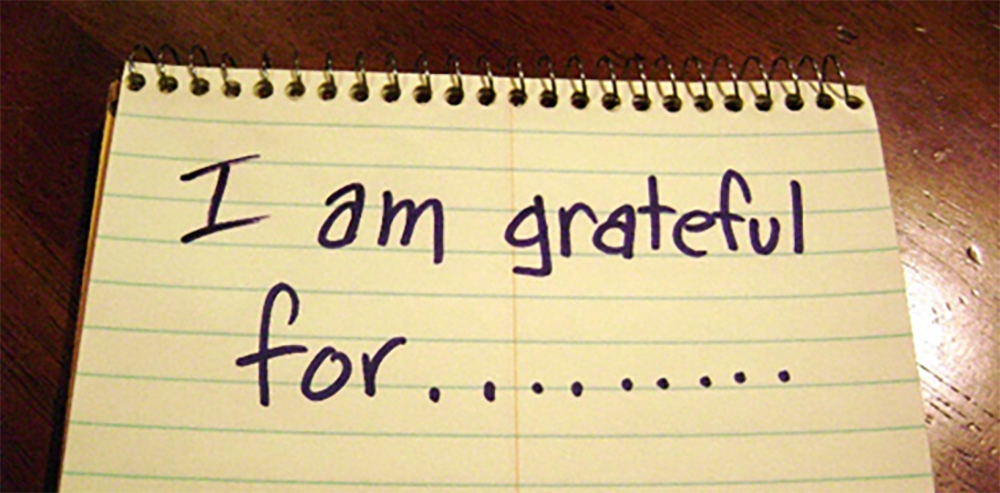
Yes, every day is a Thanksgiving Day. For those who will be sitting down to a Thanksgiving dinner, make it a time of gratitude. Remember the brachos in your life. Brachos that are not to be taken for granted, but to thank HaShem for. Not merely a generic “I am grateful for…”, but a sincere and meaningful “Thank You, HaShem”.
Shabbat Shalom!
Chaya Sora
Chaya Sora can be reached at [email protected]
This article was written L’zecher Nishmas / In Memory Of HaRav Meshulem ben HaRav Osher Anshil HaLevi, zt”l and Rebbetzin Esther bas HaRav Avraham HaLevi, zt”l