



|
Getting your Trinity Audio player ready...
|
By: Chaya Sora Jungreis-Gertzulin
Sometimes, you hear a story that touches your heart, uplifts your spirit and stays with you for years.
Rabbi Yakov Bender, Rosh Ha Yeshiva of Yeshiva Darchei Torah, shared one such story with my mother a”h, which she included in her book, The Committed Life.
Shai was a sweet young boy but was developmentally delayed. He attended a school that fit his needs, but his father would bring him on Sundays to Darchei, where he would spend time with boys his age and be exposed to a Torah atmosphere.
It was recess time, the boys started a baseball game, and Shai was, of course, included. Towards the end of the game, the bases were loaded, and Shai was at bat. The pitcher threw him a ball. Strike one. Second ball. Strike two. The pitcher then slowly inched forward, getting closer to Shai. One of Shai’s teammates stood beside him and held the bat together with Shai. The pitcher lobbed the ball slowly. Wack! Base hit. Run Shai, run, all the boys began to shout. The opposing team players just let the ball roll on and on towards the outfield fence. The runners on base took off, scoring one after another. Shai’s teammates yelled out, keep going Shai, keep going. Shai made it to second base, then to third base, and finally crossed home plate. The boys picked up Shai and carried him on their shoulders. He was their hero. A grand-slam home run.
Shai could have walked away from the game feeling like a loser, but the boys – on both teams – didn’t allow that to happen. It was a small game, but the lesson was monumental — kindness can turn what might have been defeat into a lifetime memory of victory.
Rabbi Bender related to my mother how proud he was of his fifth-grade boys. In truth, that day, they were all heroes. That day, the game wasn’t about winning. It was all about chessed.
The Torah places a great emphasis on kovod habriyos, treating every person with dignity and respect. One must be extra careful not to shame or embarrass another.
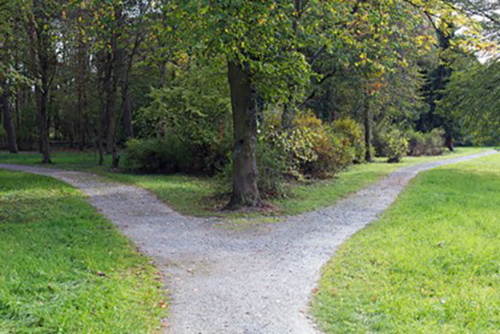
This week, we read parshas Shoftim. Amongst the mitzvos mentioned in the parsha, is the building of the Arei Miklat, Cities of Refuge. Cities where one who accidentally killed another, can escape to for safety and protection from vengeance by the victim’s family. “You shall separate these cities for yourselves in midst of your land, which Ha Shem, your G-d, gives you to possess.” (Devarim 19:2). Being able to reach these cities quickly and safely is so essential, that in the very next pasuk, the Torah says, “Prepare the way for yourself”, which the Talmud explains as meaning placing signs at crossroads leading to the Miklat. The signs read “Miklat, Miklat” meaning “Refuge, Refuge”, making the path towards these cities easy to follow.
What an important life lesson. Even one who is responsible for an accidental death is saved from a potentially embarrassing and compromising situation. The Torah teaches us to prepare signs to protect human dignity, even for someone who made a tragic mistake. Asking which way to the miklat would be a red flag, announcing his wrongdoing. The road signs were there to shield him from having to interact with others along the route.
Through their life stories, our ancestors have taught us the importance of not shaming others. Yosef, who after being estranged from his brothers is finally reunited with them. Before revealing his identity, he clears the room of all Egyptians. Despite everything he endured, Yosef was sensitive to his brothers’ feelings. Rashi explains that Yosef did not want his brothers to be embarrassed in the presence of strangers. Only when he was alone with his brothers, did he reveal his true identity. A sensitivity we should all strive for.
The Talmud teaches, “Kol hamalbin pnei chaveiro b’rabim, One who humiliates his fellow in public, k’ilu shofech damim, it is as though he were spilling blood.” (Bava Metzia 58b). The term used for shaming is malbin pnei, literally meaning to make the face turn white. When a person is humiliated, the color is drawn from his face, he turns white. The same is true with blushing, where blood flows to the face. Shofech damim, the spilling of blood. Just as with a physical killing blood flows, so, too, is it with a spiritual homicide.
Rabbi Elazar Hamodai teaches in Pirkei Avos (Avos 3:15), that there are five acts which prevent one from having a share in Olam Habah, regardless of their Torah knowledge and good deeds. Amongst them is “One who shames his fellow in public.” The Tiferes Yisroel explains that one who embarrasses others is in essence shaming the honor and dignity of Ha Shem’s creation, as all men are created b’tzelem Elokim, in the image of Ha Shem.
There is a fine line between joking and shaming. Why is it funny for a man to say my wife can’t cook a thing, or for a woman to make jokes about her husband’s naps or weight gain. How often do we speak about our children in front of them, while they are cringing in the background. And then, it passes on to the next generation. Children mimic their parents. If that humor was acceptable to their parents, they too will make comments about their peers. Whether about sports capabilities or choice of knapsack, they might think it’s funny, but the target of their “humor” isn’t laughing. No one appreciates being the subject of someone else’s jokes. Just as the Torah placed signs to guide people with dignity, we too should place “road signs” in our speech and actions—signals of care and respect that prevent others from embarrassment.
During the time when the Beis Ha Mikdash stood, Bnei Yisroel would participate in aliyas regel, going up to Yerushalayim, for Pesach, Shavuos and Succos. Multitudes of travelers coming from all directions – in contrast to the individuals going to the Arei Miklat. Yet, in contrast to the Arei Miklat, no directional signs were on the roads leading to Yerushalayim. Here too is a lesson. While the Torah wants to protect the dignity of the individual fleeing to the miklat, when it comes to Yerushalayim, the opposite is true. The Torah wants to encourage interaction between travelers and residents along the way. How beautiful it is for a nation to share their experiences. The roads become roads of achdus, roads that bring people together with happiness and good feelings. There were no road signs on the way to Yerushalayim because the journey to Yerushalayim was meant to foster connection, not isolation.
The day should come soon when we will all be on the road to Yerushalayim. A nation rejoicing together with the building of the third and final Beis Ha Mikdash.
Shabbat Shalom!
Chaya Sora
Chaya Sora can be reached at csgertzulin@gmail. com
This article was written L’zecher Nishmas /In Memory Of Ha Rav Meshulem ben Ha Rav Osher Anshil Ha Levi, zt”l and Rebbetzin Esther bas Ha Rav Avraham Ha Levi, zt”l
