



|
Getting your Trinity Audio player ready...
|
By: Chaya Sora Jungreis-Gertzulin
Sefer Shemos, the making of our nation. Shemos is also known as Sefer HaGeula, the Book of Redemption. Shemos takes us from the brutal, bitter slave camps of Egypt, through the miraculous Exodus, to the historic event of Matan Torah.
“Vayokom melech chodosh, A new king arose…, asher lo yodah es Yosef, who didn’t know Yosef.” (Shemos 1:8)
Didn’t know Yosef? How could it be? What nation doesn’t know its history? Do we not know who George Washington was? Abraham Lincoln? How could it be that a king in Egypt was not aware of Yosef, a larger than life leader who brought survival and blessing to Egypt during a time of famine? How could it be that he was not aware of Yosef?
With just a few, short, concise words, Rashi explains it all. It is the story of our people, time and time again. “Oso atzmo k’ilu lo yoda, He made himself as if he didn’t know.”
How many times in our nation’s history have we given of ourselves to society, only to be conveniently forgotten about – and even worse, turned against. What happened in Egypt happened again in Spain, in Italy, in France, in Germany and Eastern Europe. And today, with Israel’s Arab neighbors.
Irit Lahav is a survivor of the terrorist attack on Kibbutz Nir Oz. In an interview, she spoke of the thoughts going through her head, while hiding in a safe room on that fateful day. She heard gunshot after gunshot, heavy artillery, grenades exploding, and wild screams in Arabic. All she kept on thinking was, WHY? How can this be happening? Why are they doing this to us? Don’t the Palestinians know that she and so many members of the kibbutz were supportive of them? She spoke of driving to the Israeli-Gaza border together with Yocheved, an eighty-five year taken hostage. Together, they would pick up Palestinians waiting at the Erez crossing and drive them to medical centers and top hospitals in Israel for cancer and other lifesaving treatments.
Irit wasn’t the only survivor who voiced these sentiments. Another woman spoke of the kindness done in the name of peace. The toys, the clothing and even the financial assistance given to the Gazans, and their children.
Thoughts while being shot at in a safe room.
Irit continued, and spoke of being afraid for her life. Was she living her last moments? The interviewer asked her, “How do you process it?” Without hesitation, she replied, “I realized they really hate us. They really hate us. I thought most of them were peace-loving people…. But no, the Palestinian public really hates us.” As the ancient Egyptians before them, they didn’t want to know.
Each day, more and more news stories come out, detailing the barbaric atrocities committed by the terrorists. Terrible acts of violence, beheadings, dismembering of bodies, burning people alive, acts of horror to women and children that I can’t even write about, desecrating bodies after death…. The list goes on and on. Crimes against humanity.
Where is the global uproar? We only have to look at the Chumash for an answer. Asher lo yodah, they made themselves not to know.
This past week, I received an email. A father telling me about his eight-year old child who befriended a little Muslim girl from Kuwait. She and her family were living here temporarily while she underwent treatment for a medical condition. All was good. They were “besties”, until the Muslim child starting texting “Free Palestine…. Israel is garbage…” and other hateful messages to his daughter.
Where does a little girl get that from? What does she want from an eight-year-old American, he pondered. I sent him a copy of Irit’s interview. “They really hate us.”
The little Muslim girl was echoing sentiments she hears at home. Words of hate passed down from her parents. Her culture. There are even children’s TV shows in Arabic glorifying acts of terrorism. School curriculums and textbooks that teach Jew hate and promote an anti-Israel attitude.
From our ancestors’ time in Egypt to the twenty-first century, the narrative doesn’t change.
In this week’s parsha, we meet another young girl. A girl full of emunah and bitachon. A girl imbued with a spirit of life and a love for her people. We meet Miriam. Life in Egypt was becoming increasingly difficult for Bnei Yisroel. The Midrash tells us that after long days of hard, back-breaking labor for the king, Bnei Yisroel were forced to work additional hours in the homes and fields of the Egyptians. They came up with one form of cruelty after another, just to oppress and persecute the Jewish people. The Egyptians played with their minds, trying to destroy their spirit.
This was the Egypt that Amram and Yocheved lived in. The Egypt Miriam grew up in.
When Pharaoh didn’t succeed in breaking them with slavery, he enacted a new law. Every newborn baby boy was to be cast into the Nile.
Amram was the leader his generation. In a state of despair, he asked himself, how can one bring life into a world where there was no hope for tomorrow? What kind of future would the next generation have? It was then that Amram divorced his wife, Yocheved.
When people saw what Amram did, they followed his lead. Couple after couple separated.
It was young Miriam who turned to her father and spoke up with strength. She told him that his decision was harsher than Pharaoh’s decrees. Pharaoh’s edict affected only the baby boys, while breaking apart homes was preventing the birth of both boys and girls. Moreover, while Pharaoh’s edicts would deprive newborn males of their physical life in this world, don’t deny their neshamos a place in Olam Habah, the World to Come.
Miriam’s words penetrated Amram’s heart. He saw the truth in her plea. He became fortified with renewed emunah.
“A man went from the house of Levi and took a daughter of Levi.” (Shemos 2:1) Amram remarried Yocheved. A beautiful chuppa was built. A chasuna was had with Miriam and Aaron joyfully dancing for their parents. Upon witnessing this, everyone else remarried their wives.
The birth of Moshe followed. The Chumash says “ki tov hu, that he was good.” Rashi tells us that their house became filled with light. Every neshama that comes into this world brings with it its own bracha, its own mazel. A light in the house.
We have recently seen so much tragedy. So many Jewish lives snuffed out. So much evil perpetrated by those who chose to forget how much they benefited from the goodness of their Jewish neighbors.
Amram and Yocheved’s story is the story of our nation. The strength of a people who continue on when all looks bleak.
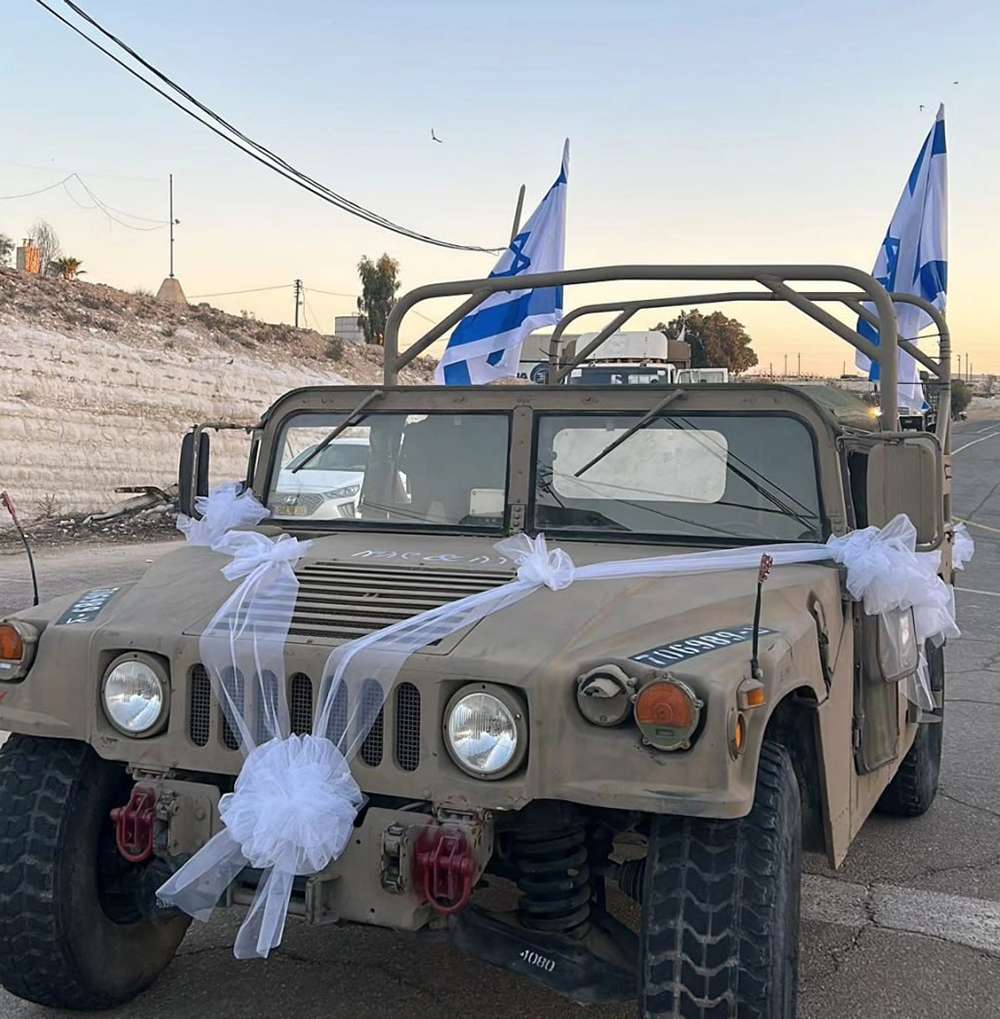
There are so many “war weddings” happening in Eretz Yisroel. Soldiers returning home for a day, just to get married. To celebrate life. The message of Miriam lives on.
Shabbat Shalom!
Chaya Sora
Chaya Sora can reached at [email protected]
This article was written L’zecher Nishmas /In Memory Of HaRav Meshulem ben HaRav Osher Anshil HaLevi, zt”l and Rebbetzin Esther bas HaRav Avraham HaLevi, zt”l
