


























By: Chaya Sora Jungreis-Gertzulin
In this week’s parsha, we are introduced to the meraglim, the scouts chosen to explore Eretz Yisroel prior to the Jewish nation settling there.
Meraglim comes from the word regel, meaning foot, for the scouts trekked across the terrain of Eretz Yisroel. “Shelach lecha, send for yourself.” (Bamidbar 13:2).
In response to the people’s request to explore the land, HaShem told Moshe “Send for yourself”, for your interest, for your desire.
The Torah tells us that the meraglim were anoshim, men of importance. They were neseeim, each one the leader of his respective tribe. After forty days of exploration, they returned, carrying beautiful, grand-sized fruits. They captured the nation’s attention by beginning their report with words of praise, saying it was a land of milk and honey. But they continued on to speak of walled cities and giants who inhabited the country. They painted a picture of doom and gloom, saying it was an “Eretz ocheles yoshvehah, a land that eats its inhabitants”. A land that would be impossible to conquer and settle.
There were only two amongst the twelve meraglim, Yehoshua and Calev, who stood strong and spoke positively, giving the nation words of encouragement.
How could this have happened? How could it be that leaders would speak negatively about Eretz Yisroel, HaShem’s eternal gift to His people? The nation witnessed the Yad HaShem, the Hand of G-d, and experienced multiple miracles. Where was their faith and trust in HaShem?
From the time of their exodus from Egypt, Bnei Yisroel’s existence was one of miracles. From crossing the sea to receiving the Torah at Sinai. From the daily portion of manna, to the Ananei HaKavod, the Clouds of Glory, that guided and protected them by day, to the fire that warmed and shielded them at night. For them, life was one big miracle. But now, they were facing the next chapter of their journey – to settle in the Holy Land. This next step was fraught with anxiety and fear. Rather than having all of their needs provided for by HaShem, they were genuinely afraid of the responsibilities and labor that settling the land entails. They doubted their very ability to survive in a natural environment.
Here was the nation’s undoing. They failed to trust that HaShem’s presence would continue even after the nation entered a more natural way of life. They didn’t realize that every day was filled with miracles. That no matter where they were, HaShem was with them, then and always, in ways both big and small.
The most spectacular of miracles is waking up each day, a functioning body, the sun shining, fruits and vegetables growing, the gift of life. As Albeit Einstein famously said, “There are two ways to live your life. One as though nothing is a miracle, the other as though everything is a miracle.”
The meraglim, as great as they were, were lacking a belief that HaShem truly controls the world, and can do anything. Even make it easy for Bnei Yisroel to settle the land. To understand that Eretz Yisroel is HaShem’s land, a land that He watches over. A land whose very existence is a miracle.
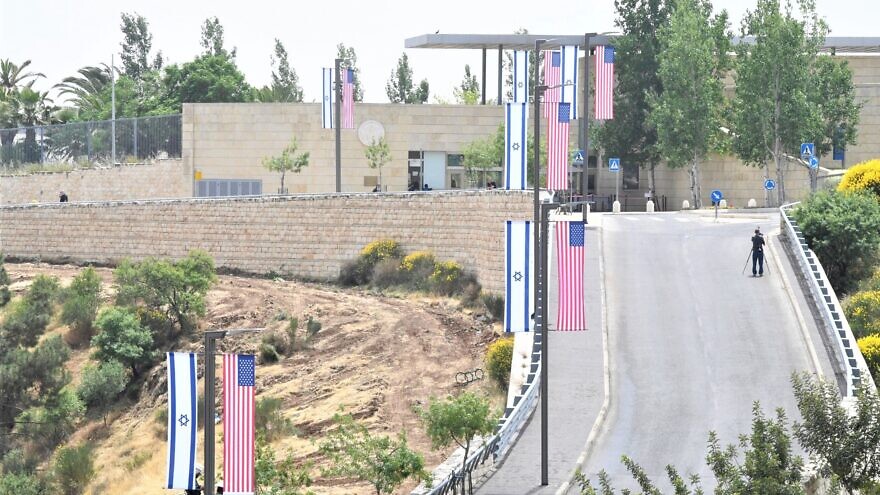
The challenge of recognizing HaShem’s hand in history did not end in the wilderness. It remains a challenge for every generation. The miracle of Eretz Yisroel continues to this very day. Just a few days ago, Israel’s ambassador to the US, Yechiel Leiter, wrote, “Iran fired 11 ballistic missiles at Israel today. Each one of those missiles can level an entire neighborhood, and kill hundreds.” But HaShem was watching over His land and His people. Virtually no injuries and no significant damage. US ambassador to Israel, Mike Huckabee, unquestionably one of today’s chassidei umos ha’olam, amongst the righteous of the nations, wrote, “Iran fired missiles at Israel last night and early today. The missile alert sounded at 6AM in Jerusalem. They were intercepted. Thank G-d.”
We are a nation of miracles. “Hinei lo yonum v’lo yishon Shomer Yisroel, He who watches Israel neither slumbers nor sleeps. (Tehillim 121:4) Shouldn’t it be evident that after more than thousands of rockets launched into Israel, HaShem’s watchful eye was ever present? Yes, there is Iron Dome and a great military. But shouldn’t it be obvious to all, that the real protector of the Holy Land and its people is HaShem?
One question still remains. How were Yehoshua and Calev able to avoid falling into the trap of the other scouts? Perhaps the answer can be gleaned from their very names.
Before the meraglim left on their mission, Moshe turned to Yehoshua, whose name was then Hoshea, giving him a bracha for success. Moshe feared that due to Hoshea’s humble nature, he would be negatively influenced by the other scouts. Therefore, he added the letter yud to his name, changing Hoshea to Yehoshua. The letter yud, symbolic of HaShem’s name, served as a bracha that HaShem be with him. Rashi tells us that Moshe blessed Yehoshua with the words, “May HaShem save you from the advice of the meraglim.” (Bamidbar 13:16)
The midrash teaches that the yud added to Hoshea came from our matriarch Sara’s original name, Sorai. HaShem added a hei to her name, changing Sorai to Sara. For generations the yud was in safekeeping, until Moshe added it to Hoshea. With it came the strength of Sara. A woman who spoke up when she saw something wrong. Sara knew that Yishmael was harmful both spiritually and physically to Yitzchak. She insisted to Avraham that Yishmael be sent out of their home. Adding the yud to Hoshea gave him that same strength to stand up to the negativity of the meraglim.
Calev means ca-lev, like a heart. Calev’s heart was one with HaShem, and one with His people. In fact, whereas the Torah relates the details of the meraglim’s mission in the plural, the language is changed to the singular in verse 13:22. “Vayovoh ad Chevron, and he arrived at Chevron”. Rashi explains that only Calev stopped off at the holy city of Chevron, known as “the heart” of Eretz Yisroel, to pray for the power to resist the collusion of his fellow meraglim.
HaShem is always watching over us – collectively and individually. HaShem performs miracles for us each and every day. We just need to recognize these special gifts. We need to learn from Yehoshua and Calev pray, to always have HaShem in our hearts and minds. In turn, HaShem will be there for us. He will spare us from misfortune and negative influences.
A life lesson for us. When worries arise, whether about family, health, livelihood, or the future, we can follow the example of Yehoshua and Calev: daven, remember the blessings already present in our lives, and trust that HaShem continues to guide us at all times.
Shabbat Shalom!
Chaya Sora
Chaya Sora can be reached at [email protected]
This article was written L’zecher Nishmas / In Memory Of HaRav Meshulem ben HaRav Osher Anshil HaLevi, zt”l and Rebbetzin Esther bas HaRav Avraham HaLevi, zt’l



