



|
Getting your Trinity Audio player ready...
|
By: Chaya Sora Jungreis-Gertzulin
This Shabbos, Rosh Chodesh Menachem Av, marks the beginning of the Nine Days, concluding with Tisha B’Av. It is a period of mourning for the destruction of the Beis HaMikdash. A time to remember what we once had. A time to daven that we merit to see it once again.
“V’l’yerushalayim ircha, b’rachamim toshuv…, And to Yerushalayim Your city, may You return in compassion, and may You rest within it…” (From the daily Amidah)
“Uvnei Yerushalayim ir hakodesh b’mheirah b’yameinu, Rebuild Yerushalayim, the Holy City, soon in our day….” (Birchas Hamazon)
Every day, we daven for the Holy City of Yerushalayim. In every Amidah, in every Birchas Hamazon, we ask HaShem to enable us to see it once again in its splendor and glory.
Prayers that are on our lips, but do they enter our hearts? Are our souls truly yearning for Yerushalayim? How many of us truly shed tears for Yerushalayim?
The year was 1920. The British government appointed Sir Herbert Samuel as the first High Commissioner of Palestine. Sir Herbert visited the Holy Land. He met with Christian and Muslim leaders, and made an appointment to visit Rabbi Yosef Chaim Sonnenfeld zt”l, Chief Rabbi of Yerushalayim.
The meeting was scheduled to take place at the rabbi’s small, simple basement apartment in the Old City. To enter, one had to descend a long flight of steep stairs. The rabbi’s students pleaded with him to temporarily relocate his residence in order to give Sir Herbert a more favorable impression. Rabbi Sonnenfeld declined, but made a small “indulgence” by acquiring a new tablecloth in honor of his guest.
On the day of the visit, Sir Herbert was escorted to the Old City by a tight ring of security. There were huge crowds and a large media presence to report on the event. As Sir Herbert descended the stairs and entered the apartment, he greeted the rabbi with what he thought to be a joke…. “The Rabbi couldn’t find himself an apartment deeper in the earth?”
Rabbi Sonnenfeld’s reaction was to open a shuttered window revealing a street-level view of the Old City. Tears began to stream from the rabbi’s eyes, as he said in a pained voice: “As long as the dwelling place of my beloved G-d lies in ruins, my home need not be any better than His.”
The rabbi’s profound and heartfelt words left Sir Herbert in awe. Visibly moved, he suddenly found himself speechless. Sir Herbert just turned around and silently left. When he reached the street, reporters surrounded him, firing questions about the meeting, but Sir Herbert remained silent.
I am reminded of a story my mother, the Rebbetzin a”h told me. Once, after speaking in Yerushalayim, a beautiful young woman came over and shared her personal experiences. She was originally from Sweden and went to Israel for a visit. She fell in love with the land and its people, and couldn’t bring herself to leave. After much studying and preparation, she converted, becoming a member of Am Yisroel.
My mother was sure that she would be asking for a bracha to find an appropriate shidduch, but that was not the case. Instead, she asked for something else. A bracha to find it within her neshama to truly cry for Yerushalayim. To weep for a city in ruins, to cry for a people surrounded by enemies, a people in pain.
Genuine tears flowing from a rabbi’s eyes. A British High Commissioner left speechless. A convert to Judaism wanting nothing more than to cry for her people. But where are we? Do we realize that the hatred of our enemies that led to the destruction of our Beis HaMikdash endures to this very day? We are in the midst of Galus Yishmael, what are sages say is the last and most difficult of all exiles. We have been subjected to increased acts of anti-Semitism, harassment and even violence. Just recently, in Boulder, Colorado, Mohammed Sabry Solimian threw homemade incendiary devices and a flame-thrower into a crowd which gathered to show support for the hostages. Despicable acts that are becoming more commonplace.
More than twenty years ago, my mother would speak of Europe becoming “Eurabia”, with the influx of Muslims who openly spew hatred of the Jewish people. Do we not see it happening today? France and England, countries that once were considered safe and tranquil, have become frightening and dangerous. On a recent Shabbos, no sooner than after Rabbi Yehia and Rebbetzin Batcheva Lahiani of Grenoble, France, left their home for a Shabbos dinner, they heard three explosions. Their home became engulfed in flames, burning it to the ground. This was not the Lahiani family’s first experience with a hate crime. As their daughter Sara said, “First you insult, then you slash tires, then you try breaking into a house, and then the house explodes”. But the French authorities called it “a case of arson”, stopping short of labeling it as anti-Semitism.
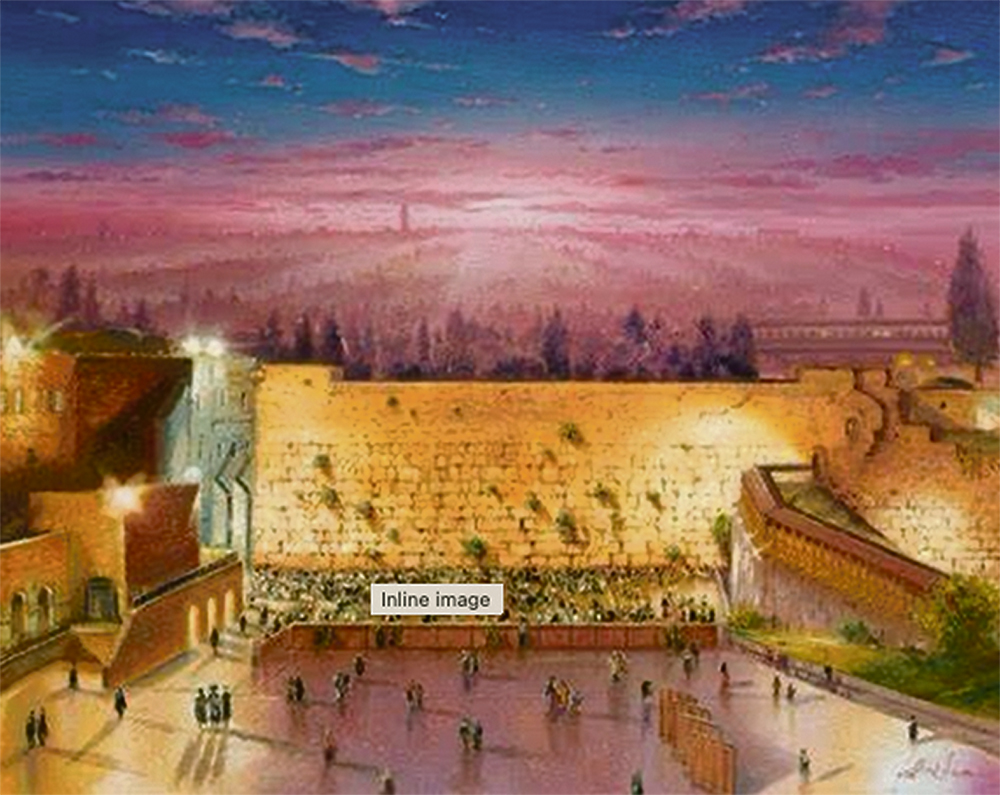
My mother related a story about a soldier who was a member of the battalion that liberated Yerushalayim in 1967. The soldiers ran to the Kotel, and overwhelmed with emotion, broke down in tears. One soldier, who wasn’t religious, stood off by the side. He, too, broke down in tears. When asked why he was crying, his response was “I am crying because I do not feel what my fellow soldiers are feeling. I am crying because I do not have what to cry about.”
Acheinu kol beis Yisroel, han’esunim b’tzara U’vashivya. A plea to HaShem for members of our nation in captivity, in pain and distress. While it was written many centuries ago, first appearing during the ninth century in Seder Rav Amram Goan, it takes on extra meaning today. About fifty years ago, Abie Rotenberg put this heart-rending tefilla to song. Since October 7, this song has been on the lips of Jews worldwide, often sung in unison following Tehillim and other public gatherings for Am Yisroel, for shalom in Eretz Yisroel, and for the release of the innocent hostages.
It’s time to cry for our people, no matter where they are. As we are getting closer to Tisha B’Av, let’s make an effort to concentrate even more on our tefillos. To shed a tear or two for Yerushalayim. As we daven, we should try to visualize a rebuilt Yerushalayim.
We are a nation that has shed many tears. A nation that has experienced much pain and persecution. Yet, at the same time we are nation that sings Ani Maamin – I Believe. A nation that infuses hope and belief, Emunah and bitachon, into our tears. In that merit, the day should come soon when our tears of sorrow become tears of joy.
“Kol hamisabel al Yerushalayim, zoche v’roeh b’simchasa… Whoever mourns for Yerushalayim will merit to witness the rejoicing of its rebuilding.” (Talmud)
Chodesh Tov and Shabbat Shalom!
Chaya Sora
Chaya Sora can be reached at [email protected]
This article was written L’zecher Nishmas /In Memory Of HaRav Meshulem ben HaRav Osher Anshil HaLevi, zt”l and Rebbetzin Esther bas HaRav Avraham HaLevi, zt”l
