



|
Getting your Trinity Audio player ready...
|
By: Chaya Sora-Jungreis
It was the beginning of the fortieth year of Bnei Yisroel’s trek through the vast desert. This week’s parsha, Chukas, tells of the death of Miriam, older sister of Aaron and Moshe. “Bnei Yisroel arrived to the Wilderness of Tzin… and the people settled in Kadesh, Miriam died there…” (Bamidbar 20:1) Kadesh, a name that alludes to the kedusha, the sanctity that personified Miriam.
Already, as a young child, Miriam had a heart filled with faith and the belief in a better tomorrow. A belief so strong, that when her parents separated due to Pharoah’s evil decree to kill every newborn Jewish boy, she convinced them to remain together with renewed faith.
It was Miriam who stood by the riverside watching over her baby brother Moshe. With much courage, she approached Basya, princess of Egypt, and suggested a nurse (Miriam’s own mother) for the baby.
It was Miriam, aka Puah, the baby whisperer. Miriam/Puah stood alongside her mother, assisting her as a midwife. Defying Pharaoh’s decrees, she helped bring the blessing of new neshamos into the world.
And, it was Miriam who never gave up on the dream of a miraculous redemption from Egypt. Even in midst of hardship, Miriam fashioned tambourines, giving women hope that one day they will be free and use their instruments to praise Hashem through song and music.
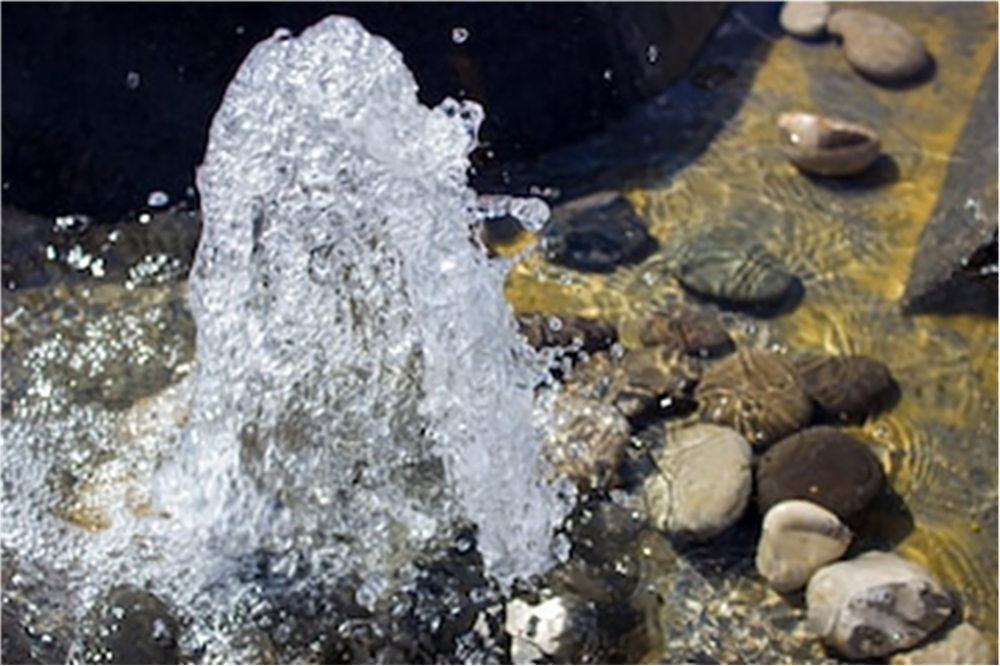
As long as Miriam was alive, a wonderous rock, the Be’er Miriam, the Well of Miriam traveled with the nation. A stone that supplied them with sufficient water to satisfy all their needs, as well as that of their livestock. This miraculous stone gave forth water in the merit of Miriam who stood by the riverside waiting to see what would be with her baby brother.
Immediately after telling us of Miriam’s death, we learn in the very next pasuk about the lack of water for the nation. There is no mention of public mourning or of people crying over the loss of a woman who had done so much for them.
The Alshich teaches that Miriam’s death, immediately followed by the people’s lack of water, tells us that the nation didn’t mourn her properly. It was only when Bnei Yisroel used up their water supply did they realize the great loss.
Appreciating a person’s goodness and the benefits we derive from them is not limited to our leaders and teachers. Even in our personal lives, how tragic it is that at times we don’t appreciate the good a person does for us during their lifetime, and sometimes not even after their death. How many of us live with regrets that we didn’t value more, respect more, do more, even say more. Missed opportunities to verbalize our thoughts, to say you mean so much to me… I can’t thank you enough… I love you.
It was a thirsty, disgruntled people that came to Moshe. Imagine Moshe being surrounded by a mob screaming out water, water…. “Why have you brought (us)… to die in this wilderness… Why did you have us ascend from Egypt to bring us to this evil place.” (Bamidbar 20:4-5)
HaShem tells Moshe that he and Aaron should gather the nation around a large rock. To speak to the rock and refreshing water will spring forth. Another miracle to take place right before the eyes of the nation.
Moshe and Aaron gathered the nation around the rock. Turning to the people, Moshe said, “Shimu na ha’morim, Listen now, you rebels…”
Rebels. To call a name. We all have our moments. I know I have mine. We wish we could take back some of the words misspoken and some of the actions we do – at home, amongst friends, family, neighbors, or at work – during moments of stress and tension. But we can’t, and often it is us who suffer the consequences. How often do we say “What in the world was I thinking…. Why did I ever say or do that…” At times, we don’t even realize how painful our words are. Words that can be like sharp daggers coming forth from our mouth.
While there may be times when admonishment or criticism is called for, there is a way to convey the message in a manner that is not hurtful. I remember my mother telling me that when she was a child, if ever there was a time that my zeide would want to correct her, to teach her a lesson, he would preface it with kind words. He would say “mein teiere kind, my dear child, ess past nisht, it doesn’t behoove you.” Nothing more needed to be said.
We can’t compare ourselves to Moshe. Because Moshe was who he was, teacher of an entire nation, role model and mentor, he was judged on a totally different level than the average man. Ibn Ezra teaches that Moshe fell from his high level of spirituality by calling the people “you rebels”.
Just saying the words “you rebels” can change one’s mindset. Even if you are Moshe. Instead of speaking to the rock, as HaShem commanded him, he hit the rock. For this, we are told that Moshe lost the privilege of bringing the nation into Eretz Yisroel.
Rashi comments that Moshe lost an opportunity to make a Kiddush HaShem. Imagine if Moshe had actually spoken to the rock, resulting in water flowing from it. Enough water to quench the thirst of an entire nation. How amazing that would have been. Bnei Yisroel would have said to themselves, “A rock that doesn’t speak and doesn’t hear and doesn’t require sustenance, fulfills the word of HaShem, how much more so should we”. A lesson that was lost.
Rav Reuven Leuchter writes about another important lesson we can learn from the rock. Who would think that a rock could possibly give forth water just by speaking to it. By witnessing that great miracle, the people would come to the understanding that HaShem could make the impossible, possible. We, too, have moments when we feel that we don’t have the physical or emotional strength to cope with the demands and challenges of life. We might be right. But we should know that HaShem is with us every step of the way, giving us the wherewithal to accomplish what He asks of us.
Bnei Yisroel could have been witness to a great miracle and gain new understanding. To realize that everything is in the hands of HaShem. That with our deeds, our mitzvos, we can bring brachos upon ourselves, our families, our people. To come to the realization that if a rock which doesn’t have needs “listens” to HaShem, how much more should we, whose every need – health, happiness, sustenance, nachas – are constantly gifted us by HaShem.
Shabbat Shalom!
Chaya Sora
Chaya Sora can be reached at [email protected]
This article was written L’zecher Nishmas /In Memory Of HaRav Meshulem ben HaRav Osher Anshil HaLevi, zt”l and Rebbetzin Esther bas HaRav Avraham HaLevi, zt”l
